
comparison
Biosafety level is an institutional decision
BSL-1 and BSL-2 as educational descriptions only: the containment assignment for a line or sample is made by the institution, and a supplier cannot make it.
- Author
- EVRINTH Editorial Team
- Published
- 8 October 2026
- Updated
- 8 October 2026
- Reading time
- 8 min
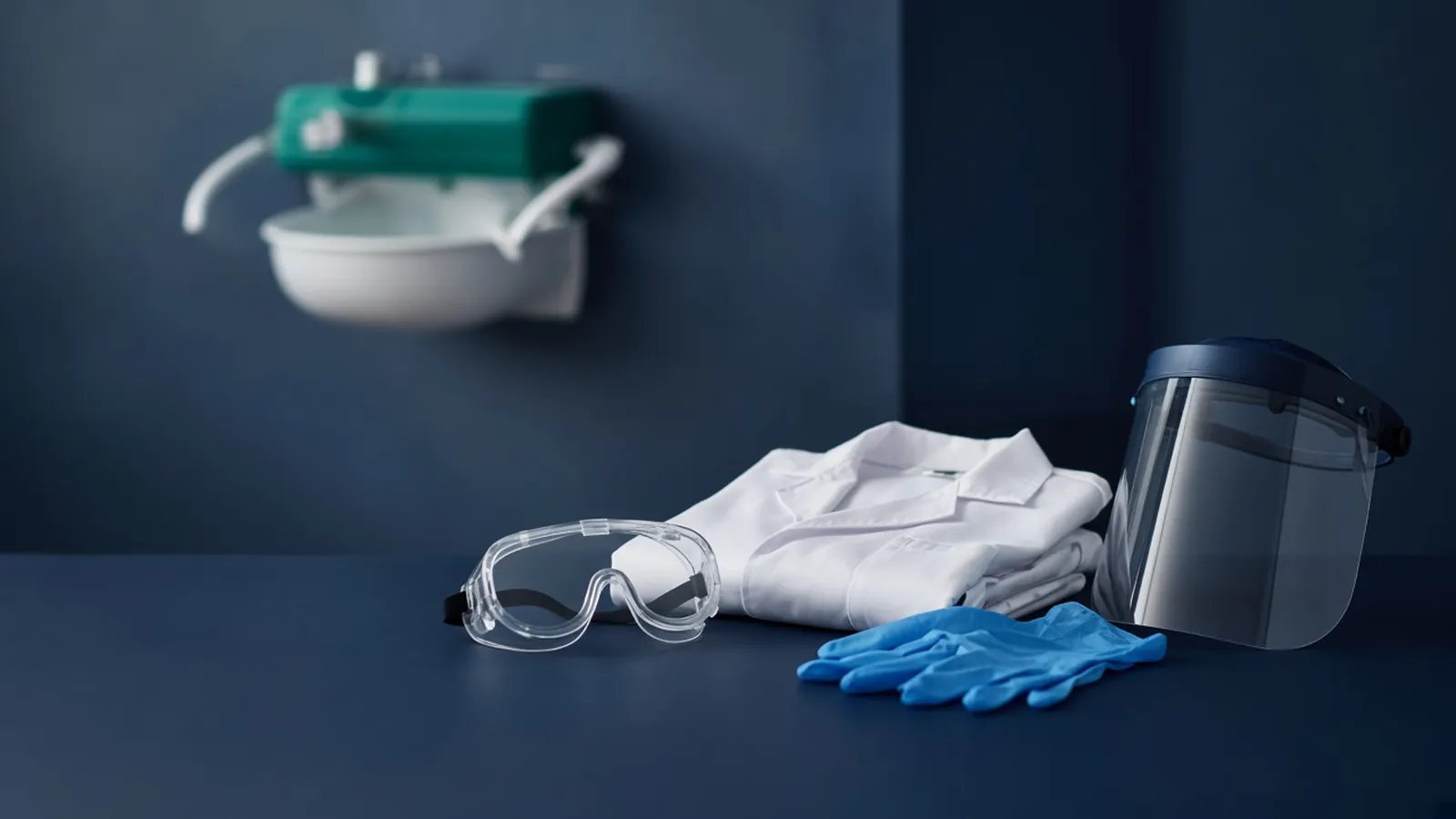
A biosafety level is a decision made by the institution that is responsible for the work. It is not a fact a culture flask can display, and it is not a fact a supplier, a catalogue or this article can assign. Public manuals describe levels so that committees can talk. The committee still has to look at the actual line, the actual construct, the actual sample and the actual procedure. The bench orientation for those ideas is biosafety basics for research benches. How a mammalian culture is kept once the assignment exists is mammalian cell culture for research labs. This page compares questions the institution must answer with questions a supplier is allowed to answer. It does not place any human sample into a level.
Educational descriptions, not assignments
In the manuals many laboratories teach from, Biosafety Level 1 is the set of practices for work with well-characterised agents not known to cause disease in healthy adult humans, built on standard microbiological technique. Biosafety Level 2 is the set of practices for agents associated with human disease of varying severity, where the main routes of exposure are often through skin, mucous membranes or ingestion, and where procedures that splash or aerosolise are done in a biological safety cabinet. Access, waste treatment and training are tighter than at the first level. These sentences are educational. They become an assignment only when your institution applies them, or applies a different national scheme, to a named piece of work.
The WHO Laboratory Biosafety Manual, fourth edition, is a public risk-based reference. Countries also keep their own manuals. In the United States, Biosafety in Microbiological and Biomedical Laboratories is widely cited. It is named here so you recognise it. It is not a link you should treat as your rulebook unless your institution says so. National rules apply and can differ in wording, in enforcement and in what they forbid. A sentence copied from another country's training slide is not your assignment.
Nothing in those descriptions tells you the level of a blood sample, a tumour culture, a viral vector or a gene-edited line you have not named to your own committee. Do not ask this page to finish that sentence. Do not ask a seller to finish it either. If the work is new to the building, the honest status is unassigned until the office writes something down. Unassigned is a reason to wait. It is not a synonym for the lower teaching level.
What changes the decision, and what does not
The institution looks at the agent or the material, the procedure, the staff, the room and the worst credible exposure. A procedure that aerosols a BSL-2 agent is not handled like a procedure that keeps it in a closed tube, even when the agent name is the same. Primary human material brings ethics and blood-borne hazard questions that a continuous epithelial line from a public collection may not. Those are reasons to open a local assessment. They are not reasons for an article to announce a level.
Confluence does not change the level. A full flask is not more BSL-2 than a sparse one. Passage number does not change the level, though a long, poorly recorded passage history can change how much you trust the identity of the line. Mycoplasma contamination is a quality and a practical containment problem. It is not, by itself, a new biosafety level written by the microbe's silence. Authentication, which ICLAC explains as an identity problem, answers whether the cells are who you think they are. Identity is an input to risk assessment. It is not a substitute for the assessment.
Personal protective equipment in the photograph — coat, eye protection, gloves, and a face shield where the procedure needs one — is what the local rules specify for the task. The picture is not a menu you mix. An eyewash nearby is a room fact your safety office cares about. It does not classify the vial.
A comparison of who may answer
Use the split when you write an email. If the question decides hazard, it stays inside the institution. If the question describes a product against an assignment you have already stated, a supplier may answer it.
| Question | Who can answer it | Who must not be asked to invent it |
|---|---|---|
| Which containment level applies to this line, vector or sample? | The institution, in writing | A supplier, a blog, or a catalogue filter |
| Which cabinet and which PPE does our assessment require? | The institution | A seller of plasticware |
| May this human specimen be handled at a level we have not assessed? | The institution, or the answer is no until they do | Anyone outside that assessment |
| What disinfectant and contact time do we use here? | The institution's procedure | A guess added to a purchase note |
| What sterile-barrier and surface treatment does this flask have? | The manufacturer, from their document | Your committee; that is not their job |
| What package and what paperwork can be discussed if we state our assignment? | A supplier, against the assignment you quoted | A supplier who is handed an unassessed sample and told to choose |
| What mycoplasma or identity document do you already hold for a collection vial? | The supplier, if they generated it and will share it | A supplier, if you want them to certify your own untested flask |
| Does a normal confluence mean the culture is harmless? | Nobody; the question is the wrong kind | The microscope |
The commercial use of the table is narrow and practical. A sourcing specification should repeat the biosafety assignment the institution has already made, so packaging, labelling and documentation can be discussed against a known constraint. A specification that asks the seller to pick the level is not ready to send. Culture guides from a public collection, such as the ATCC culture guides, may state handling precautions for lines they distribute. Read them as information from that collection. Your institution still adopts or overrides them. Workflow sites such as protocols.io can show how a method was done somewhere else. They are not your biosafety approval.
When the workflow must stop
If the material is already in the building and nobody can find a written assignment, stop treating it as an ordinary flask. Quarantine it physically in the way your safety office directs, and do not passage it into the shared incubator while you shop for plastic. If two documents disagree, the stricter local instruction wins until the office reconciles them. If a collaborator emails "it is only BSL-2 everywhere", that email is not your assessment. Ask your office to look at the material. A failed mycoplasma test or a lost passage record is a reason to pause the science. It is not a reason to rewrite the level in the margin of the notebook.
A control for this page is clerical. Before a purchase or a shipment, a second person should be able to point at the assignment in the file and at the same words in the enquiry. If they cannot, the enquiry is early.
Protective equipment does not travel as a suggestion
Gloves, coats and eye protection are chosen for the procedure the institution named. A face shield for one task is not a decoration for every task, and its absence is not something a general article should patch. Waste streams, spill response and occupational health follow the same local document. This comparison is not medical advice, not an exposure protocol and not permission to handle a pathogen because a paragraph sounded like your project.
Paper that has to cross a border or a city
Heat and humidity do not assign a level, but they do threaten the paperwork and the package. A shipment of culture plastic is not a shipment of cells. A shipment of cells or of primary material moves under transport rules your institution and the carrier already have to meet. Write the assignment you were given into the sourcing note so the packaging conversation has a starting constraint. Write the country and the institution as the authorities. A foreign manual attached as a PDF does not convert itself into local approval. Specify vessels, medium class and documents separately from containment, using the laboratory consumables catalogue only for the hardware classes. The academic research reference is a page for university-shaped briefs, not a safety certificate. Through the quote request you can ask whether packaging and documentation for an assignment you have already stated can be discussed. You cannot ask anyone in that conversation to choose the level, and no culture work is being offered in place of your committee.
Questions from the bench
Can a supplier tell us which biosafety level our cells need?
No. A supplier can describe a product, a package and a document they are able to provide. The containment assignment for a line, a virus or a sample is made by the institution that holds the work. Send the assignment you already have. Do not send a sample description and ask a seller to choose a level.
Are BSL-1 and BSL-2 enough categories for every culture?
They are teaching categories from public manuals, not a complete risk assessment. Higher containment exists for other hazards, and some work is forbidden in a given institution even when a label sounds familiar. Your biosafety office maps the actual material to local rules. This article will not do that mapping.
Does a clean flask or a normal confluence change the level?
No. Confluence, passage number and a clear medium describe the culture's condition. They do not describe hazard. A mycoplasma-positive flask may need a different practical response under the same assignment, such as discard rules, but the assignment itself came from the institution before the flask looked unhappy.
What should the sourcing line say about containment?
Quote the assignment your institution has already made, and ask what packaging and paperwork can be discussed for material under that assignment. Leave out any request for the seller to confirm that a human sample is safe or is a particular level. National transport rules still apply on top of the laboratory assignment.
References
Manufacturer names identify published method classes. Trademarks remain with their owners. Catalogue records on this site are independent references for enquiry. They are not a statement of inventory, distribution rights or a supply commitment. This page is educational. It is not medical advice, a diagnostic protocol or a biosafety approval.
Catalogue
Related products and categories
These links follow the subject of the article into published manufacturer references. A listing is a reference for an enquiry, not a statement of stock or distribution rights.
Continue in this cluster
Related reading
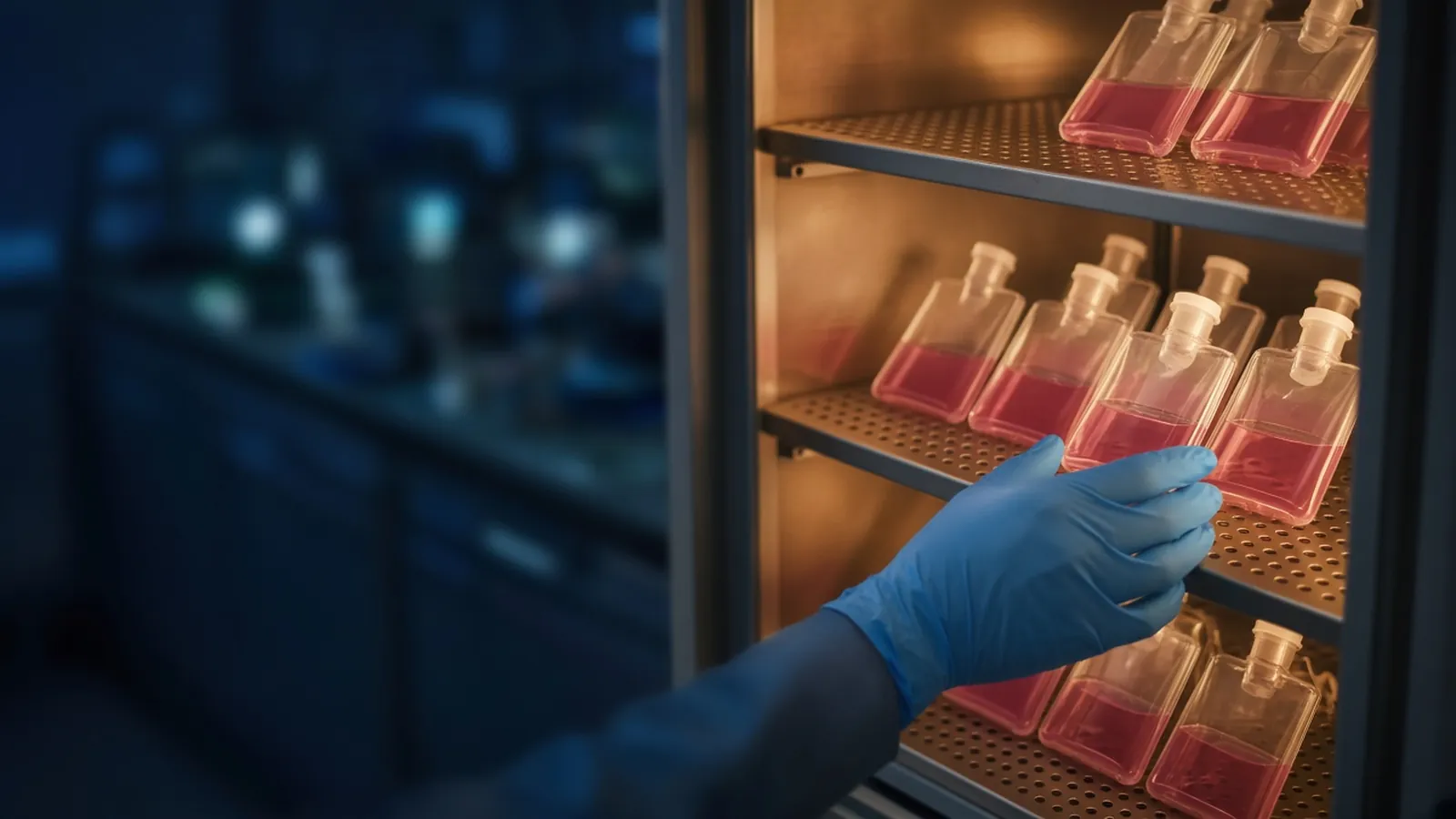 Mammalian cell culture for research labsHow research labs keep mammalian cell culture workable: medium, aseptic technique, confluence, passage records and contamination checks.Biosafety basics for research benchesResearch-bench biosafety is a stack of barriers chosen by a risk assessment. This page explains the stack. It does not approve the work.A glossary of culture termsPairs of culture words that laboratories mix up, and the wrong next action each pair causes, from confluence versus density through to confluent versus