
Pillar guide
Biosafety basics for research benches
Research-bench biosafety is a stack of barriers chosen by a risk assessment. This page explains the stack. It does not approve the work.
- Author
- EVRINTH Editorial Team
- Published
- 8 October 2026
- Updated
- 8 October 2026
- Reading time
- 10 min
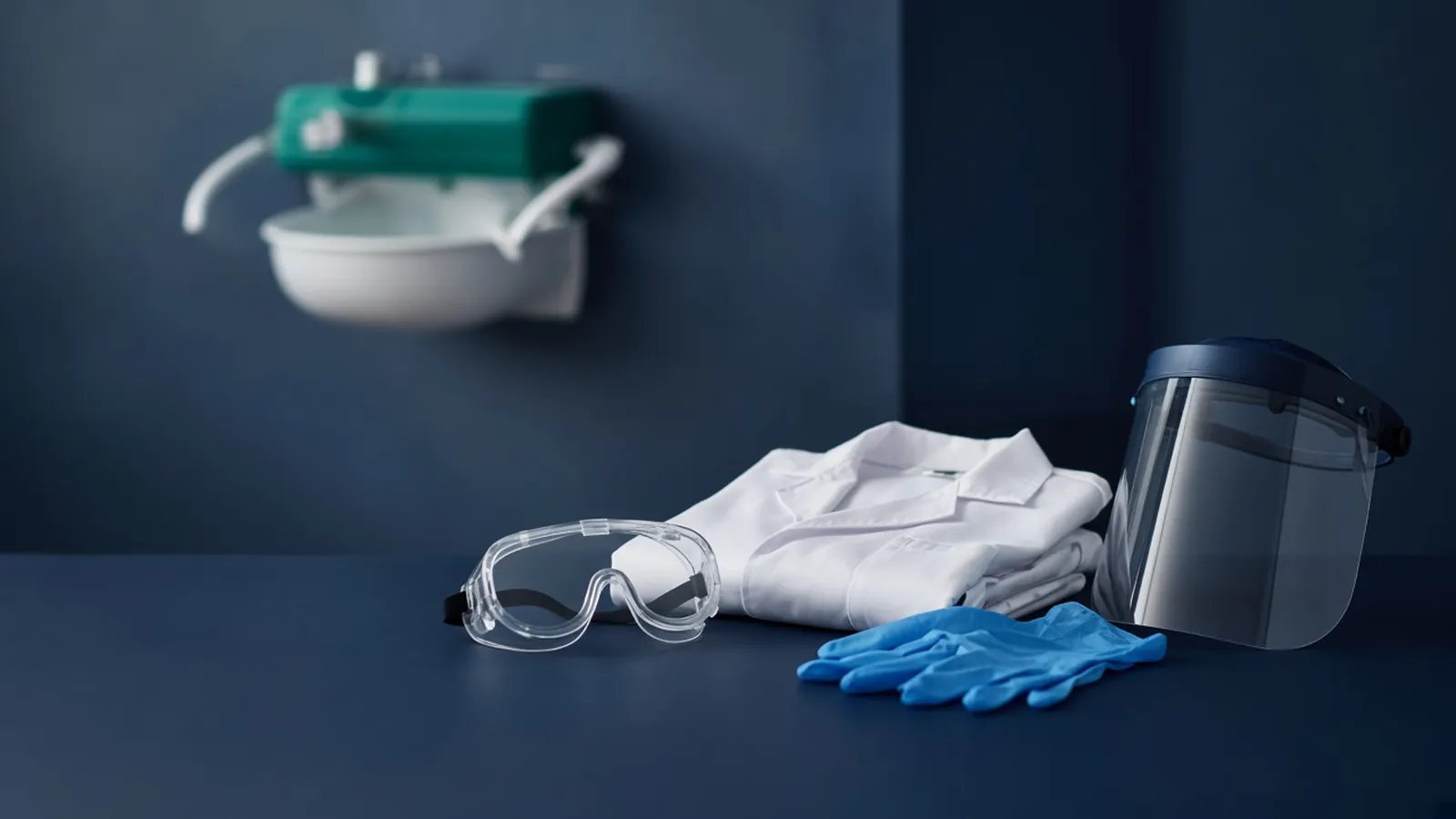
Biosafety basics for research benches are a way of thinking about how a biological agent could reach a person, leave the room, or spoil the work, and which barriers make that less likely. The barriers are chosen by a risk assessment. They are not chosen by a blog post, a catalogue photograph of goggles, or the fact that a neighbouring laboratory works at a particular containment level. This page explains the stack a bench scientist should be able to name. It does not approve an organism, a protocol, or a room.
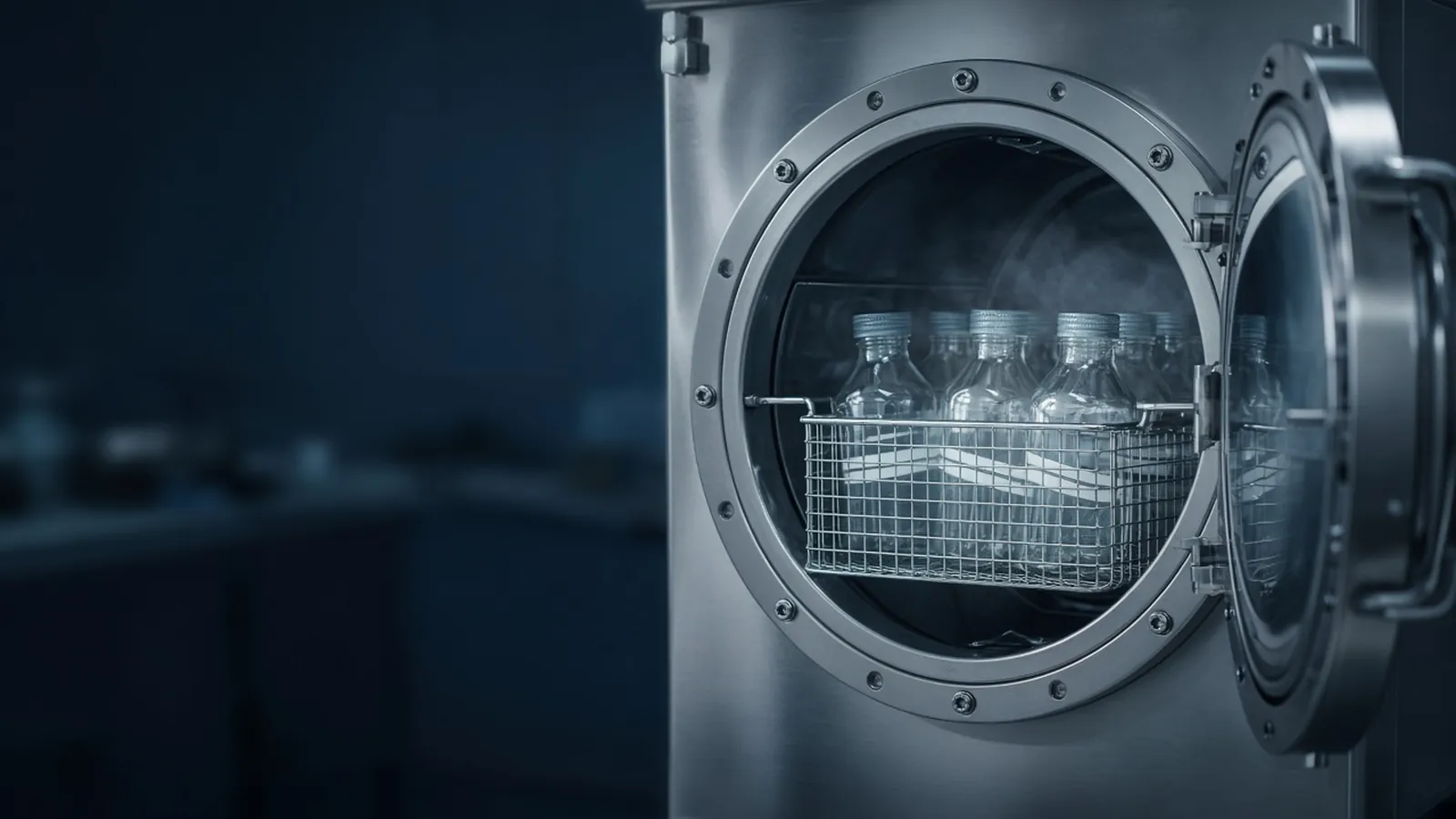
What steam sterilisation can and cannot finish is covered in autoclaves and what sterilisation does not do. Coats, gloves, eye protection and waste consumables are catalogue classes in laboratory consumables. A teaching laboratory that needs a documented enquiry path can start from academic research and a quotation request. A quotation is not a biosafety approval.
The decision this page supports
The decision is whether you understand which barrier is doing which job, so you can follow the assessment you were given and recognise when the work has drifted away from it. If you do not know the agent, you are not ready to choose gloves. If you know the agent and not the procedure, you still do not know whether the hazard is a splash, a cut, or an aerosol. Write both down before you open a tube.
Two public references frame the language laboratories already use. The WHO laboratory biosafety manual, fourth edition, emphasises a risk-based approach: the agent, the procedure, and the people, rather than a level number alone. The CDC Biosafety in Microbiological and Biomedical Laboratories describes containment practices and the familiar biosafety levels. Neither document is a permit for your building. Your biosafety officer, your institutional committee, and the law that applies where you work are the permit.
The stack, from the organism outward
The agent is the centre. A well-characterised strain that is not associated with disease in healthy adults is a different problem from a pathogen, a clinical specimen, or a recombinant organism the committee has not seen. Risk group is a property used in classification. It is not, by itself, the containment level of your experiment. The procedure can raise the risk: sonicating a culture, homogenising tissue, or centrifuging an open bucket creates aerosols that a closed plate does not.
Personal protective equipment is the closest barrier to your body. A fastened lab coat keeps everyday splashes off your clothes. Eye protection is for splashes, not for aesthetics. Gloves are for the task the assessment names, and they are removed before you leave the zone. A face shield is for operations with a larger splash or a cryogenic hazard, not a general upgrade you wear so the coat can stay open. PPE fails when it is the wrong material for the chemical as well as the organism. Nitrile resists many aqueous biological buffers and fails against some solvents. Read the chemical side too.
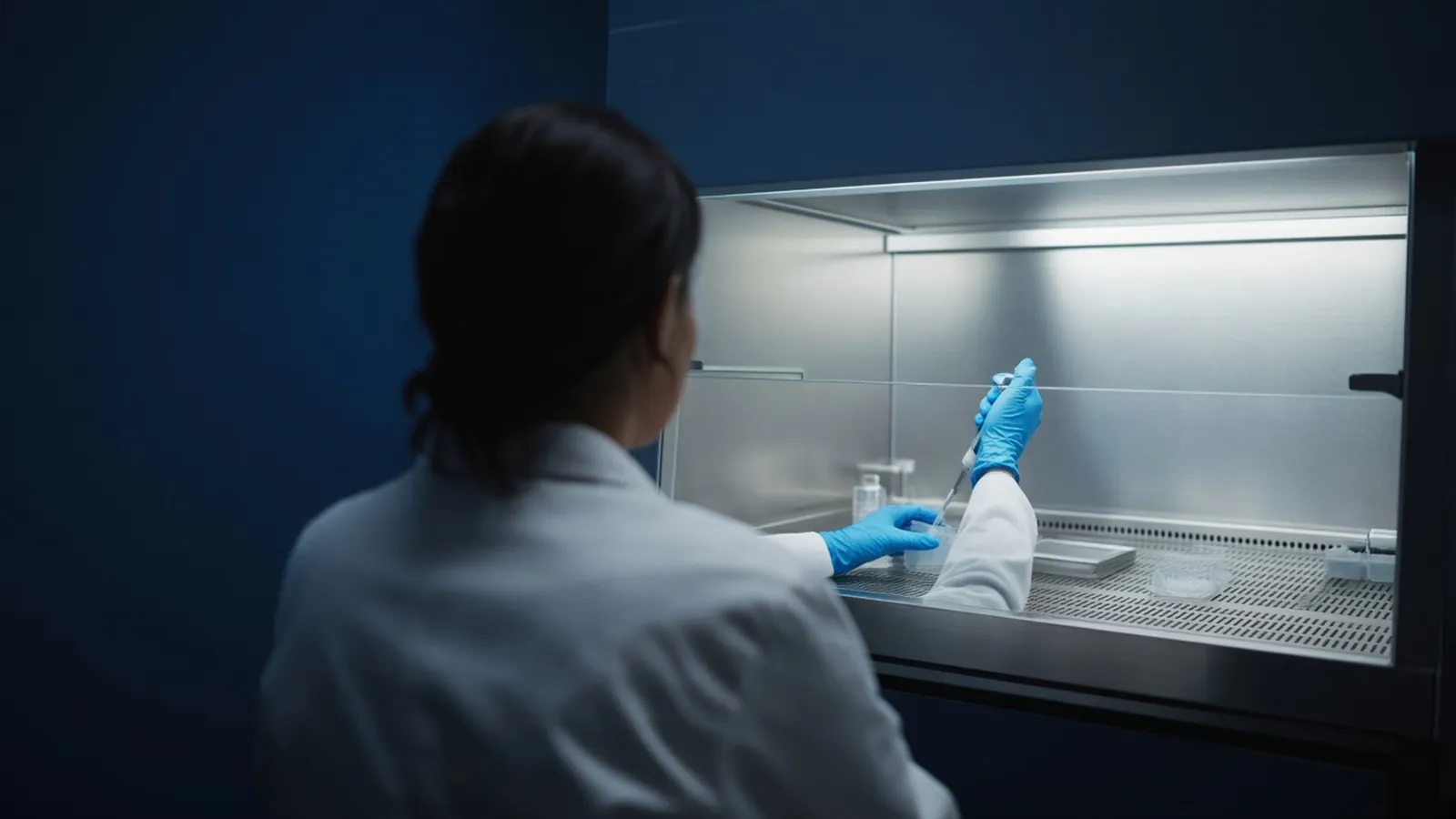
Primary engineering controls sit just beyond the coat. A certified biosafety cabinet contains aerosols from the work and, in the classes used for most research, protects the work as well. Certification has a date. A cabinet with a failed or expired certificate is a fan in a box until someone competent says otherwise. Airflow alarms exist to be obeyed. A bunsen burner inside a cabinet disturbs the airflow and is a fire risk. Follow the cabinet's own rules.
A chemical fume hood is a different machine. It pulls hazardous vapours away from the worker. It is not a sterile workspace and it is not a biosafety cabinet. A horizontal laminar-flow clean bench is a third machine. It protects a product from dust by blowing clean air outward, often toward the worker's face. It is useful for some clean assemblies of sterile, non-hazardous reagents. It is the wrong place to open an infectious culture.
Secondary barriers are the room: the sink, the eyewash, the door that closes, the bench surface that can be disinfected, the pest control, and the autoclave or the chemical waste path. An eyewash that is blocked by a freezer is not an eyewash. A sink used for tea is not a handwash. These are design facts a risk assessment is allowed to fail you for.
Administrative controls hold the stack together: training, access, medical surveillance where it is required, a spill plan, a waste plan, and the rule that a new experiment returns to the committee. They fail quietly. A written spill plan that nobody can find is not a control.
Bench habits that show up in almost every low-risk assessment
These habits are common because they are proportionate to a great deal of ordinary research. They still do not authorise you to begin a new organism.
Know what is in the tube, including a recombinant insert if there is one. Keep the door of the laboratory closed when the assessment says so. Do not eat, drink, apply cosmetics, or store food in the fridge that holds samples. Wash your hands when you leave. Keep pens and phones out of the contaminated zone, or accept that they are now contaminated and disinfect them by a method that actually works on that surface.
Plan sharps. Needles and blades cause the injuries that gloves do not stop. Use a sharps container at the point of use. Do not recap a needle with two hands if the laboratory has adopted a one-handed or a needle-free method. Do not walk across the room with an uncovered blade "for a second".
Respect aerosols. An open tube in a vortex, a cap popped off a warm culture, a loop that spatters when it is too hot, and a spill that dries and becomes dust are classic routes. Wait, wipe, and work inside the cabinet the assessment named. Centrifuge cups are opened in the cabinet when the assessment says the load may have leaked.
Disinfect the surface with an agent and a contact time that match the organism. Alcohol is rapid on many vegetative bacteria and a poor choice for some spores, and it is a fire hazard beside a flame. Bleach is useful in conditions the procedure must specify, and it corrodes metal and must not be casually mixed with acids or ammonia or sent into an autoclave. Read the disinfectant's instructions. "Spray and wipe immediately" is how contact time becomes zero.
Waste is decided at the start. Sharps go in a sharps container. Infectious solids go in the bag the autoclave procedure can accept, not overfilled, not mixed with a solvent. Chemical waste follows the chemical rule, which may forbid the autoclave entirely. The autoclave page explains why a striped tape is not the end of the argument.
| Barrier | The job it can do | The job it does not do |
|---|---|---|
| Lab coat, eye protection, gloves | Block splashes and contamination of skin and clothes | Stop a needle, stop a vapour, or classify the agent |
| Biosafety cabinet, certified | Contain aerosols from the work | Act as a fume hood for every chemical, or work when the certificate has lapsed |
| Fume hood | Pull hazardous vapours away from the worker | Provide a biosafety enclosure or a sterile field |
| Clean bench, air toward the user | Keep dust off a non-hazardous product | Protect the worker from an infectious culture |
| Autoclave | Sterilise a load that steam reaches, when validated | Approve the experiment, or remove every chemical hazard |
When a control fails
If you do not know the organism, stop and identify it before you invent a PPE list. A tube inherited without a label is a waste or a quarantine problem, not a favour to a colleague.
If the cabinet alarm sounds, stop the work, close the cultures, and tell the person responsible for the cabinet. Do not finish the plate "since you are almost done".
If a spill happens, follow the written spill plan: warn the people nearby, cover the spill, allow the contact time, then clean. Improvising with a dry paper towel aerosolises the surface. If the spill is large, or if it involves an agent you are not trained for, leave and get the biosafety contact. Heroism is not a barrier.
If a glove tears, remove it, wash, and replace it. If a splash reaches the eye, use the eyewash for the time the laboratory's rule states and report the incident. This article will not invent a treatment. Medical decisions belong to a clinician and to the occupational health process, not to a knowledge-centre page.
If a method you found on protocols.io skips containment, do not import the skip. Import the science and re-apply your assessment. Culture-collection documents, including the ATCC culture guides, state a biosafety level for the strains they hold. That statement is a starting point for your committee, not an automatic authorisation in your room.
India-relevant operational note
Recombinant DNA work and work with infectious agents in Indian institutions is reviewed through institutional biosafety committees and national guidelines. The committee's letter, not a local habit, is what allows a new construct or a new agent. Teaching laboratories that handle only well-characterised, low-risk material still need a written assessment, a working eyewash, and a waste path. Heat and humidity do not change the organism. They do make people prop doors open and disable cabinet sashes "for air". A propped door and a raised sash are failed controls. Power cuts stop cabinets and autoclaves mid-procedure. The written rule should say that an interrupted cycle or a stopped cabinet means the load is not finished.
Safety of the safety equipment
PPE itself has limits and burdens. A coat that brushes a bunsen is a fire. Gloves contaminated with a sensitising chemical become the exposure. Ultraviolet lamps fitted in some cabinets are an eye and skin hazard and are not a substitute for wiping the work surface. Do not bypass interlocks.
This page is educational. It is not medical advice, not an occupational-health opinion, and not a certification that a room meets any biosafety level. If the assessment is missing, the correct scientific act is to delay the experiment.
What to put in an enquiry
When you ask for coats, gloves, eye protection, disinfectants, sharps containers or waste bags, specify the hazard they must resist, the size, and the standard or performance you need. A glove that survives buffer may fail the solvent used in the same protocol. State that biosafety approval sits with your institution.
Use the quote form for those consumables, and use the academic-research path when the enquiry is about equipping a teaching bench with a coherent list. Do not ask a seller to assign a biosafety level. Ask them to confirm the material, the size, and the document that describes chemical resistance or sterilisation compatibility. Then take that document back to the risk assessment, which is where the decision was all along.
Separate a bench habit from an approval to start the work
- 01Name the agent and the procedure before the PPEWrite what the material is and which steps can splash, cut, or make an aerosol. A coat and gloves do not classify an organism. The institutional risk assessment does.
- 02Pick barriers that match those stepsUse a biosafety cabinet for work that needs containment of aerosols, a fume hood for hazardous vapours, and eye protection when a splash is credible. A clean bench that blows air at the worker is the wrong tool for an infectious culture.
- 03Fix the waste path before the first tube opensDecide what will be autoclaved, what will be chemically disinfected, and what is a sharp. Steam sterilisation has limits that the autoclave page explains. Do not discover the waste path at the end of the afternoon.
- 04Stop when the work changesA new organism, a new vector, a larger volume, or a move from a sealed plate to an open aerosol is a new assessment. The old PPE list does not travel with you automatically.
Questions from the bench
Does reading this page authorise BSL-2 work?
No. Biosafety levels and risk-based controls are assigned by your institution, using national rules and references such as the WHO laboratory biosafety manual and the CDC BMBL. This article explains ideas a bench scientist meets. It is not an approval, a training certificate, or a substitute for the biosafety officer.
Is a laminar clean bench the same as a biosafety cabinet?
No. A horizontal clean bench is built to keep dust off a clean product, and it blows air toward the person. A biosafety cabinet is built to contain aerosols, and it is used only while it is certified. Using a clean bench for an infectious culture protects the culture and exposes the worker.
Do gloves mean the bench is safe to touch afterwards?
No. Gloves pick up the organisms and the chemicals you handled. Touching a phone, a pen, or a door handle with a dirty glove moves that material out of the work zone. Remove gloves as the procedure says, wash your hands, and treat the eyewash and the sink as part of leaving, not as optional furniture.
Where does the autoclave fit?
An autoclave is one decontamination tool for loads that steam can actually reach, after they have been cleaned and packed for the cycle. It does not replace the risk assessment, and it does not prove a load is safe because indicator tape changed colour. Those limits are the subject of the autoclave article.
References
Manufacturer names identify published method classes. Trademarks remain with their owners. Catalogue records on this site are independent references for enquiry. They are not a statement of inventory, distribution rights or a supply commitment. This page is educational. It is not medical advice, a diagnostic protocol or a biosafety approval.
Catalogue
Related products and categories
These links follow the subject of the article into published manufacturer references. A listing is a reference for an enquiry, not a statement of stock or distribution rights.
Continue in this cluster
Related reading
 Autoclaves and what sterilisation does not doSteam sterilisation holds a cleaned load at temperature. It does not wash, remove endotoxin, or prove sterility because the tape changed colour.A glossary of biosafety termsPairs that share a bench still do different jobs. Use this comparison to choose the right word for a cabinet, a chemical, a level, or a control.
 Biosafety cabinets are not fume hoodsChoose a Class II cabinet, a chemical fume hood, or a laminar clean bench by what each airflow protects. HEPA filtration does not capture vapours.