
comparison
A glossary of biosafety terms
Pairs that share a bench still do different jobs. Use this comparison to choose the right word for a cabinet, a chemical, a level, or a control.
- Author
- EVRINTH Editorial Team
- Published
- 8 October 2026
- Updated
- 8 October 2026
- Reading time
- 11 min
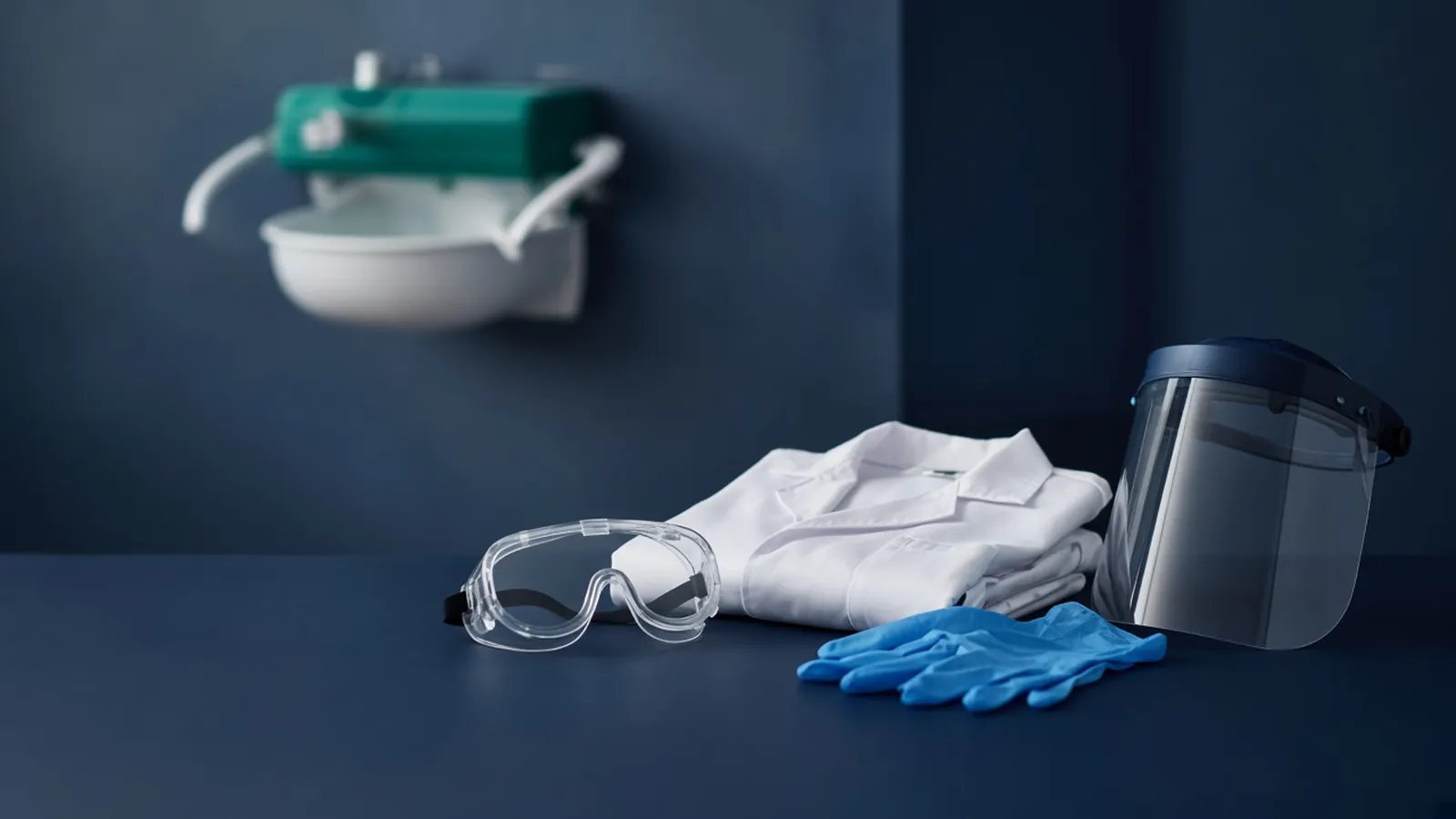
Two steel boxes can share a sash and a fan and still protect opposite things. If you are about to write hood on a sourcing note, the word is already too small. This comparison is for people who specify benches, consumables, and enclosures and need the pairs of biosafety words that get swapped on forms. The stack those words belong to is explained in biosafety basics for research benches. Coats, gloves, eye protection, and waste containers are classes in the laboratory consumables catalogue. A teaching-lab list can be discussed through academic research and a quotation request. None of those pages assigns a containment level.
The decision the words are for
You are deciding which noun is allowed to appear on an enquiry, a risk assessment, and a label, so that the thing which arrives can do the job you named. A wrong noun is not a style problem. It buys a clean bench for an infectious culture, calls a spray a sterilant, or treats a risk-group table as permission to start. The WHO laboratory biosafety manual and the CDC BMBL are the public language many committees already use. They are references for your institution. They are not a permit this article can issue.
Biosafety cabinet, fume hood, and clean bench
These three are confused because each is a box with a front opening and a motor. The air does different work.
A Class II biosafety cabinet, the enclosure most culture rooms mean, draws room air in at the front so aerosols have a path that does not lead at the operator, and it pushes filtered air down over the work. Many units return a large share of air to the room after a HEPA filter. A HEPA filter stops particles. It does not stop solvent vapour. How to sit inside one, and when to stop, is the subject of working inside a biosafety cabinet. This page only asks you to stop calling it a hood.
A chemical fume hood pulls air from the room, across the work, and out through a duct. It is built to take vapour away from the breathing zone. The flow is turbulent on purpose. It is a poor place to keep an open flask free of particles, and it is not a biosafety cabinet. Parking an infectious culture there because the sash looks similar protects neither the worker in the way a cabinet does nor the culture.
A laminar clean bench, often horizontal, bathes a product in filtered air and commonly blows that air out toward the person. It is a rational tool for assembling sterile, non-hazardous reagents when the assessment has already said the product is the thing at risk and the person is not. It is the wrong tool the moment the material can infect. The air that keeps the agar clean is the air that can carry an aerosol into the room.
The branch is blunt. If the assessment names an aerosol from a biological agent, you are in cabinet territory, and only a cabinet your institution has accepted for that work. If the assessment names a volatile hazardous chemical, you are in fume-hood territory, with the duct and the face-velocity check the chemical plan requires. If you need both particle control and vapour capture, that is a facilities decision about a ducted cabinet or a different process. It is not solved by the nearest sash. If the only need is dust off a non-hazardous product, a clean bench may be the honest machine, and it should be labelled so nobody later opens a culture in it because it was free.
Disinfectant and sterilant
Both words promise that microbes are dealt with. They promise different endings.
A disinfectant is a chemical used on a surface or, in some claims, in a liquid, to reduce organisms to the level the product states, for the organisms it lists, after a contact time, on a surface that is not buried in soil. Seventy percent ethanol is a familiar bench example. It evaporates, it fails against some spores, and it is a fire hazard beside a flame. Bleach solutions are another class. They are useful only in the conditions the procedure specifies, they corrode metal, and they must not be mixed with acids or ammonia or sent casually into an autoclave.
A sterilant is a chemical process claimed to destroy microbial life, including bacterial spores, when the surface is clean and the contact conditions are actually met. That is a harder claim. It still is not the same object as steam sterilisation of a load, which is a physical process with its own indicators. Calling every spray a sterilant lets people skip the contact time and skip the question of spores.
The confusion shows up in a sentence like "I sterilised the bench with a quick spray." If the cloth moved at once, you did not even meet a disinfectant contact time. Soil left underneath the spray protects organisms from both words. The branch when the control fails: if you cannot name the agent, the product, and the wet time, you do not have a disinfection step yet. Stop and read the laboratory procedure. Do not upgrade the verb to sterilise to make the note sound stricter.
Hazard and risk
Hazard is what the thing can do. Risk is the chance and the severity of harm given how you actually handle it.
Concentrated hydrochloric acid is a hazard whether the bottle is closed in a cabinet or open beside your eyes. The risk of those two scenes is not the same. A well-characterised bacterial strain is a different hazard from a clinical specimen, and a closed plate is a different risk from the same strain in a sonicator. People write "this chemical is high risk" when they mean the intrinsic hazard is serious, then they skip the procedure, the volume, the route, and the controls. The assessment gets a label and no analysis.
Use hazard when you are naming the agent, the chemical, or the energy. Use risk when you are naming the procedure: volume, aerosol, sharps, who is present, and which barriers are in place. A spill plan is a risk control for a named hazard. It is not a synonym for the hazard. If the procedure changes, the risk line is rewritten even when the bottle's hazard has not.
Biosafety level and risk group
Risk group is a scheme for classifying an agent, often from the disease it can cause, how it spreads, and whether prevention or treatment exists. Biosafety level is a description of how a laboratory works: practices, safety equipment, and facilities. The CDC BMBL describes the familiar levels. The WHO manual presses a risk-based reading so that a level number is not treated as a complete assessment.
The mix-up is the sentence "it is risk group 2, so we are a BSL-2 lab and we may start." Risk group does not authorise the room. A procedure that makes aerosols, uses sharps, or scales the volume can demand more than the habits people casually attach to a level. A level assigned to a different protocol does not travel with the organism into a new method. Your committee writes the assignment. A blog, a neighbour's door sign, and a product page do not.
If you cannot point to the document that assigned the level for this procedure, you do not have a level. Pause and find the assessment. Do not average two numbers from two doors.
Personal protective equipment and engineering control
Personal protective equipment is worn. A fastened coat, eye protection, and the glove polymer the chemical and the organism both allow are typical pieces. They are the last layer, close to the body, and they fail open: a tear, a gap at the wrist, a glove that then touches a phone. Nitrile handles many aqueous biological solutions and fails against some solvents. Eye protection is for splashes. A face shield is for a larger splash or for cryogenic work when the assessment says so. None of these classifies the agent.
An engineering control changes the equipment or the room so the hazard is less able to reach people. A certified biosafety cabinet, a ducted fume hood, a centrifuge with sealed cups, a guarded needle device, and an eyewash that is actually reachable are in this family. They still fail when they are switched off, blocked, uncertified, or the wrong machine. They do not fail in the same way a glove fails, and they should not be specified as if they were gloves.
Administrative controls are the rules: training, access, the waste path, the spill plan. They are not PPE and they are not a cabinet. A written rule nobody can find is not yet a control. When you enquire, say which of the three you are buying. A box of gloves does not certify a cabinet, and a cabinet does not train the user.
| Pair people swap | What the first term is doing | What the second term is doing | The specification error |
|---|---|---|---|
| Biosafety cabinet / fume hood / clean bench | Cabinet: aerosols and, typically, the product | Hood: vapour. Clean bench: product, air often outward | One sash ordered for three jobs |
| Disinfectant / sterilant | Reduction claimed for named organisms and a wet time | A sterilising claim, including spores, on a clean surface | A dry spray written up as sterile |
| Hazard / risk | What the agent or chemical can do | Chance and severity given this procedure | A hazard label with no procedure |
| Risk group / biosafety level | A classification of the agent | Practices, equipment, and facilities for the work | A table used as a permit |
| PPE / engineering control | Worn barrier on the person | A machine or device that contains the hazard | More gloves ordered instead of containment |
A worked specification, and the branch when the word is wrong
A teaching lab wants one enclosure for three afternoon jobs: pouring sterile agar that contains no infectious agent, opening cultures of a non-pathogenic laboratory bacterium the committee has already assessed, and staining slides with a volatile solvent. One purchase cannot be all three. Agar pouring, if the assessment agrees the product is the only concern, can sit at a clean bench. The cultures belong in the cabinet the assessment named. The solvent belongs in a ducted hood. Write three lines. If the budget allows only one machine this year, the branch is to drop or relocate a job, not to rename the machine until the sentence sounds affordable.
The same habit appears in consumables. An enquiry for a "sterile disinfectant, assorted" will be guessed. Name the surface, the organisms the procedure cares about, the contact time you will actually allow, and whether you need a disinfectant or a sterilant. Name the glove polymer against both the buffer and the solvent. State that biosafety approval stays with your institution.
Failure modes that start as vocabulary
The clean bench inherits a culture because the previous user called everything the hood. Ethanol is logged as a sterilant and the wet time is never written. A risk-group printout is pinned up and treated as the assessment. Gloves are doubled while the cabinet alarm is silenced. Each is the nearer word used for the harder job.
Heat and humidity do not change the definitions. They do make people prop a sash open "for air." In a specification for a warm building, say which enclosure is ducted, where fan heat will go, and that a raised sash is a failed control. Power cuts stop cabinets and hoods. The written rule should say that a stopped fan ends the session.
What this page does not do
It does not approve an organism, a room, or a person's fitness to work. It does not replace the biosafety officer, the chemical hygiene plan, or a clinician. Spill response, including which absorbent and which contact time, is the laboratory's procedure. Reading the pairs does not give permission to proceed with a new agent. If the assessment is missing, the scientific act is to wait.
What to put in an enquiry
Use the precise pair. For an enclosure, state what must be protected: the user from vapour, the user and the product from aerosols, or only a non-hazardous product from dust. Ask which test document the laboratory will want to see after installation, and who maintains it. For consumables, state glove polymer, eye protection, disinfectant or sterilant claim, surface, and contact time. Point the note at the consumables catalogue and send it with the quote form. Ask a seller to confirm material and documents. Do not ask a seller to assign a biosafety level or to decide that a clean bench is close enough.
Questions from the bench
If a form says hood, which machine should the enquiry name?
Name the job, then the machine class. A chemical fume hood moves vapour away from the breathing zone. A biosafety cabinet is for aerosols and, in the classes used for most culture work, for the product as well. A clean bench keeps dust off a non-hazardous product and often blows air toward the person. Hood is too small a word to buy any of them.
Is seventy percent ethanol a sterilant because the bench looks clean afterwards?
No. A rapid alcohol wipe is a disinfectant step only for the organisms and the contact time its claim covers, and wiping at once can make that time zero. A sterilant is a different claim: a process intended to destroy microbial life, including spores, on a surface that was cleaned first. The label and your laboratory procedure decide which word is honest.
Does a risk-group number set the biosafety level of the experiment?
It does not, by itself. Risk group is a classification of the agent. Biosafety level is the set of practices, equipment, and facilities chosen for a procedure. The same agent can sit in a different arrangement when the procedure changes, and your institution assigns that arrangement. This page does not.
Can a thicker glove replace a cabinet?
No. Gloves are personal protective equipment. They sit on the person and fail when they tear, when the wrong polymer meets a solvent, or when a contaminated glove touches a door. A cabinet is an engineering control. It changes the air around the work. Specifying more gloves when the missing control is containment is a category error, not a bargain.
References
Manufacturer names identify published method classes. Trademarks remain with their owners. Catalogue records on this site are independent references for enquiry. They are not a statement of inventory, distribution rights or a supply commitment. This page is educational. It is not medical advice, a diagnostic protocol or a biosafety approval.
Continue in this cluster
Related reading
Biosafety basics for research benchesResearch-bench biosafety is a stack of barriers chosen by a risk assessment. This page explains the stack. It does not approve the work.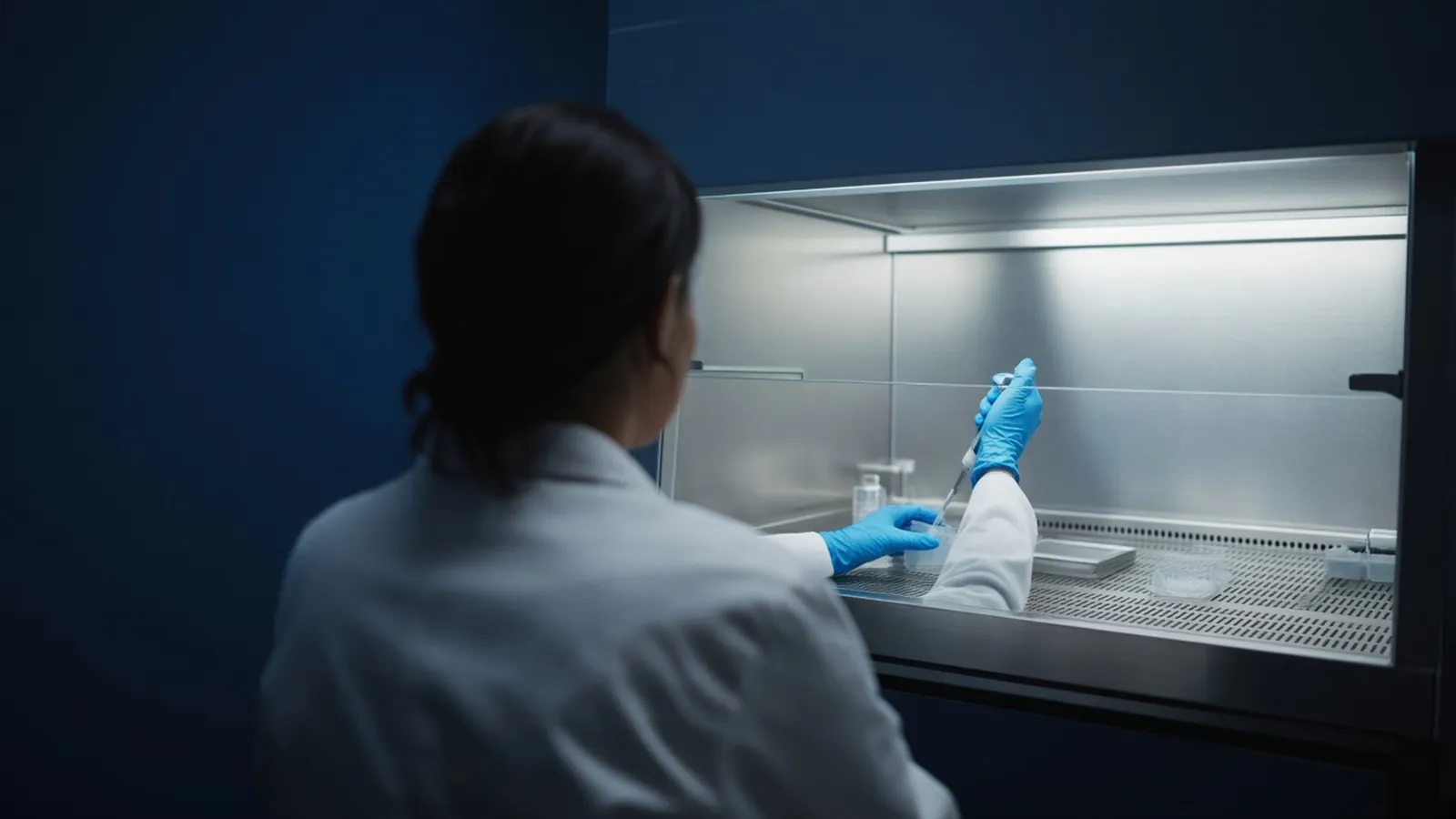 Working inside a biosafety cabinetHow a Class II biosafety cabinet moves air, how that differs from a chemical fume hood, and which habits keep cultures and workers protected.
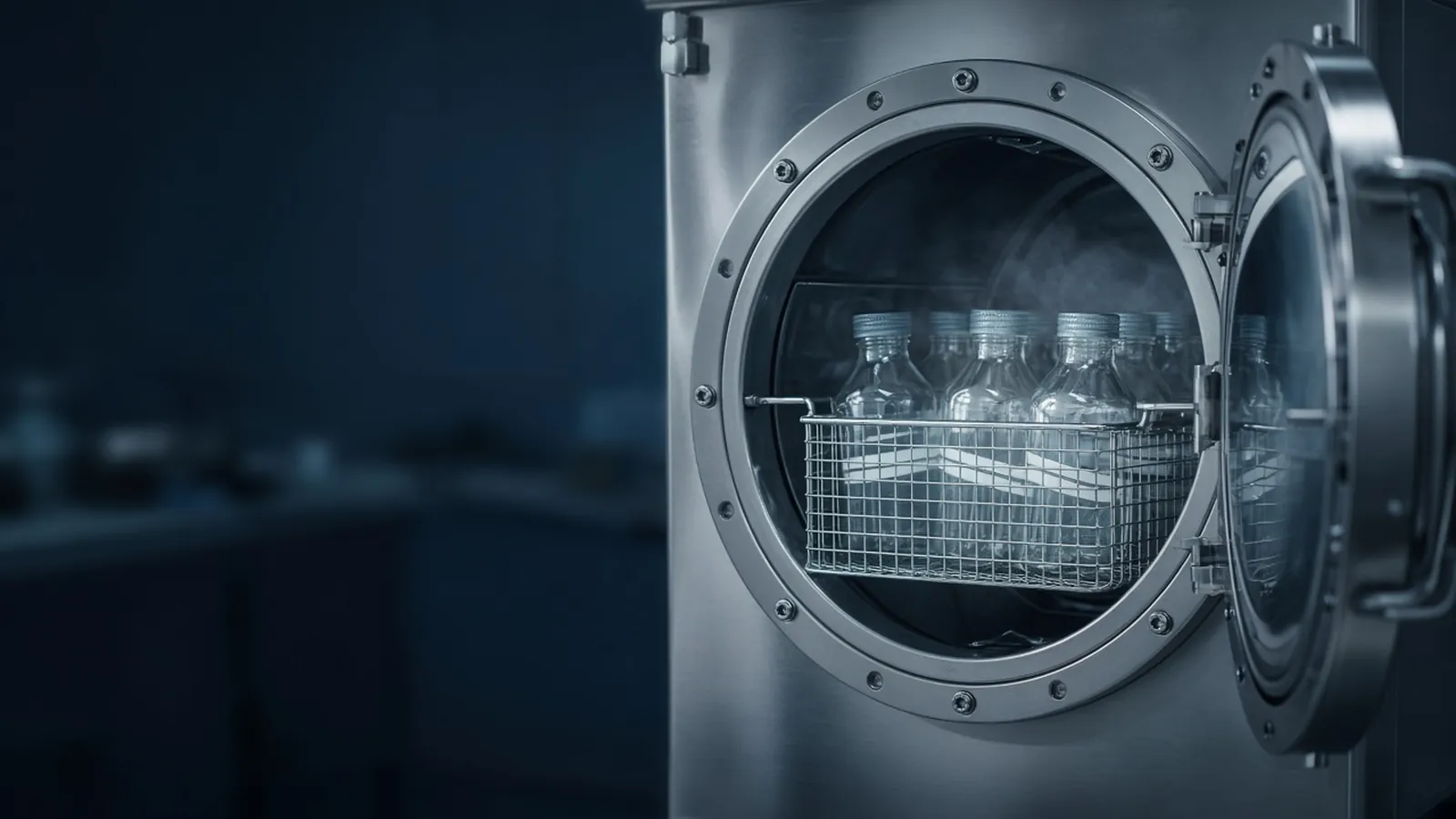 Autoclaves and what sterilisation does not doSteam sterilisation holds a cleaned load at temperature. It does not wash, remove endotoxin, or prove sterility because the tape changed colour.