
guide
Autoclaves and what sterilisation does not do
Steam sterilisation holds a cleaned load at temperature. It does not wash, remove endotoxin, or prove sterility because the tape changed colour.
- Author
- EVRINTH Editorial Team
- Published
- 8 October 2026
- Updated
- 8 October 2026
- Reading time
- 11 min
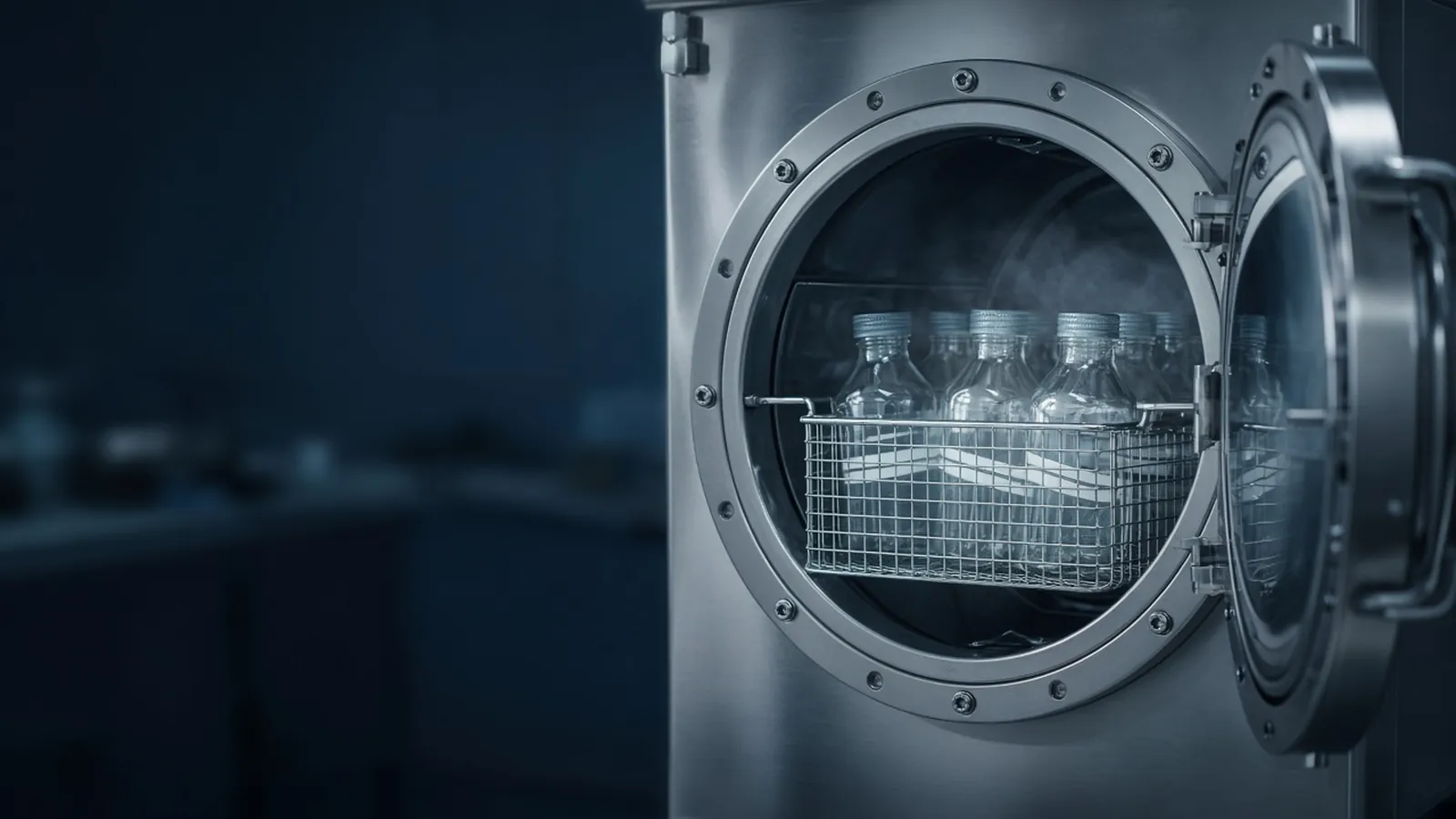
Autoclaves and what sterilisation does not do is a distinction worth making before you trust a striped bag. An autoclave kills microorganisms with saturated steam under pressure, held at temperature, in a load that steam can actually reach. That is a powerful and limited tool. It does not wash, it does not reliably destroy endotoxin, it does not inactivate prions on a routine cycle, and it does not prove the centre of the load was sterile because tape on the outside changed colour. The risk assessment that decided the waste should be autoclaved at all sits in biosafety basics for research benches.
Bags, indicators and containers are consumable classes in the laboratory consumables catalogue. The machine itself is an instrument class in the scientific instruments catalogue. A teaching-lab specification can be discussed through academic research and a quotation request. A seller cannot approve your waste stream.
The decision you are supporting
You are deciding whether this load is a candidate for steam, how it must be packed, and which indicator is allowed to release it. If the answer is that steam cannot reach the soil, that the load is a chemical the autoclave must not heat, or that the goal is depyrogenation rather than sterilisation, the autoclave is the wrong machine. Choosing it anyway produces a warm hazard with a scientific name it has not earned.
Public biosafety references treat autoclaving as one decontamination method inside a programme. The WHO laboratory biosafety manual and the CDC BMBL are the right kind of reading before a local procedure is written. They are not a cycle recipe for your particular machine. The machine's own validation, and the load you actually run, decide the time and the temperature.
How saturated steam kills
At atmospheric pressure, water boils at 100 °C. In a closed chamber, raising the pressure lets steam exist at a higher temperature. Many research and clinical cycles are built around a set point near 121 °C, sometimes higher, with a holding time that is defined at temperature. The number on the panel is the chamber, or a sensor in a drain, depending on the design. The organisms are in the load. The load lags the chamber, especially if it is a large volume of liquid or a dense bag of waste.
Steam kills by transferring heat as it condenses, coagulating proteins and disrupting the structures microbes need. Dry heat at the same temperature is less effective for sterilisation because it transfers more slowly. That is why trapped air is a failure, not a detail. Air insulates. A pocket of air in a bottle, a bunched bag, or an overloaded basket can leave the centre below temperature while the display looks finished. Pre-vacuum cycles exist to remove air before steam is admitted. Gravity cycles rely on steam displacing air downward and out. Using the wrong cycle for the load is a classic false pass.
The holding time starts when the load is at temperature. A twenty-minute programme that begins when the chamber first touches the set point may have given a large flask a much shorter true hold. Liquids need a slow exhaust at the end. A fast exhaust makes them boil over, wet the packs, and sometimes erupt when they are disturbed. Dry goods can often use a faster exhaust and a drying phase. Mixing a loose bin of pipette tips with a trolley of media flasks is how both loads get the wrong ending.
What the cycle does not do
It does not clean. Agar, blood, and protein soil shield organisms and keep steam from the surface. Wash glassware and instruments first. A dirty flask that comes out with a passed indicator tape may still have failed in the dirt. The tape never looked inside the soil.
It does not reliably remove bacterial endotoxin. Lipopolysaccharide is much more heat-stable than a vegetative cell. Sterile and pyrogen-free are different specifications. Where glassware must be depyrogenated, laboratories use a validated dry-heat process at a far higher temperature than an autoclave. Do not offer a research autoclave cycle as that process.
It does not inactivate prions on a routine microbiological cycle. Prion decontamination, where it is relevant at all, is a separate institutional protocol with harsher conditions and often with disposal rather than reuse. If you do not have that protocol, you do not improvise one from a media cycle.
It does not make chemical waste safe. Organic solvents, volatile toxic compounds, and bleach do not belong in the chamber. Hypochlorite corrodes stainless steel and can liberate chlorine, particularly if it meets acid. Radioactive waste follows the radiation rule, which may forbid steam. The chemical disposal procedure wins. An autoclave is not an incinerator.
It does not accept every plastic. Some tubes and racks melt and then coat the drain. Use containers the maker rates for autoclaving, and do not fill bottles to the cap. Liquids expand. A sealed, overfilled bottle can burst. Loosen caps so steam can move, unless the container's own validated method says otherwise.
It does not prove sterility because the tape striped. Autoclave tape and other external indicators show that the outside reached a condition that changes the dye. Chemical integrators placed inside a pack are a stronger process check and still not a biological result. A biological indicator carrying resistant bacterial spores, commonly Geobacillus stearothermophilus for steam, placed at the hardest location, is how you challenge the cycle. If the indicator grows after incubation, the load is not released. You review packing, air removal, timing, and the autoclave's maintenance. You do not average a failure into a success.
It does not certify a PCR-clean laboratory. Killing cells is not the same as destroying every amplifiable DNA fragment. Post-PCR waste can remain a contamination problem for a later amplification even after a cycle that passed a spore test. The contamination plan for nucleic-acid work still applies. Methods collected by Addgene assume that plan. They do not assume the autoclave solved it.
It does not leave every recipe unchanged. Sugars caramelise. Some buffers shift pH. Antibiotics and heat-labile supplements are often filter-sterilised and added after the agar has cooled. A medium that was "sterilised" into uselessness is a failed preparation, not a successful cycle. Recheck pH and performance when the composition is heat-sensitive.
It does not replace personal protective equipment or the risk assessment. Unloading is a burn hazard. The assessment still decides who may run infectious waste, what is recorded, and which loads are forbidden.
| Indicator | The question it can answer | The question it leaves open |
|---|---|---|
| Tape or external dye | Did the outside of this pack see a triggering condition? | Was the centre sterile? |
| Chemical integrator inside the pack | Did the inside see a defined steam exposure? | Would a resistant spore in the worst location have died? |
| Biological indicator | Could this cycle kill the challenge spores where it was placed? | Every other load packed differently, or a chemical hazard |
| Chart or digital record | What temperature and pressure did the sensor see, and for how long? | Whether the sensor represents the load centre |
A workflow with branch points
Sort the load before you walk to the machine. Liquids, dry sterile goods, and infectious waste are different cycles. If a bag contains a solvent bottle or a bleach-soaked cloth, it does not go in. Remove those items and use the chemical waste path.
Clean what should be cleaned. Loosen caps. Leave headspace in liquids. Arrange bags so steam has a path, and do not compress waste into a single anaerobic brick. Place the biological indicator where you have validated the challenge, not where it is convenient to fish out.
Choose the cycle the validation named. Start it. If power fails mid-cycle, the load is not done. Do not invent the remaining minutes from memory. The written rule should say to restart a defined cycle or to hold the load as contaminated and ask the responsible person. After a power cut, a "probably it finished" is not a release.
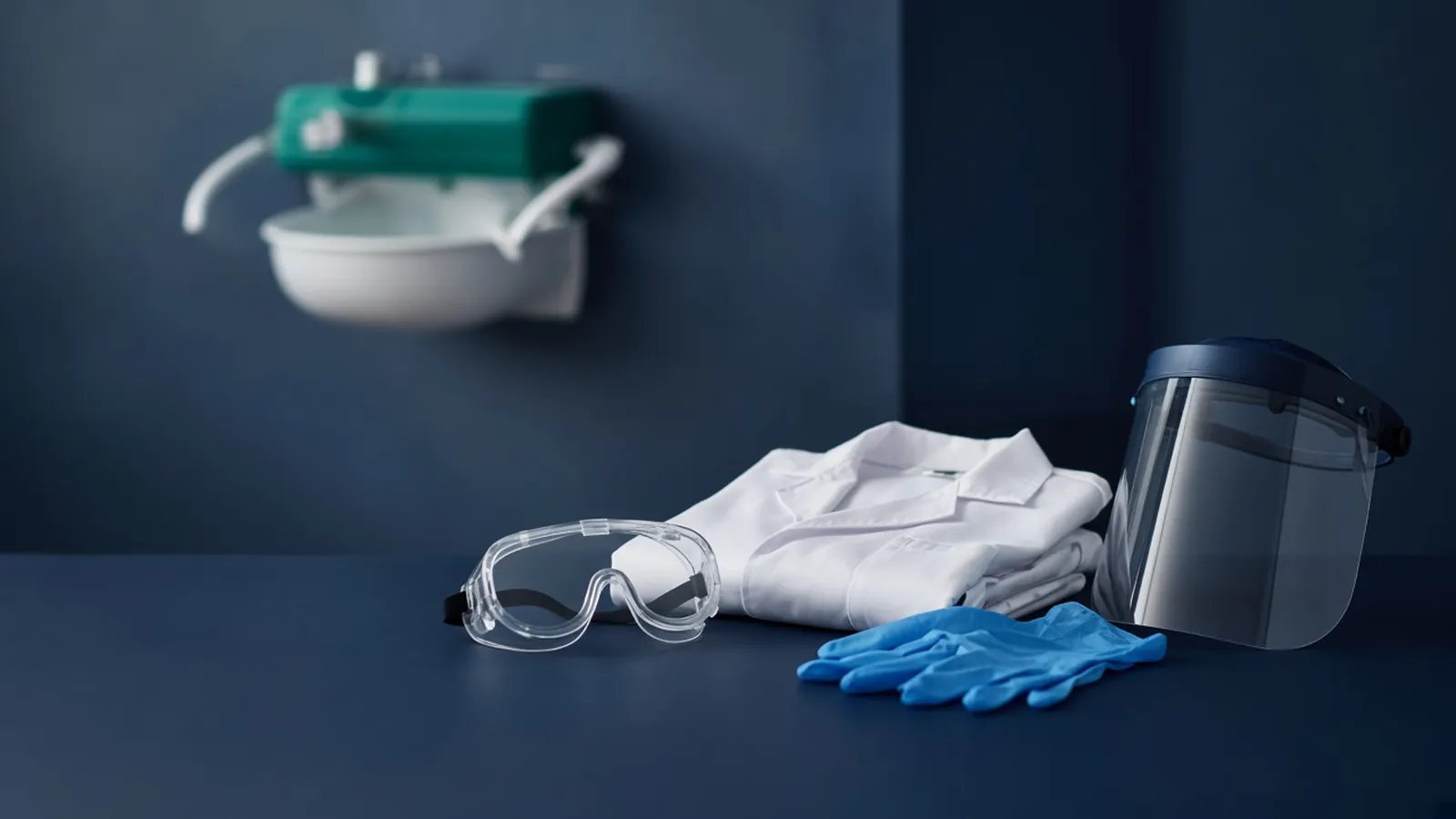
Unload with heat-resistant gloves, a visor if the laboratory requires one, and patience. Superheated liquids can boil up when nudged. Let flasks stand. Do not lean over the chamber. A cracked bottle is now a sharp as well as a burn.
Incubate the biological indicator for the time and temperature its instructions state, with a non-autoclaved control from the same lot so you know the spores were alive to begin with. Growth in the test indicator fails the load. Growth only in the control, and a satisfactory chart, supports release of that load. A control that does not grow tells you nothing: the indicator lot may have been dead already.
Record the date, the cycle, the load type, and the indicator result. A machine log that nobody reads is not a quality system.
Failure modes that look like bad luck
Chronic wet packs mean the drying phase, the way items are stacked, or a steam quality problem. A damp pack is not a sterile barrier once hands and benches touch it. Unwrap, dry by a validated route, or resterilise. Do not put a wet "sterile" flask on a dusty shelf and call it done.
Melted plastic and a blocked drain are maintenance events. The next cycle will trap more air and more water. A gasket that leaks prevents pressure and temperature from holding. Listen to the users who say the door drips.
Overloading is cultural. It feels efficient and it is the reason indicators fail on busy afternoons. Run two cycles. The organism in the centre of the bag is not impressed by the queue.
Media that comes out brown and sweet-smelling has been cooked. Split the recipe. Autoclave the part that tolerates heat. Add the rest through a filter afterward, using aseptic technique. Culture-collection recovery notes, including the ATCC culture guides, assume the medium still works. A caramelised sugar is not that medium.
Heat, humidity, and unreliable power
In a humid season, packs that leave the chamber damp stay damp. Plan drying time and a clean surface to cool them. Do not store "sterile" goods in an open basket under a drip. Ventilation and a working drain matter more when the room itself is hot, because the autoclave rejects heat and moisture into that room.
Power that drops during the hold is an incomplete process. Write the rule before the monsoon week, not during it. A smaller, honest load that matches a cycle you can finish is better than a packed chamber you have to guess about. Maintenance of gaskets, drains, and the recorder is an enquiry item, not a luxury, because an unmaintained autoclave fails by looking normal.
Safety
Steam burns are severe. Delayed eruptive boiling of liquids is a known autoclave injury. Wear the personal protective equipment the assessment names for unloading. Do not override a door interlock. Do not autoclave a sealed vessel. Training is part of the method: an untrained user with a passed tape is how the wrong chemical enters the chamber.
This page is not an instruction to sterilise a particular pathogen, not a validation report, and not medical advice after a burn. Report injuries through the laboratory's process. The risk assessment remains the authority on which waste may be treated this way at all.
What to put in an enquiry
Specify the chamber size, liquid and dry-goods cycles, a recorder for temperature and pressure, the electrical supply, ventilation, and drainage. Ask how the user can tell a cycle failed. For consumables, specify autoclave-rated bottles, waste bags of a stated size, and biological indicators for steam, including the organism and the incubation the instructions require. State that your institution approves the waste procedure.
Send the note through the quote form. Compare quotations on cycle types and on documents, not on an adjective such as automatic. Then write the local packing rule, because the machine cannot see the air pocket you packed into the bag.
Decide whether a load is a candidate for steam sterilisation
- 01Separate cleaning from sterilisingWash soil, agar and protein off the items first. Steam does not scrub. A dirty load can protect organisms in the dirt even when the chamber display looks correct.
- 02Reject loads that steam should not seeKeep solvents, volatile toxic chemicals, bleach-soaked waste, and materials your chemical disposal rule forbids out of the autoclave. A routine cycle is also not a prion method and not a depyrogenation method.
- 03Pack so steam can reach the hardest pointLoosen caps, avoid sealed bottles, and do not overload the chamber. Liquids need a slow exhaust. The holding time starts when the load is at temperature, not when the panel first reaches the set point.
- 04Read an indicator that matches the questionTape on the outside shows that the outside saw heat. A biological indicator in the hardest location challenges the cycle. If that indicator grows, treat the load as not sterilised and review the pack and the machine.
Questions from the bench
Does a colour change on autoclave tape mean the load is sterile?
No. Tape is a process indicator. It reports that the outside of the pack was exposed to conditions that change the ink. It does not measure the centre of a liquid, a bag of waste, or a crowded basket. Biological indicators are how a laboratory challenges whether the cycle could kill a resistant spore in the place steam reaches last.
Will a standard cycle remove endotoxin?
Do not rely on it. Bacterial endotoxin is a heat-stable lipopolysaccharide. Steam sterilisation is aimed at killing organisms, not at depyrogenating glassware. Depyrogenation, where it is required, is a different and much hotter dry-heat process with its own validation. A sterile buffer can still be pyrogenic.
Can I autoclave bleach or organic solvents?
No. Hypochlorite corrodes the chamber and can release chlorine, especially if acids are present. Solvents may be flammable or toxic when heated, and they do not belong in a steam autoclave. Follow the chemical's disposal rule. The autoclave is not a universal waste destructor.
What should an autoclave enquiry specify?
Specify chamber volume, the cycle types you need for liquids and dry goods, recording of temperature and pressure, and the installation constraints of power, ventilation and drainage. Ask how a failed cycle is indicated. Approval of your waste procedure stays with your institution, not with the seller.
References
Manufacturer names identify published method classes. Trademarks remain with their owners. Catalogue records on this site are independent references for enquiry. They are not a statement of inventory, distribution rights or a supply commitment. This page is educational. It is not medical advice, a diagnostic protocol or a biosafety approval.
Catalogue
Related products and categories
These links follow the subject of the article into published manufacturer references. A listing is a reference for an enquiry, not a statement of stock or distribution rights.
Continue in this cluster
Related reading
 Biosafety basics for research benchesResearch-bench biosafety is a stack of barriers chosen by a risk assessment. This page explains the stack. It does not approve the work.A glossary of biosafety termsPairs that share a bench still do different jobs. Use this comparison to choose the right word for a cabinet, a chemical, a level, or a control.
 Biosafety cabinets are not fume hoodsChoose a Class II cabinet, a chemical fume hood, or a laminar clean bench by what each airflow protects. HEPA filtration does not capture vapours.