
guide
Working inside a biosafety cabinet
How a Class II biosafety cabinet moves air, how that differs from a chemical fume hood, and which habits keep cultures and workers protected.
- Author
- EVRINTH Editorial Team
- Published
- 8 October 2026
- Updated
- 8 October 2026
- Reading time
- 9 min
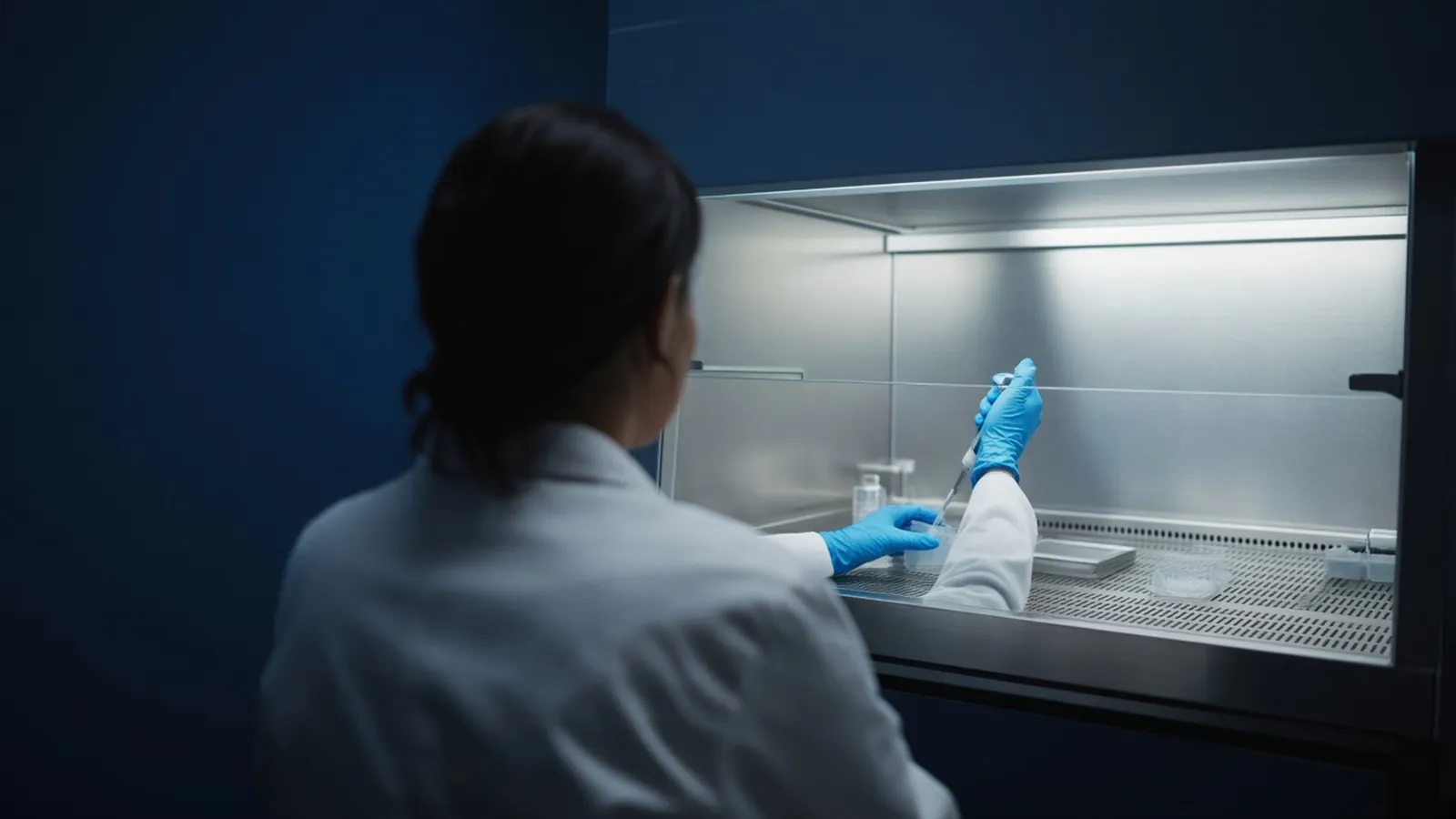
Working inside a biosafety cabinet is a practical skill built on an engineering control. The cabinet does not make a protocol safe by itself, and careful hands do not replace a failed airflow. This page is for people who handle research cell cultures and need to decide how a session should be set up, watched and closed. It explains the airflow, the difference from a chemical fume hood, and the habits that keep the culture and the worker inside the arrangement the cabinet was built for. It is not a biosafety approval, not a clinical procedure, and not a substitute for the risk assessment your institution owns.
Passaging, media and confluence decisions sit in mammalian cell culture for research labs. Flasks, tubes and pipette formats that enter the opening can be compared from the laboratory consumables catalogue. A sourcing question goes through the quote request. The academic research path is a way to frame a university specification. None of those pages certifies a cabinet or states that a given lot is waiting in a store.
Who the cabinet is for
A biosafety cabinet earns its place when work can generate aerosols or when material must be protected from room particles. Open flasks, serological pipettes and enzymatic detachment all move liquid through air. The decision the cabinet supports is narrow: which enclosure, with which airflow, for this session. It does not answer which biosafety level applies. That question belongs to the institutional committee, using the WHO Laboratory biosafety manual and the CDC BMBL alongside local rules. This article assigns no containment level.
The cabinet protects a volume of air only while its pattern is intact. Tip boxes on the front grille, a permanent ethanol bottle on the rear intake, and a culture left open while you turn to speak all break that pattern. The deck can look calm while room air reaches the flask.
How the air moves
A Class II cabinet, the type most culture rooms use, combines two streams. Room air is drawn in at the front opening so aerosols over the work have a path that does not lead at the operator. Air that touches the work is pushed down through a HEPA filter. A further filtered stream leaves the cabinet, either toward the room or into a duct, depending on subtype.
A type A2 cabinet typically returns much of its air to the laboratory after filtration. A type B2 cabinet is hard-ducted and exhausts what it takes in. Both can be appropriate. They are not interchangeable if the risk assessment named a duct, and neither is a licence to evaporate solvents in the opening. HEPA filtration removes particles. It does not remove chemical vapour.
The sash has a marked height because inflow was balanced at that gap. A fully raised sash, or a head inside the opening, changes the pattern a certifier measured. So does a rack sealing the rear grille. Arm speed is part of the physics. A fast withdrawal pulls cabinet air out with the sleeve. Slow movements let downflow and inflow re-form. A cabinet in a draught between a door and an air-conditioner can fail on a busy afternoon even after a quiet certification.
Cabinet, clean bench and fume hood
Three enclosures share a sash and a fan. Their jobs differ, and substituting one for another is a real failure.
| Enclosure | What the airflow is for | What it does not do |
|---|---|---|
| Class II biosafety cabinet | Filtered downflow over the work and an inward front curtain | Remove solvent vapour, or forgive a blocked grille |
| Laminar clean bench | Filtered air over a product that must stay clean | Protect the operator; many designs blow air outward |
| Chemical fume hood | Pull vapours away from the breathing zone and out of the room | Provide a particle-free field for an open culture |
A biosafety cabinet is not a fume hood. Volatile solvents belong in the enclosure the chemical assessment names, often a ducted hood. Parking those bottles in the culture cabinet because it looks clean can load a HEPA filter with vapour and still return that vapour to the room on a recirculating unit. The reverse mistake is sterile culture in an empty fume hood. A fume hood is turbulent by design. It is a poor place to keep a flask particle-free.
What you bring through the sash
Bring the vessels, media, pipettes and waste container the session will use. Leave cardboard sleeves outside. Wipe items that tolerate the laboratory disinfectant and let the surface dry so liquid does not pool into a thread. Serological pipettes, filtered tips and sterile tubes are classes of consumable, not one recipe. A filtered tip matters when the pipette barrel must not shuttle aerosols between the cabinet and the bench.
Waste stays inside until the session ends, or leaves by a defined path. Reaching to a floor bin with a dripping pipette, then back to an open flask, throws the protection away. Gloves are not clean forever. A glove that touches your face, the sash edge or a phone is changed. Do not spray ethanol toward the HEPA grille. Many cabinets are not built for a Bunsen flame: a flame disturbs downflow and sits next to ethanol. If a method truly needs flaming, that requirement is written and approved, not improvised.
ATCC culture guides describe how a culture collection handles lines it distributes. They do not replace institutional rules, and they do not turn an unknown clinical specimen into a routine research flask.
A session, and the branch when airflow fails
Start the blower and purge for the interval your laboratory has set. Confirm the sash height and that the airflow indicator sits in its window. Disinfect the deck. Lay out materials so clean flasks are not on the arm path through the waste beaker. Then open the first vessel.
Work one culture at a time when lines must not mix. Caps stay face-down on a clean patch or in the hand, not on a grille. The confluence call belongs at the microscope, before you are rushed inside the sash. Mycoplasma will not be filtered out of a line that is already colonised. The cabinet reduces new airborne contamination. It does not replace a testing programme.
If the alarm sounds, if you smell solvent, or if power fails, close vessels and withdraw. Do not finish one last flask in still air. After power returns, purge again. A generator that restores lights but not the fan has not restored the control. For a spill, cover it and apply the disinfectant and contact time in the spill plan. Liquid that enters the sump under the work tray is a maintenance event. Do not lift that tray unless you are trained and the cabinet's decontamination step is done.
At the end, disinfect, remove waste by the defined path, and run the post-use blower interval. Record an alarm, a spill or a line that looked contaminated. A methods note on protocols.io is one place to write the session you actually follow. The record should name the cabinet, not "the hood".
When a culture fails
Cloudiness or an unexpected lawn has several homes: the cabinet, an incubator water pan, a shared medium bottle, a pipette barrel used outside and then inside, or a stock that was already infected. Before you condemn the HEPA filter, ask whether only the flasks from one afternoon failed, or every bottle that touched one aliquot. A cabinet outside its certification window is taken out of service. It is not "used carefully" until the contractor arrives.
Heat, humidity and interrupted power
In a hot building, people rush and a long session in a coat becomes sloppy. Plan shorter loads. Medium left in a sunlit prep room is not the reagent a temperate protocol called "room temperature". In a humid week, condensate on a bottle from the cold room drips into the opening. Wipe it off before the bottle crosses the sash. A power cut mid-session turns the cabinet into an open bench with a stainless aesthetic. Close, wait, purge. If outages are routine, the laboratory plan should say which sessions are not started unless backup power covers the fan. Certification interval and velocity checks stay local. This page does not invent a filter life for that climate.
What to send with an enquiry
EVRINTH can take a sourcing question about consumables a cabinet session uses. The useful note names vessel format, the sterile claim you need, tip style, and any chemical the item must tolerate, including the surface disinfectant. Point at the laboratory consumables catalogue and ask whether a quotation is possible. Do not ask a catalogue page to certify the cabinet or to assign a biosafety level. The academic research page frames a university enquiry. It is not a statement that a culture service is being performed.
Safety
Follow your institution's biosafety rules. Mammalian lines can carry agents that a research label does not cancel. Disinfectants, ultraviolet lamps and ethanol are themselves hazardous. Do not use this article as medical advice, as a diagnosis, or as permission to change containment. If the agent has not already been assessed where you work, stop and take that assessment to the people accountable for it.
Set up a biosafety cabinet session before the first vessel is opened
- 01Match the cabinet to the risk assessmentConfirm the class and exhaust arrangement your institution named for this work. A running fan is not the same thing as a cabinet certified for the cell lines on the plan.
- 02Load, purge, then disinfect the surfacePlace only what the session needs inside, keep both intake grilles clear, let the blower purge, and disinfect the deck with the agent and contact time already chosen.
- 03Work from clean to dirty with slow movementsOpen vessels only after the airflow has settled. Keep sterile items on the clean side and waste on the dirty side, and move your arms slowly enough that the front inflow can re-form.
- 04Stop when the air pattern is no longer the one you plannedIf an alarm sounds, the sash leaves its marked height, or power drops, close vessels and withdraw. Treat the surface as protected again only after the laboratory restart and purge rule has been met.
Questions from the bench
Is a biosafety cabinet the same machine as a laminar-flow clean bench?
No. A clean bench bathes the work in filtered air and often blows that air toward the operator. A Class II biosafety cabinet combines filtered downflow over the work with an inward air curtain at the sash. A similar stainless deck does not make the airflow the same.
Does the ultraviolet lamp inside the cabinet replace surface disinfection?
It does not. Ultraviolet lamps leave shadows, age without obvious warning, and expose skin and eyes. Laboratories that switch them on still wipe the work surface with an accepted disinfectant for a stated contact time. The lamp is not a shortcut around soil or a skipped wipe.
Can a biosafety cabinet capture chemical vapours the way a fume hood does?
A biosafety cabinet is not a chemical fume hood. Many Class II cabinets return a large share of air to the room after HEPA filtration, and a HEPA filter does not remove volatile solvent vapour. If a method needs both particle control and solvent capture, that is a facilities decision.
What should an enquiry about cabinet consumables include?
Name the vessels, whether the work is sterile mammalian culture, any filtered-tip or serological-pipette requirement, and the disinfectant the surface must tolerate. Ask for the written specification. A catalogue family name is not a sterile recipe and not a biosafety approval.
References
Manufacturer names identify published method classes. Trademarks remain with their owners. Catalogue records on this site are independent references for enquiry. They are not a statement of inventory, distribution rights or a supply commitment. This page is educational. It is not medical advice, a diagnostic protocol or a biosafety approval.
Catalogue
Related products and categories
These links follow the subject of the article into published manufacturer references. A listing is a reference for an enquiry, not a statement of stock or distribution rights.
Continue in this cluster
Related reading
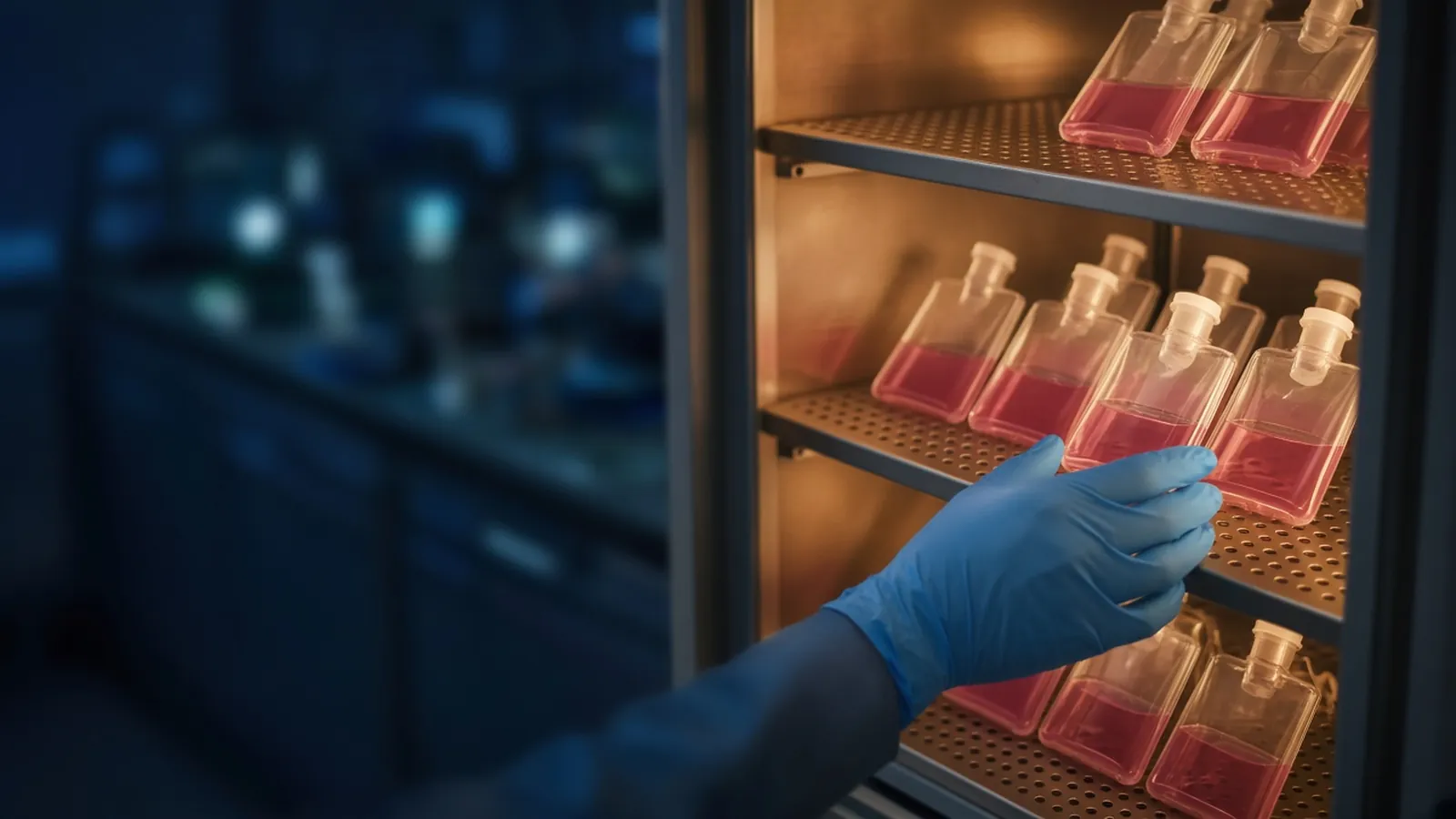 Mammalian cell culture for research labsHow research labs keep mammalian cell culture workable: medium, aseptic technique, confluence, passage records and contamination checks.A glossary of culture termsPairs of culture words that laboratories mix up, and the wrong next action each pair causes, from confluence versus density through to confluent versusAntibiotics in medium hide poor techniqueWhen penicillin-streptomycin in routine medium hides a contaminant, and how to choose whether a research culture should grow with or without it.