
guide
Checking a pipette between calibrations
A gravimetric water check shows whether a piston pipette is still fit for quantitative work between scheduled calibrations, and when to stop using it.
- Author
- EVRINTH Editorial Team
- Published
- 8 October 2026
- Updated
- 8 October 2026
- Reading time
- 10 min
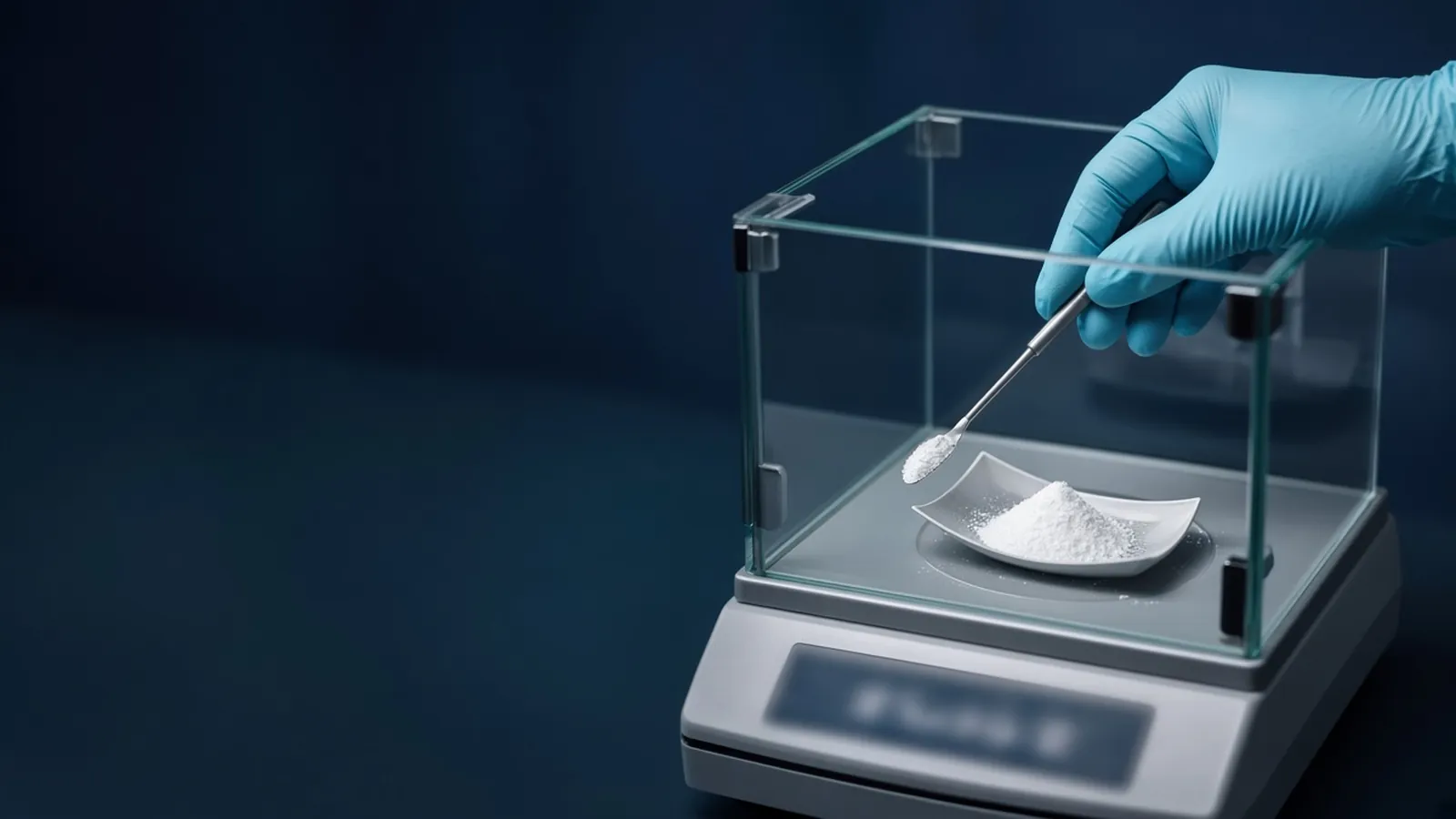
Checking a pipette between calibrations is a small gravimetric test that tells you whether a piston pipette is still fit for the quantitative work you are about to do. A full calibration, performed on a schedule by a person who follows a written metrology procedure, remains the reference event. The bench check sits between those events. It catches a leak, a bent shaft, a tired seal, or a technique drift before that error becomes a dilution series, a standard curve, or a published concentration.
The companion page on accurate micropipetting technique covers how to hold and pace a dispense. This page covers the decision that follows a bad number on the balance. Tips, tubes, and related plastic live in the laboratory consumables catalogue. Balances and pipette families belong with the scientific instruments catalogue. A family name is not evidence that a given range meets your tolerance. Put the tolerance in a quotation request.
Who the check is for
Use an interim check when the volume itself is a result: enzyme units, a standard curve, a dilution that must match a paper, a plate where neighbours are supposed to receive the same amount. Skip the theatre when the pipette is only moving a wash buffer and the exact microlitre will not be interpreted. The decision is whether this instrument, at this setting, with this tip, is allowed to create a number you will trust.
The check is also for the person who inherited a pipette with a faded sticker. A sticker records someone else's procedure on someone else's date. It does not measure the seal you have today.
What the balance is actually measuring
A piston pipette traps an air cushion between the piston and the liquid. The distance the piston travels is intended to displace a known volume. The liquid that arrives in the tube depends on that distance, on the tip seal, on how completely the liquid leaves the tip, and on the density and vapour of the liquid. Calibration procedures therefore use water. Water has a published density at a measured temperature, so a mass on a balance can be turned back into a volume.
The conversion is not "milligrams equal microlitres" at every temperature. Warm water is less dense. A competent procedure applies a density and buoyancy correction for the water temperature you record. NIST's documentary standards list is a public index of metrology procedures. Use the correction your laboratory already adopted, or the one in the pipette's own calibration standard. Do not paste a vendor tolerance table into a notebook and call it a check.
Two summaries matter. The mean of several dispenses, compared with the set volume, is the systematic error. People often call this accuracy. The scatter among those dispenses is the random error. People often call this precision, and they often express it as a coefficient of variation. A pipette can be precise and wrong, or right on average and too noisy to use. The interim check should report both.
Equipment classes, not a kit insert
You need an air-displacement pipette with a readable volume setting, tips that seal on that pipette, a balance with a draft shield, a small vessel, equilibrated purified water, and a thermometer that can tell you the water temperature to the precision your correction requires. The balance has to be level, recently checked, and fine enough that the tolerance is several divisions, not a single flicker of the last digit.
The vessel should be small enough that you are not watching a puddle evaporate in a beaker, and stable enough that the draft shield closes. Weighing boats that wander, and tubes that touch the shield, invent scatter that you will blame on the piston.
Gloves, a timer, and a written sheet complete the class list. There is no reagent cartridge. If you are checking a multichannel pipette, plan to sample several channels. One honest channel does not clear the row.
A workflow with branch points
Let the water, the tips, and the pipette sit in the room until they are no longer cold from a store or warm from a windowsill. Record the room and the water temperature. Set the volume you actually use, not only the maximum mark. Many failures hide at the volume the laboratory uses every day.
Seat a fresh tip. Pre-wet it by aspirating and dispensing water back into the stock two or three times, so the air cushion is humid. Then use forward pipetting: depress the plunger to the first stop, aspirate vertically, touch the tip to the vessel wall or deliver into the liquid surface in the way your technique page specifies, depress to the first stop to deliver, and use the second stop only for the blow-out that forward mode includes. Keep a steady pace. A pause with the tip in the air lets water evaporate from a small volume and lets a volatile liquid creep.
Dispense into the vessel on the balance. Close the shield. Record the mass when the display has settled. Repeat enough times that one drip cannot dominate the mean. Four to ten dispenses is a common planning range for an interim check. A full calibration procedure may ask for more. Reset the tare so each dispense is its own mass, or record cumulative mass and subtract. Write which you did.
Convert mass to volume with the temperature correction. Compare the mean and the scatter with the limit written at the start.
If the first series fails, change the tip and repeat once. A damaged tip orifice mimics a bad piston. If the second series passes, keep the pipette and discard that tip lot only if several tips from it fail. If the second series fails in the same direction, take the pipette out of quantitative service. Tag it. Do not lend it to the bench that "only needs it for primers".
If the mean is acceptable and the scatter is wide, watch the technique before you condemn the seal. Inconsistent rhythm, a plunger that is released with a snap, a tip that clicks on loosely, or a balance in a draught will widen the series. If a careful repeat is still wide, the seal, the piston, or the shaft is a repair question.
If only the lowest setting fails and the upper settings pass, restrict the pipette in writing to the range that passed. A quiet restriction is how the next person uses the bad setting.
Reading the failure
| Pattern | A reasonable first suspicion | What you do before anyone calculates with it |
|---|---|---|
| Mean high or low, scatter tight | Wrong setting, incomplete blow-out, or a seal that has shifted the volume | Repeat with a new tip. If it persists, tag the pipette |
| Mean acceptable, scatter wide | Loose tip, rushed plunger, draught, or a worn seal | Repeat with a steadier rhythm and a closed shield. If it persists, tag it |
| One channel of a multichannel is off | Tip seal or one piston | Do not average it back into honesty. Repair or restrict that channel |
| Water passes, glycerol volumes look wrong | The liquid, not the certificate | Use reverse pipetting and a liquid-specific check, or switch method |
A systematic shift with a tight scatter is often a relief, because the cause is mechanical and repeatable. A wide scatter is harder. It may be the operator on that day. That is why the repeat is part of the method, and why the same person who will use the pipette should be able to produce the series. A check performed by a specialist and then ignored by a rushed technique is a sticker, not a control.
Viscous liquids and volatile solvents
Forward pipetting is the right default for aqueous buffers. Reverse pipetting is the usual alternative for a viscous liquid or a volatile solvent. In reverse mode you aspirate by depressing to the second stop and deliver only to the first stop, leaving a residue in the tip. The volume delivered is then the calibrated stroke, without a blow-out that would splatter glycerol or spray a solvent.
A water check does not rehearse that residue. Detergents foam and cling. Enzymes supplied in glycerol cling. Chloroform and ethanol evaporate into the air cushion and can drip. If the experiment depends on those liquids, add a check that uses them, or accept that the pipette is verified only for water-like solutions. Pre-wetting matters more, not less, with volatiles, because an unsaturated air cushion steals volume.
Do not lay a pipette flat when it is full. Liquid runs into the piston, and the next fifty dispenses are a contamination and a corrosion problem. If it happens, stop using it for quantitative work until it has been cleaned and checked again.
Heat, humidity, and the balance room
Water leaves a small vessel quickly in a warm, dry, or merely breezy room. In a hot building the "room temperature" density you remember from a temperate protocol is the wrong density. Measure the water you have. Close the draft shield. Cover the stock tube between dispenses if your procedure allows it. A series that takes a long time at the smallest volumes will drift low because of evaporation, and you will tag a good pipette.
Humidity and monsoon weather also swell paper and cardboard tip boxes and can leave tips with a poor seal if the rack has warped. A tip that does not click home is a failed check waiting to happen. Power cuts matter because a balance that rebooted may need its own internal check before it is allowed to referee a pipette. Record that the balance was fit, not only that the pipette was tested.
Vibration from a centrifuge or a shared bench makes the last digit meaningless. Move the balance or wait. The interim check is cheaper than repeating a week of assays.
Safety and the limit of the claim
The hazards are ordinary: a heavy balance lid, broken glass vessels, and whatever chemical you chose to pipette besides water. Follow the safety data for that chemical. This page is not a calibration certificate, not a legal metrology stamp, and not permission to skip the scheduled service your quality system already names.
An interim pass supports continued use at the volume and liquid class you tested, until the next scheduled calibration or the next incident. It does not travel with the pipette to another laboratory, another tip family, or a multichannel row you did not weigh.
What to put in an enquiry
When you ask for a pipette, a balance, or a calibration service, write the volume range, the volumes you will actually check, the systematic and random error you need, whether the device is single or multichannel, and the tip family. Say whether the liquids are aqueous, volatile, or viscous. Ask for the documentary standard the certificate will cite, and for the balance readability the smallest volume requires. Addgene's protocol collection and the public methods on protocols.io show how often a molecular recipe assumes the pipette was right. Neither site replaces your tolerance. Send the specification through the quote form and keep the returned document next to the pipette's tag.
Run an interim gravimetric check before you trust a pipette
- 01State the volume and the toleranceWrite the set volume, the liquid class, and the error limit your laboratory already adopted. An interim check compares the pipette with that limit. It does not invent a new acceptance table.
- 02Weigh replicate dispenses of equilibrated waterUse forward pipetting with a fresh, well-seated tip. Record water temperature, balance readability, and at least a small series of dispenses into a vessel that has already been brought to room conditions.
- 03Separate a shifted mean from a wide scatterA mean that sits outside the tolerance is a systematic problem. A mean inside the tolerance with a wide spread is a precision problem. They point at different causes and both can take the pipette out of quantitative use.
- 04Tag the pipette if the repeat still failsRepeat once with a new tip and the same technique. If the result is still outside the limit, mark the pipette out of service for quantitative work and send it for a full calibration or repair.
Questions from the bench
Does a water check prove the pipette is accurate with glycerol or detergent?
No. Water is the metrology liquid because its density is known. A viscous liquid wets the tip differently and often needs reverse pipetting and a slower rhythm. Pass the water check, then test the real liquid if that volume decides the experiment.
How often should a laboratory repeat this check?
The scheduled calibration interval is a local quality decision, often tied to how hard the pipette is used and to the consequence of a wrong volume. An interim check belongs after a drop, a solvent incident, a repair, or any week in which the results look strangely precise and still wrong. This page does not set a universal calendar.
Can a milligram balance check a one-microlitre setting?
Usually it cannot. One microlitre of water has a mass of about one milligram, so a balance that only reads to a milligram cannot see the error that matters. Match the balance readability to the tolerance, or check a larger fraction of the range and treat the smallest volume as unchecked.
What should a pipette enquiry ask for?
Ask for the volume range, single channel or multichannel, the tip family, and the systematic and random error you need at the volumes you actually use. Ask which documentary calibration the certificate will follow. Send that specification with a quotation request rather than a catalogue adjective alone.
References
Manufacturer names identify published method classes. Trademarks remain with their owners. Catalogue records on this site are independent references for enquiry. They are not a statement of inventory, distribution rights or a supply commitment. This page is educational. It is not medical advice, a diagnostic protocol or a biosafety approval.
Catalogue
Related products and categories
These links follow the subject of the article into published manufacturer references. A listing is a reference for an enquiry, not a statement of stock or distribution rights.
Continue in this cluster
Related reading
 Accurate micropipetting techniqueHow an air-displacement micropipette delivers a volume, how forward pipetting uses the two stops, and why temperature belongs in the result.A glossary of liquid-handling termsSeparate the liquid-handling terms people mix up, from blow-out and pre-wetting to systematic error, tip fit, and the Z-factor.Air displacement versus positive displacementTrace under-delivery and dripping to the air cushion or the piston, and choose the pipette class that matches the liquid.