
troubleshooting
Endotoxin and primary immune cells
Why lipopolysaccharide can activate primary monocytes or macrophages that an epithelial line ignores, and which reagent classes to suspect first.
- Author
- EVRINTH Editorial Team
- Published
- 8 October 2026
- Updated
- 8 October 2026
- Reading time
- 7 min
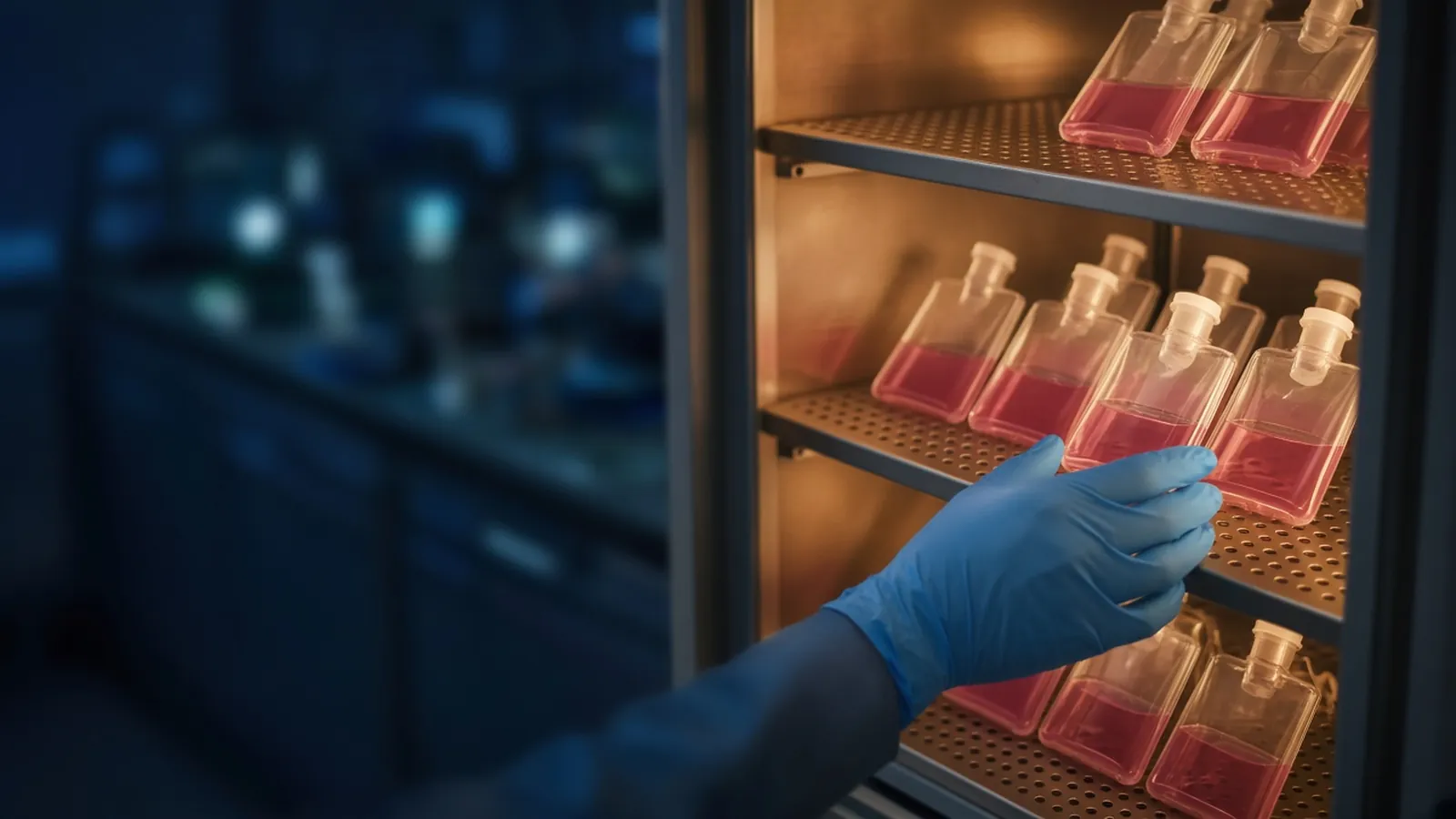
Primary monocytes and macrophages can behave as if you stimulated them when you did not. The usual uninvited stimulus is endotoxin, the lipopolysaccharide from the outer membrane of gram-negative bacteria. Levels that leave an epithelial monolayer looking peaceful can change shape, adhesion and cytokine-class readouts in a sensitive immune cell. Troubleshooting starts from that difference. It does not start from a new growth factor. The ordinary culture frame is mammalian cell culture for research labs. Water as a reagent, with the ways a type fails, is laboratory water types and where they fail. This page is the endotoxin path into an unstimulated immune culture.
What the molecule does to a sensitive cell
Lipopolysaccharide is recognised by innate immune pathways. On many monocytes, macrophages and dendritic cells the practical consequence in culture is activation: a shift in morphology, in surface markers your panel already measures, or in a soluble readout you did not intend to provoke. Epithelial lines and many fibroblasts are comparatively indifferent, so a laboratory can run "clean" morphology for years and still hand a primary macrophage a contaminated buffer. Confluence of a companion epithelial flask is not a control for this problem. The control is the immune cell in medium you believe is unstimulated, versus a well you stimulated on purpose.
Do not borrow a numerical limit from a neighbouring paper and treat it as yours. Laboratories set a limit from the cell type and from the assay the supplier actually ran. Common assay classes include a lysate amoebocyte method, a recombinant factor C method, and a cell-based activation method. They do not always return the same number on the same sample. A specification that says low endotoxin without naming the assay is unfinished. Measurement institutes such as NIST exist so that a number can be tied to a method. Ask the method.
Where endotoxin enters the culture
Four sources cover most unhappy plates. The water used to rinse, to make buffers and to reconstitute proteins is the first. Resistivity and total organic carbon, the usual headlines of a purification system, are not an endotoxin result. A polished resistivity can sit next to a contaminated storage tank or a dirty final filter. Read the water page for how types fail, then ask separately whether anyone measured endotoxin in the water you pipette.
Serum is the second source. It is a biological lot. Some lots are tested and the document names an assay and a figure. Some are not tested for this purpose. A lot that supported a fibroblast does not thereby become suitable for a macrophage. Record the lot. If activation appeared when the lot changed, the side-by-side is the serum, not the plastic you have used for a year.
The vessel is the third source. Tissue-culture treatment is about attachment. An endotoxin claim is a different sentence, present only when the manufacturer prints it. Untested plastic is not "probably fine" for a primary immune cell just because it is sterile. Sterility is the absence of viable growth, not the absence of bacterial fragments. Dead gram-negative material still carries lipopolysaccharide.
A recombinant protein made in bacteria is the fourth source. Expression in a gram-negative host is an efficient way to make a research protein and an efficient way to carry endotoxin into a well unless the supplier describes removal and an assay. Antibodies and cytokines bought for immune work are the usual surprises. A protein that was fine on a western blot can still activate a monocyte. Solvent controls must use the same water and the same carrier.
Mycoplasma is a different contaminant. It can alter immune cells too, and it is not lipopolysaccharide. If the culture has never been tested, do not let an endotoxin hunt be the only question. Clarity and confluence will not answer either question.
| Source | How it reaches the well | What to ask before you change anything else |
|---|---|---|
| Water and buffers made from it | Rinses, diluents, medium supplements you dissolve | Was endotoxin measured, and by which assay? Resistivity is not that assay |
| Serum or plasma supplement | The medium itself, lot by lot | Does this lot carry a stated figure, and did activation start with the lot? |
| Culture plastic | The surface and any rinse that sat in the well | Is there a manufacturer endotoxin statement, or only a sterility mark? |
| Protein expressed in bacteria | The stimulus you did not mean to add | Was removal documented, and is the control in the same buffer? |
| A dirty reconstitution vial | A protein that was clean and is not now | Did you dissolve it in the sensitive water? |
A troubleshooting order that changes one class
Confirm you did not add a stimulus and then forget it. The notebook should say unstimulated in those wells. If the cells still look activated by the criterion you set in advance — a shape you defined, a marker you already run — treat the reagent path as guilty until one class is isolated.
Swap water first if buffers are made in house. Hold serum, plastic and proteins constant. If the quiet returns, the purification train or the jug is the finding. If it does not, swap the serum lot against a retained bottle, same plastic, same water. If it does not, move the same cells into a vessel that carries an endotoxin statement, or into a different lot of the vessel you used. If a recombinant protein is in the well, repeat the condition without it, in the same buffer. The well that calms down names the class. The well that does not calm down means you have not found it, or more than one source is present. Do not change serum, water and plastic on the same day and then write a confident sentence.
Some published methods include a control reagent that binds lipopolysaccharide. If you use one, follow that method's own instructions and keep a buffer-only arm. A change in the readout is a clue, not a chemical identification. This page has no dose to offer.
Branch if the morphological "activation" is actually toxicity or contamination. Debris, acid medium and a failing viability dye are a different article's crash. Mycoplasma testing still belongs on the laboratory schedule. A bacterial bloom is not a subtle endotoxin problem. It is a contaminated culture, and it leaves the shared incubator under your local rules.
Not a clinical assay, and not a biosafety assignment
A research monocyte that changed shape is not a diagnosis of the person the cells came from, and it is not a test you can report clinically. Primary human material, donor conditions and containment are decided by the institution and by the ethics path that authorised the sample. The WHO Laboratory Biosafety Manual helps people write rules. It does not assign a level on this page, and it does not turn an activation marker into medicine. General culture background on the NCBI Bookshelf is the same kind of public reference. Follow your authorised sheet.
Water in a warm building, and the sentence on the order
Warm rooms and intermittent power are hard on stored water. A carboy that cooled and then sat is a reason to ask for a fresh endotoxin-aware fill from the system your protocol names, not a reason to guess a count of bacteria. Serum that arrived warm is quarantined from the immune culture until the stability statement is clear. When you enquire, name the cell as a primary monocyte or macrophage, state that you need low-endotoxin handling, and ask which assay supports any figure. Name water, serum and vessel as separate classes. Basal medium that is only "sterile" is not a complete answer. Everyday classes are listed in the laboratory consumables catalogue. A university brief can use the academic research reference. The quote request can carry that specification so a method of supply can be discussed. The discussion is not a clinical test and not a statement that a particular lot has been reserved for you.
Questions from the bench
Why did the epithelial line look fine in the same medium?
Many epithelial and fibroblast cultures do not respond visibly to lipopolysaccharide levels that change a monocyte or a macrophage. A clear monolayer and a normal confluence are not an endotoxin test. The sensitive cell is the assay, which is why the water, the serum and the plastic have to be specified for that cell.
What endotoxin limit should I write on an order?
Write the limit your laboratory has already set for that cell type, and ask which assay supports any figure a supplier quotes. A lysate method, a recombinant factor C method and a cell-based activation method can disagree. This page does not publish a universal threshold in endotoxin units. A number without the assay name is not a specification.
Are bacterial recombinant proteins the only risk?
They are a common risk, because proteins expressed in gram-negative bacteria can carry lipopolysaccharide unless a removal step and an assay are documented. Water used to dissolve them, serum in the medium, and the culture vessel are the other usual sources. Change one class at a time or you will not know which swap calmed the cells.
Is this a clinical test for infection?
No. Activation of a research culture is not a diagnosis of a donor and not a medical result. Primary human immune cells also sit under an institutional biosafety and ethics decision that this article cannot make. Keep the work inside that decision, and do not interpret a marker on a plate as a patient finding.
References
Manufacturer names identify published method classes. Trademarks remain with their owners. Catalogue records on this site are independent references for enquiry. They are not a statement of inventory, distribution rights or a supply commitment. This page is educational. It is not medical advice, a diagnostic protocol or a biosafety approval.
Catalogue
Related products and categories
These links follow the subject of the article into published manufacturer references. A listing is a reference for an enquiry, not a statement of stock or distribution rights.
Continue in this cluster
Related reading
Mammalian cell culture for research labsHow research labs keep mammalian cell culture workable: medium, aseptic technique, confluence, passage records and contamination checks. Laboratory water types and where they failResistivity, organic carbon and endotoxin answer different questions. A water grade fails when the assay cares about a contaminant the meter cannot see.A glossary of culture termsPairs of culture words that laboratories mix up, and the wrong next action each pair causes, from confluence versus density through to confluent versus