
application
Glycerol stocks that actually recover
How to freeze a verified E. coli clone in glycerol and revive it from the ice so the recovered colony is the one you archived.
- Author
- EVRINTH Editorial Team
- Published
- 8 October 2026
- Updated
- 8 October 2026
- Reading time
- 7 min
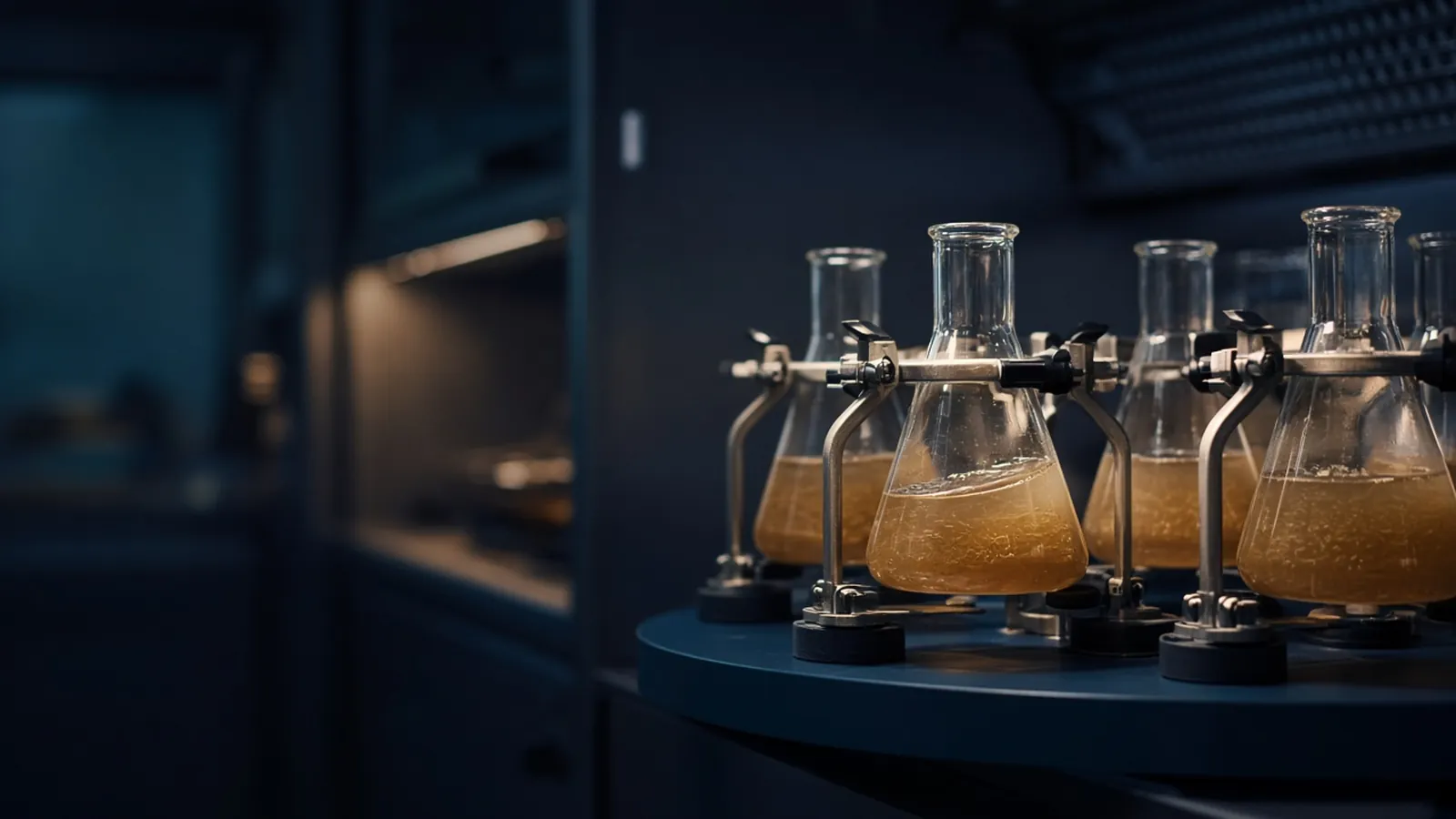
A glycerol stock is worth making only if a streak months later is the same clone you verified. The decision this application supports is when to freeze, how to mix, and how to recover without thawing the archive into oblivion. The strain and the transformation that produced the colony are in bacterial culture and transformation. Proof that the colony carries the insert belongs to plasmid cloning from insert to colony. The antibiotic on the recovery plate is the subject of antibiotic selection and blue-white screening.
Glycerol and sterile tubes are specified from the reagents and chemicals catalogue, with method context on the molecular biology pathway. If you are archiving a designed gene, the custom gene synthesis reference can carry that part of the enquiry. Cold-chain and format questions go to the quote request. A method can be discussed. Broader freezer practice is in storing biological samples from fridge to freezer.
Freeze a culture you have already believed
Make the stock from a liquid culture of one colony whose plasmid you have already checked by digest, colony PCR or sequence, whichever claim you need. A colony that merely grew on the transformation plate is a candidate. Freezing it promotes the candidate into the archive without the test. Later you will recover it faithfully, and faithfully wrong.
Grow that verified colony under selection so plasmid-free daughters are not the majority of what you freeze. Do not archive a non-selective overnight of a burdensome plasmid and hope. The Addgene protocol for creating a glycerol stock is the public method sketch: culture, sterile glycerol, mix, freeze. Follow your laboratory's written concentrations and tube types on top of that sketch.
What the glycerol is for
Freezing in broth alone grows ice crystals that puncture cells. Glycerol lowers that damage by acting as a cryoprotectant, so a useful fraction of the population stays viable. For E. coli cloning strains the final concentration laboratories use is often in a band around 15 to 25 percent. Some written methods sit at one end of that band, some at the other. Use the method your laboratory has already written down. Do not invent a finer optimum in the middle of a busy afternoon.
Mixing is the step people skip. Glycerol is viscous. If you pipette it under the broth and cap the tube, the bottom is nearly pure glycerol and the top is unprotected culture. Invert or pipette until the swirl looks even. A tube that still shows two layers is not a stock yet. Work sterilely. An open cryotube on a dusty bench archives the dust as well as the clone.
Label before you freeze. Strain, plasmid name, marker, date, and the check you did. A frosted tube is illegible, and an illegible tube cannot be recovered on purpose. ATCC culture guides show how collections expect labels and revival to be taken seriously for material they send. Give your own archive the same courtesy.
Freeze once, scrape ever after
Freeze at the temperature your laboratory uses for bacterial stocks, commonly a cold freezer rather than a domestic freezer that cycles. Put the tube in a box that is not opened every hour. Recovery is a scrape: take the box to the freezer, or work on dry ice, touch a sterile tip or loop to the frozen surface, and streak that ice onto selective agar. Do not thaw the tube "so it is easier to pipette". The Addgene streak-plate protocol is how that ice becomes single colonies again.
Streak onto the antibiotic the plasmid requires. A lawn of recovery on plain agar does not prove the plasmid came along. Pick a single colony from the selective plate for the next culture. If nothing grows, the stock is dead or the drug plate is wrong. Try one more scrape from a second vial if you made duplicates. Do not scrape the same hole repeatedly while the vial melts in your hand.
Duplicates are the application detail that saves projects. Two vials in two boxes survive a dropped tube or a box left on the bench. One vial is a single point of failure with a confident label.
Recovery failures worth naming in the notebook
| What you did | What you get back | What to do instead |
|---|---|---|
| Stock made from an unchecked colony | Whatever that colony was, including a mixture or an empty vector | Verify, then freeze a culture of the verified colony |
| Glycerol never mixed | Poor viability, or survival only in a lucky layer | Mix to a uniform suspension before the tube sees the freezer |
| Whole tube thawed for every streak | Fewer cells each time, until the streak is blank | Scrape frozen surface; duplicates stay untouched |
| Stock from a non-selective culture of a hard plasmid | Cells that grow on plain agar and fail on the drug | Freeze under selection; recover on selective agar |
| Label written on a lid that was later swapped | The wrong clone, confidently | Write on the tube body, and record a box map |
| Frost-free freezer that warms every cycle | Slow death that looks like a fussy strain | Store where the temperature stays cold |
Why the first streak fails
The stock was never mixed. The colony was never verified and was in fact a satellite with no plasmid, so selective agar stays blank while you blame the freezer. The tube thawed on the way across campus and was refrozen, killing the viable fraction. The plate you streaked onto is an outdated ampicillin dish, so even a healthy stock looks dead. Change one variable: a known-good plate, a second vial, a culture you froze the same day as a viability check.
A viability check is a streak the week you freeze, not a surprise a year later. If that early streak fails, you still have the colony plate. If you discover the failure after the plate was discarded, you have a story and no clone.
Labels, waste and the organism you actually froze
Freeze only strains the institution has already accepted for this freezer. A glycerol stock is not a change in risk group, and it is not a way to keep an unapproved organism because the tube looks anonymous. Record the biosafety context in the box map your laboratory uses. This page is not medical advice. Spills of a thawed stock are live culture. Disinfect as the laboratory has already specified. The WHO Laboratory Biosafety Manual is a public reference for the people who set that specification.
Do not store bacterial stocks in a box of enzymes with no separation and no map. The recovery failure mode there is human: the wrong tube, the right technique.
Power cuts, frost and a dry-ice handoff
A freezer that warms during a power cut delivers a partial thaw. Vials at the front suffer first. After the event, streak the important clones onto selective agar while you still remember which box warmed, and remake stocks from colonies that grow. Do not wait a year to learn the thaw was lethal. Frost-free domestic freezers are a poor home for this archive because their defrost cycle is a designed warm-up.
Between buildings, carry vials on dry ice, not in a pocket and not in an ice bucket that has become water. They should arrive still frozen. Label them before they leave, because nobody can write on a tube inside a vapour cloud. A hot loading bay is enough to soften the surface if the dry ice has already gone. Plan the handoff so the scrape, when it happens, happens at the destination freezer.
What to ask for
Ask for glycerol suitable for bacterial cryoprotection, tubes that stay closed at freezer temperature, and any label that still sticks when cold. State that the organism is a non-pathogenic cloning strain and that recovery will be by scraping onto selective agar. Put the specification on the quote request. A method can be discussed. The custom gene synthesis reference belongs in the same enquiry only when the archived sequence is still being specified. It does not mean the archive already exists.
Questions from the bench
What glycerol concentration should a stock of a cloning strain use?
Laboratories commonly finish somewhere around 15 to 25 percent glycerol for E. coli, and then they follow their own written method rather than a number overheard from another bench. Mix until the suspension is uniform. A tube that is broth on top and pure glycerol at the bottom will freeze badly and recover badly. The Addgene glycerol-stock method is a public sketch of the same idea.
Why not thaw the tube each time I need a streak?
Each thaw grows ice damage and drops viable cells. Scrape a little ice from the frozen surface with a sterile tip or loop and streak that, while the rest of the tube stays frozen. Return it to the freezer before the surface turns to liquid. A stock that lives in your hand during a conversation is being thawed whether you meant it or not.
Can I archive the transformation plate without checking the plasmid?
You can freeze anything, and you will recover whatever you froze. If the colony was a mixture, a satellite, or an empty vector, that is what the stock will be. Verify the construct, then make the stock from a culture of that verified colony. A pretty label does not add a restriction site.
What should an enquiry about tubes or glycerol say?
Ask for the glycerol grade and the tube type your freezer storage uses, and say the stocks are for non-pathogenic E. coli cloning strains. A method can be discussed alongside the written specification. Say how cold the handoff has to stay if the tubes must travel between buildings.
References
Manufacturer names identify published method classes. Trademarks remain with their owners. Catalogue records on this site are independent references for enquiry. They are not a statement of inventory, distribution rights or a supply commitment. This page is educational. It is not medical advice, a diagnostic protocol or a biosafety approval.
Catalogue
Related products and categories
These links follow the subject of the article into published manufacturer references. A listing is a reference for an enquiry, not a statement of stock or distribution rights.
Continue in this cluster
Related reading
Bacterial culture and transformationHow non-pathogenic E. coli cloning strains are grown and how plasmid DNA is introduced, with the controls that make a colony meaningful.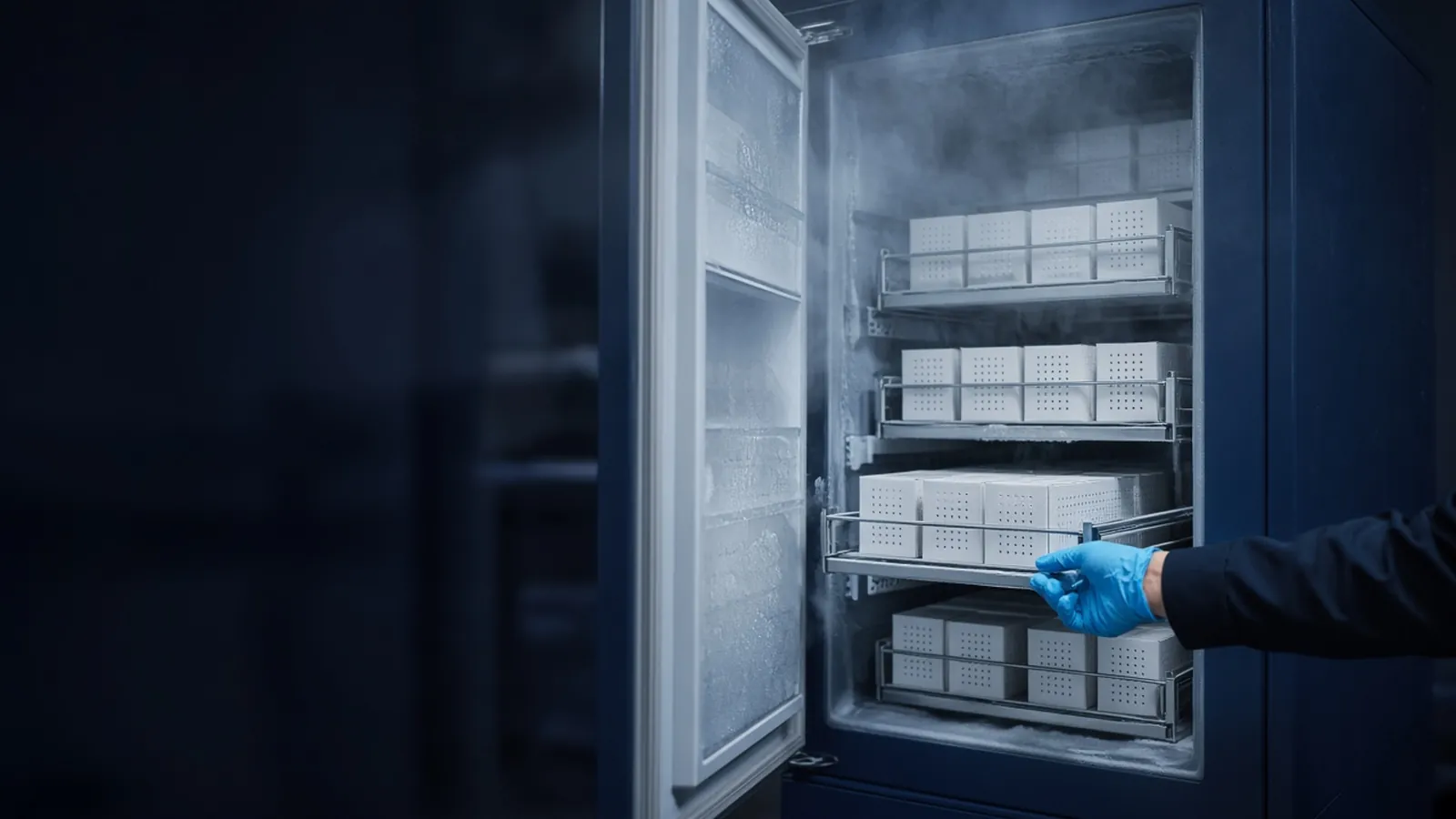 Storing biological samples from fridge to freezerFridge, minus-20, minus-80 and nitrogen storage slow different kinds of damage. A warm box is a quarantine decision, not a hope.
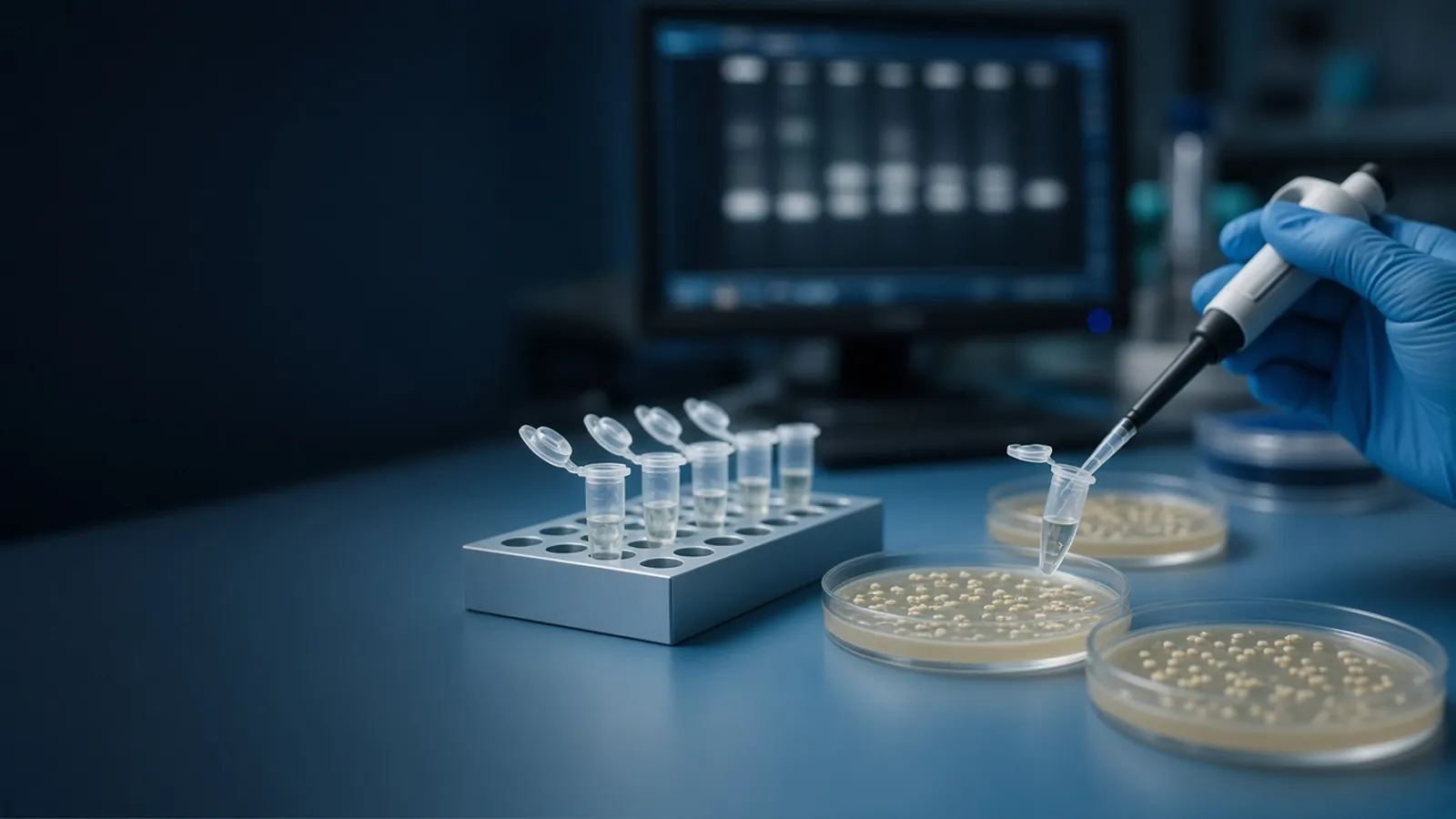 Plasmid cloning from insert to colonyHow an insert becomes a plasmid, a colony and a verified clone, and which checkpoint fails when the plate is empty or the insert is wrong.