
guide
Phage contamination as a concept
Bacteriophage contamination makes many cloning strains fail together and lingers on surfaces. This guide covers how to recognise the pattern and when to stop.
- Author
- EVRINTH Editorial Team
- Published
- 8 October 2026
- Updated
- 8 October 2026
- Reading time
- 9 min
Several cloning strains that fail on the same afternoon, in the same shaker, are a different problem from one ligation that produced no colonies. Bacteriophage contamination is the concept this guide is for: a virus of bacteria, classically a T1-like phage in an E. coli cloning room, that lyses cultures and survives on surfaces after the person who spilled them has gone home. The decision is whether the pattern follows a single DNA tube or follows a shared tool. Culture and transformation of non-pathogenic cloning strains, when the bench is fit for them, are described in bacterial culture and transformation. The barrier habits around any spill sit with biosafety basics for research benches.
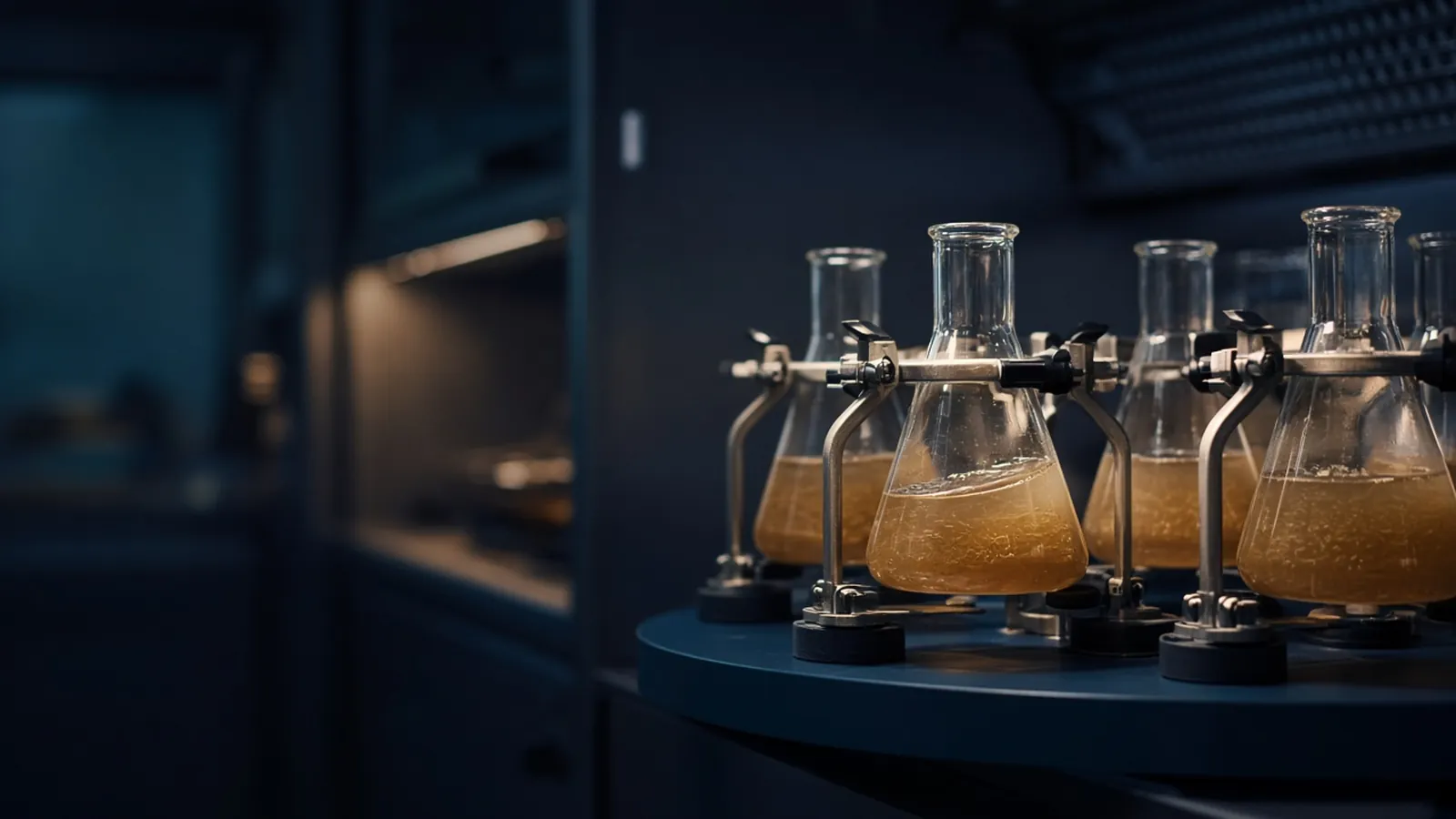
The hero photograph is amber broth in clamped flasks. Those flasks are exactly where a phage problem becomes obvious, because a culture that was cloudy can drop clear as cells lyse. They are also a good way to spread the problem if a wet cap is handled and then a pipette is shared. Reagent and plastic classes are in the reagents and chemicals catalogue. The cloning workflow is the molecular biology pathway. A DNA design question can be framed from custom gene synthesis as a reference only. Questions about strain class, including resistance to a phage receptor, go through the quote request.
What you are looking at
Bacteriophages are viruses that infect bacteria. In a cloning laboratory the one with the longest reputation is T1, because dried material stays infectious on surfaces and because it infects many standard E. coli strains through the FhuA outer-membrane protein, historically called TonA. Strains mutated in that receptor are sold as a T1-resistant class. That class is a genotype choice. It does not sterilise a pipette.
The visible events are ordinary and easy to mis-name. A flask becomes turbid on schedule and is clear the next morning, sometimes with debris. A streak that should have grown is empty, or shows glassy plaques, clear spots in a lawn of the host. Transformations that used to work fail across plasmids that share nothing but the room. People blame competent-cell lots one after another. The lot is sometimes the culprit. When the replacement lot fails in the same incubator and a different incubator is fine, the geography is the data.
This guide does not tell you how to grow phage, how to raise a titre, or how to enrich it from a lysed culture or from the environment. Those are propagation methods, and they are out of scope. The useful act is to notice the pattern, stop, and hand the cleaning decision to the institution.
Why it follows objects rather than plasmids
Phage particles adsorb to cells and are also carried on gloves, pipette shafts, flask mouths and aerosol from a sloshed culture. A single contaminated micropipette, used for every "quick" inoculation, will visit every strain on the bench. A shaker tray that caught a drip does the same for every flask clamped on it. A plasmid tube cannot do that. The plasmid tube only touches reactions you pipette it into.
That is the branch. List the failures by strain, by plasmid and by tool. One plasmid, one host, other work healthy: debug the DNA, the antibiotic and the cells, using the controls in the culture article. Many strains, many plasmids, one incubator or one pipette set: treat it as a surface pattern until the safety office says otherwise. Mixed patterns happen. A genuinely bad DNA prep can land in a room that also has a phage. The shared-tool list is still the first map.
Some cloning strains are marketed as T1 resistant. Use that as a purchasing class when the committee has accepted the genotype, and keep cleaning. A resistant host can hide a contamination that will destroy the sensitive strain next door. Sharing a pipette between a resistant room and a sensitive room is how the hide fails.
Ordinary inoculation technique, which you return to only after the area is cleared for use, is illustrated by the Addgene protocol for inoculating a bacterial culture. The broader set of cloning notes is the Addgene protocols index. Neither is a decontamination method.
What to stop touching
Stop opening new cultures in the suspect area. Do not "just streak one more plate" with the same loop handle. Do not carry the suspect flask to the clean incubator to see if it recovers. Recovery in a second room is how a local problem becomes a departmental one. Close the flasks you already have, leave them in a tray the safety office considers contained, and label the tray as a suspected phage event rather than as ordinary waste, until they tell you which stream it is.
Disposable plastic that cannot be cleaned is part of the event. Open tip boxes, wooden sticks, spreaders and flasks with porous closures that sat in the splash zone are cheaper than a month of failed transformations. Reusable glass is decontaminated only by the method the office names. Do not soak a chlorine bleach product into a mystery cleaner. Do not mix bleach with ammonia or with acid. Name the incompatibility to the office if you are unsure what is already on the cloth. The WHO Laboratory Biosafety Manual is a public reference for the conversation. Your spill card is the instruction.
An indicator test, if it is allowed at all, uses a phage-sensitive cloning strain the institution names, under the containment they name, to ask whether unexpected clearing still happens. This page does not write that test. Ask, and wait. Collection-strain paperwork, if you need a fresh host afterwards, is handled in the spirit of the ATCC culture guides, under your own assessment.
One bad plasmid versus a bench-wide failure
| Question | Points to the DNA | Points to a phage-like pattern |
|---|---|---|
| How many strains fail? | The host you transformed with that tube | Several hosts, including strains that never saw that DNA |
| How many plasmids fail? | Ligations or preps from one source | Unrelated plasmids fail in the same incubator |
| What does the broth do? | The control plasmid still grows in the same cells | Cultures cloud and then clear, or never cloud, across flasks |
| What does the map follow? | The DNA tube and the reactions it entered | A pipette, a shaker, a shared bench, a person's gloves |
| What does a different room do? | The same DNA fails there too | The other room, with its own pipettes, still grows the same strains |
Patterns that feel similar and are not this
A wrong antibiotic makes every strain that lacks the marker refuse to grow. The cultures do not typically cloud and then clear, and a strain you know is resistant still grows on the same drug. Dead competent cells fail at the transformation step and spare the streaks you make from glycerol stocks with a sterile stick. A shaker left off by a power cut produces stalled cultures with a clock time in common, including flasks that were not handled by the suspect pipette. Write the clock time down. If only the handled flasks cleared, the clock is not the cause.
Medium poured too hot with a dead antibiotic grows lawns. Lawns are the opposite appearance of plaques. Do not fold those notes into one "contamination" word.
Institutional disinfection, and nothing improvised
The safety office chooses the agent, the contact time and the waste stream. Cloning strains remain inside the assessment you already have. A suspected phage does not authorise you to culture a new organism, to take swabs home, or to run an enrichment. Waste that may contain phage is still waste they classify. The manual linked above supports the conversation. Your card is the procedure. This page is not medical advice and not a permit to change containment.
Humidity, shared kit, and the cupboard everyone uses
Dried droplets persist. A humid bench that never quite dries is a poor reason to delay a spill cleanup, because the spill is the object being carried. Shared tip boxes left open beside a shaker are a common route. In a building where several groups use one orbital shaker, the enquiry and the local rule both need a named responsible person for a contamination hold. A power cut belongs in the incident note as a time stamp. It is not, by itself, a lysis pattern. When work resumes, start from stocks that never entered the segregated area, and keep the T1-resistance genotype, if you use it, written on the flask so a sensitive strain is not the first test of a bench that was only wiped quickly.
What to ask when you specify a host after an event
Name the strain class, whether a T1-resistance genotype is required, the antibiotic markers, and the institutional assignment so packaging can be discussed. Say that the bench is returning to cloning work only under the local clearance. A method for routine culture can be discussed once that clearance exists. Use the quote request. Keep custom gene synthesis as a design reference if the plasmids must be rebuilt, and do not describe a phage experiment as something a supplier should help you run. The request is for a cloning strain and clean consumables, specified in writing.
Stop a suspected phage event and hand the bench back to the institutional rule
- 01Stop new cultures in the affected areaPause transformations, streaks and fresh flasks that share the incubator, the pipette set or the shaker you suspect. Write down which strains and which plasmids failed, and which neighbouring work still grew. A single bad ligation is not yet this pattern.
- 02Segregate the area and the toolsMark the bench, the shaker and the pipette drawers so the next person does not borrow them. Move nothing to a clean room to finish the experiment. The point of segregation is to keep a surface problem from becoming a building problem.
- 03Dispose or disinfect only as the institution requiresAsk the safety office which agent and which contact time apply to a bacteriophage concern on a cloning bench. A brief alcohol wipe is a weak assumption for a phage that persists when it dries. Do not invent a homemade dilution, and do not mix disinfectants.
- 04Replace plastic you cannot clean, then ask before any indicator testDiscard open tip boxes, used spreaders and other disposables that cannot be decontaminated under the local rule. Resume work only when the office says the area is fit. Use a phage-sensitive indicator strain only if that office allows the test. Do not enrich or propagate phage from a cleared flask.
Questions from the bench
What does a phage problem look like compared with a dead plasmid?
A dead plasmid or a failed ligation hits the constructs made from that DNA. A control plasmid in the same competent cells still makes colonies, and other people using the incubator are fine. A phage-like pattern hits several strains and several unrelated plasmids that share a pipette, a shaker or a bench, often with cultures that go cloudy and then clear.
Does a T1-resistant cloning strain mean the bench can stay dirty?
Resistance through a receptor class such as FhuA, also called TonA in older names, is a strain property aimed at T1-like phage. It is not a licence to skip cleaning, and it does not cover every bacteriophage that can annoy a cloning room. Keep the institutional surface rule even when the host is marketed as resistant.
Should you plate the cleared culture to see the phage?
Not as a home project. Propagating phage, enriching it from a lysed flask, or hunting it in environmental samples is outside this guide and outside ordinary cloning work. If the institution wants an indicator test, they will say so and they will name the strain and the containment. Until then, stop, segregate, and disinfect as they require.
Can a power cut mimic this pattern?
A power cut stops shaking and cooling, and the cultures you already had may stall or overgrow. It does not simultaneously lyse unrelated strains at several benches while a control left in another room stays healthy. Record the outage, and still look for a shared tool if the clearing follows people rather than the clock.
References
Manufacturer names identify published method classes. Trademarks remain with their owners. Catalogue records on this site are independent references for enquiry. They are not a statement of inventory, distribution rights or a supply commitment. This page is educational. It is not medical advice, a diagnostic protocol or a biosafety approval.
Catalogue
Related products and categories
These links follow the subject of the article into published manufacturer references. A listing is a reference for an enquiry, not a statement of stock or distribution rights.
Continue in this cluster
Related reading
Bacterial culture and transformationHow non-pathogenic E. coli cloning strains are grown and how plasmid DNA is introduced, with the controls that make a colony meaningful.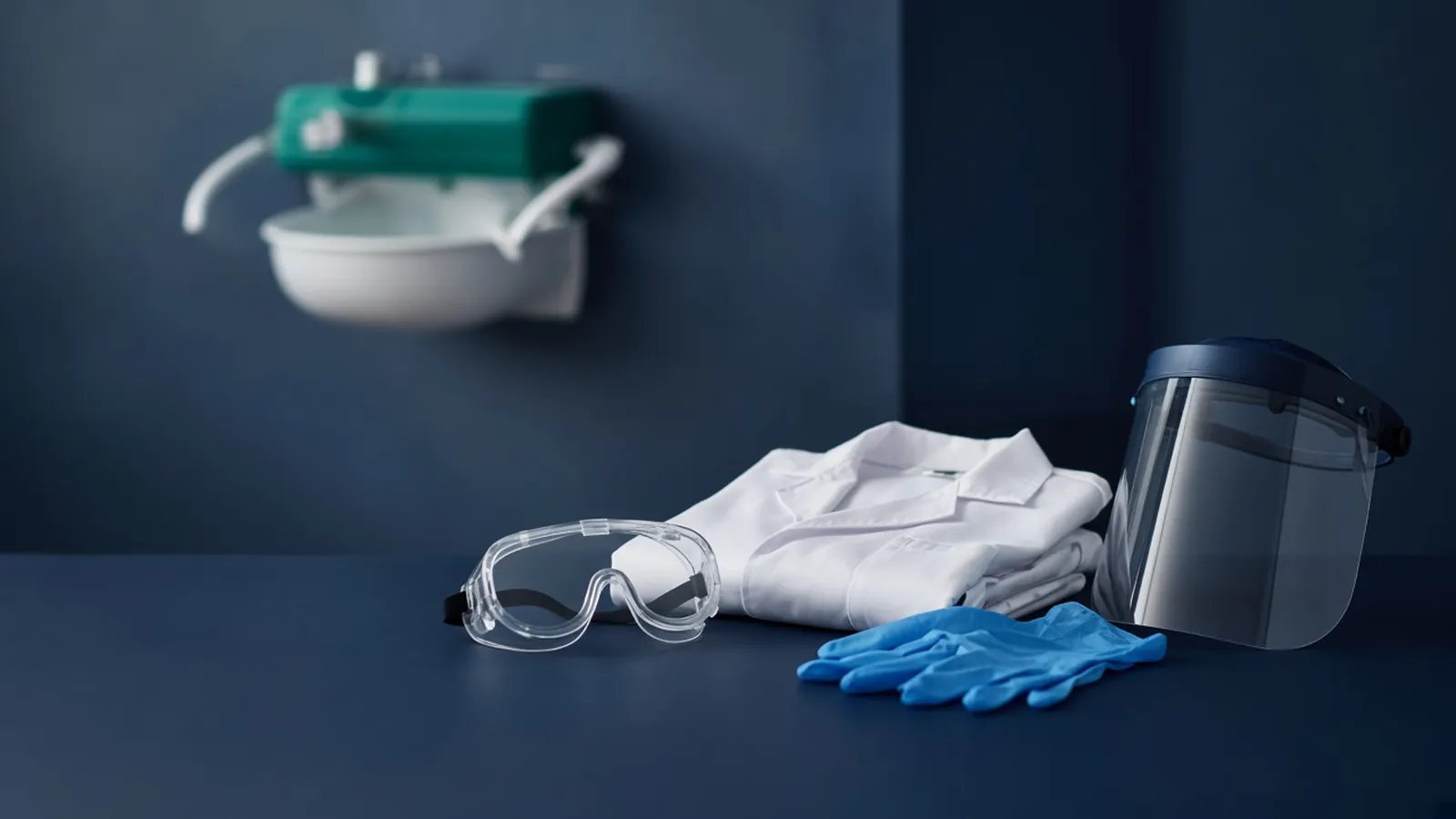 Biosafety basics for research benchesResearch-bench biosafety is a stack of barriers chosen by a risk assessment. This page explains the stack. It does not approve the work.A glossary of bench microbiology termsPlain definitions of colony, lawn, streak, pellet, transformant and the other bench words a cloning afternoon depends on.