
glossary
Plastic resins and solvent compatibility
A working map of polypropylene, polyethylene, polystyrene, polycarbonate, PET and PTFE, and why the solvent chart still decides.
- Author
- EVRINTH Editorial Team
- Published
- 8 October 2026
- Updated
- 8 October 2026
- Reading time
- 7 min
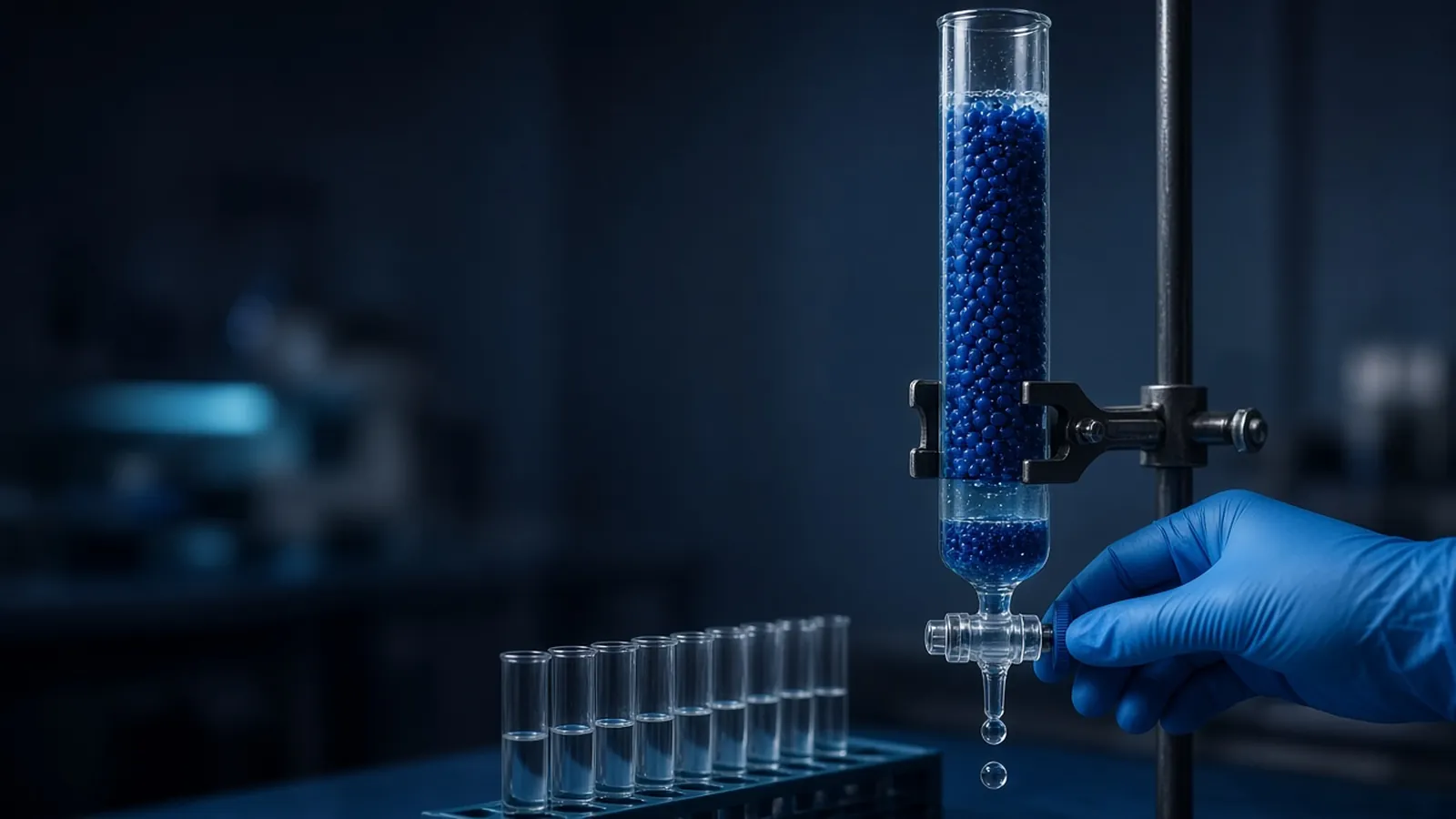
Resin names are classes of polymer, not permissions to pour. Polystyrene and polypropylene can share a drawer and fail on different chemicals, and the only honest way to choose is the chart for the piece you will actually wet. This glossary defines the classes research benches meet most often. Glass, when the chart is absent or hostile, is the subject of choosing laboratory glassware. The photograph assigned to this note shows chromatography hardware. The words below are about the plastic the liquid touches, which you confirm on the product, not by assuming a column body and a tube are the same resin.
Polypropylene
Polypropylene is the common default for aqueous microtubes, many bottle caps, and labware marked as autoclave-tolerant. It is translucent rather than glass-clear, tough, and comfortable with a wide range of aqueous acids, bases and salts at ordinary bench temperatures. That comfort is why it became the tube people reach for. It is still a chart material. Some organic solvents soften it, swell it, or extract additives, especially with heat or long contact. A tube that survives a brief aqueous aliquot is not automatically a storage bottle for an extract. When a method says polypropylene, keep that word, and when the liquid is a new solvent, open the chart before the bottle.
Polyethylene
Polyethylene comes in denser and softer grades. High-density polyethylene bottles are the familiar milky reagent bottles for many aqueous solutions. Low-density polyethylene is softer and shows up as wash bottles and some flexible containers. Both generally dislike high temperature more than polypropylene does. Autoclaving polyethylene is a distortion risk unless that exact product is marked for steam. Chemical resistance to aqueous reagents is broad and still incomplete. Hydrocarbons and some solvents migrate or swell the wall. A wash bottle of solvent is a leak and a label problem waiting for a warm afternoon. Use polyethylene where the chart and the temperature agree, and do not promote a wash bottle to a waste vessel for a mixture you have not checked.
Polystyrene
Polystyrene is rigid, clear, and cheap to mould into Petri dishes, serological pipettes and optical plates. It is the right class when you need to see a liquid or read absorbance through a plate the assay allows. It is attacked by many organic solvents. Acetone, aromatic solvents and chlorinated solvents are classic ways to craze, cloud or dissolve it. It is also a poor autoclave material. It softens and warps at temperatures well below a steam cycle. A clear plate is not a small beaker for cleaning glassware with solvent, and a Petri dish is not a lid for an acetone beaker. If the workflow leaves aqueous biology and enters organic chemistry, leave the polystyrene behind.
Polycarbonate
Polycarbonate is the strong, clear plastic of some centrifuge tubes and safety shields. Strength is not chemical indifference. It can crack, sometimes suddenly, when stressed in contact with certain solvents or with strong bases. Repeated autoclave cycles can haze it and reduce toughness even when a single cycle is allowed by the maker. A centrifuge tube has a rotor rating as well as a chemical rating. Exceeding either is outside this glossary. If the liquid is alkaline and the tube will be spun, the chart and the rotor note are both mandatory reading. Glass or polypropylene may be the calmer choice for that base.
PET and PETG
Polyethylene terephthalate and the glycol-modified grade PETG appear as clear media bottles and some single-use vessels. They show the liquid the way glass does and avoid a broken bottle in a cell-culture corridor. Solvent resistance is limited. Strong organics and high temperatures are where these bottles disappoint. Many are sold for single use and for a stated sterile or clean claim. Autoclave instructions, when they exist, are specific to the grade. Do not assume a clear plastic media bottle can take the steam cycle you use for borosilicate GL45 bottles. The glass type for those reusable bottles is a different specification, described for laboratory glasses in ASTM E438.
PTFE
Polytetrafluoroethylene is the fluoropolymer people mean when they ask for a broadly resistant liner, sleeve or tube. It handles a wide chemical set and a wide temperature set compared with the plastics above. It is still a component, often a liner inside a polypropylene cap or a sleeve on a glass joint. The wetted face may be PTFE while the body is not. Specify which surface touches the liquid. Filled or modified fluoropolymers are not identical to virgin PTFE. The chart for that part remains the decision.
| Class | Typical honest use | Solvent caution |
|---|---|---|
| Polypropylene | Aqueous tubes, many autoclave-marked caps | Chart the organics; heat and time matter |
| Polyethylene | Aqueous bottles, wash bottles | Poor default for hot cycles and some solvents |
| Polystyrene | Clear aqueous plates and dishes | Many organics attack it; not a steam plastic |
| Polycarbonate | Strong clear tubes, within rotor rules | Some solvents and bases cause cracking |
| PET or PETG | Clear single-use media bottles | Do not treat as borosilicate or as a solvent flask |
| PTFE | Liners, sleeves, resistant tubing | The liner is not the whole assembly |
Using the chart without fooling yourself
Find the exact chemical, the concentration, the temperature and the contact time. A resin rated for dilute acid at room temperature may be unmarked for that acid hot, or for a mixture. Mixtures are not averages of their rows. If the chart says the product was not tested, that is a gap, not a yes. Glass is the usual default for aggressive organics, made up in volumetric glass when the volume must be declared and stored in a bottle with a compatible closure. NIST practice is why the volumetric step stays in calibrated ware rather than in a moulded plastic mark.
The branch when a tube clouds, crazes or smells of solvent is to stop, transfer anything you can save into glass, and treat the plastic as waste under your chemical rules. Leachate from a softened tube is an experimental variable you did not intend.
Safety
Organic solvents add flammability, toxicity and waste rules that this glossary does not replace. Biological reagents in plastic add biosafety containment under the WHO laboratory biosafety manual and the CDC BMBL. Research use only. A resistant tube is not a diagnostic container.
Warm rooms and long contact
Compatibility charts often assume a moderate temperature and a stated time. A solvent bottle in a warm store, or a tube left over a weekend in a hot instrument bay, can leave that assumption. Short contact during a transfer is a different exposure from overnight storage. Write the harsher one into the choice, including a warm store if that is where the bottle will sit.
What an enquiry should name
The resin class, the format (tube, bottle, plate, liner), the solvents and approximate conditions, whether autoclave marking is required, and the quantity. Ask for the compatibility basis the supplier will stand behind for that specification. Shop the laboratory plasticware catalogue and keep glass lines in the laboratory glassware catalogue. Send both through the quote request when the method uses both.
Questions from the bench
Why is a resin name not a solvent permission?
Polypropylene, polystyrene and the other names are polymer classes. Additives, wall thickness, temperature and the time of contact change whether a given bottle softens, cracks or leaches. The manufacturer publishes a compatibility chart for that product. A class description tells you which chart to open. It does not replace the chart, and a neighbour's anecdote does not either.
Which common lab plastic fails first with organic solvents?
Polystyrene is attacked by many organics, including ketones and aromatic and chlorinated solvents, so it is a poor default the moment the liquid stops being aqueous. Polycarbonate can crack in contact with some solvents and some bases even when it looks sturdy. Polypropylene survives a wide range of aqueous reagents and still has solvent entries on the chart that say do not use. When the chart is missing, use glass.
Where does PTFE sit in this list?
PTFE is the high-resistance fluoropolymer used for joint sleeves, cap liners and some tubing. It tolerates a broader set of chemicals and temperatures than the commodity lab plastics. A PTFE liner does not make the whole cap, or the bottle under it, equally resistant. Specify the wetted material, and still read the chart for that part.
Should a volumetric concentration be prepared in a plastic bottle?
Prepare a stated concentration in volumetric glass rated for that solvent, then transfer into a bottle the solvent and the closure tolerate. A plastic bottle's moulded mark is a capacity guide. Solvent that swells the wall also changes the volume you thought you stored. Glass remains the default vessel for aggressive organics unless a specific resin is documented for them.
References
Manufacturer names identify published method classes. Trademarks remain with their owners. Catalogue records on this site are independent references for enquiry. They are not a statement of inventory, distribution rights or a supply commitment. This page is educational. It is not medical advice, a diagnostic protocol or a biosafety approval.
Catalogue
Related products and categories
These links follow the subject of the article into published manufacturer references. A listing is a reference for an enquiry, not a statement of stock or distribution rights.
Continue in this cluster
Related reading
 Choosing laboratory glasswareHow to match borosilicate beakers, flasks and volumetric glass to the measurement you need, and when a printed line is only a guide.A glossary of labware termsDefinitions of the labware words that change a result: class marks, to contain and to deliver, joint size, resin, sterile and clean.Beakers are for handling not for accuracyWhy a beaker graduation is only a handling guide, and when a concentration other people will reuse belongs in a volumetric flask.