
guide
When to use plastic tubes tips and plates
When polypropylene tubes, pipette tips and polystyrene plates are the right vessel, and when solvent or volume still belongs in glass.
- Author
- EVRINTH Editorial Team
- Published
- 8 October 2026
- Updated
- 8 October 2026
- Reading time
- 8 min
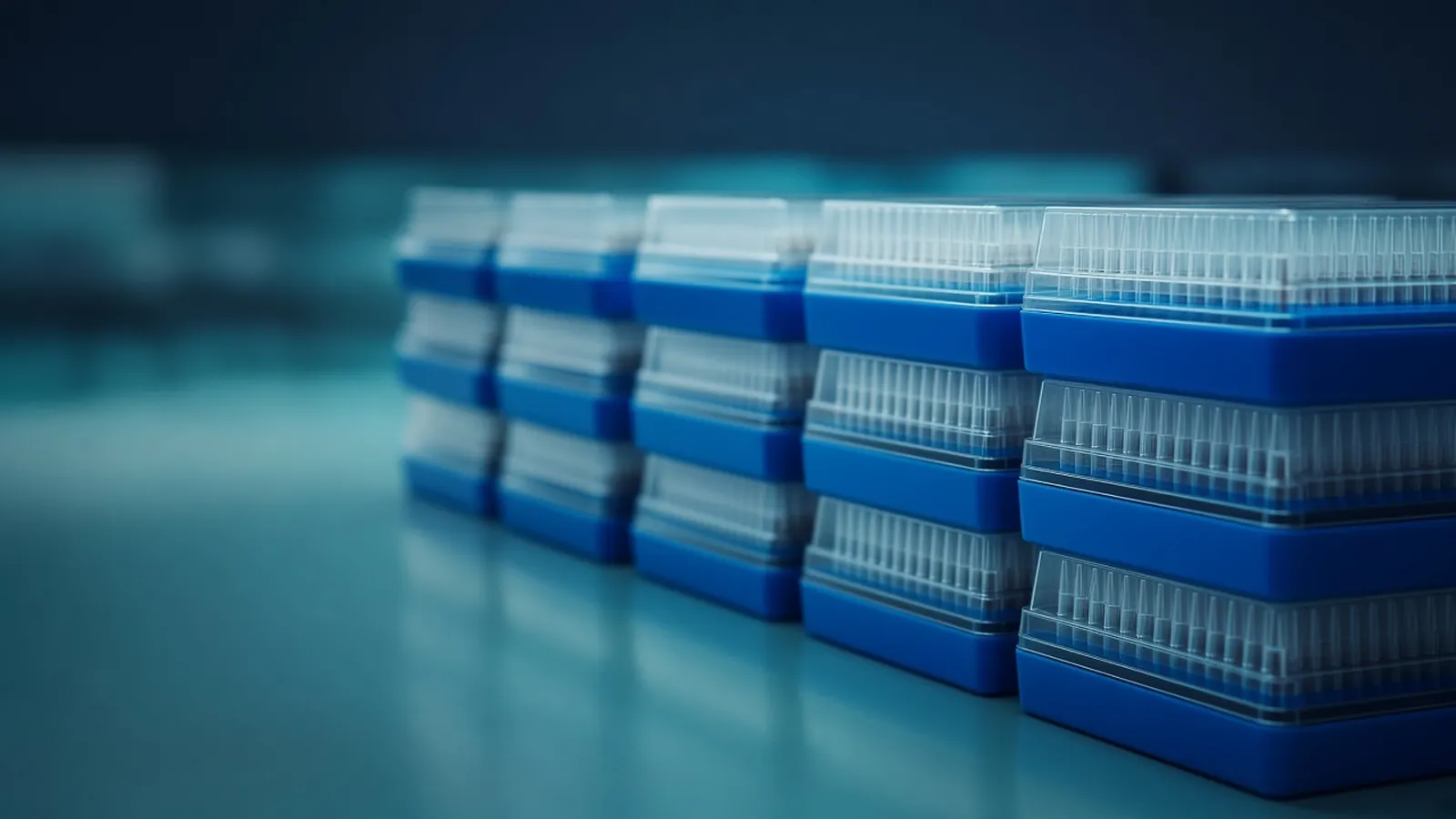
Plastic tubes, tips and plates are the right vessel when the experiment needs a clean single-use surface, a shape a rotor or a reader accepts, or a sterile field you do not want to rebuild from washed glass. They are the wrong vessel when the solvent dissolves them, when the volume must be a calibrated glass volume, or when heat will warp them. This page is that choice. The glass side of the same decision is choosing laboratory glassware.
Formats sit in the laboratory plasticware catalogue. When the answer is glass, use the laboratory glassware and volumetric glassware catalogues instead of forcing a polymer. Specifications go through the quote request.
The job the polymer has to survive
List the stresses before you list the catalogue. Solvent. Temperature. Spin speed. Optical clarity. Binding of a scarce analyte. A sterile claim. A footprint an instrument already owns. A tube that satisfies the rotor and fails the solvent is still a failed tube. A plate that is beautiful and the wrong skirt for the gripper is a plate you cannot run.
Plastic is not one material. Treating "plasticware" as a chemical class is how chloroform ends up in a polystyrene reservoir and how a quantitative transfer is attempted in a tube whose graduations were moulded as a hint.
Materials as classes
Polypropylene is the default for many microcentrifuge tubes and pipette tips. It is tough, often autoclavable when the product says so, and resistant to a wide range of aqueous buffers. It still binds some proteins and nucleic acids, it can be softened by certain solvents, and it is not a volumetric flask. Low-binding and low-retention versions change the surface. They are worth the specification when the analyte is dilute. They are not magic for every buffer.
Polystyrene is clear and is the usual material of Petri dishes and many cell-culture and assay plates. Tissue-culture treatment makes the surface wettable so many mammalian cells attach. Untreated polystyrene is the choice when you do not want that attachment. Polystyrene is a poor home for many organic solvents. It also softens at temperatures polypropylene would still tolerate. Do not autoclave a plate because the tube next to it was polypropylene.
Polyethylene appears as bottles, wash bottles and some caps. High-density and low-density grades differ. Caps matter as much as tubes: a cap liner that fails in phenol is the leak, even when the tube wall survives. Polycarbonate is tough and clear and has its own solvent list. Fluoropolymers such as PTFE resist chemicals that attack the others and cost enough that they are a specified choice, not a default tip.
Glass remains the vessel when you need a ground volumetric mark, a flame or a hot plate, or a solvent on the wrong side of the polymer chart. Borosilicate does not bind a scarce DNA the way some tubes do, and it does not leach plasticisers. It breaks, and it is the wrong sterile single-use flask. The choice is allowed to be mixed inside one method: dissolve a standard in volumetric glass, then aliquot it into certified tubes.
Tips, tubes and plates
Tips are a metering surface, not an accessory. The tip must seat on that pipette. A poor seal drips and destroys the air cushion the pipette uses to measure. Filter tips add a barrier so aerosols drawn toward the barrel are less likely to leave it later. Use them when the next sample would be ruined by that aerosol, including nucleic-acid setup. Non-filter tips are appropriate for many chemical transfers. Sterile, nuclease-free and pyrogen-free are different test claims. Buy the claim you will write in the method. A rack that was poked by a dusty hand is no longer the interior the claim described, even if the box still says the word.
Tubes cover microcentrifuge tubes, conical centrifuge tubes, cryovials and PCR tubes. Thin-wall PCR tubes exist so a thermal block can change the liquid temperature. A thick storage tube in a cycler is a different reaction. Conical tubes for a swinging-bucket rotor need the speed rating and the chemical rating. Screw caps and flip caps fail differently. A flip cap that pops in a warm water bath is an open tube.
Plates differ by well number, well shape, colour and skirt. Flat bottoms suit optical reading and adherent cells. Round and V bottoms suit pellets and some mixing. Black plates cut crosstalk in fluorescence. White plates support luminescence. Clear plates let you see the cells and also let light through. A 96-well plate and a 384-well plate are not interchangeable by wishing the pipette to be careful. Skirt and height decide whether a robotic gripper or a thermocycler lid will accept the plate. Tissue-culture treatment belongs only on the culture step. An assay plate does not need it, and the treatment can change binding.
Compatibility, in decisions rather than a copied chart
| Condition | Prefer | Think again |
|---|---|---|
| Aqueous buffer, single use, centrifuge | Polypropylene tube of the right rating | A beaker you hoped was sterile |
| Mammalian adherent culture | Tissue-culture-treated polystyrene flask or plate | Untreated plastic, unless the line is meant to stay in suspension |
| Organic solvent, chloroform, many hydrocarbons | Glass, or a fluoropolymer the note names | Polystyrene, and any tube you have not checked |
| Standard concentration others will calculate from | Volumetric glass at its calibration temperature | Moulded graduations on a tube or a cylinder used as a flask |
| PCR or RNA, shared pipettes | Filter tips and tubes with the nuclease claim you need | An open tip box from a high-copy bench |
| Fluorescence read | Plate colour matched to the optics | A clear culture plate reused because it was empty |
No table on a webpage replaces the compatibility note for the resin in your hand. When the note is silent and the solvent is aggressive, use glass. NIST calibration procedures are the public doorway for volume as a metrology problem. A moulded line on a conical tube is not in that category.
Culture-plastic expectations for collection cell lines are described in ATCC culture guides. They do not convert an untreated plate into a growth surface.
Failure modes
Solvent attack looks like cloudiness, cracking, or a swollen cap that will not open. Adsorptive loss looks like a perfect blank and a sample that vanished at low concentration. A recovery spike into the same tube plastic tells you which failure you have. Warped plates rock in a reader and invent optical scatter. Reused "washed" tips carry over enzyme and DNA. Static makes small volumes cling to a tip and then jump to a glove. That is a delivery error, not a shy meniscus.
Leachables from some plastics inhibit enzymes or add a mass-spectrometry background. If a blank in a new tube brand grows peaks, the tube is a reagent. Name it in the method record.
Safety
Broken plastic is less likely to cut than broken glass and more likely to be thrown into the wrong waste because it "looks clean". Tips that touched a culture or a toxic chemical are the waste your assessment named. A biosafety cabinet does not make an open tip box sterile again after it has sat in the draught of the sash. Filter tips do not replace that discipline. Decontamination of reusable racks follows institutional rules. The WHO laboratory biosafety manual is a reference for that judgement, not a waste procedure printed here. This page is not medical advice.
Heat, humidity and static
In a hot laboratory, plates and tip racks left in sunlight warp, and adhesive films fail. Store them as the note says, not on the window side of the incubator. Humidity changes static: a dry, heavily air-conditioned room makes tips cling and droplets creep; a monsoon week puts condensate on cold plates brought out of a refrigerator. Wipe and equilibrate before you read an optical plate, or the fog is your signal. A power cut that warms a cold room is a reason to check whether a kit's plastic and reagents were still inside their storage range before the next run. Do not assume a sealed pouch enjoyed the outage.
What to send with an enquiry
State resin, volume, sterile or nuclease claim, filter or non-filter tips, centrifuge rating, plate colour, well shape, tissue-culture treatment and instrument fit. Ask for those words on the specification. Use the laboratory plasticware catalogue and the quote request. If the honest answer is calibrated glass, say that, and point the enquiry at volumetric ware instead of asking a tube to pretend.
Pick a polymer vessel that survives the step you will actually run
- 01Name the stress on the vesselWrite the solvent, the temperature, the centrifugal force, the sterile claim, and whether an instrument must accept the footprint. The polymer follows the stress, not the colour of the rack.
- 02Check chemical compatibility before the first aliquotIf the liquid attacks polystyrene or swells a tube, move the step to borosilicate or to a polymer the compatibility note allows. A clear tube is not a universal bottle.
- 03Separate sterile, nuclease-free and pyrogen-free claimsUse the claim the experiment needs and no vaguer word. A tip that is sterile is not automatically certified free of nucleases, and a culture plate that is irradiated is not a volumetric device.
- 04Record the format in the methodNote tube resin, filter tips if you used them, plate colour and well shape, and any low-binding claim. The next person cannot repeat an adsorption result in a different plastic.
Questions from the bench
Are filter tips required for every pipette?
No. A filter tip is an aerosol barrier. It earns its place in PCR setup, RNA work, and any cabinet session where the pipette barrel must not carry droplets from sample to sample. It is wasted theatre for a buffer transfer on a chemistry bench, and it does not cancel a contaminated barrel that already happened. Match the tip to the contamination path you are blocking.
Can I autoclave any plastic tube?
Only if that resin and that manufacturer note say it survives the cycle. Many polypropylene tubes do. Polystyrene plates usually do not; they melt or warp. A warped tube that no longer seals will leak in a rotor. Autoclaving a piece that was sold as sterile and single-use can also add distortion and leachables you did not test.
Why did the protein or the DNA yield change when the tube brand changed?
Polypropylene binds some proteins and nucleic acids, and surface treatments sold as low-binding reduce that loss for some molecules and not others. A method validated in one tube can lose analyte in another at low concentration. If the amount is small, the tube is part of the chemistry. Verify the new resin with a recovery control before you blame the sample.
What should an enquiry about tubes, tips or plates include?
Resin, sterile or nuclease-free claim, volume, centrifuge rating, tip filter, plate well shape and whether the plate must be tissue-culture treated or optically clear. Ask for the written specification. A catalogue family is not one resin and not evidence about any particular lot.
References
Manufacturer names identify published method classes. Trademarks remain with their owners. Catalogue records on this site are independent references for enquiry. They are not a statement of inventory, distribution rights or a supply commitment. This page is educational. It is not medical advice, a diagnostic protocol or a biosafety approval.
Catalogue
Related products and categories
These links follow the subject of the article into published manufacturer references. A listing is a reference for an enquiry, not a statement of stock or distribution rights.
Continue in this cluster
Related reading
 Choosing laboratory glasswareHow to match borosilicate beakers, flasks and volumetric glass to the measurement you need, and when a printed line is only a guide.A glossary of labware termsDefinitions of the labware words that change a result: class marks, to contain and to deliver, joint size, resin, sterile and clean.Beakers are for handling not for accuracyWhy a beaker graduation is only a handling guide, and when a concentration other people will reuse belongs in a volumetric flask.