
application
Buffers that crash out on a column
Spot mobile phases that precipitate on a column: phosphate with organic solvent, high salt, cold beds, and why you filter.
- Author
- EVRINTH Editorial Team
- Published
- 8 October 2026
- Updated
- 8 October 2026
- Reading time
- 7 min
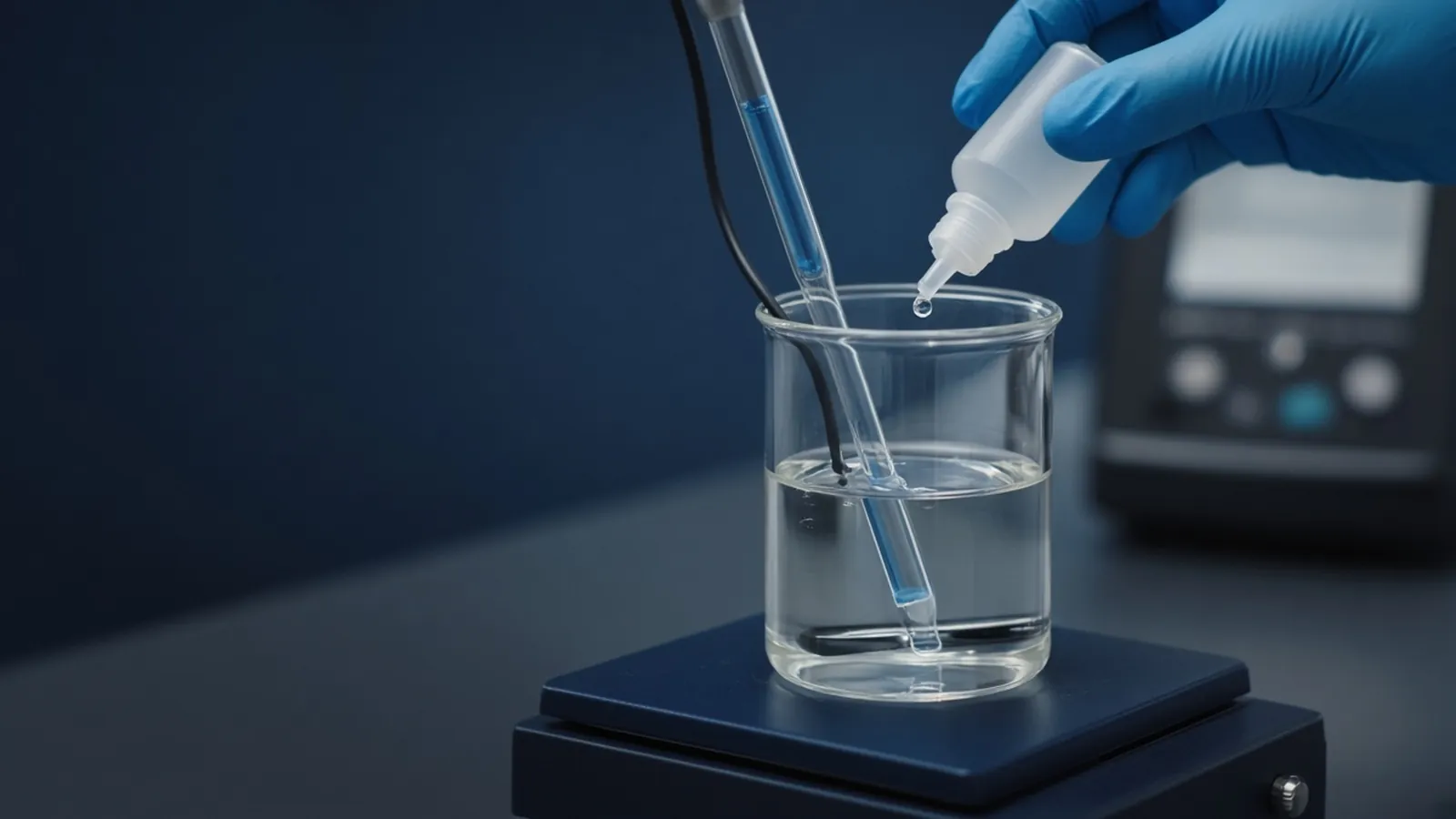
Precipitation on a column is a research failure with a simple cause: two liquids that were clear apart are not clear together, or a liquid that was clear on the bench is not clear at the temperature of the bed. The decision is whether to discover that in a glass beaker or inside a frit. How the separation itself is chosen is in chromatography methods in life-science labs.
Where solids appear in real methods
Chromatography assumes a mobile phase that stays a single liquid while it moves. A crystal in that liquid is a new stationary phase you did not pack, and it sits in the worst places: check valves, mixer, inlet frit, and the top of the bed. Pressure rises. Peaks broaden. A later injection looks "retained" because the flow path is partly blocked.
Phosphate with acetonitrile is the combination people remember because both bottles look innocent. Phosphate buffer is a normal aqueous phase for some small-molecule and oligonucleotide work. Acetonitrile is a normal organic phase. At a high enough organic fraction the phosphate salt's solubility collapses. The same pattern appears when a high-salt ion-exchange buffer meets methanol or acetonitrile, and when a concentrated ammonium sulfate cut is injected onto a reversed-phase column. Incompatible salt pairs can do it without any organic solvent at all. Calcium with phosphate, or a cationic detergent with an anionic one, will throw a solid in a fully aqueous line.
Cold makes all of this more likely. A mix that is stable at 25 Celsius can nucleate at 8 Celsius in a column compartment or in a cold room where a preparative column stands. The beaker test belongs at the temperature of the bed, not only at the temperature of your hand. Warm laboratories create the opposite surprise: a buffer made in a hot afternoon and then run on a cooled HPLC can shed salt as the loop and the column take heat out of it.
pH moves solubility too. A protein or a small molecule that is soluble in the load buffer can crash when the gradient crosses its least soluble pH. That solid is sample, and it packs the frit just as a buffer salt would. UniProt can remind you of domains and processing. It will not tell you the solubility in your mixed solvent. A small mixing trial will.
A practical trial before the pump
Write the strongest eluting composition the programme will reach, including the highest organic fraction and the highest salt. Mix those proportions in a clear vessel at the column temperature. Wait. If it clouds, the gradient is not a chromatography method yet. Change the buffer ion, lower the salt, or cap the organic fraction until the mix stays clear. There is no universal substitute recipe. Phosphate is not always the wrong buffer. Acetonitrile is not always the wrong solvent. The pair at that ratio and temperature is the question.
Filter mobile phases that pass the clarity test. A 0.2 or 0.45 micrometre filter, chosen for solvent compatibility, takes out dust and undissolved fines. Degas if the pump requires it. Date aqueous bottles. A buffer that grew microbes for a week will plate a film on a frit and raise pressure in a way that looks exactly like salt. Affinity chromatography buffers with sugars or dilute proteins are good food. They are a poor thing to leave on a column over a hot weekend.
When the sample itself is the risk, centrifuge or filter it in the injection solvent. A clear supernatant can still precipitate after it dilutes into the starting mobile phase. Mix one drop of sample with several drops of starting mobile phase in a tube and look. That tube is cheaper than an inlet frit.
What you do when the pressure has already risen
Stop. Do not raise the flow to push the solid through. Note the pressure and the composition on the screen at the moment it climbed. If the rise coincides with the organic ramp, precipitation is the leading hypothesis. Replace the column with a union. If the high pressure remains, the solid is in the pump or the tubing. Flush with the solvent that redissolves it, often warm water for a phosphate crash, and confirm the manual allows that flush. If the pressure drops when the column is removed, the frit or the bed is holding the solid. A reversed flush, only if the insert allows it, may move debris off an inlet frit. A bed that has compacted will not return to its old pressure just because the salt redissolved.
Then run a blank gradient and watch pressure across the full programme. A sample injected into a path you have not cleared will be blamed for a blockage it did not cause. Fractions collected during the climbing-pressure run are suspect: flow was not the flow you set, and the time axis slipped.
| Observation | Working hypothesis | Next action |
|---|---|---|
| Cloud in a beaker at the final composition | The programme will precipitate | Change ion, salt, organic fraction, or temperature |
| Pressure rises as organic increases | Solid forming at the mixer or frit | Stop, union-test, flush with a dissolving solvent |
| Pressure high even in water, column offline | Block in the pump path | Clean the path before the column goes back |
| Clear at the bench, cloudy in the column oven | Temperature margin was too small | Repeat the mix test in the cold |
| Film and odour in an old aqueous bottle | Microbial growth, not only salt | Discard, remake, and sanitize as the insert allows |
Affinity eluates and the next column
A capture step often elutes in imidazole, glutathione, or high salt. Those reagents were chosen so the protein would let go of a ligand. The next column, often ion exchange or reversed phase, has its own starting condition. Injecting the neat eluate imports the elution reagent into a place where it may precipitate or may simply destroy binding. Buffer exchange is part of the application, not a delay. The scale can be a small desalting bed or a dilution the next resin's note accepts. Follow that note. The article on affinity and ion-exchange protein purification covers the binding logic. This one only insists the liquids stay liquid.
Heat, cold rooms, and power
In a warm building, aqueous buffers made in the morning and left uncapped lose water, so the salt concentration at the end of the day is higher than the recipe. That concentrated bottle is the one that crashes when organic solvent arrives. Cap bottles and date them. In a cold room, leave time for the mobile phase to reach the room temperature before you judge it clear, and run the beaker test there. If power fails and a column sits for hours at a new temperature, assume the bed may hold crystals. Re-equilibrate with a solvent you know dissolves them, at a low flow, and watch pressure for a column volume or two before any sample.
Safety
Precipitates in a pumped system become sprays when a fitting fails. Stay under the pressure rating. Phosphate, organic solvents, and affinity reagents are chemical hazards. A lysate buffer is also a biological material. Institutional biosafety rules apply. The WHO laboratory biosafety manual is a public reference for that judgement. This page is not a cleaning protocol for an unknown toxin and not medical advice.
What to send
List the ions, the organic solvent, the extreme compositions, the temperature range, the column chemistry, and whether an affinity eluate is the sample. Ask for a flow path that tolerates that set and for a filter compatibility note. Use the scientific instruments catalogue and the quote request. A protein campaign question can be framed on the custom protein expression and purification reference as a discussion of method. ---
Questions from the bench
Why is phosphate plus acetonitrile a classic crash?
Phosphate salts are comfortable in water and poorly soluble once the organic fraction climbs. A gradient that pairs a phosphate buffer with acetonitrile can be clear in each bottle and cloudy in the mixer where the two streams meet. The solid nucleates in the pump, the tubing, or the frit. The chromatogram may still appear for a few injections. The pressure is the earlier witness. A beaker mix at the highest organic fraction you will reach is the test before the column sees it.
Does filtering the mobile phase prevent precipitation?
Filtration removes particles already in the bottle. It does not stop a salt from becoming insoluble when composition, temperature, or pH changes later. Filter anyway, because fines and dust block frits on their own. Then check solubility at the strongest point of the gradient and at the coldest temperature the column will sit in. A solution that is clear at the bench and cloudy in a cold column oven has not been filtered into safety.
Can an affinity elution buffer precipitate on the next HPLC step?
Yes. Imidazole, high salt, or a pH extreme that was correct for an affinity resin can meet an organic solvent or a colder temperature on the next column and fall out of solution. Exchange or dilute into the next mobile phase before the injection. The affinity step and the HPLC step have different solubility maps. A clear eluate in the cold room is not a promise about a 40 percent acetonitrile mix.
What should an enquiry say about solvent compatibility?
Name every buffer ion, the organic solvent, the highest organic fraction, the salt concentration, the pH, and the lowest temperature on the flow path. Ask which wetted materials and which column pH window accept that set. Send it with the quote request. A request that says only HPLC buffer will be answered with a guess you do not want.
References
Manufacturer names identify published method classes. Trademarks remain with their owners. Catalogue records on this site are independent references for enquiry. They are not a statement of inventory, distribution rights or a supply commitment. This page is educational. It is not medical advice, a diagnostic protocol or a biosafety approval.
Catalogue
Related products and categories
These links follow the subject of the article into published manufacturer references. A listing is a reference for an enquiry, not a statement of stock or distribution rights.
Continue in this cluster
Related reading
 Chromatography methods in life-science labsHow life-science chromatography separates molecules on a stationary phase, and what an HPLC or column peak does not prove about purity.A glossary of chromatography termsUse chromatography terms with their real limits: retention, resolution, void, and a peak that is only a detector response.
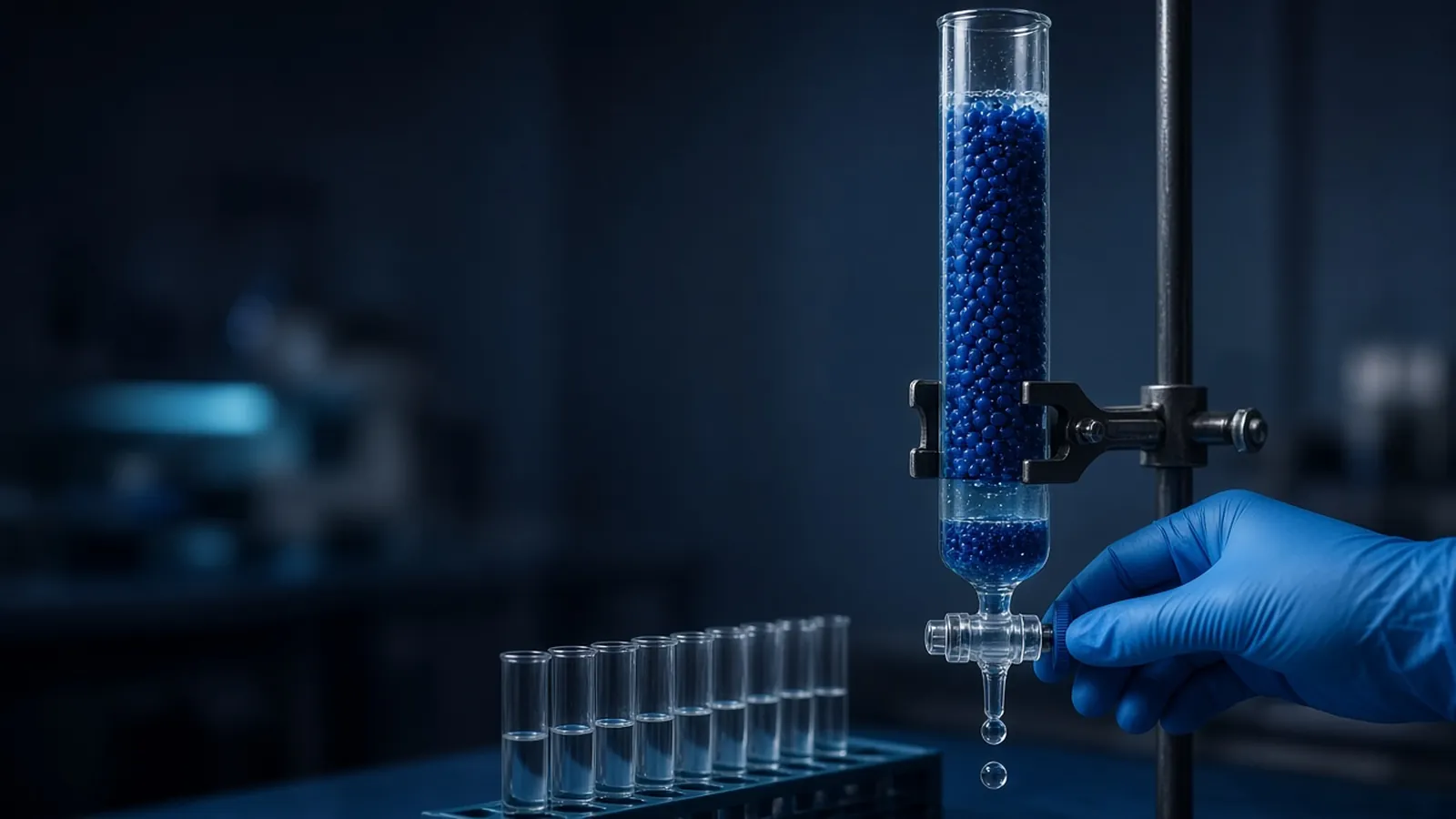 Affinity and ion-exchange protein purificationHow affinity capture and ion exchange pull a protein from a lysate, and why each collected fraction still needs an identity check.