
application
Comparing manual and automated handling
See which variances a liquid handler removes and which tip, clot, dead-volume, and deck errors it adds, then plan the check.
- Author
- EVRINTH Editorial Team
- Published
- 8 October 2026
- Updated
- 8 October 2026
- Reading time
- 7 min
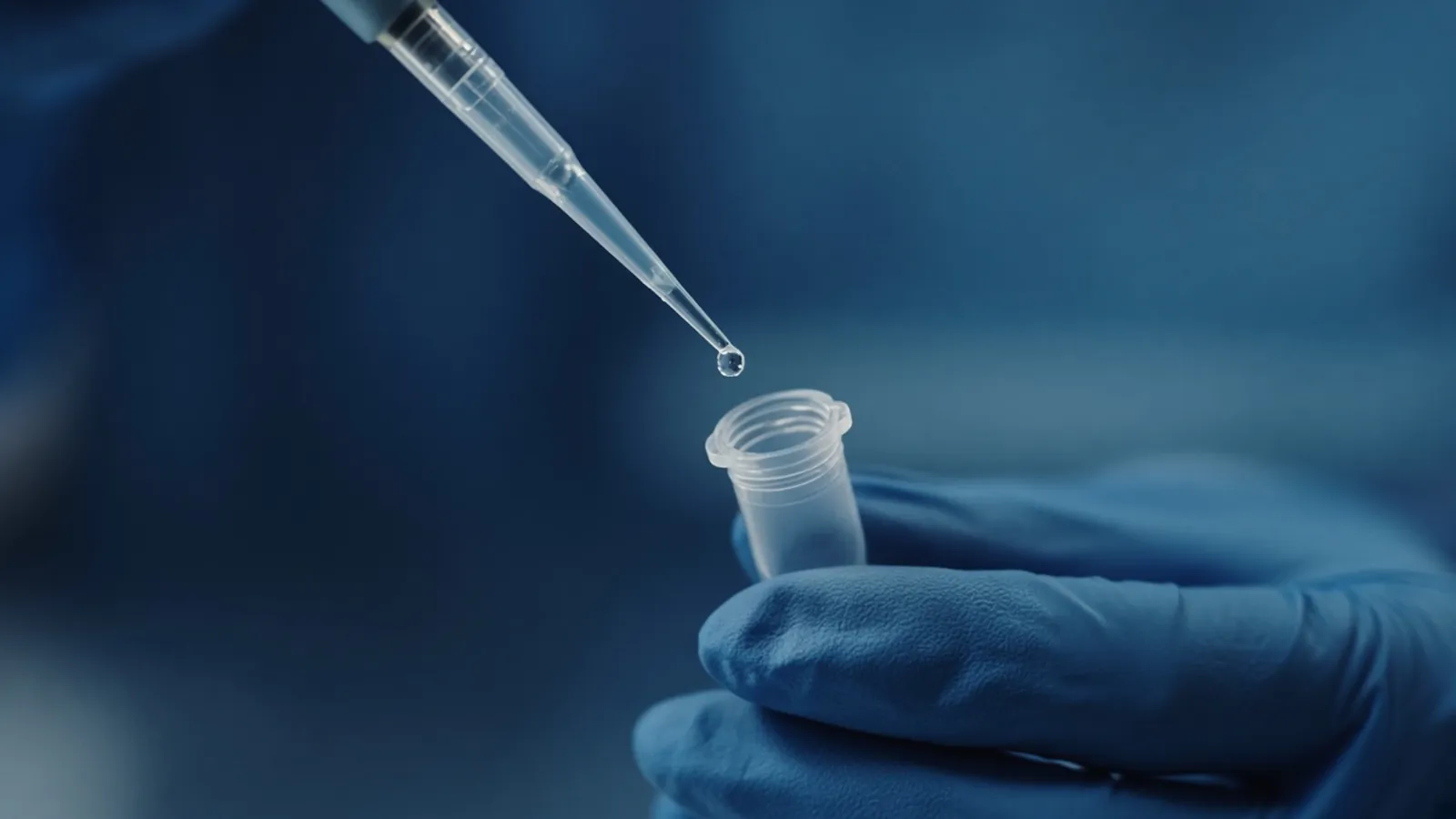
A liquid handler is a research tool for repeating a volume after a person has decided the volume is the right one. Comparing manual and automated handling means listing the variances each one removes and the new ones the deck adds, then deciding which check proves the run you are about to trust. Manual forward technique remains the reference habit in accurate micropipetting technique. The robot does not make that habit obsolete. It freezes one version of it in a file.
What the application can claim
Use automation when the same map repeats, when fatigue has been the scatter, and when the liquid is within what the head and the tip can move. The claim you can support is that programmed wells received the programmed action more uniformly than a tired hand. The claim you cannot support, without a check, is that the programmed volume matches the specification, that the plate was in the right orientation, or that a viscous reagent behaved like the water used to teach the head.
A person sees a bubble, a drip, and an empty reservoir corner. A robot sees thresholds if it has sensors, and otherwise it sees nothing. Clot detection and liquid-level detection are optional classes of hardware, not a moral property of automation. If your head lacks them, your method needs a visual check of the first cycle and a fill height with margin. If your head has them, test whether a viscous liquid trips the clot alarm. The branch is to slow the aspirate in the programme or to keep that liquid manual.
Tip-touch, dead volume, and deck layout
Tip-touch is the automated cousin of touching the well wall. It can finish a forward dispense. It can also pellet a bead of liquid on the wall above the reagents if the height is wrong. Verify touch with dyed water and the real plate type. A different manufacturer of 96-well plates can change the well depth enough to turn a good touch into a crash or a miss.
Dead volume sits in reservoirs, troughs, and tubes the tip is forbidden to reach. Specify it for each labware definition. Manual users often tilt a tube. Robots usually cannot. The last programmed aliquots are where air aspiration shows up as scatter. Leave a remainder on purpose, the way reverse pipetting leaves a remainder, and do not plan experiments that consume the theoretical bottom of the bottle.
Deck layout errors are systematic and confident. A plate rotated so A1 is where the programme thinks H12 is will be pipetted perfectly into the wrong wells. A tip rack of the wrong height teaches the head to pick air or to crush cones. A dropped tip in a nest shifts every later coordinate. The application limit is that the map in the software and the plastic on the deck are the same object. Photograph or checklist the deck at the start of a run you will publish.
Tip fit still rules. The head was checked with a tip family. A bargain rack that almost mounts will leak on every channel and the leak will look like biology because it is so even. Filter tips change the air path slightly and may be required by the risk assessment. They are not a biosafety cabinet.
A workflow for adopting a method, and the branch when the robot and the hand disagree
Write the manual method first: volume, forward or reverse, pre-wet, tip family, temperature. Translate it into speeds and heights. Run dyed water or a gravimetric series at the programmed volume. Convert mass with water density at the measured temperature, about 0.998 grams per millilitre near room temperature, from a table. Compare the mean and the scatter with the specification you claim. Error numbers live in the manufacturer specification and, for classical pipettes, in ISO 8655-2:2022. ISO 8655-1:2022 remains a terminology and user-recommendation standard, not a robot certificate.
Branch if the robot is tighter than the hand but the mean is shifted. Look at tip-touch height, blow-out settings, and pre-wet before you edit the volume number to force agreement. Branch if the robot is wider than a rested hand. Look at tip seating, teaching, and a reservoir low enough to catch air. Branch if a power cut stops a run mid-plate. Do not restart blindly. Record the last completed well from the log, check for half-filled wells, and decide whether the plate is still interpretable. The head does not lose its calibration because the power failed, and the plate may still be ruined.
A manual check of the same map, by a person using checking a pipette between calibrations logic on the hand pipette, tells you whether the disagreement is the head or the chemistry. Keep both instruments inside their own specifications.
| Step | What a person removes or adds | What a robot removes or adds |
|---|---|---|
| Finding the stop | Thumb fatigue, skipped blow-out | A programmed blow-out, repeated even if wrong |
| Seeing a bubble | Can stop and repeat | Repeats the bubble unless a sensor exists |
| Well identity | Can misread a map when tired | Repeats a rotated plate perfectly |
| Viscous liquid | Can slow down and use reverse mode | May alarm as a clot, or rush if the speed was copied from water |
| Last aliquots | Sees the meniscus | Dead volume and air at the programmed bottom |
| After a crash or a drop | Sends the pipette to be checked | Needs the same humility for the head |
Safety and the limit of automation
A robot can spill a larger reservoir than a hand. The risk assessment names containment, tips, and waste. A filter tip on a head is still not a cabinet. This comparison is research method design. It is not a diagnostic claim and not a statement that unattended operation is appropriate for every liquid. Stay inside what your institution allows a deck to do alone.
What an enquiry should include
State volumes, channel count, tip family, whether you need level or clot sensing, the labware heights, and the calibration document required for the head. Say which liquids are viscous or volatile so dead volume and speed are not copied from water. Instruments are in the scientific instruments catalogue, tips and reservoirs in the laboratory consumables catalogue. Send the deck constraints with the quotation request.
Questions from the bench
Which human errors does a liquid handler actually remove?
A robot removes the thumb's fatigue, the skipped pause, and the slow drift of immersion depth across a long plate, provided the programme and the deck are right. It repeats a tip height and a speed you typed. It does not remove a wrong volume in the method file, a tip that does not seal on that head, or a plate seated one nest off. Those become perfectly repeated errors. The limit of the claim is repeatability of the programme, not automatic correctness.
What is dead volume on an automated deck?
Dead volume is liquid the robot cannot aspirate because of the reservoir geometry, the tip length, or a safety height above the bottom. It is not part of the aliquots and it is not optional if you hoped to use the whole bottle. Manual pipetting has a related limit when a tip breaks the surface, but a person sees the meniscus. Specify dead volume for the labware you will actually nest, and fill above it. A programme that assumes an empty corner is reachable will suck air and scatter the last wells.
How do clot detection and tip-touch change a result?
Clot or empty detection, on heads that have it, can refuse a bad aspirate. It can also flag a viscous liquid as a clot and stall a run that a slow manual reverse stroke would have finished. Tip-touch, a programmed contact with the well wall, mimics the manual wall touch that completes a forward dispense. Set too hard, it flicks droplets or disturbs cells. Set too high, it dispenses in the air and leaves a bead in the tip. The application needs a written height, checked with the real plate, not a default from another labware definition.
Does an automated head still need calibration?
Yes. The head is a pipette with a piston path, a tip mandate, and a date. A calibration or a gravimetric check at the volumes you programme is what lets you compare it with the specification you claim. A vendor demonstration plate is not that check. After a crash, a tip-eject failure, or a move to a new laboratory, treat the head as unchecked until a water series says otherwise. Manual technique standards do not transfer numbers to the robot, and the robot's certificate does not repair a bent teaching tip.
References
Manufacturer names identify published method classes. Trademarks remain with their owners. Catalogue records on this site are independent references for enquiry. They are not a statement of inventory, distribution rights or a supply commitment. This page is educational. It is not medical advice, a diagnostic protocol or a biosafety approval.
Catalogue
Related products and categories
These links follow the subject of the article into published manufacturer references. A listing is a reference for an enquiry, not a statement of stock or distribution rights.
Continue in this cluster
Related reading
Accurate micropipetting techniqueHow an air-displacement micropipette delivers a volume, how forward pipetting uses the two stops, and why temperature belongs in the result.A glossary of liquid-handling termsSeparate the liquid-handling terms people mix up, from blow-out and pre-wetting to systematic error, tip fit, and the Z-factor.Air displacement versus positive displacementTrace under-delivery and dripping to the air cushion or the piston, and choose the pipette class that matches the liquid.