
protocol overview
Competent cell handling on ice
How to thaw, hold and plate chemically competent E. coli so the cells stay cold and the colony still reports the DNA you added.
- Author
- EVRINTH Editorial Team
- Published
- 8 October 2026
- Updated
- 8 October 2026
- Reading time
- 11 min
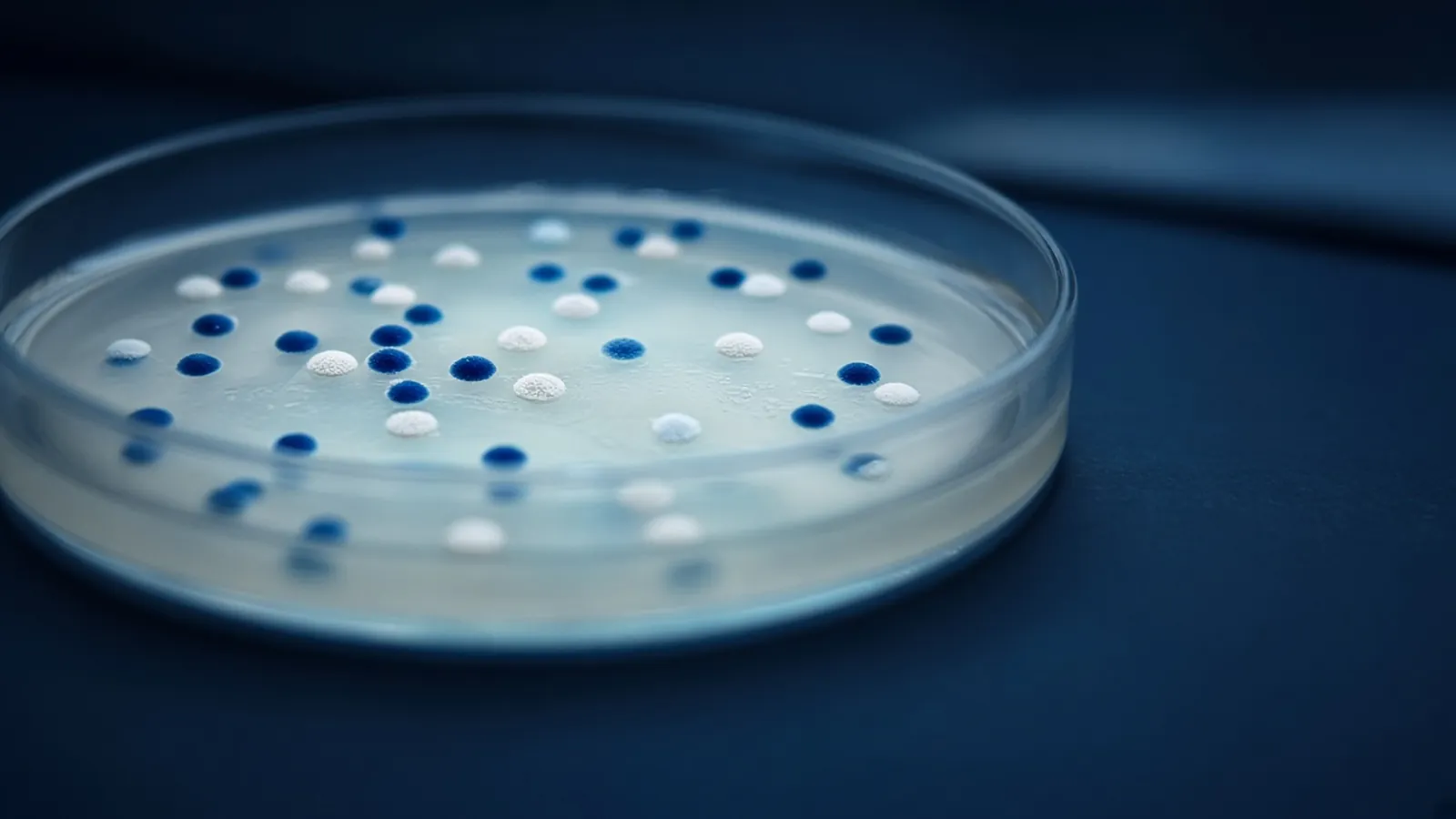
Chemically competent cells are a frozen reagent whose useful property disappears as they warm. The decision this overview supports is whether the colonies you count tomorrow still reflect the DNA you added, or a tube that spent too long off ice. Strain choice, medium and the shape of a transformation sit in bacterial culture and transformation. The plasmid you are introducing is the subject of plasmid cloning from insert to colony. Which antibiotic the plate must contain is covered in antibiotic selection and blue-white screening.
Competent-cell classes and recovery media are specified from the reagents and chemicals catalogue, beside the molecular biology pathway. Design questions about the DNA itself can be framed with the custom gene synthesis reference. Cold-chain limits belong on the quote request. A handling method can be discussed there. Longer storage logic for frozen biological material is in storing biological samples from fridge to freezer.
A cold reagent with a short bench life
Commercial and homemade chemical competent cells are washed E. coli, usually a K-12 cloning strain, held in a divalent-cation buffer and frozen. The cations and the cold are what leave the cells able to take up plasmid DNA. That state is not stable at room temperature. Every minute the suspension sits warm is a minute of lost competence. The practical rule is therefore dull and strict: thaw on ice, add DNA while cold, perform only the warm step the manufacturer printed, return to ice, then recover in the broth they name.
This overview does not paste a microlitre table. Volumes differ by kit. The sheet in the box is the volume authority. What does not differ is the order: cold, DNA, the printed pulse or incubation, ice, recovery without antibiotic, then selective plates. The Addgene bacterial transformation protocol is a public sketch of that order. Match it to your lot rather than mixing sentences from two suppliers.
Electrocompetent cells are a different preparation. Mention them only to keep them out of this cold chain by mistake. They must also stay ice-cold, and the DNA must be in water or a very low-salt buffer. Salt that a chemical transformation may tolerate will arc under a pulse. Do not heat-shock an electrocompetent aliquot, and do not electroporate a chemical aliquot. The tube label decides the instrument.
Why warmth ends competence
The competent state depends on a chilled envelope and on the ions in the buffer. Warm the cells and membrane fluidity changes, the ions do not hold the same arrangement, and the cells begin to behave like ordinary E. coli again. Ordinary E. coli does not take up plasmid DNA at a useful frequency. A tube that thawed in a coat pocket can still look like a cell suspension. It will not look like a transformation.
The heat shock is not an invitation to let the cells loiter at warm temperature. For many chemical preparations it is a brief rise, classically near 42 Celsius and well under a minute, used because that short stress helps DNA enter. The seconds belong to the lot. A block that is actually at 37, or a water bath that has overshot, is a different experiment. After the shock the tube goes back onto ice so the cells are not left at the shock temperature while you label plates. Label the plates before you thaw anything.
Mixing matters. Competent cells are fragile. Flicking the tube to mix DNA is the usual gesture. Vortexing shears the advantage you paid for. A large volume of ligation mix can also inhibit, because the ligation buffer is a chemical dose, not a neutral liquid. If the sheet says to use a small fraction of a ligation, believe it. Too much DNA-buffer and too warm a tube fail in different ways, and both look like "no colonies".
Aliquots, ice and the recovery broth on the label
The equipment class is simple: a freezer that holds the cells at the temperature the sheet states, a deep ice bath, pre-chilled tubes, a timer, a heat block or bath you have checked, and the recovery medium named by the manufacturer. That medium is often a rich broth with a little sugar, commonly called SOC in many methods. Use the one paired with the cells. Substituting a random broth can work, and it can also drop the colony count enough to hide a weak ligation.
Aliquot on arrival if the supplier sent a larger tube than one experiment needs. Do the split on dry ice so the stock never becomes liquid. Freeze the portions immediately. A kit that is thawed every Monday for a single ligation is a kit you are titrating downward. Write the date and the strain on each aliquot. An unlabelled tube of competent cells is a guess, and a guess you cannot compare with the positive control.
Plates are part of the cold chain even though they are not frozen. They should be warm enough that cells are not shocked by ice-cold agar, and not so hot that they kill the inoculum. Dry the surface of very wet plates before you spread, with the lid slightly open in a clean area for the time your method allows, so the plated volume does not pool. Selective antibiotic must match the plasmid marker. A perfect cold chain plated on the wrong drug is a blank plate.
From the freezer to the plate, and the branch when the control is blank
Thaw one aliquot on ice. Add the test DNA to one tube and, from the same thaw, add a known intact plasmid to a second tube and water to a third. The known plasmid is the cell control. The water tube is the no-DNA control. If you only transform the precious ligation, you cannot tell a dead aliquot from a dead assembly.
Follow the printed cold incubation, the printed heat shock, and the return to ice. Add recovery medium. Incubate without antibiotic for the time the sheet gives, often on the order of tens of minutes for routine cloning strains, so the resistance protein is made before the cells meet the drug. Plate a measured fraction. Incubate at the temperature the strain expects.
Read the three plates together. Known plasmid gives colonies, water gives none, ligation gives candidates: the cold chain and the plates did their job, and any emptiness in a future ligation is about the DNA. Known plasmid gives nothing, water gives nothing: the cells, the shock, the recovery or the plates failed. Do not redesign the cloning strategy on that evidence. Water gives colonies: the plates are not selective, and you cannot call anything a transformant. A fuller map of empty plates is a troubleshooting exercise of its own. Fix the control pattern first.
Pipetting those small volumes cleanly is part of the result. Accurate micropipetting technique is the companion if the "same" aliquot keeps producing wildly different colony counts from a trusted plasmid.
Three ways the same tube can be treated
| Handling | What the cells experience | What the plates tend to show |
|---|---|---|
| Thawed warm, or held in the hand | Competence collapses before DNA is added | No colonies, including from a plasmid that has worked in this strain before |
| Thawed once, refrozen, thawed again | Ice damage plus a second warm-up | Fewer colonies than the fresh aliquot; a weak ligation disappears entirely |
| Thawed on ice, DNA added cold, shock as printed, recovered as printed | The state the manufacturer froze is still mostly there | Known plasmid gives colonies; the no-DNA plate stays clear |
| Electrocompetent tube warmed, or DNA still in ligation salt | Cold chain broken, or salt left in the cuvette | Arcing, or a silent failed pulse; chemical heat-shock times do not apply |
Where the cold chain fails on an ordinary afternoon
The frequent failures are ordinary. The ice was a thin layer in a plastic tray and had become water by the time the ligation was ready. The cells were thawed while plates were still being labelled. A colleague borrowed half the aliquot and put the rest back in the freezer. The heat block had been set that morning and nobody checked the well. Recovery was skipped because the plates were selective and "the gene is on the plasmid", which forgets that the gene still has to be expressed before the drug is fair.
A shipment that arrives warm is a different reagent from the one that left frozen. Note the condition on the paperwork and do not hide a warm arrival by freezing it and hoping. Run the known-plasmid control before you commit a rare sample. ATCC culture guides talk about revival of material that has travelled. Read them as a reminder that transport is part of the reagent's history.
If the known plasmid works and the ligation does not, the ice was not the problem. Look at the assembly, the salt load, and whether you plated enough of the recovery. If nothing works, replace the aliquot before you replace the ligase story.
The strain does not become a new risk group because it is competent
Competence is a physiological state of a cloning strain, not a change in containment. Handle the cells under the rules your institution has already set for that K-12 host. No mouth pipetting. Disinfect spills. Inactivate waste. Antibiotics and the solvents sometimes used with DNA are chemical hazards of their own. This page is not medical advice and not a reason to transform an organism that is not on the cloning-strain list. The institutional biosafety decision still governs. A public frame those decisions often cite is the WHO Laboratory Biosafety Manual.
Ice that vanishes, and freezers that warm
Above about 30 Celsius a shallow pan of ice is gone before a careful ligation is mixed. Use a deep bath, pre-chill the tubes, and keep the path from ice to heat block short. Do not hold the tube up to read the label in a shaft of sun. In a building with evening power cuts, a freezer full of competent cells can warm overnight. If the box thawed, mark every tube and do not treat them as the original lot. Moving them to a backup freezer while they are still frozen is the useful action. Refreezing a melt "so they are cold again" produces the refrozen row of the table above.
A dry-ice handoff between buildings fails if the tubes ride in a pocket or in an unsealed box that has already vented. They should still be frozen when they arrive. Write that expectation on the request.
What an enquiry for this reagent should carry
State the strain genotype, chemical versus electrocompetent, the markers you plate, the efficiency duty if a large or difficult assembly needs it, and how cold the shipment must stay. Ask for the handling times that belong to the product, not a generic transformation paragraph. The quote request is where that specification goes. A method can be discussed. Use the custom gene synthesis reference only if the DNA design is part of the same question. It is an independent prompt, not a claim that synthesis is already running.
Keep one aliquot of chemically competent cells cold from the freezer to the recovery broth
- 01Split the kit into single-use aliquots while it is still frozen solidWork on dry ice or in a freezer long enough to portion the cells into pre-chilled tubes. Freeze those aliquots at once. The point is that one ligation does not thaw the tube you will need next week.
- 02Thaw the aliquot on ice, not in your handSet the tube in a deep ice bath until the suspension is just liquid. Pre-chill the DNA tube and the pipette tips you will use. Label the selective plates before the cells leave the cold.
- 03Add DNA while the cells are still cold, then follow the printed shockMix gently. Do not vortex a competent aliquot. Use the incubation and the heat-shock times printed for this lot, then return the tube to ice for the interval that sheet names.
- 04Recover in the medium the manufacturer names, then plateAdd the recovery broth they specify and incubate without antibiotic for the time they specify so the resistance protein can be made. Plate a measured fraction on the marker that matches the plasmid. Include a no-DNA tube from the same aliquot.
Questions from the bench
Can I refreeze competent cells that I thawed and did not use?
Treat a thawed aliquot as spent for high-efficiency work. A second freeze forms ice again and competence falls, often enough that a ligation which should have worked looks like a dead plasmid. If you must know whether anything survived, mark that tube as refrozen and do not compare it with a fresh aliquot.
Why does the tube have to stay on ice before the heat shock?
Chemical competence is a cold, cation-treated state. As the suspension warms, that state collapses and fewer cells take up DNA. Holding the tube in your fingers, or in a shallow puddle of melted ice, is a warm thaw even if you meant to be careful. The heat shock is a brief, timed exception, and then the cells go back to ice.
Are electrocompetent cells handled the same way?
They also stay ice-cold, and they have an extra rule: the suspension and the DNA must be free of salt. A ligation buffer that is harmless to many chemical transformations will arc in a cuvette. This overview is about the chemical cold chain. Follow the electroporation sheet for pulse settings rather than borrowing the heat-shock times.
What should an enquiry for competent cells specify?
Strain genotype, chemical competence versus electroporation, efficiency class if you know the duty, the antibiotic markers you will plate, and the cold-chain limit on shipment. Ask for the handling sheet that belongs to the lot. A method can be discussed from that sheet. A family name on a catalogue page is not evidence about a particular tube.
References
Manufacturer names identify published method classes. Trademarks remain with their owners. Catalogue records on this site are independent references for enquiry. They are not a statement of inventory, distribution rights or a supply commitment. This page is educational. It is not medical advice, a diagnostic protocol or a biosafety approval.
Catalogue
Related products and categories
These links follow the subject of the article into published manufacturer references. A listing is a reference for an enquiry, not a statement of stock or distribution rights.
Continue in this cluster
Related reading
 Bacterial culture and transformationHow non-pathogenic E. coli cloning strains are grown and how plasmid DNA is introduced, with the controls that make a colony meaningful.
 Storing biological samples from fridge to freezerFridge, minus-20, minus-80 and nitrogen storage slow different kinds of damage. A warm box is a quarantine decision, not a hope.
 Plasmid cloning from insert to colonyHow an insert becomes a plasmid, a colony and a verified clone, and which checkpoint fails when the plate is empty or the insert is wrong.