
comparison
Cryogen burns and oxygen displacement
Cold burns and oxygen displacement are different injuries from one liquid. Compare contact controls with the controls for a small room or a lift.
- Author
- EVRINTH Editorial Team
- Published
- 8 October 2026
- Updated
- 8 October 2026
- Reading time
- 8 min
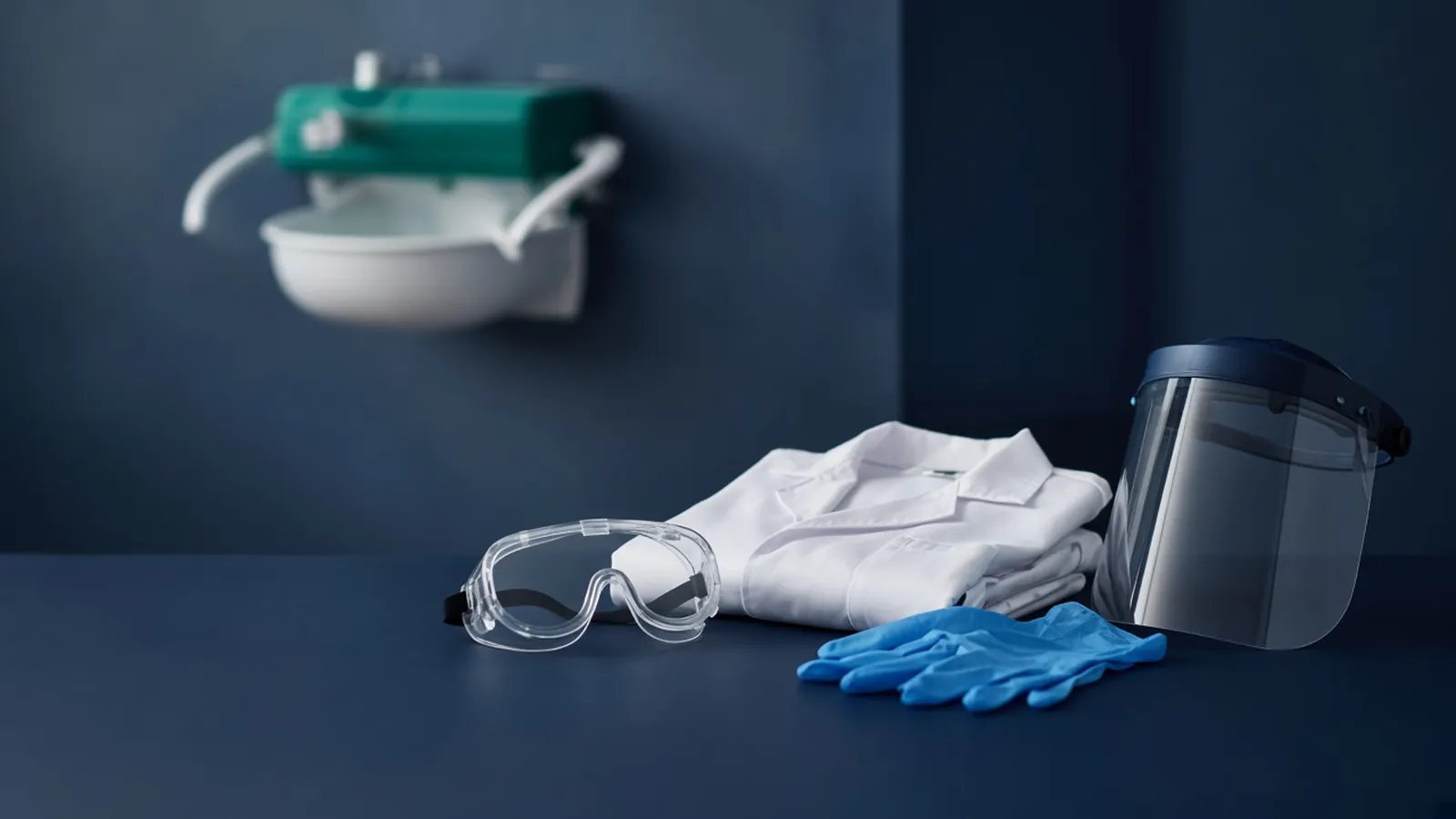
Liquid nitrogen hurts skin by cold and hurts a room by volume. The two injuries do not look alike, and the controls you specify should not either. This comparison is for people who store viable samples or fill dewars and need to stop treating "cold" as one hazard. Where a sample sits, from the fridge down to nitrogen, is storing biological samples from fridge to freezer. Dry ice is a different solid, with carbon dioxide gas, and its packing limits are in dry ice packing for sample shipments. The programme around the bench is biosafety basics for research benches. Face shields, cryogloves, and related consumables are classes in the laboratory consumables catalogue. Specify them through academic research and a quotation request. A quotation is not a room assessment.
Two mechanisms, one liquid
Liquid nitrogen sits at about -196 °C. Contact with the liquid, with a just-filled metal rack, or with gas cold enough to matter freezes tissue. The injury is local and fast. Wet gloves make it worse because water freezes to the skin. A loose insulated glove, of the kind that can be flung off if liquid enters it, is a typical control. A thin nitrile exam glove is not that control. A face shield is typical when a fill can splash, because the eyes are a contact site too. Your assessment names the set. This page does not prescribe treatment after a burn. The first response is the laboratory's written cold-injury rule and a clinician. Do not invent a folk remedy while you wait, and do not treat a white patch of skin as a badge of effort.
The second mechanism is oxygen displacement. As the liquid warms it becomes gas, on the order of several hundred times the liquid volume. That gas is not a poison in the theatrical sense. It is mostly nitrogen, which does not announce itself by smell. In a small room, a cold room, a store without ventilation, or a lift car, the oxygen available to breathe can fall. The person may not get a useful warning before they cannot leave. A large dewar that vents during a fill, a dewar left to boil in a closed office, or a spill from a tipped vessel are the scenes. An autoclave in the same room does not cancel this. Heat may even speed the boil-off. The hazards are neighbours, not substitutes.
People mix the mechanisms up in both directions. They wear a face shield and then fill a dewar in a tiny room with the door shut, because they have "got the PPE." Or they install an oxygen alarm and then handle racks with wet exam gloves, because the alarm feels like the whole control. Each control answers one column. Specify both, or you have specified half an injury.
What you notice, and what you do not
A contact burn announces itself on the skin. You can point at it. An oxygen-deficient room often does not. There may be a plume of cold vapour, a hiss, or nothing you trust. Do not use how alert you feel as the instrument. Where the institution has fitted an oxygen alarm, the alarm is the instrument, and the response is the one written beside it: leave, and do not stay to finish the fill. Many occupational rules treat oxygen below about 19.5 percent as oxygen-deficient. That figure is a common reference point, not your setpoint. Your institution sets the alarm and the action. A missing alarm is not replaced by a blog telling you to be careful.
If there is no alarm because the assessment did not require one, the control is the one they did require: ventilation, a limit on quantity, a ban on certain rooms, a second person. Do not add an alarm on your own initiative and invent the setpoint. Do not ignore a vapour cloud because an alarm was never purchased.
Controls that are typical, and local
Several controls show up so often that people mistake them for universal law. They are typical institutional controls. Confirm them where you work. This page is not a statute.
Vapour-phase dewars keep stored vials in the cold gas above the liquid, which reduces the chance that liquid nitrogen enters a badly sealed vial and later bursts it on the bench. That is a storage and explosion-of-the-vial control. It is described with the storage article. It does not remove boil-off, and a transfer of liquid into that dewar is still a liquid transfer, with contact and gas volume both in play.
Oxygen alarms, where the institution fits them, belong in the rooms the assessment names, with a power arrangement that still means something during a cut. An alarm that dies with the lights is a gap the institution should see. You specify "alarm as our risk assessment requires, with the behaviour they wrote for a power cut." You do not specify a medical promise.
A very common rule is that you do not travel in a passenger lift with a dewar. The reason is narrow: if the lift stalls, you and the venting liquid share a small sealed volume. Some buildings use a freight lift with a procedure, or move the dewar without a person riding. Confirm the local rule before you write it into a poster as if this article had enacted it. A stairwell with a heavy dewar is its own crush and spill hazard. The alternative to the lift is the procedure the institution wrote, not a creative route.
Personal protective equipment for contact does not ride in the lift as a gas control. A face shield does not add oxygen. Conversely, standing in a large ventilated hall does not make a metal rack safe to grab. Write the two columns on the risk assessment as two columns.
Dry ice is the comparison that keeps nitrogen honest. Solid carbon dioxide is about -78 °C, sublimes to a dense gas, and pools low. It burns by contact and displaces oxygen too, and the packing article already says not to ride in a closed cabin with a shipper. Do not use dry-ice gloves, dry-ice quantities, or dry-ice ventilation assumptions as if they were the nitrogen procedure. Same family of ideas. Different temperatures, different gas, different vessel.
| Contact burn | Oxygen displacement | |
|---|---|---|
| What the liquid is doing | Freezing tissue or sticking wet material to skin | Becoming a large volume of gas |
| What you tend to notice | Pain, a white or hard patch, a splash | Often little, until it is late |
| A control that matches | Face shield, loose cryoglove, no wet nitrile, tongs | Ventilation, quantity limits, alarm where fitted, leave |
| A control that does not match | An oxygen alarm in the corridor | A face shield worn in a closed lift |
| Typical local rule to confirm | How cold injury is reported and treated | No person riding with a dewar; alarm response |
| What a seller cannot decide | That your gloves were enough after an injury | That your room is safe at your fill volume |
The branch when the fill goes wrong
If liquid touches skin or a glove sticks, stop the transfer, get the glove off, and follow the cold-injury rule. Do not keep pouring while you inspect the hand. If the room has a vapour cloud you did not expect, or an alarm sounds, stop and leave. Do not stay to close a perfect valve if the assessment says to get out. A second person, if your alone-work rule requires one for fills, is the person who notices you did not come out. That staffing rule is institutional. It is not a curfew this page can write.
If a vial that was in liquid nitrogen splits or pops when warmed, that is the liquid-in-the-vial problem from the storage page, plus flying plastic. It is not proof the oxygen alarm is unnecessary. Deal with the sharp and the cold under the spill and injury rules. Do not sort vials in a closed small room because the pop made you cautious of your hands and forgetful of the air.
Heat, power, and the specification
In a hot building, boil-off is not slower. Dewars still vent, and a closed store at the end of a humid day is still a small room. Specify the vessel class, the personal protective equipment, and the alarm question in the enquiry before the hot season makes people casual. If power cuts are routine, write that any alarm the institution fits needs a stated behaviour when the supply drops. Use the quote form. Ask for the vessel's own documents. Do not ask whether a particular room is safe for a particular pregnancy, a particular illness, or a particular fill volume you hope someone else will bless. The institution's risk assessment, and occupational health where a person is the question, own those decisions.
What this page will not do
It will not treat a cold burn, clear a room, or approve a nitrogen installation. It will not tell you that vapour-phase storage has solved asphyxiation. It will not convert a typical lift practice into a law. Read the local rule, specify the two mechanisms as two controls, and do not proceed on the strength of a catalogue photograph of a dewar.
Questions from the bench
Is a litre of liquid nitrogen a small amount because the dewar looks manageable?
The liquid volume is a poor guide to the gas volume. A litre of liquid nitrogen becomes on the order of several hundred litres of gas as it warms. In a small room, a cold room, or a lift car, that gas can displace oxygen. The dewar can be easy to roll and still be a room-scale asphyxiant if it vents where you are standing.
Does vapour-phase storage remove the oxygen hazard?
Vapour-phase storage is a typical way to keep vials out of liquid so that liquid nitrogen is less likely to enter a poorly sealed tube. It does not stop the dewar from venting cold gas, and it does not make a fill or a transfer harmless. Sample integrity and the explosion risk of a vial that took in liquid are discussed with storage practice. The gas hazard remains a room question.
Is the rule about lifts a law this article is stating?
No. A typical institutional rule is that a person does not travel in a lift with a liquid-nitrogen dewar, because a stall turns the car into a small sealed volume. Confirm that control locally. This page did not draft a statute. If your building has a different written control, follow the writing, including any freight-lift practice the institution actually approved.
What should a cryogen enquiry specify, and what should it not ask?
Specify dewar type, whether you intend vapour-phase storage, the personal protective equipment class for transfers, and whether the institution is fitting an oxygen alarm. Ask for documents on the vessel, not for a declaration that your room is safe. Do not send a person's health information, and do not ask a seller to set the alarm point. That setpoint belongs to the institution.
References
Manufacturer names identify published method classes. Trademarks remain with their owners. Catalogue records on this site are independent references for enquiry. They are not a statement of inventory, distribution rights or a supply commitment. This page is educational. It is not medical advice, a diagnostic protocol or a biosafety approval.
Catalogue
Related products and categories
These links follow the subject of the article into published manufacturer references. A listing is a reference for an enquiry, not a statement of stock or distribution rights.
Continue in this cluster
Related reading
Biosafety basics for research benchesResearch-bench biosafety is a stack of barriers chosen by a risk assessment. This page explains the stack. It does not approve the work.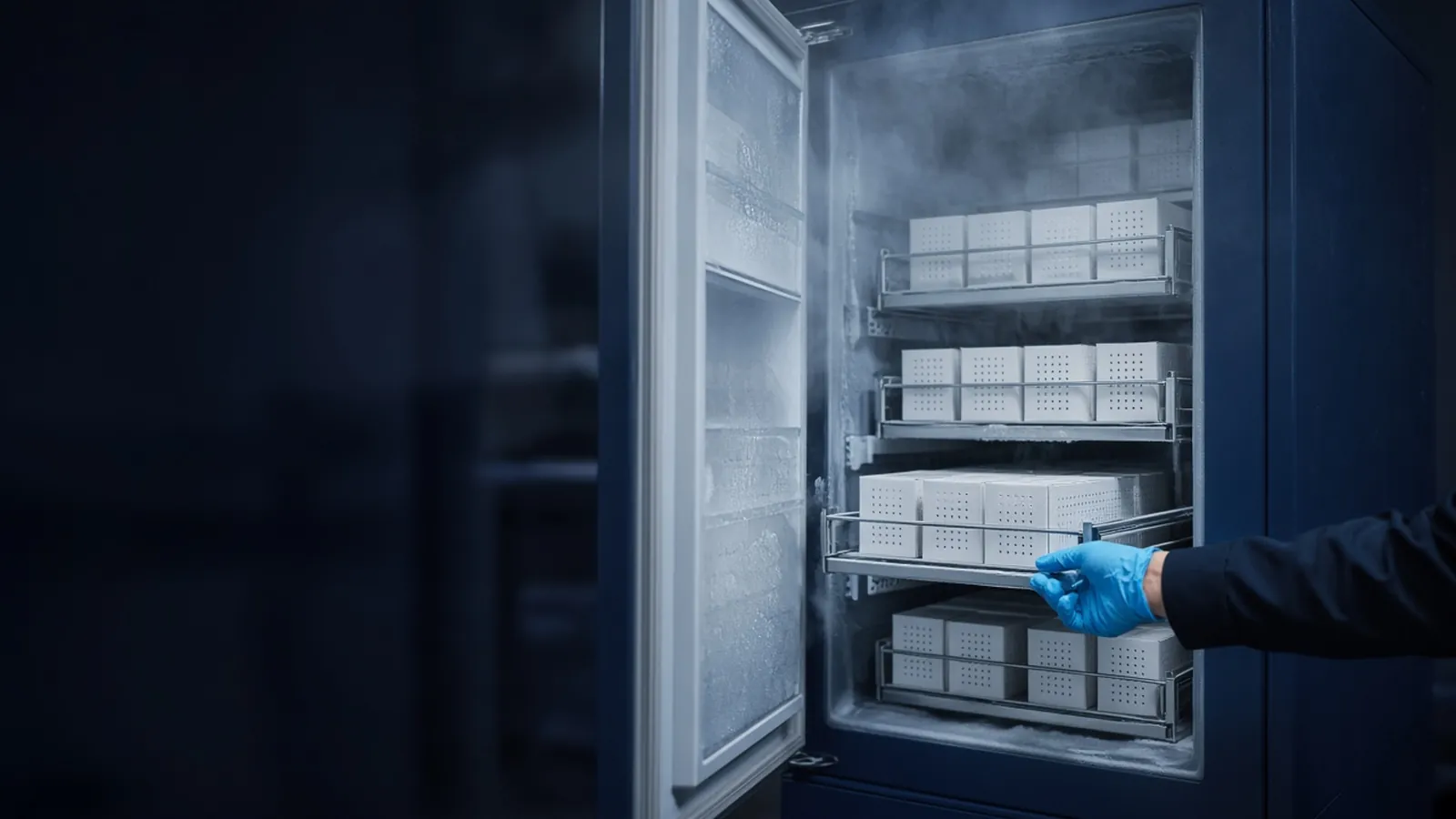 Storing biological samples from fridge to freezerFridge, minus-20, minus-80 and nitrogen storage slow different kinds of damage. A warm box is a quarantine decision, not a hope.
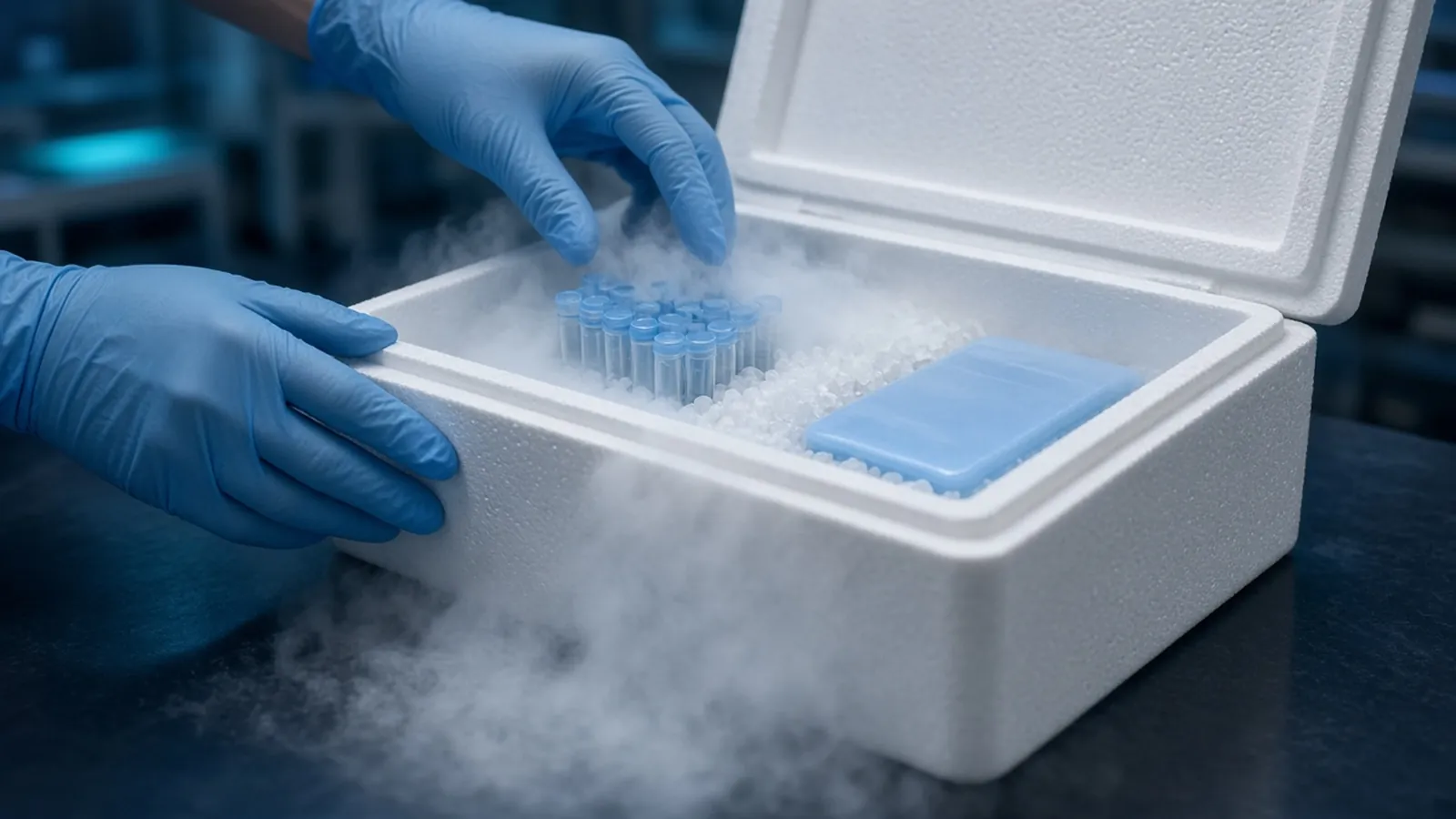 Dry ice packing for sample shipmentsDry ice keeps non-infectious research samples cold and can burn skin or displace air. Carrier rules and infectious-substance law still govern shipping.