
selection guide
Disposal of bacterial waste
Liquid cultures, agar plates, tips and sharps are different waste. The institution chooses inactivation. This page lists the questions to take to the safety
- Author
- EVRINTH Editorial Team
- Published
- 8 October 2026
- Updated
- 8 October 2026
- Reading time
- 8 min
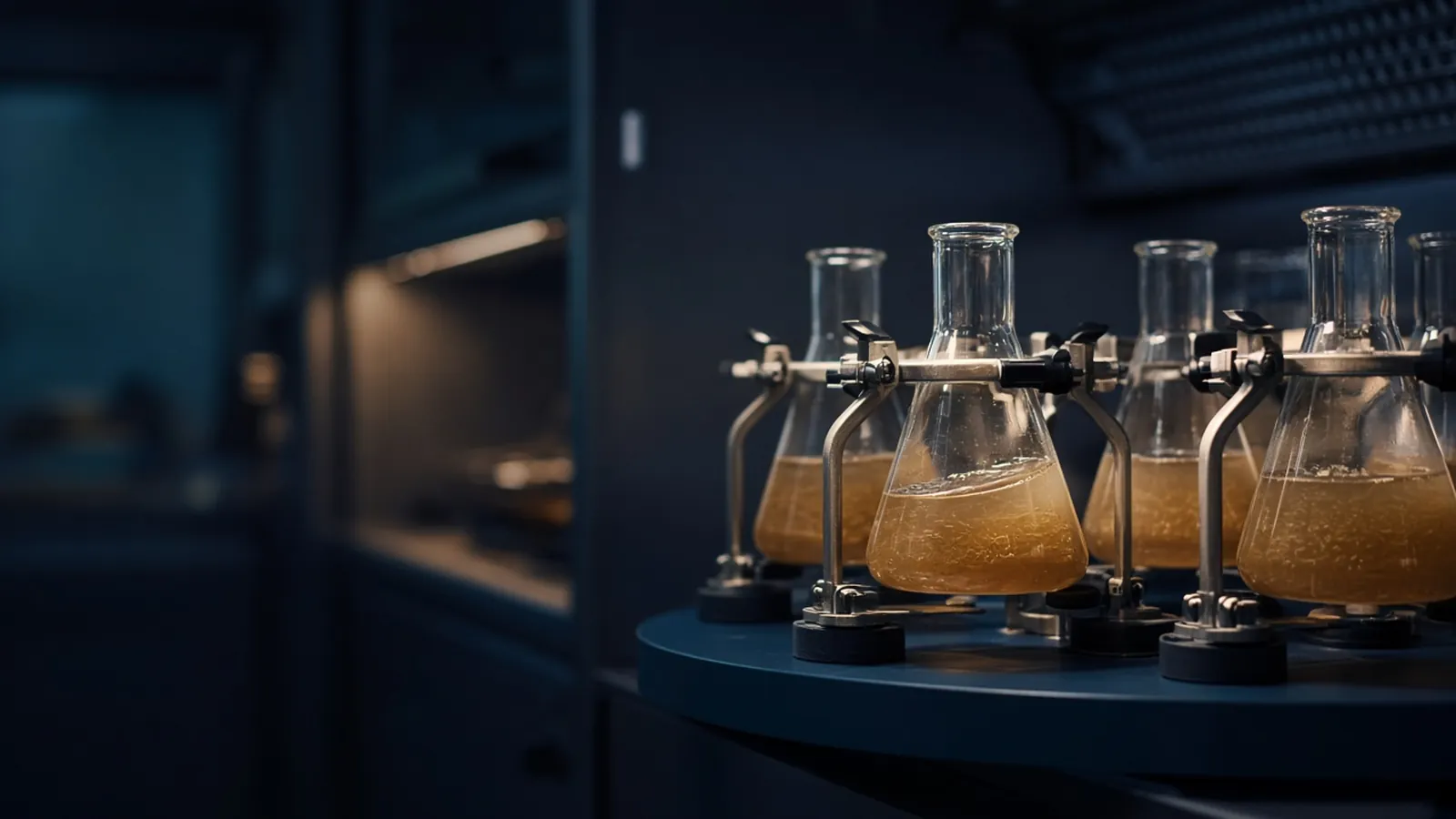
A shake flask, a stack of plates and a box of tips can all have touched the same non-pathogenic E. coli cloning strain and still be three different wastes. The decision this selection guide supports is which question to take to the safety office for each stream, so inactivation matches the organism assignment, the plastic, and any antibiotic the institution treats as a chemical. How the culture was grown is in bacterial culture and transformation. What a steam cycle does and does not do to a load is in autoclaves and what sterilisation does not do. The barrier habits around the bench are in biosafety basics for research benches.
The hero photograph is amber culture clamped on a shaker. That broth is live until the office's method has finished with it. It is the waste people are most tempted to pour out, and it is the waste this page refuses to send down a drain. Consumable classes used to contain it can be discussed from the reagents and chemicals catalogue when the item is a reagent, and the work itself sits on the molecular biology pathway. A DNA design note, if you are describing the plasmid that made the culture, can use custom gene synthesis as a reference only. Container and labelling questions go through the quote request.
Streams, not a single bin
Liquid culture is a bottle or a flask of cells in broth, often with an antibiotic. It spills. It can pressurise a tightly closed vessel if it is left warm and active. The institution chooses among an autoclave cycle suited to liquids, a chemical disinfection with a named contact time, or removal by a contractor. Treated liquid meets a drain only if they say the drain is allowed. Until that treatment is done, the flask is biological material under the assignment you already have for that cloning strain.
Agar plates are solid, bulky and full of plastic. Many sites bag them for a steam cycle. Some plastics melt or warp and ruin the load. The office knows which ware survives their cycle. Melted polystyrene is not "sterilised waste". It is a failed load and a burn hazard when the door opens. If the office uses chemical treatment for plates instead, the contact time has to reach the colonies, not only the lid.
Tips, spreaders and loops that touched culture are biological waste. They are not clean recycling because the strain was a cloning strain. Whether they are autoclaved, chemically disinfected or collected depends on the plastic and the local rule. A tip that melts into a tray can shield organisms in the same way overpacked bags do. The autoclave article is the place to remember that steam has to reach the load, and that indicator tape is not a centre-of-bag measurement.
Sharps are their own container: needles, glass Pasteur pipettes, broken glass, microscope slides. They cut through bags. A cut from a clean-looking pipette that held culture is an exposure your institution records in its own way, even when the organism is a disabled K-12 strain. The sharps container is the selection, and it is not optional because the plasmid was ordinary.
Gloves, paper and wipes from a spill follow the spill card. If they are wet with culture they are not office paper. If they are soaked in a disinfectant the autoclave forbids, they are not an autoclave bag either. The card separates those.
Who chooses the inactivation
The safety office, the biosafety committee, or the contractor they appointed chooses. This guide lists criteria they typically need from you. It does not choose for them. Criteria that change the answer include the organism assignment, whether the waste contains antibiotics or other chemicals they treat separately, the melting behaviour of the plastic, and the presence of sharps. A cloning strain the committee already listed is not a reason to invent a milder path than the one they wrote. A new resistance marker or a new insert can change the waste rule even when the flask looks the same. Tell them before the bin changes.
The WHO Laboratory Biosafety Manual is a public reference for that conversation. Handling expectations that arrive with collection strains are illustrated by the ATCC culture guides. Ordinary cloning manipulations that generate this waste are indexed in the Addgene protocols collection. Your card outranks all three.
Bleach is a class, not a recipe
Chlorine bleach products are a disinfectant class. They need a contact time. Broth and agar are organic loads that use up available chlorine, so a splash of product on a full plate is not automatically the time the manufacturer printed for a clean surface. The safety office names the product, the dilution class and the time for biological waste. This page will not write a home recipe with volumes of concentrate.
Incompatibilities are part of the selection. Do not mix bleach with ammonia. Do not mix bleach with acid. Both mistakes are ways laboratories generate toxic gas. Do not add a bleach soak to a load the autoclave procedure forbids. Corrosion of the chamber and reactions in the bag are why those procedures exist. If you do not know what a cloth was wet with, do not autoclave it and do not combine it with a second chemical. Ask.
Chemical disinfection and steam are alternative classes the institution might assign to a stream. They are not two half-steps you invent in series.
Questions that match the waste in your hand
| Waste you are holding | Question for the safety office |
|---|---|
| Liquid cloning-strain culture | Is inactivation by autoclave, by a named disinfectant and contact time, or by a contractor, and may the treated liquid go to the drain? |
| Agar plates in plastic dishes | Which bag, and does this plastic melt in the cycle this site runs? |
| Tips, spreaders and loops | Are they autoclave plastic, chemical disinfection, or a sharps-like stream because of rigid sticks? |
| Needles, Pasteur pipettes, broken glass | Which sharps container, and where does it go when it is full? |
| Medium that contains a selective antibiotic | After the organisms are inactivated, is the drug still chemical waste? |
| Spill wipes | Which disinfectant is allowed, and which bin receives the used wipe? |
Take the table to the office as questions, not as a policy you have already enacted. If they have a one-page card, the card replaces the table the moment you are given it.
Plastic that melts, and drug that remains
A sourcing note for bags and containers should say what they must survive. An autoclave bag that is not rated for the cycle temperature class will fuse around a load of plates and leave a core the steam barely reached. A sharps container has a fill line and a lid for a reason. Specify those classes when you enquire about consumables. Do not specify a brand affection, and do not specify a disposal service this site does not claim to perform. The question is the container that matches the stream your office already named.
Antibiotics deserve their own sentence in the waste description you hand over. Ampicillin, kanamycin and the rest are not identical in how an institution views the effluent. Write the drug name. If the office says the selective agar is chemical waste after kill, labelling the bag only as "bacterial" will send it down the wrong path. If they say the biological inactivation is enough, follow that, and do not accumulate a private store of "antibiotic plates" in a freezer as an unofficial archive.
Research limits
This page is about waste from non-pathogenic cloning strains under an assignment you already hold. It does not authorise work with a pathogen, and it does not tell you to disinfect your way out of a missing assessment. It does not tell you to pour live culture away. Recording a method, the sort of note people put on protocols.io, can include the waste stream your office assigned. The office remains the author of that stream. This page is not medical advice.
Heat in the corridor, and how long a bag may wait
A bag of plates or a flask left in a hot corridor will grow, smell and sometimes swell if it is sealed while cells are still active. Ask the safety office how long a container may wait before inactivation, and where it waits. Do not invent an hour limit in a local poster and treat it as their answer. Tightly closed culture bottles are a pressure risk in heat and again in an autoclave if the machine procedure expects loosened closures. Follow the closure rule they trained. Humidity that rots a cardboard sharps outer before collection is a facilities question you can raise with the same office. None of these points is a reason to move live waste into ordinary rubbish because the autoclave queue was long.
What a container enquiry should say
Name the stream the office assigned: liquid biological, autoclave-bound plates, sharps, or a chemical-waste overlay for antibiotic medium. Name the temperature class the bag must survive if steam is the method. Name the fill behaviour you need from a sharps container. Ask for the written specification of the container, not a nickname. Packaging can be discussed from that note through the quote request. The strain and the marker belong in the note so the receiver understands this is cloning-strain waste equipment, specified by your institution's categories. Keep custom gene synthesis out of the waste question unless you are also asking about DNA, and then keep it labelled as a design reference.
Questions from the bench
Can all cloning-strain waste go in one bag?
Liquid broth, agar plates, pipette tips and sharps are different physical hazards even when the organism is the same non-pathogenic cloning strain. A bag that hides a Pasteur pipette will cut the person who carries it. A bottle of live culture is not a plate. The safety office assigns the stream for each. One bin is how those assignments get ignored.
Is household advice about bleach a laboratory method?
No. Chlorine bleach is a disinfectant class with a contact time, and organic matter such as broth and agar consumes it. The safety office names the product, the dilution class and the time. Do not mix bleach with ammonia or with acid, and do not invent a kitchen recipe. Many autoclave rules also forbid bleach-soaked waste because it damages the machine.
Do antibiotics in the agar change the bin?
They might. Some institutions treat selective medium as chemical waste after the organisms are dead, because they do not want active drug in the drain. Others include it in the biological stream once inactivated. Ask that question explicitly. The marker you chose for the plasmid is part of the waste description.
Where should a live flask never go?
Not down a sink, not into ordinary rubbish, and not into a corridor to be forgotten. Live culture stays in the inactivation path the institution named, whether that is an autoclave cycle, a chemical disinfection they have specified, or a contractor. This page will not give a dump-and-hope step.
References
Manufacturer names identify published method classes. Trademarks remain with their owners. Catalogue records on this site are independent references for enquiry. They are not a statement of inventory, distribution rights or a supply commitment. This page is educational. It is not medical advice, a diagnostic protocol or a biosafety approval.
Catalogue
Related products and categories
These links follow the subject of the article into published manufacturer references. A listing is a reference for an enquiry, not a statement of stock or distribution rights.
Continue in this cluster
Related reading
Bacterial culture and transformationHow non-pathogenic E. coli cloning strains are grown and how plasmid DNA is introduced, with the controls that make a colony meaningful. Autoclaves and what sterilisation does not doSteam sterilisation holds a cleaned load at temperature. It does not wash, remove endotoxin, or prove sterility because the tape changed colour.
 Biosafety basics for research benchesResearch-bench biosafety is a stack of barriers chosen by a risk assessment. This page explains the stack. It does not approve the work.