
protocol overview
Ergonomics and repetitive pipetting
Plan posture, thumb force, and breaks for a long pipetting session, and report pain as an occupational issue for the institution.
- Author
- EVRINTH Editorial Team
- Published
- 8 October 2026
- Updated
- 8 October 2026
- Reading time
- 8 min
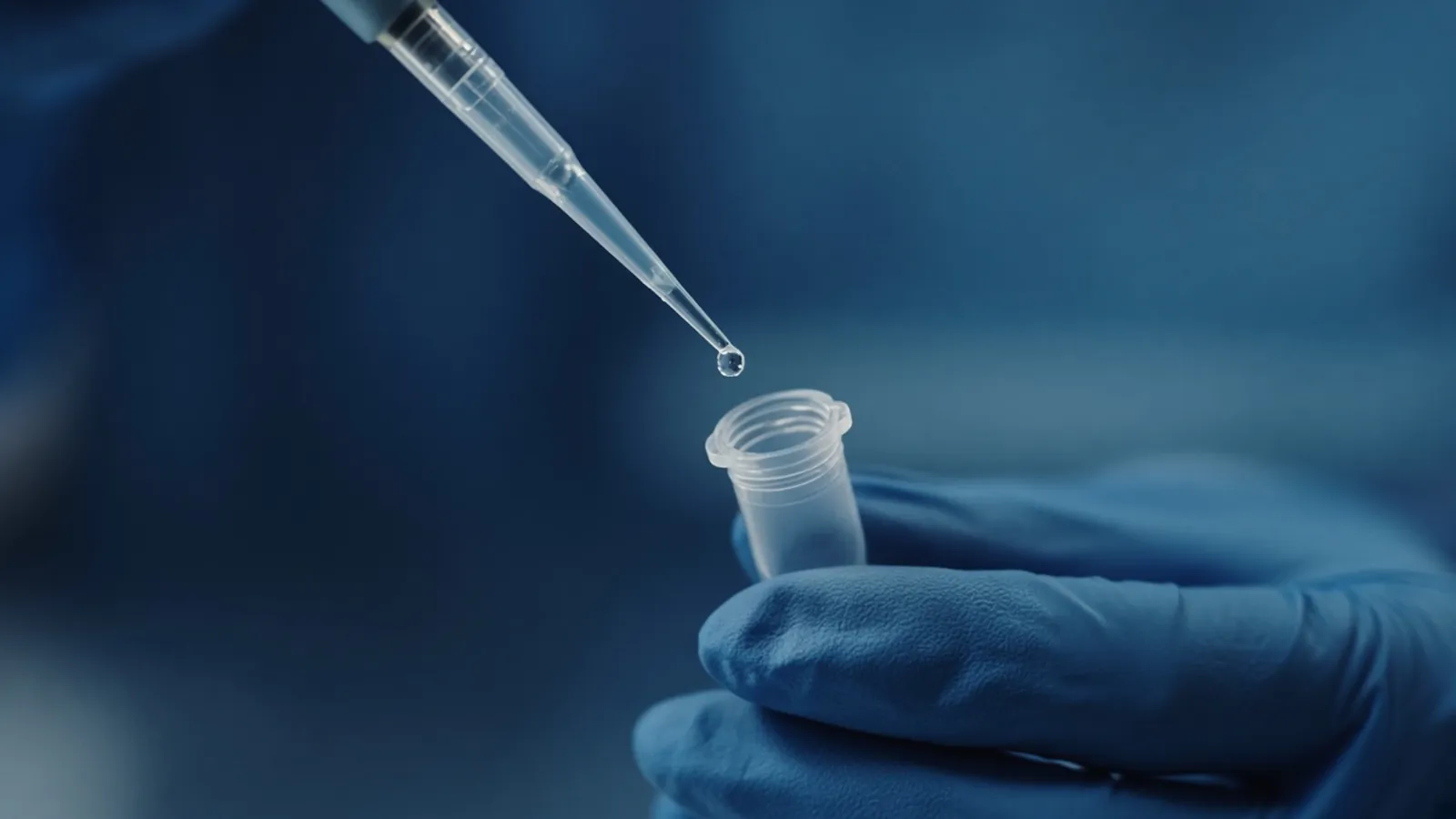
A long plate can fail in the hand before it fails in the chemistry. Ergonomics and repetitive pipetting are the workflow for keeping the first column and the last column on the same stroke, and for treating pain as something the institution records rather than something a person hides. The stops, the angle, and the blow-out are the technique in accurate micropipetting technique. This page is how that technique survives an afternoon.
Force, posture, and frequency
The thumb does three jobs: it finds the first stop, it controls the release so liquid follows, and it drives the ejector. Each job is a force, and the forces add across a 96-well plate. A stiff spring, a tight tip, and a viscous liquid push the same thumb. When the thumb tires it changes the job. Releases get fast. The pause disappears. The second stop gets skipped or slammed. Those are volume errors with a musculoskeletal cause. They will not show up as a contaminated reagent.
Posture decides how long the thumb can stay honest. A wrist bent upward to clear a tall box, an elbow held out because the reservoir is far away, and a shoulder shrugged because the chair is low all steal endurance. Bring the work in. Support the forearm if the bench allows a rest that does not contaminate gloves. Keep the pipette close to vertical for aspiration even so. A comfortable tilt that lifts one side of a multichannel out of the reservoir is not a successful accommodation. Change the reservoir height instead.
Frequency is the third variable. One plate with pauses is a different exposure from four plates with no break because a timer is running. Write the break into the method at a boundary you can reconstruct. ISO 8655-1:2022 is a terminology and user-recommendation standard. Consistent user technique is part of what those recommendations are for. It does not set a medical limit and it does not certify a pipette. Error tables stay in ISO 8655-2:2022 and the manufacturer specification.
Tool classes that change the load
Lighter plunger springs are a real instrument class. They reduce the force of each stroke for a given volume range. Specify them when the work is repetitive and the volume still needs a proper pipette, and ask for the error specification at the volumes you use. A light spring is not a reason to work at the extreme bottom of the range, where relative error is already wider. It is also not a licence to skip tip seating. A tip that must be pounded on will erase the benefit in one gesture.
The ejector is often harder than the plunger. If people are banging tips off on the edge of a box, the ejector path is painful or the tips are over-seated. That banging damages the shaft, and a damaged shaft leaks. Fix the fit. Eject into a waste container at a height that does not need a swing.
Positive-displacement and electronic repeater classes change the gesture again. An electronic pipette can reduce thumb travel for many aliquots of the same volume. It still needs a calibrated mechanism, a tip that seals, and a person who programmes the right mode. Handing a tired person an unfamiliar electronic pipette in the middle of a plate adds mode errors. Train before the day you need the relief.
Viscous liquids lengthen the time the thumb is loaded. The correct response is a slower stroke, reverse mode, or positive displacement, not a harder grip. Snapping a thick liquid is how both the volume and the hand get worse.
The session, with branches
Before tips go on, place reservoir, plate, tip box, and waste within a forearm reach. Set the chair so the wrist is near neutral at the reservoir surface. Put the method where you can see the volume without twisting the barrel toward your face for every well.
Seat tips with a level press. Pre-wet if the method says so. Work in blocks. At the planned break, eject tips that would sit full, especially with solvents, and rest the pipette upright. Use the break to notice numbness, aching at the base of the thumb, or a change in how the stop feels. Those signs mean the next block should be shorter or done by someone else who is trained, not that you should hurry.
Branch if the last wells show bubbles, drips, or a skipped blow-out. Mark them. Do not discover them in the data a day later. Repeat those wells after rest or with a second trained person. Branch if a particular pipette is the one everyone avoids because it is stiff. Tag it for service or replacement. A dropped pipette is already out of quantitative service until it is checked, tired hand or not. The check pattern is in checking a pipette between calibrations.
If pain persists beyond the session, report it through the institution. Occupational health and the laboratory's own risk process are the right homes for that report. The WHO laboratory biosafety manual and CDC BMBL are advisory frameworks for safe laboratory work and risk assessment. They are not a diagnosis of a thumb.
| Session signal | What is loading | Branch |
|---|---|---|
| Wrist bent to reach the reservoir | Layout, not the assay | Move the work before continuing |
| Thumb slips past the first stop | Fatigue or a stiff spring | Break, then a lighter class if the specification fits |
| Tips banged off on the box | Ejector force or over-seating | Fix fit; inspect the shaft |
| Viscous liquid, rising force | Drag, held too long | Slow reverse mode or positive displacement |
| Pain that remains the next day | An occupational issue | Report it to the institution |
Failure modes that look like a bad kit
A plate whose edge columns are short, pipetted last, is often a tired blow-out rather than an edge effect of the incubator. A standard curve that was careful, followed by twenty samples that were snapped, is two techniques. Watch the time stamps or simply watch the hand. Tip fit belongs here too: the tip you must hammer on is an ergonomic defect and a metrology defect.
Do not reward finishing a painful plate. A wrong conclusion and an unreported injury both outrank the wish to complete the last column. The volume is not trustworthy once the stroke has changed.
Safety
Repetitive strain is an occupational matter. Report it. Do not use this article as treatment. Aerosols and hazardous liquids are unchanged by a lighter spring. Keep the containment the assessment named. Research use only. Not a clinical procedure.
What an enquiry should say
State the volume range, how many dispenses a session contains, whether a lighter plunger class is required, single or multichannel, and the tip family that must seat without a hammer blow. Mention viscous liquids if they dominate the day, because the force then lasts longer. Browse the scientific instruments catalogue and tips in the laboratory consumables catalogue. Put the session pattern in the quotation request.
Set up a long pipetting session so the stroke stays repeatable
- 01Set the bench, the chair, and the wrist before the first tipBring the reservoir and the plate close, at a height that lets the wrist stay near neutral. A reach that lifts the elbow for every column will not survive the plate.
- 02Match plunger effort to the volume and the liquidUse a pipette in a lighter spring class when the specification allows it, and slow the stroke for viscous liquids instead of forcing the thumb. Eject tips with the ejector, not by banging the shaft.
- 03Break the session before the stroke changesPause on a schedule you write down, stretch the hand away from the plunger, and restart with a fresh look at tip seating. A series that speeds up as the thumb tires is a volume change.
- 04Report pain to the institution, and stop a failing techniquePain is an occupational signal for the laboratory to assess, not a diagnosis this page can make. If the last columns are drips, bubbles, or skipped blow-outs, discard the plan to finish and repeat those wells with a rested hand or another tool.
Questions from the bench
Why does thumb force change the delivered volume?
Forward pipetting depends on finding the first stop and, at the end, the second stop, with a smooth release. A tired thumb overshoots the first stop on the way down, releases in a jerk, or skips the pause. Each of those is a different volume. Viscous liquids make it worse because the force lasts longer. A lighter plunger spring, as a product class, reduces the effort per stroke. It does not remove the need for breaks, and it does not fix a tip that fits badly and must be rammed on.
Is pain from pipetting something this article can diagnose?
No. This is a research workflow for keeping a stroke repeatable and for treating pain as an occupational issue the institution should hear. It is not a medical diagnosis, not a treatment plan, and not advice to work through an injury. Report persistent pain, numbness, or weakness through the route your organisation already uses. A supervisor who only offers a slogan to be careful has not finished the assessment. Changing posture and tool class can be part of that institutional response.
How should breaks sit inside a plate?
Put them at a boundary you can record: the end of a replicate block, not halfway through a column of eight. Note the wells completed. Check that tips still seat and that you have not started snapping the plunger to hurry. A break that becomes a long conversation while liquid sits in the tips is a different error, especially with volatile solvents. Park the pipette upright, eject tips that have sat, and pre-wet again if the method requires it.
Do multichannel pipettes remove the ergonomic load?
They remove some repetition and they concentrate the force of several pistons and a stiffer ejector into one hand. Tip pickup of eight or twelve tips can be the heaviest gesture of the morning if the box is low or the cones fit tightly. Seat with a level press, not a body lean. If one tip always needs a second shove, that is a fit problem and an injury problem. Alternate hands only if both hands are trained in the same stops. An untrained hand is not a rest. It is a second technique.
References
Manufacturer names identify published method classes. Trademarks remain with their owners. Catalogue records on this site are independent references for enquiry. They are not a statement of inventory, distribution rights or a supply commitment. This page is educational. It is not medical advice, a diagnostic protocol or a biosafety approval.
Catalogue
Related products and categories
These links follow the subject of the article into published manufacturer references. A listing is a reference for an enquiry, not a statement of stock or distribution rights.
Continue in this cluster
Related reading
Accurate micropipetting techniqueHow an air-displacement micropipette delivers a volume, how forward pipetting uses the two stops, and why temperature belongs in the result.A glossary of liquid-handling termsSeparate the liquid-handling terms people mix up, from blow-out and pre-wetting to systematic error, tip fit, and the Z-factor.Air displacement versus positive displacementTrace under-delivery and dripping to the air cushion or the piston, and choose the pipette class that matches the liquid.