
glossary
Incident reporting without blame theatre
Incident, exposure, route, and corrective action are different words. This glossary shows what a useful report contains and what blame leaves out.
- Author
- EVRINTH Editorial Team
- Published
- 8 October 2026
- Updated
- 8 October 2026
- Reading time
- 8 min
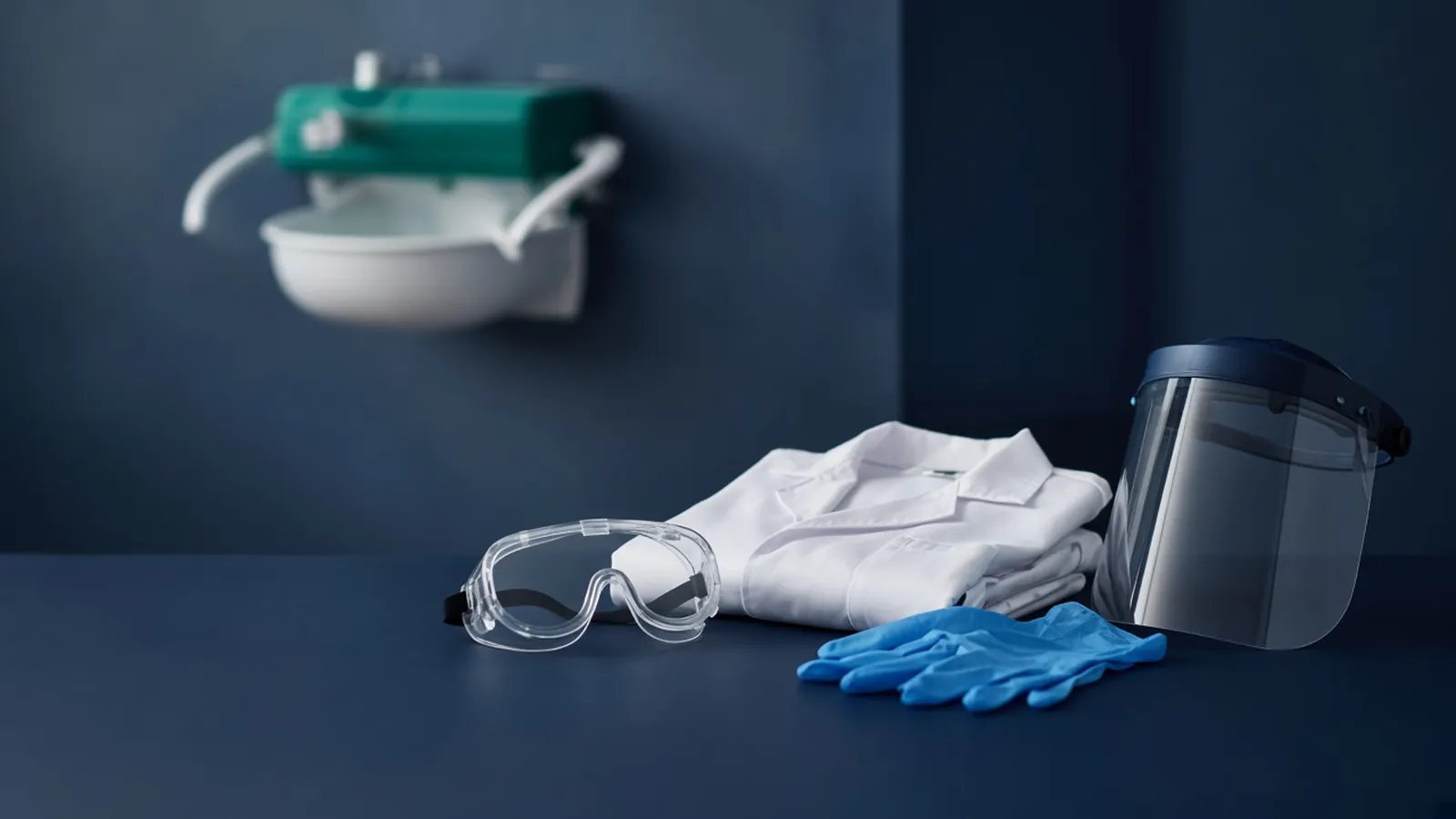
An incident report is a set of words with jobs. If the words only name who to be disappointed in, the next person learns nothing they can change. This glossary defines the words a useful report actually needs, for a spill, a cut, a cold burn, or a fan that failed mid-session. The programme those words sit inside is biosafety basics for research benches. What a cabinet alarm means in the moment is working inside a biosafety cabinet. Gloves, eye protection, and spill consumables are classes in the laboratory consumables catalogue. Replacing a kit after you have used it is a specification you can send through academic research and a quotation request. The report itself stays in the laboratory. A seller does not adjudicate it.
Incident and near miss
An incident, in this glossary, is an unplanned event in which a control failed or was never in place, whether or not someone is hurt. People reserve the word for blood and then do not write the afternoon when the bottle fell and did not break. That reservation is how the same bottle falls again. A near miss is the incident in which harm did not land. It deserves the same nouns. The confusion is moral: a near miss feels like luck you should be grateful for, quietly. Gratitude does not record the loose cap.
Write the sequence. What was open, what was lifted, what failed, what time it was, who was in the room. Motive and character can wait forever. They are not required fields.
The WHO laboratory biosafety manual and the CDC BMBL both expect incidents and exposures to be reported inside a programme. Your form is the institution's form. This page will not redesign it into a human-resources essay. It will say which fields make the form do work.
Agent
The agent is what the material was: the organism as identified, the chemical as labelled, the radionuclide if that was the hazard, the hot liquid, the cold liquid. "Something in room 3" is not an agent line. If the label was missing, the agent line says unidentified liquid from the bench of a named procedure, and it says what you did not mix it with afterwards. Guessing a benign identity to keep the report small is a second incident.
Agent is not the same word as hazard class, and not the same word as biosafety level. You can add those if you know them. You cannot replace the agent with them. A splash of phenol and a splash of buffer are both "liquids." The report that says liquid has not started.
Exposure and route
Exposure means a person and a material actually met, or may have met, in a way that counts. Route is how they met. The routes that change the response are not interchangeable: a splash to the eye or the mouth, a splash to intact skin, a cut or a needle, a breath taken through an aerosol, a mouth pipette you hope nobody still does, a cold burn from contact. "Exposed" with no route invites everyone to imagine the worst route, or to ignore the real one.
Who was exposed is a different field from who was present. A colleague at the far bench may have no exposure and still be a witness to the sequence. Write both, and do not promote every witness into a casualty. If you do not know whether the eye was hit, say that, and say that the eyewash was used or was not. Uncertainty is a fact. It is more useful than a confident maybe.
Personal protective equipment belongs here as a fact, not as a scolding. Goggles were on the forehead. The glove tore and the skin was cut. The face shield was in the drawer. Those sentences explain the route. They are not a closing argument.
The first minutes
The first minutes are what was done before anyone tried to write beautifully. Coat off, gloves off, eyewash, room left, spill covered, power isolated if that was the emergency rule, clinician called, biosafety contact called. This glossary does not give the clinical steps. If someone is injured, help them under the laboratory's emergency rule first. A perfect report written while a person stands with acid in an eye is a failed priority. The sentences can be short and late. They should still be true.
Do not backfill the first minutes with the procedure you wish you had followed. If the spill was wiped dry at once and the contact time was skipped, write that. The skipped time is the lesson. A fictional contact time teaches the next person to write fiction.
What will change
A corrective action is a change to a control: a sash mark that will be checked, a bag that will not be overfilled, a second person for the acid pour, a cabinet taken out of use until the alarm is repaired, a training record that will include the failure sign that was missed. It has an owner and a thing you could look at next week.
Blame is a different genre. It names a person as the cause and stops. Blame theatre is the longer version: a meeting that rehearses disappointment, a sentence about culture, a warning with no change to the setup. The glossary distinction is practical. If the report's last line could be read aloud and nobody would know what to do differently on Monday, it is theatre. You can think a person was careless and still write the loose cap, the missing shield, and the new check. The institution decides whether any employment process also runs. That process is not this report, and this page will not script it.
| Field | A line that can be used | A line that only performs |
|---|---|---|
| What happened | The cap was tight, the flask was lifted, the seal blew at the bench | Someone was careless with glassware |
| Agent | Phenol-chloroform from the extraction, about this volume | A chemical |
| Who and route | One person, splash to the eye, goggles were on the forehead | People were exposed |
| First minutes | Eyewash started, coat removed, clinician called | We handled it appropriately |
| What will change | Goggles are checked before this extraction, owner named | We will be more careful |
| Near miss | The flask blew inside the hood sash and nobody was hit | Nothing happened, so no form |
A short worked report, and the branch when injury and paperwork collide
A usable note is five sentences. During an extraction at this bench, a sealed tube vented when it was opened. The liquid was the phenol-containing waste of that protocol. One person had a splash to the cheek. Goggles were on. The cheek was washed as the spill plan says, the coat was changed, and the clinician on the institution's list was called. The change is that this waste tube is opened only in the hood, with the cheek and eyes covered, and the owner of that change is named.
The branch when someone is actually injured: the clinician and the emergency rule come before the prose. Biosafety is told as the rule requires, especially if the agent was infectious and the route was a needle or a mucous membrane. You do not wait for blame to be apportioned before making that call. You also do not publish the person's health details in a group chat so the report feels transparent. The report the institution stores is the report. A retelling for the room can wait, and can omit the theatre.
If the only change anyone will accept is "be more careful," send the report back. Careful is not a control. A control is a sash, a cap, a buddy, a repaired alarm, a training line, a smaller volume. The OSHA laboratory standard is one public reminder that incidents with hazardous chemicals belong in a programme. Your form is still local.
Power cuts and the same five fields
A power cut that stops a cabinet mid-session is an incident if work continued in still air, and a near miss if vessels were closed and people stepped back. The agent is whatever was open. The route is the aerosol you may have created by finishing the pipette. The first minutes are whether you waited and purged. The change is the rule that a dark cabinet is not a cabinet. Heat and a humid afternoon do not add a field. They explain why a sash was raised, which is still a fact about the sequence, not an excuse that replaces the change.
What not to ask a supplier
After a spill you may need more absorbent, a new face shield, or a container that closes. Specify those on the quote form. Do not attach the report and ask who was at fault, and do not ask a seller to confirm that your corrective action meets a law you have not cited carefully. The institution owns the report. The useful version is short, specific, and finished by a change you can see.
Questions from the bench
Is a near miss too small to write down?
A near miss is the event in which the agent almost reached someone, or reached the wrong place, and the injury did not quite happen. It is often the better report, because the mechanism is visible and nobody is hurt. If your laboratory's rule says near misses are reported, write the same facts you would write for an injury: what happened, what the agent was, what the route would have been, and what will change.
What belongs in the first-minutes section?
What was actually done before the narrative started. Eyes went to the eyewash, the coat came off, people left the room, the spill was covered, a clinician was called. It is a sequence, not a treatment protocol. This page will not tell you how long to flush or which medicine to use. If someone is hurt, that care runs immediately. The sentences can be finished after the person is helped.
Is human error a complete cause?
It is a label, and usually a stopping point. A useful report can say that a cap was tight, a bag was overfilled, or a sash was above the mark, without auditioning a character. The next question is what will change in the setup, the training, or the staffing. A paragraph about disappointment does not move the sash mark.
Should the report name a biosafety level as the lesson?
Name the agent you actually had, as far as it was known, and the procedure you were doing. A level number copied from a door sign is not a substitute for the route of exposure. If the agent was unknown, write unknown, and say what you did while it was unknown. The institution's biosafety contact can refine the name. The report should not wait for a perfect taxonomy before the first facts are down.
References
Manufacturer names identify published method classes. Trademarks remain with their owners. Catalogue records on this site are independent references for enquiry. They are not a statement of inventory, distribution rights or a supply commitment. This page is educational. It is not medical advice, a diagnostic protocol or a biosafety approval.
Catalogue
Related products and categories
These links follow the subject of the article into published manufacturer references. A listing is a reference for an enquiry, not a statement of stock or distribution rights.
Continue in this cluster
Related reading
Biosafety basics for research benchesResearch-bench biosafety is a stack of barriers chosen by a risk assessment. This page explains the stack. It does not approve the work. Working inside a biosafety cabinetHow a Class II biosafety cabinet moves air, how that differs from a chemical fume hood, and which habits keep cultures and workers protected.A glossary of biosafety termsPairs that share a bench still do different jobs. Use this comparison to choose the right word for a cabinet, a chemical, a level, or a control.