
explainer
Monsoon humidity and weighing a check
Read monsoon humidity as a weighing problem: static, drift, condensation, and slower evaporation, before you blame the pipette.
- Author
- EVRINTH Editorial Team
- Published
- 8 October 2026
- Updated
- 8 October 2026
- Reading time
- 7 min
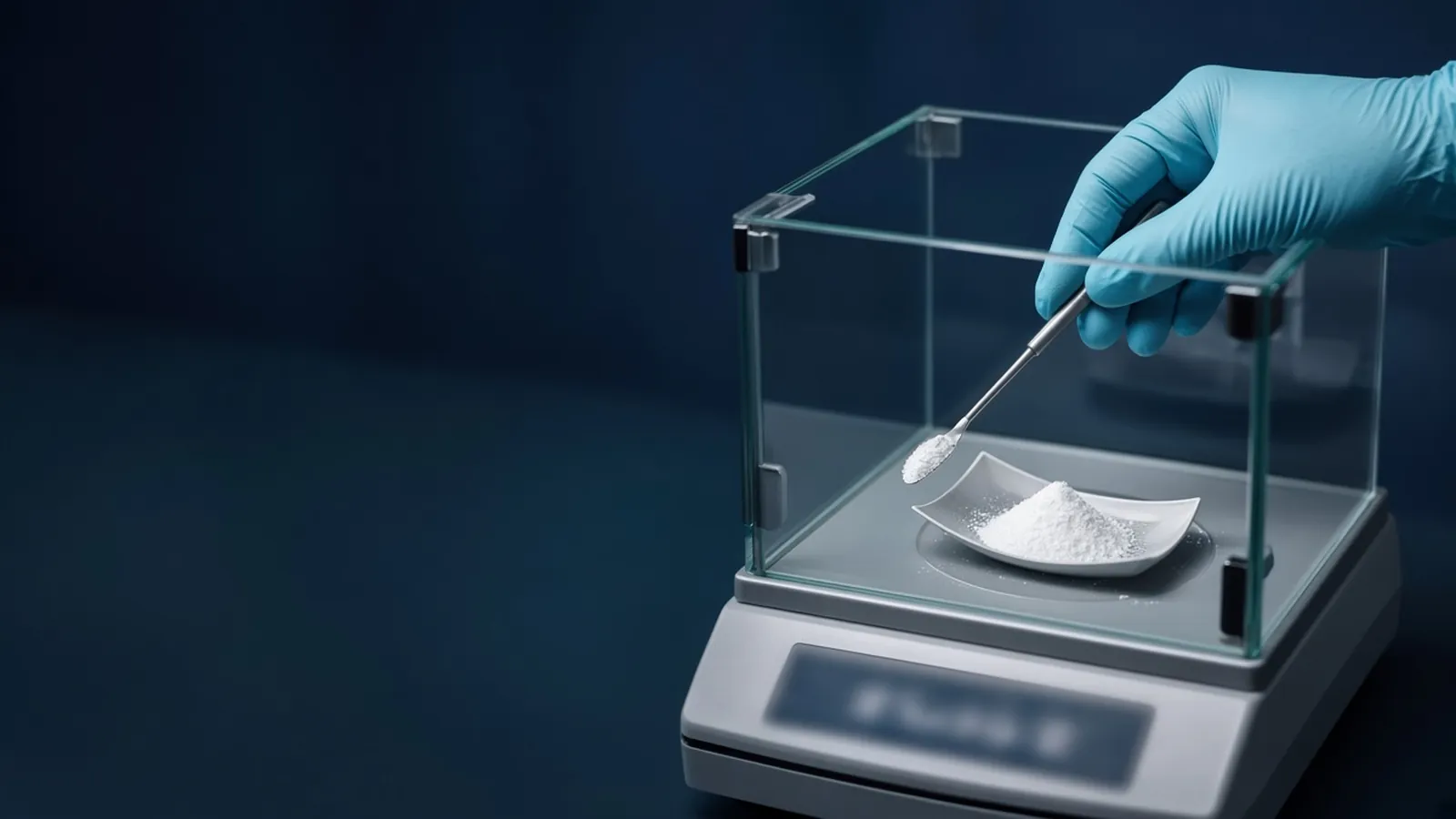
Monsoon humidity changes the way a gravimetric pipette check behaves, mostly at the balance. The decision is whether a drifting reading is water on the vessel, a draught, a balance that has not warmed up, or a pipette that truly moved. Blaming the piston for a wet week, or trusting a pipette because "evaporation is slower so the numbers look calm", both miss the mechanism. The stroke you are judging is still the forward water habit in accurate micropipetting technique.
What moist air does to a weighing
Evaporation removes mass from an open vessel. In dry air a small water aliquot can lose a visible fraction of itself while you prepare the next dispense. In humid air that loss slows. A series that looked noisy in the dry weeks can look tighter in the wet weeks for that reason alone, with no change in the pipette. Slower evaporation is helpful if you understand it. It is not evidence that technique improved, and it is not a correction factor to carry back into the dry season.
Condensation is the opposite error. Wet air meeting a cold surface leaves a film. The balance sees the film as mass. A boat from a cold cabinet, a tip box that was in a cooler room, or a draft shield that is colder than the incoming air can all do this. The mass then falls as the film evaporates, which looks exactly like a pipette with terrible random error. Equilibrate the vessel. Watch whether the display moves before any dispense. If it moves, you are not ready to judge a piston.
Electrostatics sit on the dry side of the same physics, and they do not vanish on the first humid day. Charge on plastic makes the pan pull toward a tip or a glove. The display runs. High humidity bleeds charge away faster than desert air does, and a gloved hand can still show the effect. The remedy is mechanical: a metal vessel when the method allows, a closed shield, no hovering hand, no crumpled plastic in the chamber. Do not install a private "monsoon offset" in the pipette's adjustment.
The pipette is still an air-displacement instrument
The volume the pipette delivers depends on the piston, the tip seal, the temperature of the cushion, and the vapour of the liquid. Humidity of the room air is a minor member of that list next to a warm afternoon or an ethanol aliquot. ISO 8655-1:2022 is the terminology and user-recommendation standard. It tells you to respect influences. It does not certify today's unit. Error numbers live in ISO 8655-2:2022 and the manufacturer specification. Your check compares the pipette with the specification you claim, after the balance is fit to speak.
Water density remains about 0.998 grams per millilitre near room temperature and must come from a table at the measured temperature. Humidity does not replace that table. A Z-factor is still a temperature and buoyancy correction, not a rainfall correction. This page invents no climate statistics and no city averages. If your room is wet enough that paper curls and cold tubes sweat, use the mechanisms above. If it is not, do not borrow them.
NIST's Office of Weights and Measures and BIPM are the public metrology context for taking a balance seriously. They do not know your draft shield.
A workflow that separates the balance from the pipette
Level the balance and let it complete the warm-up the manufacturer asks for. A balance switched on for a hurried check after the power returns will drift as its electronics and chamber temperature settle. Close the shield. Place the empty vessel inside and watch it. A stable tare is the gate. If the tare climbs or falls, look for condensation, a wet pan, or a draught from a door that people open into wet air.
Only then pipette. Use equilibrated water, a tip that seals, and forward pipetting. Work at a steady pace. A cover or trap still helps if volumes are small, even when humidity is high, because "slower" is not "zero". Record water temperature. Convert mass with the matching density. Compare mean and scatter with the specification you claim. The between-calibration pattern is in checking a pipette between calibrations.
Branch if the empty vessel was already drifting. Fix that, and do not adjust the pipette. Branch if the vessel was stable and the dispenses are outside the claim. Then the pipette, the tip, or the stroke is the lead. Change the tip once. If the failure remains, remove the pipette from quantitative service. A viscous-liquid problem is a different experiment. Do not use a humid-week water pass to bless glycerol.
| What the display does | Mechanism in wet air | Next check |
|---|---|---|
| Empty cold vessel gains, then loses | Condensation, then drying | Equilibrate the vessel and tare again |
| Reading runs when a tip approaches | Residual static on plastic | Metal vessel, closed shield, still hands |
| Series tighter than in dry weeks | Slower evaporation | Keep the cover; do not retune the piston |
| Drift for many minutes after power returns | Balance not warmed up | Wait, then repeat |
| Stable tare, mean still outside the claim | Pipette, tip, or stroke | One new tip, then out of service if it persists |
Failure modes that survive the rains
A leaky tip still drips when the air is wet. A warm liquid still changes the cushion. A viscous liquid still needs a slow reverse stroke or positive displacement. Humidity explains weighing artefacts. It does not explain a row of wells that was short because a multichannel tip was unseated. Keep those causes on their own lists so a wet week does not become the universal excuse.
People also wipe a balance pan with a very wet cloth and weigh immediately. The pan then loses water for ten minutes. Dry the pan. Confirm the tare. Then pipette.
Safety and limits
This is an explanation of a research check with water. It is not a weather forecast, not a building-design guide, and not a diagnostic method. Standing water, mould, and electrical safety around balances are institutional facilities questions. Do not defeat a draft shield by leaving it open because the room feels airless. If a culture was weighed by mistake, stop and follow the spill rule you already have. CDC BMBL is an advisory biosafety reference, not a weighing protocol.
What to tell an enquiry
If the balance or the pipette is being specified for a humid building, say so as a condition: draft shield required, resolution matched to the smallest volume, and a calibration document that states test temperature. Name the pipette range and the tip family separately. Instruments are in the scientific instruments catalogue, vessels and tips in the laboratory consumables catalogue, and the condition goes with the quotation request.
Questions from the bench
Does high humidity make an air-displacement pipette inaccurate?
Humidity is a small direct influence on the delivered volume compared with liquid temperature, vapour from the liquid itself, tip seal, and technique. It is a large influence on the balance you use to judge that volume. Moist air slows evaporation from the weigh vessel, which can help a slow series, and it encourages condensation on anything colder than the room. If the assay and the balance disagree only in the wet weeks, inspect the weighing before you send the pipette for adjustment.
Why does a cold vessel gain mass in humid air?
A tube or boat taken from a refrigerator or a strongly cooled room can sit below the dew point of wet air. Water condenses on the outside and the balance gains mass that the pipette never delivered. The reading drifts as the vessel warms and the film disappears. Equilibrate vessels inside the draft shield area, wipe visible moisture with a non-shedding cloth if your method allows, and do not tare a sweating boat and then pretend the climb is pipette scatter.
What about electrostatics when the air is damp?
Dry air is the classic static problem: plastic tips and gloves make the pan jump. High humidity usually reduces that charge, and it does not abolish it when a fresh polypropylene tip and a synthetic glove are involved. If the display runs when your hand approaches, wait, use a metal vessel, and keep tissues and plastic racks out of the shield. Do not average a running display into a calibration mean.
Should a laboratory postpone pipette checks until the rains end?
No. Postpone a series when the balance will not settle or the vessel is wet, then run it when the shield, the warm-up, and the vessel temperature are under control. The pipette still needs a check after a drop or a suspicious assay, whatever the season. Record the water temperature for the density correction, about 0.998 grams per millilitre near room temperature and taken from a table for the actual temperature. The season is context for the balance, not a reason to skip the specification you claim.
References
Manufacturer names identify published method classes. Trademarks remain with their owners. Catalogue records on this site are independent references for enquiry. They are not a statement of inventory, distribution rights or a supply commitment. This page is educational. It is not medical advice, a diagnostic protocol or a biosafety approval.
Catalogue
Related products and categories
These links follow the subject of the article into published manufacturer references. A listing is a reference for an enquiry, not a statement of stock or distribution rights.
Continue in this cluster
Related reading
 Accurate micropipetting techniqueHow an air-displacement micropipette delivers a volume, how forward pipetting uses the two stops, and why temperature belongs in the result.A glossary of liquid-handling termsSeparate the liquid-handling terms people mix up, from blow-out and pre-wetting to systematic error, tip fit, and the Z-factor.Air displacement versus positive displacementTrace under-delivery and dripping to the air cushion or the piston, and choose the pipette class that matches the liquid.