
protocol overview
pH electrodes storage and calibration
Store the glass electrode in its storage solution, calibrate with fresh buffers that bracket the target, and treat a tired slope as a failed control.
- Author
- EVRINTH Editorial Team
- Published
- 8 October 2026
- Updated
- 8 October 2026
- Reading time
- 9 min
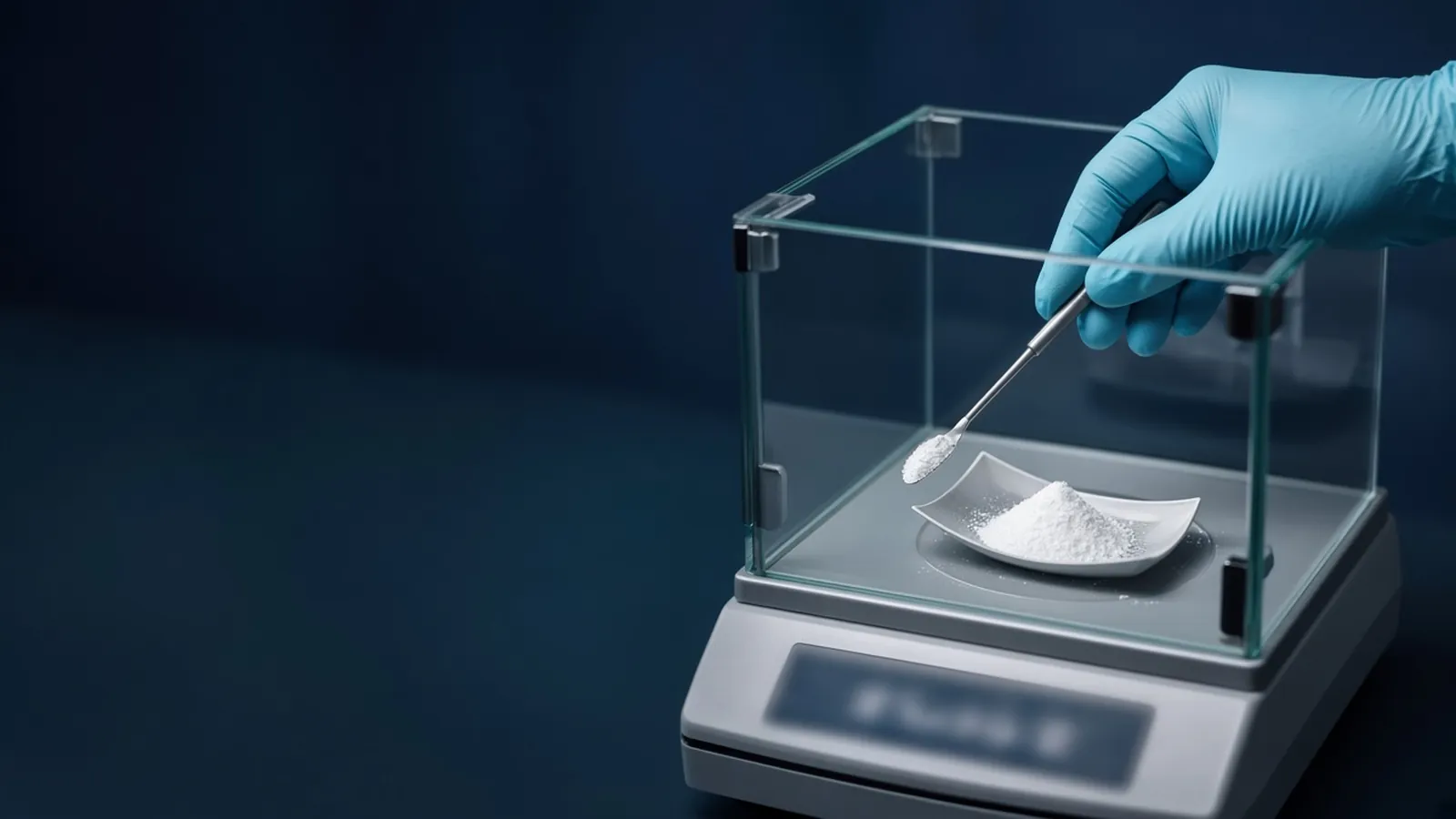
A glass pH electrode is fit for a buffer only while its slope still looks like the Nernst response you just calibrated. Storage decides whether tomorrow's slope exists. The bracket of standards decides whether today's slope applies to the pH you are about to claim. This is the working sequence, including the branch where the slope fails and the buffer is not adjusted to hide it. How that pH sits inside a preparation is preparing a buffer and checking pH. Why the water you rinse with is a poor thing to store the probe in is part of laboratory water types and where they fail.
Calibration buffers and storage solution are reagents. Specify them from the reagents and chemicals catalogue. The beakers they live in for a morning are beakers and flasks, small ones you can cap. The electrode, the standards, and the storage solution belong as separate lines on a quotation request.
The sequence this overview follows
You are about to release a buffer at a stated pH. Before the sample sees acid or base, the electrode has to pass a control. The control is a calibration with fresh buffers that bracket the target, producing a slope the laboratory accepts. Everything else in the morning is in service of that slope: how the probe was stored overnight, how you rinse, and when you refuse to continue.
If you only need a coarse indication, say so and use a method that matches, even pH paper where the recipe allows it. Do not record a paper colour as pH 7.40 from a glass electrode. The numbers imply the control.
What the slope is
The glass membrane potential changes with hydrogen-ion activity. At 25 °C the ideal slope is about 59 millivolts per pH unit. That is the Nernst factor, and it increases slightly as the electrode warms because it contains a temperature term. A meter reporting percent slope is comparing the electrode with that ideal at the relevant temperature. One hundred percent is the theoretical response, not a grade on a classroom curve. Laboratories set a window around it. A slope outside the window is a failed control. You do not nudge the window because a batch is waiting. You fix the probe, the standards, or both, and you recalibrate.
A single standard tells the meter an offset and assumes the slope. That is a check, not a calibration, and it is blind to a tired membrane. Two standards define a slope. Three, when the meter allows, show whether the response is linear across the range. The pair you choose must bracket the sample. For a target of 7.4, pH 7 and pH 10 bracket it. pH 4 and pH 7 do not. For a target of 5.5, pH 4 and pH 7 do. Extrapolating past the higher standard is how alkaline buffers get a confident, wrong number.
Storage, filling solution, and the brief rinse
Between uses, store the electrode in the storage solution the manufacturer names. For many combination electrodes that solution is a concentrated potassium chloride, often on the order of 3 moles per litre, sometimes with a small amount of buffer specified by the maker. Follow the bottle that belongs to the probe. Do not store the bulb in ultrapure water, distilled water, or a random buffer you happen to have. Low-ionic water leaches the hydrated gel layer and empties the reference junction of its salt. The next slope fails, often slowly enough that a week of "almost fine" buffers goes out the door first.
The reference side of a refillable electrode has a filling solution, also commonly a concentrated potassium chloride, which must be high enough to flow. A dry junction is a drifting junction. Keep the filling hole closed during storage if the instructions say closed, and open during measurement if they say open, so the junction can actually junction. Those two positions are a frequent cause of a slope that will not settle.
Rinse the bulb with water between standards and between samples so you do not carry one buffer into the next. Blot the drop off. Do not wipe the glass hard enough to charge it. The rinse is a few seconds. It is not an overnight soak, and the rinse water is not the storage solution. After the last sample, rinse and return the probe to storage. A probe left dry on the bench until Monday is a replacement candidate, not a puzzle.
Calibration as a workflow with a stop
Take fresh portions of the standards. Alkaline standards pick up carbon dioxide and drift acidic. A beaker that has sat open is not fresh because the bottle it came from was expensive. Equilibrate the standards and the sample at the temperature you will record. Confirm the meter knows that temperature if you are using temperature compensation. Compensation corrects the electrode slope. It does not cancel the chemical temperature coefficient of Tris or of any other buffer. Record the sample temperature beside the pH anyway.
Stir gently or follow the still-reading habit your meter was validated with, and give the display time to settle. Note the slope and the offset the meter reports. If both sit inside the laboratory window, measure the sample and write the pH, the temperature, the date, and the slope in the batch note. If the slope fails, stop. Replace the storage habit first if the probe was left in water, refill the reference if it is low, or take another electrode. Then calibrate again. Do not add acid to the sample until a passing slope exists. Each blind addition is salt you cannot un-add.
Two operators should agree inside the laboratory's comparison window on the same buffer. If they do not, one electrode, one set of tired standards, or one temperature is telling a story. Find which, before you average the disagreement into a released pH.
| Step | Pass looks like | Failed control |
|---|---|---|
| Overnight storage | Bulb in the manufacturer's solution, commonly concentrated KCl | Bulb parked in ultrapure water or left dry |
| Standards | Fresh, and one below and one above the target | pH 4 and pH 7 used for a pH 8.5 sample |
| Slope at 25 °C | Near 59 mV per pH unit, inside the laboratory window | A tired percent slope you decide to ignore |
| Junction | Filling solution flowing, hole position as instructed | A clogged junction and a drifting display |
| Sample result | pH and temperature written after a passing slope | The sample titrated to decorate a bad meter |
| Afterward | Rinsed and returned to storage | Left in the sample beaker overnight |
Failure modes
A slow drift during the sample is a blocked junction, a low filling solution, a bulb that dried, carbon dioxide entering an alkaline or weakly buffered solution, or a magnetic stirrer warming the beaker. The slope check separates an electrode fault from a real solution change. Standards that pass, and a capped aliquot that holds still while an open beaker falls, point at carbon dioxide. Standards that fail point at the probe or the standard bottles.
Proteins and sulfides foul glass and junctions. A method that measures those samples needs the cleaning procedure the electrode maker allows, not an abrasive wipe. Oils and silicone leave a film that looks like a mysterious offset. The remedy is cleaning and a new calibration, not a permanent offset glued into the meter.
Ultrapure water as a sample, rather than as a storage medium, is still a bad pH measurement. There is almost no buffer capacity and almost no ionic strength. The display wanders. Do not conclude the polisher is "acidic" from that wander and start dosing the product water. Use resistivity for ions.
Safety and limits
Calibration buffers are chemicals. Concentrated potassium chloride storage solution is an irritant. Eye protection applies. The filling solution is not a drink and not a waste you pour into a biological culture. This protocol does not approve a pH for a diagnostic or clinical decision. It produces a research record. If the sample is infectious, the institutional biosafety rules decide whether that probe is allowed in that beaker and how it is disinfected afterward. Disinfection has to be compatible with the electrode. The biosafety manual and the electrode manual both exist, and neither replaces the other.
Power cuts and a warm bench
After a power cut the meter may forget a calibration or wake with a default temperature. Recalibrate before you sign a bottle. A warm room changes the Nernst slope slightly and changes Tris chemically by much more. Compensation can handle the electrical part if the temperature probe is actually in the liquid. It cannot make a morning Tris identical to an afternoon Tris. Write the temperature. Keep storage solution topped up, because a warm dry bench evaporates an open vial and leaves salt crust rather than a place to park the bulb.
What the enquiry should list
Ask for the electrode type only if you are buying a probe, and ask which storage solution and filling solution belong to it. Ask for calibration buffers at the nominal pH values you need in order to bracket the working range, with a statement of traceability you can read. Ask the shelf life once opened. On receipt, calibrate and record the slope before the electrode is cleared for batch release. A probe that cannot meet the window on day one should be the supplier's conversation, not the buffer's. The quotation request should name those standards explicitly so "pH kit" does not arrive as a single bottle that cannot bracket anything.
Store, calibrate, and accept a pH only when the slope passes
- 01Park the electrode in the manufacturer's storage solutionUse the storage solution named for that probe, commonly a concentrated potassium chloride. Ultrapure water leaches the glass and the reference junction. Cap the filling hole in storage if the instructions say to.
- 02Calibrate with fresh buffers that bracket the targetChoose at least two standards, one below the sample pH and one above. Open a fresh portion. A week-old alkaline standard has been exchanging carbon dioxide with the room.
- 03Read the slope and stop if it failsA healthy glass electrode is near 59 millivolts per pH unit at 25 °C. The laboratory sets the acceptance window. A slope outside that window means you do not have a pH yet.
- 04Rinse, measure, and return the electrode to storageRinse between standards and samples, blot rather than wipe the bulb, and measure with the filling hole open if the probe is built that way. When the batch is signed, return the electrode to storage solution.
Questions from the bench
What does a slope of about 59 millivolts mean?
It is the Nernstian response of a glass pH electrode at 25 °C: the potential changes by about 59 millivolts for each pH unit. Meters often express that ideal as 100 percent at the calibration temperature. A tired electrode falls away from it. The laboratory window decides the fail point.
Why is ultrapure water a bad storage medium?
The hydrated glass layer and the reference junction need ions. Low-ionic water pulls salt out of the junction and ruins the glass response, so the next calibration lies. Store the probe in the solution its manufacturer names, commonly concentrated potassium chloride, and rinse with water only as a brief step between solutions.
Do pH 4 and pH 7 standards bracket a pH 7.4 buffer?
They sit on one side of 7.4 or at best touch the neighbourhood from below. Bracketing means one standard below the target and one above, such as pH 7 and pH 10 for a slightly alkaline buffer. The slope is then an interpolation across the sample, not an extrapolation past the last standard.
References
Manufacturer names identify published method classes. Trademarks remain with their owners. Catalogue records on this site are independent references for enquiry. They are not a statement of inventory, distribution rights or a supply commitment. This page is educational. It is not medical advice, a diagnostic protocol or a biosafety approval.
Catalogue
Related products and categories
These links follow the subject of the article into published manufacturer references. A listing is a reference for an enquiry, not a statement of stock or distribution rights.
Continue in this cluster
Related reading
 Laboratory water types and where they failResistivity, organic carbon and endotoxin answer different questions. A water grade fails when the assay cares about a contaminant the meter cannot see.
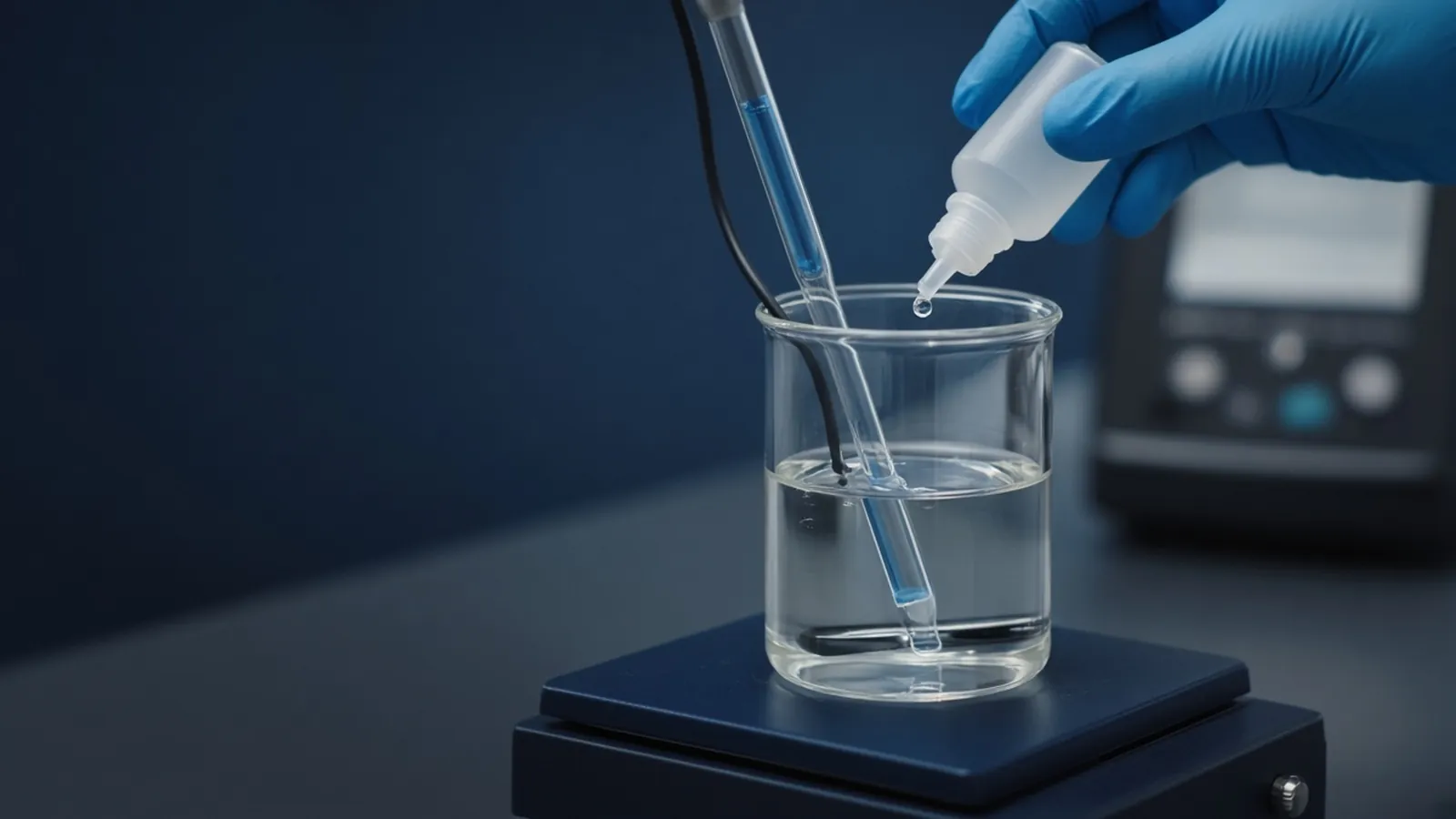 Preparing a buffer and checking pHPrepare a buffer at a stated pH and temperature, record the salt form, and treat a drifting electrode or a bad slope as a failed control.A glossary of solution termsDecide which number a recipe means before you weigh a salt: molarity or molality, which percent, normality, buffer capacity, osmolality, or hydrogen-ion