
comparison
Plate maps so a robot and a person agree
Compare a human plate map with a robot deck map so well identity, A1 orientation, replicates, and controls stay the same.
- Author
- EVRINTH Editorial Team
- Published
- 8 October 2026
- Updated
- 8 October 2026
- Reading time
- 7 min
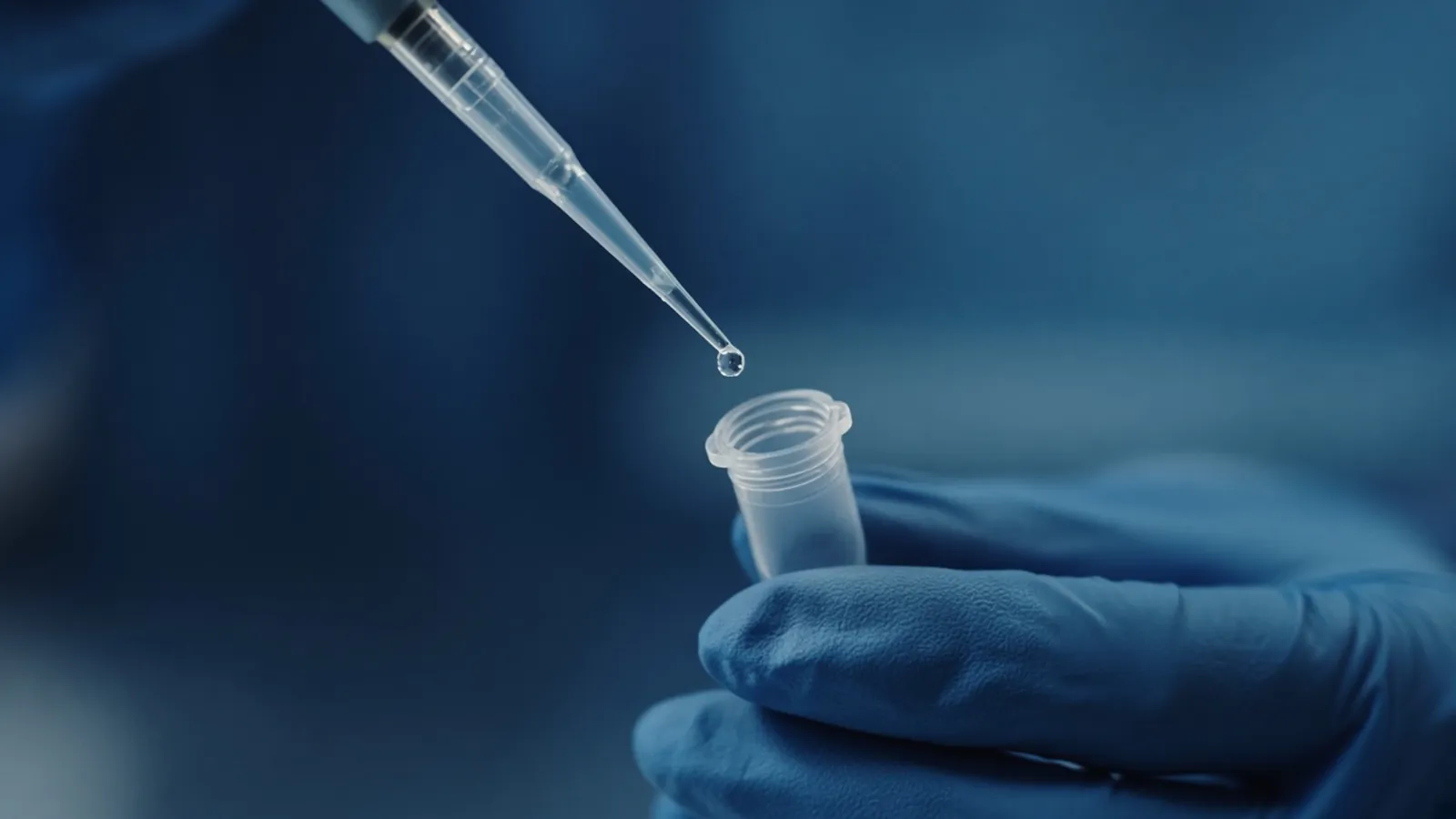
A plate map is a contract between a person and, when there is one, a liquid handler. The comparison that matters is what each version of the map can show. The person can see a skipped well and forget to write it down. The robot can repeat a rotated plate without feeling wrong. Agreement is well identity, orientation, replicates, controls, and a written exception path. The volume that then goes into those wells still depends on accurate micropipetting technique or on a checked robotic head. The map does not create the volume. It says which well was supposed to receive it.
What a person can show
A handwritten or spreadsheet map can show roles in plain language: sample, replicate, blank, positive control, well left empty on purpose. It can show the order a hand actually worked, which matters when the last columns were tired or the reservoir ran low. It can be annotated mid-plate. Those are real advantages. What it cannot show is whether the pipette was in forward mode, whether the tip sealed, or whether a viscous liquid was snapped. Those belong in the method next to the map, not in the well codes alone.
Orientation is where human maps go quiet. People assume A1 is the labelled corner nearest the writing on the plate. A colleague who turns the plate to reach column 12 can transpose the assumption. The map should say which physical corner is A1 while the plate is on the bench, in a sentence, not only by colouring a cell in a spreadsheet that has no picture of the plastic.
What a robot file can show
A robot file can show labware, nest, tip height, aspirate speed, and which reservoir feeds which wells. It can show a 180-degree rotation if someone defined it. It cannot show that the operator placed the plate the other way up. It cannot show a verbal "skip H12, the tube was empty" unless that skip is edited into the run. It can show dead volume only if the labware definition includes it. A file copied from another laboratory's plates can be internally consistent and still wrong for your wells.
Tip fit and liquid class are easy to omit from both maps. The robot will use whatever rack is on the nest. If that rack is not the family the head was checked with, every well is systematically off and the map still looks perfect. Viscous liquids need a slower speed or a different tool. A map that says only "add sample" does not choose the speed. Put the liquid class in the method the file was translated from.
ISO 8655-2:2022 specifies requirements for single-channel and multi-channel pipettes complete with tips. A robot head is still a volume device that needs a specification you claim and a check you performed. ISO 8655-1:2022 is terminology and user recommendations, not a plate-map format. Use the error language from that framework when you verify a column. Do not use it as a substitute for A1.
How to compare the two before a real sample
Print or display the human map in well codes and the robot preview in well codes. Read them aloud for one column: roles, replicates, controls. Confirm which physical corner each document calls A1, with the plate in the nest. Confirm who dispenses each liquid so a control is not delivered twice. Confirm the tip family on the deck is the one in the method.
Run a dye or a water check into an empty plate if the layout is new. Read it against the map. A rotated plate is obvious with dye and expensive with samples. Weigh a programmed volume if the result is quantitative, using water density at the measured temperature, about 0.998 grams per millilitre near room temperature, from a table. The hand-pipette version of a check is in checking a pipette between calibrations. The head needs its own series.
Branch if the preview and the paper disagree. Do not start and plan to remember the difference. Branch if an exception happens mid-run. Mark the wells on the paper and in the log before you continue. Branch if a power cut stops the deck. The log's last completed well is the map from that moment on. Wells after it are empty or partial until you decide, in writing, what they are.
| Map feature | What the human sheet can show | What the robot file can show |
|---|---|---|
| Well identity | Names and roles, if someone updates them | Coordinates, repeated exactly, including a wrong rotation |
| A1 orientation | A sentence and a glance at the plastic | The nest definition, not the plate you actually sat down |
| Replicates | Grouped by sample name | Grouped by whichever wells were programmed |
| Controls | Easy to double-fill if ownership is vague | A reservoir assignment, if it was entered |
| Exceptions | A note, if it is actually written | Only what is edited into the log or the file |
| Volume quality | Nothing, unless the method is attached | Nothing, unless the head was checked |
Failure modes
The expensive failure is a complete, precise plate in the wrong orientation, analysed as if A1 were correct. Controls then sit in sample wells and the statistics look interesting. The cheap failure is a map that was never updated after a skipped tip, so one replicate is missing and the triplicate average uses a well of water. Viscous liquids add a third failure: the map says the well was filled, the tip still holds a bead, and nobody wrote an exception because the robot did not alarm.
Do not fix a mapping error by relabelling the results to match what would have been convenient. Relabel only to match where the liquid actually went, and say that you did so.
Safety and research limits
A map is not a risk assessment. Infectious plates stay in the containment already chosen. This comparison is research record-keeping. It does not make a plate diagnostically valid. NIST and BIPM remind you that the volume in a correctly named well is still a measurement with a specification. They do not draw A1 for you.
What to specify
If you are enquiring about plates, reservoirs, or a handler, state the plate format, how A1 is marked on the labware you use, the tip family, and whether the work includes viscous liquids that change speed and dead volume. Consumables are in the laboratory consumables catalogue. Instruments are in the scientific instruments catalogue. Send a sample map, with controls and an exception note, alongside the quotation request.
Questions from the bench
Where is A1 supposed to be?
On a standard 96-well plate, rows are letters A to H and columns are numbers 1 to 12. A1 is the well at the corner where row A meets column 1, conventionally the upper left when the row letters run down the left side and you are looking at the plate in reading orientation. A robot does not know that convention until the deck nest and the labware definition say where that corner sits. If the plate is rotated 180 degrees, the person still calls a well A1 and the robot fills the well the person calls H12. The map has to name the orientation, not only the well codes.
What can a human map show that a robot file hides?
A human map can show why a well is an exception: a short sample, a dropped tip, a well skipped because the reservoir ran dry. It can sit on paper next to the bench. It hides quantitative detail the robot needs, such as tip height, dead volume, and which tip rack was taught. A robot file can show those heights and can repeat them. It hides the verbal exception unless someone writes the exception back into the file or the lab notebook. Agreement means both documents carry well identity, replicates, controls, and a place for exceptions.
How should replicates and controls be named so they survive a handoff?
Name them by well and by role. Triplicate of sample 4 in B2, B3, and B4 is a different statement from three wells somewhere in row B. Controls need the same treatment: which well is the blank, which is the positive, which is the no-template. If the robot dispenses the control from a different reservoir, that reservoir is part of the map. A person who then adds the control by hand into a well the robot also fills will double it. Write who owns each liquid.
What should happen when the run diverges from the map?
Stop and record the exception before the next cycle. A skipped column, a tip that failed to seat, a viscous liquid that alarmed as a clot, or a power cut mid-plate all change well identity. The person and the robot agree only if the exception is written in both places: the notebook and the run log. Do not reconstruct the plate from memory at the end of the day. A volume error is still a pipette problem, solved with the usual forward technique and a checked head, but the map problem is separate and should be fixed first.
References
Manufacturer names identify published method classes. Trademarks remain with their owners. Catalogue records on this site are independent references for enquiry. They are not a statement of inventory, distribution rights or a supply commitment. This page is educational. It is not medical advice, a diagnostic protocol or a biosafety approval.
Catalogue
Related products and categories
These links follow the subject of the article into published manufacturer references. A listing is a reference for an enquiry, not a statement of stock or distribution rights.
Continue in this cluster
Related reading
Accurate micropipetting techniqueHow an air-displacement micropipette delivers a volume, how forward pipetting uses the two stops, and why temperature belongs in the result.A glossary of liquid-handling termsSeparate the liquid-handling terms people mix up, from blow-out and pre-wetting to systematic error, tip fit, and the Z-factor.Air displacement versus positive displacementTrace under-delivery and dripping to the air cushion or the piston, and choose the pipette class that matches the liquid.