
application
Polypropylene polyethylene and polystyrene
Where polypropylene, polyethylene and polystyrene belong in ordinary research work, and where a resin class stops being enough.
- Author
- EVRINTH Editorial Team
- Published
- 8 October 2026
- Updated
- 8 October 2026
- Reading time
- 7 min
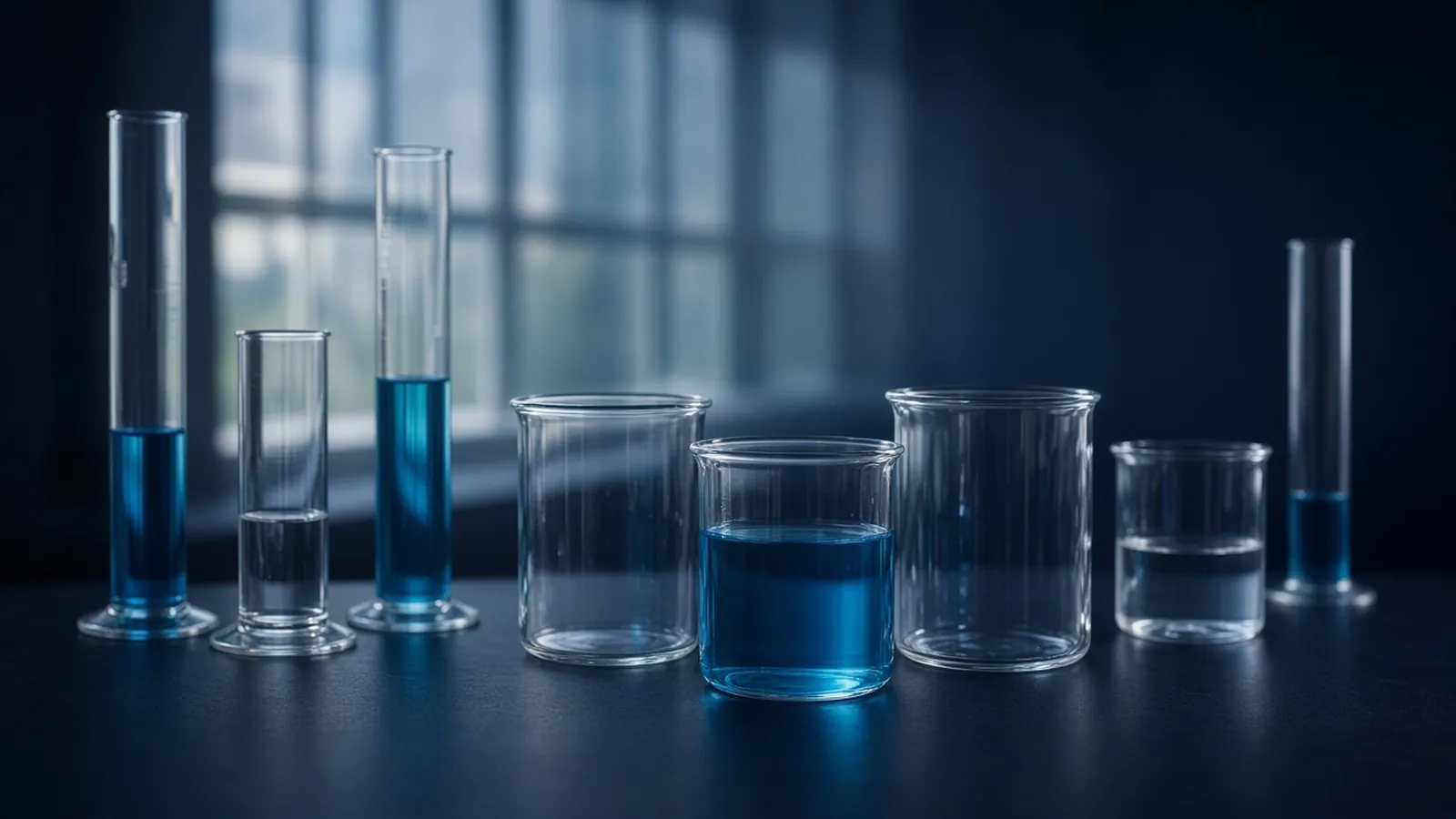
A plasmid prep, a wash bottle and a clear assay plate are three ordinary jobs, and they do not want the same polymer. This note applies polypropylene, polyethylene and polystyrene to those jobs and states the limit of a resin-class claim. Tubes, tips and plates as a buying decision are discussed in when to use plastic tubes, tips and plates. When the solvent or the volume pushes you back to glass, use choosing laboratory glassware.
A concrete bench, three resins
Consider a small molecular workflow. You prepare a buffer to a stated concentration. That step belongs in a volumetric flask of a known class, at the flask's reference temperature. NIST weights and measures practice is why the moulded line on a bottle does not take this role. You then aliquot the buffer into polypropylene microtubes because they centrifuge cleanly, cap reliably, and tolerate aqueous salt solutions for the time the method states. You rinse a bench bottle of ethanol or water from a low-density polyethylene wash bottle, remembering that a solvent the chart dislikes should never have been in that squeeze bottle. You read an aqueous colourimetric assay in a polystyrene plate because the well is clear and the instrument was built for that footprint.
None of those three successes promotes the resin to a universal container. The limit of the claim is the next liquid.
Polypropylene in the rotor and the autoclave
Polypropylene's useful range on a research bench is aqueous chemistry at moderate temperature, plus the autoclave and centrifuge duties a given product marks on its label. The mark is the product's, not the polymer's in the abstract. A tube rated to a stated relative centrifugal force in a stated rotor is not rated to a higher speed because the wall looks thick. A cap marked for steam is not a promise that every polypropylene item in the room, including a rack you forgot to check, will keep its shape.
Nucleic-acid work lives in this plastic for good practical reasons. It is also where adsorption of dilute samples becomes visible, which is a surface question rather than a solvent question. When the analyte is precious and dilute, the tube specification has to say whether a low-binding claim is required and for which molecule. An ordinary polypropylene tube remains the right default for a concentrated buffer.
Polyethylene as a bottle, not as a measurement
High-density polyethylene stores many aqueous reagents that would be wasted in borosilicate. The bottle is light, it survives a knock, and the liquid is visible only as a level, not as a colour you can compare carefully. Low-density polyethylene wash bottles deliver a stream. Both pick up solvent exposure badly when someone refills them with a convenient organic. The wall swells, the print lifts, and the next user inherits a contaminated squeeze.
Do not autoclave a polyethylene bottle because a polypropylene cap once survived. Distortion is the usual result, and a warped mouth no longer matches the cap. Glass media bottles in borosilicate, the low-expansion type distinguished in ASTM E438, remain the reusable steam vessel. Polyethylene's honest application is room-temperature aqueous storage and rinsing with liquids the chart allows.
Polystyrene where optics and cells need clarity
Polystyrene plates and dishes are optical and biological surfaces. Tissue-culture treatment is a surface claim on top of the resin. An untreated dish and a treated dish are not the same culture vessel. The assay insert names the plate colour and the polymer when both matter. Clear polystyrene suits absorbance of an aqueous assay. It does not suit luminescence or fluorescence by default, and it does not suit acetone.
The failure mode is unmistakable and still gets repeated: a pipette wetted with an organic solvent is emptied into a polystyrene well "just to dilute it". The well crazes, the optical path changes, and neighbouring wells may be contaminated by a creeping solvent. Retire the plate. Do not read around the damaged well and call the row usable.
Polystyrene also warps in a drying oven or an autoclave. If you need a sterile empty plate, buy it sterile or follow a method the plate maker allows. Do not steam a research dish and expect the lid to fit.
| Job on the bench | Resin that fits | Stop when |
|---|---|---|
| Aqueous aliquot, many spins | Polypropylene, speed as marked | The liquid becomes an uncharted solvent |
| Bulk aqueous store, wash bottle | Polyethylene | Heat, steam, or a solvent the chart rejects |
| Clear aqueous plate or dish | Polystyrene | Solvent, autoclave, or the wrong optical colour |
| Declared concentration | Volumetric glass, then transfer | Someone makes up to a moulded plastic mark |
| Repeated steam of media | Borosilicate bottle, matching cap | A plastic bottle is substituted without a steam mark |
Marks that travel with the piece
Write the resin on the tray, not only in the purchasing note. A clear polystyrene plate and a clear PETG bottle look similar on a crowded bench, and only one of them is a plausible optical aqueous plate. A milky polyethylene bottle and a polypropylene jar look similar, and only one of them is a usual autoclave candidate, and only when that item is marked. The application succeeds when the person at the bench can see the class without opening a catalogue.
When the application changes mid-protocol
The branch is the first solvent, the first heat, or the first optical claim. If an extraction switches from aqueous buffer to chloroform or phenol, the tube decision is new. Glass or a resin the chart allows takes the organic phase. If a plate assay moves from absorbance to luminescence, the colour decision is new even though the resin may still be polystyrene. If a bottle must be sterile and chemically clean, steam on borosilicate may be required, and a fresh polystyrene dish does not answer the bottle problem.
A failed control is informative. If an enzyme blank fails only in washed polystyrene and passes in a new plate, look at residue and at solvent carry-over before you replace the enzyme. If a centrifuge tube cracks, retire the lot from that chemical and that speed until you know which limit you crossed.
Safety and institutional limits
Cultures in polystyrene dishes and tubes follow your biosafety rules. The WHO laboratory biosafety manual and the CDC BMBL are the background references, not a containment assignment. Solvent waste in the wrong bottle is a chemical-hygiene incident. This page does not authorise a diagnostic assay because a plate is clear. Research use, with the assay insert and the resin chart in front of you.
What to put in the request
Name the resin, the format, the duty (centrifuge, optical, storage, autoclave), the liquids, and the quantity. Keep volumetric glass as its own line when a concentration will be declared. The laboratory plasticware catalogue is where these three resins are browsed as products, and the quote request is where the duty description belongs. Glass that the plastic must not silently replace is in the laboratory glassware catalogue.
Questions from the bench
Why is polypropylene the default microtube?
It is tough, it tolerates the aqueous buffers molecular work actually uses, and many grades are marked for autoclave or for centrifuge speeds the maker publishes. That makes it the practical tube for aliquots, spins and short storage of water-based samples. The limit is the chart. A solvent that the method just introduced can soften a tube that has been loyal for years of buffer. When that happens, the format stays a tube and the material should become glass or a documented resin.
What is polyethylene doing that polypropylene is not?
High-density polyethylene is the usual milky bottle for bulk aqueous reagents that do not need to be optically clear or steamed. Low-density polyethylene flexes, which is why wash bottles are made of it. Neither is the automatic autoclave plastic. If you need steam and a screw cap, you are usually back to a polypropylene cap on a borosilicate bottle, or a polypropylene vessel the maker marks for the cycle.
When is polystyrene the correct plate or dish?
When the liquid is aqueous and you need clarity: cell-culture surfaces treated for attachment, optical plates the assay insert names, and Petri dishes for organisms your biosafety rules allow. Polystyrene is the wrong vessel the moment organic solvent, high centrifuge load or an autoclave enters the step. Those failures are physical and obvious. Clouding, warping and dissolution are the material telling you the class was misapplied.
Can these three replace a volumetric flask?
They can hold a solution a flask has already defined. Their moulded graduations are handling marks. A concentration other calculations will use is made in volumetric glass at the printed reference temperature, then portioned into the plastic the chemical allows. Choosing laboratory glassware is the volume decision. The resin decision starts after that volume exists.
References
Manufacturer names identify published method classes. Trademarks remain with their owners. Catalogue records on this site are independent references for enquiry. They are not a statement of inventory, distribution rights or a supply commitment. This page is educational. It is not medical advice, a diagnostic protocol or a biosafety approval.
Catalogue
Related products and categories
These links follow the subject of the article into published manufacturer references. A listing is a reference for an enquiry, not a statement of stock or distribution rights.
Continue in this cluster
Related reading
Choosing laboratory glasswareHow to match borosilicate beakers, flasks and volumetric glass to the measurement you need, and when a printed line is only a guide.A glossary of labware termsDefinitions of the labware words that change a result: class marks, to contain and to deliver, joint size, resin, sterile and clean.Beakers are for handling not for accuracyWhy a beaker graduation is only a handling guide, and when a concentration other people will reuse belongs in a volumetric flask.