
explainer
Pre-wetting tips and volatile solvents
See why pre-wetting saturates the air cushion, why ethanol-class solvents still drip, and when positive displacement is the better class.
- Author
- EVRINTH Editorial Team
- Published
- 8 October 2026
- Updated
- 8 October 2026
- Reading time
- 7 min
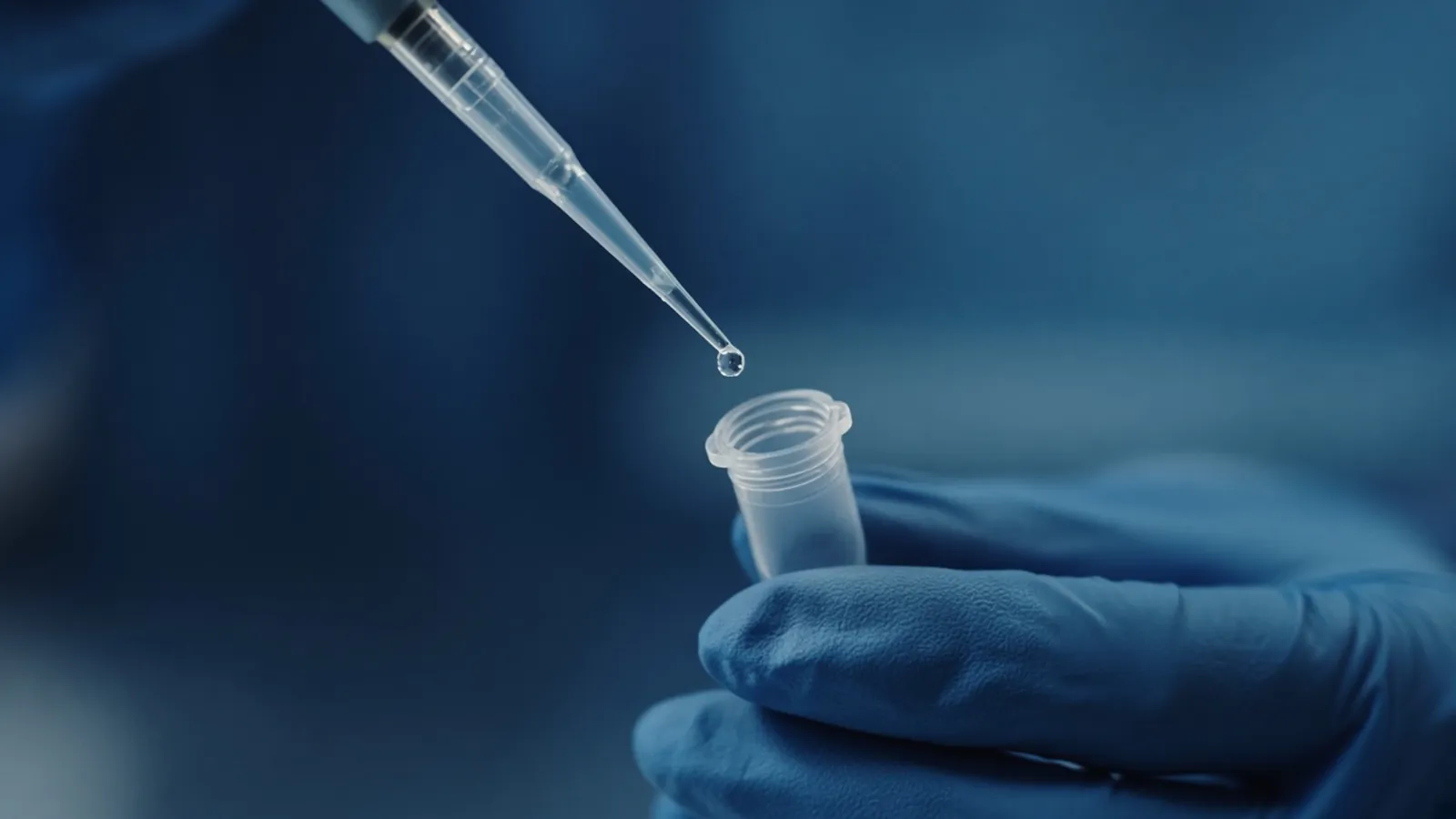
Volatile solvents expose the air cushion that an ordinary micropipette depends on. Ethanol, acetone, and acetonitrile classes evaporate into that cushion as soon as liquid sits in the tip. The first stroke into dry air is often the short one. Later strokes drip if you pause. Pre-wetting is the habit that fills the cushion with vapour before you trust a dial. It is an equilibration step, not a rinse for show. The aqueous version of the same habit sits inside accurate micropipetting technique.
The cushion is part of the volume
In an air-displacement pipette the piston never touches the liquid. It moves a column of air, and the liquid in the tip moves because that air moved. The calibration assumes the air behaves in a known way: a particular temperature, a tip that seals, and a vapour content that is already close to the liquid you are measuring. Water vapour matters. Solvent vapour matters more, because the vapour pressure is higher and the pressure in the tip rises while you are still walking to the destination tube.
Pre-wetting aspirates and expels the working liquid so the air left in the tip is no longer dry. Vapour from the film on the wall occupies the cushion. The next aspiration then expands a mixture that is already partly saturated, and less liquid is lost to evaporation during the stroke itself. You discard those preparatory volumes. They are not samples. If you keep them "because the reagent is expensive", you have measured the equilibration waste and called it the aliquot.
Tip fit decides whether that story is even available. A gap at the cone lets air leak, so the cushion never reaches the vapour state you prepared. A filter tip lengthens the air path slightly. If the method is quantitative, pre-wet and measure with the same tip family. A box that says the tips fit many pipettes has not demonstrated a seal on your cone.
What volatile liquids do after the cushion is wet
Saturation is not permanent. Ethanol in an open tube keeps evaporating. If you pre-wet, set the pipette down, answer a question, and then dispense, the liquid in the tip has been pushing vapour into the cushion the whole time. Drops form at the end. The delivered volume is short, and the bench has a solvent smear that was supposed to be in the assay. The practical rule is to pre-wet and then work promptly, with the tip capped by the liquid surface only for the brief immersion the stroke needs.
Heat makes this worse without any special climate claim. A warm room raises vapour pressure. A solvent that was manageable in a cool balance room can drip on a warm bench a few metres away. Equilibrate the bottle, or accept that you will pre-wet at the temperature where the work actually happens. Do not carry a chilled solvent onto a hot pipette and expect the first and the tenth dispense to match.
Acetone and acetonitrile belong in the same class as ethanol for this purpose: high vapour pressure relative to water, poor patience for a slow series, and a tendency to creep. The remedy class is the same. Pre-wet, keep the pace, use reverse pipetting if the method calls for it, and move to positive displacement when the drip survives those steps. Positive displacement uses a piston inside a capillary tip. There is no air volume waiting to be saturated. The tip is part of the instrument, and the calibration is not the air-displacement certificate you already have.
A small workflow and the branch when drips continue
Seat the tip. Set the volume. Aspirate and expel the solvent the number of times the method names, into a waste tube you are willing to treat as solvent waste. Watch the tip during the last preparatory hold. If a drop already hangs, the pace is too slow or the pipette class is wrong. Do not proceed to a standard curve on that observation.
Then aspirate the measured volume at a steady speed, with the tip only just under the surface. Deep immersion coats the outside with solvent that later drains into the destination and was never in the calibrated stroke. Dispense promptly. For aqueous forward work the second stop is the blow-out. For a volatile reverse method, stop at the first stop and discard the remainder, as the mode requires. Do not invent a hybrid because the drop looked small.
Branch if a gravimetric check with the solvent, corrected for that solvent's density at the measured temperature, falls outside the limit your laboratory set. A water check can pass while the solvent still drips. Water was not the question. The interim water habit in checking a pipette between calibrations remains useful for the instrument, and it does not close a solvent investigation.
| Observation | What the cushion is doing | Branch |
|---|---|---|
| First dispense short, later ones closer | Dry air took up vapour on stroke one | Pre-wet and discard those cycles |
| Drip during a pause | Vapour pressure rose after filling | Shorten the hold, or change pipette class |
| Drip with a fresh tip, immediately | Leak, damaged shaft, or liquid already in the nose | Remove from service and inspect |
| Solvent check fails after a passing water check | The air method is the wrong class for this vapour | Positive displacement, or a written solvent procedure |
| Outside of the tip is wet | Immersion was deep | Repeat with a shallow dip and a new tip |
Failure modes that survive a careful pre-wet
Pre-wetting cannot seal a cracked shaft or a piston that has solvent residue on it. If every tip drips, including a tip you trust on water, the pipette is contaminated internally or the seal is tired. Take it out of service. Solvent that has been aspirated into the nose swells some seals and then every later aqueous volume lies. Laying the pipette down with solvent in the tip is a common way that happens.
A second failure is density. People pre-wet carefully and then convert a solvent mass to volume as if it were water. Use the density of the liquid you weighed, at the temperature you measured. NIST's Office of Weights and Measures is a public home for that conversion. BIPM maintains the international comparability those units rely on.
Safety
Solvent vapours are the hazard. Work in the ventilation your assessment requires. Do not pipette strong solvents by mouth. Tips and weigh boats that held flammable liquid are solvent waste. This is a research explanation of volume.
In a hot building, equilibrate the bottle at the bench where you will pipette. A power cut that stops the cooling does not change the piston, and it does change vapour pressure for the afternoon. Repeat a solvent check when the room returns if that volume is a result.
What an enquiry should name
Name the solvent class, the volume, and whether you need air displacement with a stated pre-wet or a positive-displacement system with its own tips. Say if the pipette will also see acids or only organics, because seal materials differ. Put the pipette question to the scientific instruments catalogue and the tip question to the laboratory consumables catalogue, and send the exposure list with the quotation request.
Questions from the bench
Why does the first dispense of ethanol often run short?
An air-displacement micropipette holds a cushion of air between the piston and the liquid. Dry air in that cushion takes up vapour from ethanol, acetone, or acetonitrile as soon as the tip is filled. The vapour adds pressure, liquid is pushed back out, and the delivered volume falls. Pre-wetting, by aspirating and expelling the same solvent a few times, fills the cushion with vapour before the measured stroke. If the work is then slow, the equilibrium drifts and the drip can return.
Does pre-wetting fix a viscous liquid as well as a volatile one?
Pre-wetting mainly equilibrates vapour. A viscous liquid fails for a different reason: it moves more slowly than the piston, so a fast stroke leaves bubbles or a thick film. You still pre-wet if the method says so, but the corrective habits are a slow aspirate, a pause, reverse pipetting, or a move to positive displacement. Saturating the air cushion does not make glycerol keep up with a snapped plunger.
When is positive displacement the better class for solvents?
Positive displacement puts a piston in the tip, so there is no air cushion to saturate or to expand. That class is often the better choice for volatile solvents once pre-wetting and a brisk pace still leave a drip or a short weigh-in. It is a different tip system and a different calibration. An air-displacement pipette that has been assigned a private solvent factor on the handle is not the same thing as a positive-displacement measurement.
How many pre-wet cycles should a method specify?
Specify a small, written number and keep it for the whole series. Many aqueous and solvent techniques use a few aspirate-and-expel cycles, enough for the vapour in the cushion to stop changing the first real dispense. Copying a count from a different liquid is how methods drift. If the manufacturer of the pipette or the assay names a count, follow that. Record it next to the tip family, because a leaky tip never reaches the equilibrium you think you prepared.
References
Manufacturer names identify published method classes. Trademarks remain with their owners. Catalogue records on this site are independent references for enquiry. They are not a statement of inventory, distribution rights or a supply commitment. This page is educational. It is not medical advice, a diagnostic protocol or a biosafety approval.
Catalogue
Related products and categories
These links follow the subject of the article into published manufacturer references. A listing is a reference for an enquiry, not a statement of stock or distribution rights.
Continue in this cluster
Related reading
Accurate micropipetting techniqueHow an air-displacement micropipette delivers a volume, how forward pipetting uses the two stops, and why temperature belongs in the result.A glossary of liquid-handling termsSeparate the liquid-handling terms people mix up, from blow-out and pre-wetting to systematic error, tip fit, and the Z-factor.Air displacement versus positive displacementTrace under-delivery and dripping to the air cushion or the piston, and choose the pipette class that matches the liquid.