
guide
Questions before a safety-equipment enquiry
Before you enquire about a cabinet or a hood, name who it protects, which test documents you will read, and who will maintain it.
- Author
- EVRINTH Editorial Team
- Published
- 8 October 2026
- Updated
- 8 October 2026
- Reading time
- 9 min
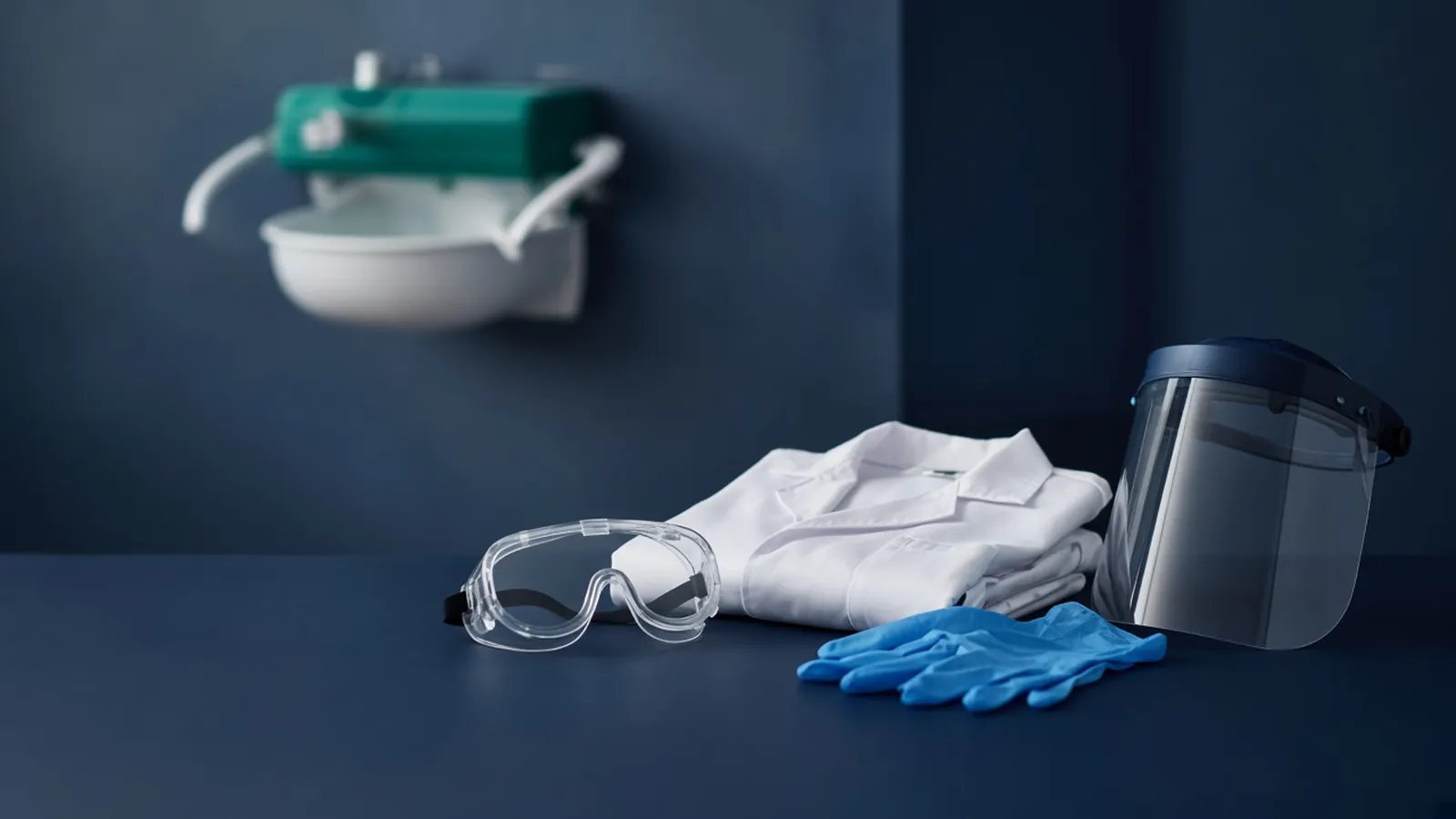
A safety-equipment enquiry that says "one cabinet, please" asks a seller to guess who must be protected. Write the protection target before you write the size. This guide is the list of questions to answer before that note goes out, for cabinets, hoods, and the consumables that only make sense beside them. How the words biosafety cabinet, fume hood, and clean bench differ is part of the comparison in this cluster, and the daily use of a cabinet is working inside a biosafety cabinet. The assessment those machines serve is biosafety basics for research benches. Gloves, coats, and waste containers that travel with the enquiry are in the laboratory consumables catalogue. Send the finished note with a quotation request. A longer habit for reagent enquiries is how to write a laboratory sourcing enquiry. This page does not price anything, and it does not claim that a given unit is waiting anywhere.
What the equipment must protect
Four targets get collapsed into one sentence. Separate them.
The user is protected when air that might carry a hazard is kept out of the breathing zone or off the body. For particles and aerosols from biological work, that is typically a biosafety cabinet of a class your institution accepts, used while it is certified. For chemical vapour, that is typically a ducted fume hood. Personal protective equipment protects the user as well, and it is a different purchase. Do not let a coat stand in for the enclosure on the same line of the form.
The product is protected when the work must stay free of room particles. A biosafety cabinet can do this together with user protection. A clean bench can do it while sending air toward the user, which is acceptable only when the assessment has said the product is non-hazardous. If you write "product only" and the work is infectious, the enquiry is already wrong.
The environment, in the biosafety sense, is protected when aerosols are not released to the room or the exhaust untreated in the way the assessment forbids. Filters, ducts, and the exhaust path are part of that sentence. A recirculating cabinet and a hard-ducted cabinet answer it differently. Say which arrangement the assessment named. If it has not named one, you are not ready to enquire. You are ready to go back to the committee.
Chemical vapour is the target people smuggle into a biological cabinet because the cabinet is clean and nearby. A HEPA filter does not capture vapour. If the method needs both aerosol control and solvent capture, write that conflict in the first paragraph and ask for the exhaust arrangement, or split the method. The WHO laboratory biosafety manual and the CDC BMBL are the right public reading beside your chemical hygiene plan. The OSHA laboratory standard is a useful picture of how a chemical hygiene plan thinks about hoods. It is not your building's law unless it actually applies where you work. Do not paste it into an enquiry as if a seller could comply with it on your behalf.
Documents the laboratory will ask to see
A brochure is not a test. Before you enquire, ask your own biosafety or facilities contact which document they will want after the machine is installed. For a biosafety cabinet that is often a field certification or test report against the practice your institution already uses, with a date and a result for inflow and downflow. For a fume hood it is often a face-velocity or containment test on the installed hood, not a factory sentence about a different room. For an eyewash or a shower, it is the commissioning check the facilities rule names. Write "we will ask to see this class of document" in the enquiry. Do not invent a certificate number, a standard you have not read, or a pass mark.
Also ask what the seller will provide before installation: drawings, electrical load, exhaust volume, and filter class in words the certifier can recognise. A document that arrives after the hole has been cut in the wrong wall is a late document. The branch when nobody can name the document: stop the enquiry. Buying first and discovering the test later is how uncertified fans become "the cabinet."
Size, then the path into the room
Measure the working width you need for the vessels, not only the outer cabinet. Then measure doors, lifts, and the corridor corner. A cabinet that cannot enter the building is not a protection target. Leave room for the certifier to stand, for the sash to move, and for the grilles not to be blocked by the neighbouring freezer. If the room is small, say so. Heat and noise are part of size in practice. A pair of cabinets in a closed teaching lab can make the room unworkable even when each unit met a drawing.
Services: what the building must already have
List power, including whether the fan must sit on backup if your sessions cannot stop. List exhaust if the assessment requires a duct, and say that a recirculating proposal is not a substitute you will discover on delivery. List gas, vacuum, water, and drain only if the method uses them. A gas tap inside a cabinet is a design question, not a default, because a flame disturbs airflow and sits next to alcohol. If you do not need gas, write that you do not, so it is not added as a courtesy. Vacuum and drain lines can become contamination paths if they are casual. Mention them only with the assessment's constraint.
Spill-response consumables are a separate line. An eyewash that is reachable, a spill kit whose absorbent matches the chemicals you actually pour, and a sharps container are not included in a cabinet by implication. Specify them as themselves. The cabinet page and the waste page in this cluster are the context. The enquiry should still name the hazard the kit must cope with.
Who will maintain it
A control without a named maintainer decays into furniture. Write who certifies the cabinet on the schedule your institution set, who changes filters, who is allowed to reset an alarm, and where the record is filed. If the answer is "someone later," the enquiry is early. Ask the seller what maintenance they can describe, and keep the obligation on the institution's side of the contract language you actually use. This article will not write that contract. It will say that a machine delivered without a maintenance path should not be treated as ready for infectious work or for hazardous vapour.
| Question before you send | A useful answer | An answer that should stop the note |
|---|---|---|
| Who is protected? | User, product, environment, vapour, as the assessment split them | Hood, or whatever is usual |
| Which document will we read? | The field test or velocity record our rule names | The brochure, or a certificate we invented |
| What size is the work? | Opening, vessels, and the path through the building | Outer width copied from a photograph |
| Which services exist? | Power, duct, gas, vacuum, drain, written as present or absent | We will see at installation |
| Who maintains it? | A named certifier and a record | The company, indefinitely, with no owner inside the lab |
A worked pair of enquiries
The culture room needs a Class II cabinet for open flasks of a cell line the committee has already placed in that room. The enquiry says: user and product; aerosols; recirculating or ducted as the assessment states; working width for two flasks and a pipettor; no gas tap; field test document after installation; filter changes by the contractor the institute already uses; power including what happens when the supply drops. It does not say "sterile hood."
The chemistry bench down the corridor needs a ducted hood for a volatile solvent. The enquiry says: user, from vapour; duct to the exhaust the building already has; face-velocity test after installation; the solvent family so the work surface material can be discussed; no claim that the hood is a biological cabinet. If someone tries to merge the two notes to save a purchase, the branch is to refuse the merge. One sash would be a wrong protection target for at least one of the jobs.
When the answers are thin
If the seller can talk about a footprint and not about airflow, you do not yet have a safety enquiry. If your own side cannot name the assessment, do not send the note to force the issue. If the only difference between two quotations is an adjective, ask again for the documents and the services. Do not fill the gap with a guess about availability. This page does not discuss price and does not describe stock.
In a hot building, write the heat load and the fact that people will be tempted to raise a sash for comfort. The specification should say the sash position is part of the control. In a building with routine power cuts, write whether backup power covers the fan. A cabinet that comes back as a dark box is not a cabinet until the purge rule has been met. Those lines belong in the enquiry because they decide whether the equipment can be the control you think you are buying.
What the note must not ask the seller to decide
Do not ask for a biosafety level, a medical opinion, or permission to start the work. Do not ask which spill disinfectant is "best" without naming the agent and the surface. Do not ask the seller to certify the room. Ask for class, size, services, and the documents your laboratory will read. Use the quote form and, for a university list, the academic research path. Then take the replies back to the people who own the assessment. The enquiry is a specification. It is not an approval.
Write a safety-equipment enquiry the laboratory can still recognise
- 01Name what the equipment must protectWrite user, product, environment, chemical vapour, or the combination the assessment actually requires. A single word such as hood is not a protection target. If two targets conflict, write two enclosures or drop a task.
- 02List the documents the laboratory will ask to seeAsk for the test or certification documents your own rule requires after installation, such as a field test report for a cabinet or a face-velocity record for a hood. Do not invent a certificate number, and do not treat a brochure as that document.
- 03State size, services, and the maintainerGive the working opening you need, the path through doors and lifts, and the services on site: power, exhaust, gas, vacuum, water, or drain. Name who will certify, change filters, and keep the record. A machine with no maintainer is a future failed control.
Questions from the bench
Should the enquiry start with the external dimensions?
Start with the protection target and the working opening. External size matters for the door, the lift, and the bench, and it is the second measurement, not the first. A cabinet that fits the room and protects the wrong thing is a successful delivery of the wrong control.
What services are easy to forget until installation week?
Exhaust ducting for a hood or a ducted cabinet, a dedicated electrical supply, gas and vacuum taps if the method uses them, a drain, and the heat the fans will put into the room. A recirculating cabinet still needs a plan for the air it returns. Write the services you have, not the services you hope a contractor will invent.
Can a quotation assign the biosafety level?
No. The enquiry can ask for equipment class, dimensions, and documents. The institution assigns containment. Say that in the note so nobody replies with a level as if it were a product feature. The same boundary applies to spill kits and gloves: specify the hazard they must resist, and keep the approval at home.
How does this differ from a general sourcing note?
A general sourcing note, of the kind described in the enquiry article, names identity, grade, and documents for a reagent or a consumable. A safety-equipment note adds who is protected, which test you will read, and who maintains the control after it arrives. Without those lines, the rest of the note is a furniture order.
References
Manufacturer names identify published method classes. Trademarks remain with their owners. Catalogue records on this site are independent references for enquiry. They are not a statement of inventory, distribution rights or a supply commitment. This page is educational. It is not medical advice, a diagnostic protocol or a biosafety approval.
Catalogue
Related products and categories
These links follow the subject of the article into published manufacturer references. A listing is a reference for an enquiry, not a statement of stock or distribution rights.
Continue in this cluster
Related reading
Biosafety basics for research benchesResearch-bench biosafety is a stack of barriers chosen by a risk assessment. This page explains the stack. It does not approve the work. Working inside a biosafety cabinetHow a Class II biosafety cabinet moves air, how that differs from a chemical fume hood, and which habits keep cultures and workers protected.
 How to write a laboratory sourcing enquiryWrite a laboratory enquiry as measurable performance, documents and an acceptance check, so a quotation can be compared with the scientific need.