
guide
Questions before a water-system enquiry
Write a water-system enquiry that names the feed, the daily volume, the contaminant that matters, pretreatment, sanitisation, and the documents the laboratory
- Author
- EVRINTH Editorial Team
- Published
- 8 October 2026
- Updated
- 8 October 2026
- Reading time
- 9 min

A water system is specified by the contaminant the assays cannot tolerate, not by a catalogue adjective. The enquiry is the place those constraints become sentences a supplier and a receiving laboratory can both check. This guide is the list of questions to answer before you send that note. It is not a sizing calculation and it does not name a brand.
The reason a single purity word fails is in laboratory water types and where they fail. Water that will be turned into buffers still needs the habits in preparing a buffer and checking pH. The general shape of a sourcing note is how to write a laboratory sourcing enquiry. Salts dissolved in the product water are a separate line in the reagents and chemicals catalogue. Collection vessels are in beakers and flasks. The finished specification goes on a quotation request.
Feed source
Write where the water enters the room. Municipal tap, a borewell, a roof tank, or a loop that is already softened or already passed through reverse osmosis are different feeds. If a test exists for hardness, free chlorine, silt, iron, or silica, attach the number and the date. If it does not exist, write unknown. A design that assumes chlorine where you have none, or none where you have a disinfectant residual, ages the wrong consumable first.
Say whether the feed pressure and temperature are known. A polisher that expects a boosted, tempered feed will disappoint on a gravity line. You do not need a fake precision. You need an honest gap so the proposal includes the missing pretreatment instead of discovering it after the skid is in the corridor.
Daily volume, including the day that is not typical
State the volume of polished water a normal day actually uses, and the volume of a day when media, buffers, and a glassware rinse coincide. Peak draw matters because a system sized on an average can force the laboratory to store water, and stored polished water is a different material by the next morning. Say whether users can wait for a slow dispense or whether several benches draw at once.
Include the volume you intend to store, if any, and how long it would sit. A storage tank is not a detail. It is a microbiological decision. If you can take water at the point of use and avoid storage, say that preference. If the building's pattern makes storage inevitable, ask how turnover and sanitisation are supposed to work for that tank.
The contaminant that matters
Pick from the real list: ions, total organic carbon, endotoxin, particles, bacteria. Add nuclease or metal only if an assay has already taught you that those are the failures. A molecular biology bench, a chromatography bench, and a culture bench in the same institute may need three different lines. Write the assays by name. "General lab water" is how the strictest assay inherits the loosest specification, or how you pay for a claim nobody checks.
For ions, ask for resistivity or conductivity at a stated temperature, and ask whether the figure is at the dispenser or inside the chassis. For organic carbon, ask for the method family and the point of measurement. For endotoxin and bacteria, ask for the test the proposal is willing to document at installation, and do not confuse that with a lifetime promise about your future tank. For particles, say the process that sees them, such as a column or a culture, rather than a vague cleanliness word.
ISO 3696 is one public vocabulary for analytical water grades. Use a grade name as shorthand only after you have listed the lines inside it that your assays use. A grade name alone, pasted into an enquiry, will come back as a grade name alone.
Pretreatment already on the wall
Describe softeners, carbon beds, particulate filters, and any existing reverse-osmosis unit, including what you know about their age and whether anyone still services them. A new polisher bolted onto an exhausted carbon bed is a new polisher in name only. If a pretreatment step is shared with a glasswasher or an autoclave feed, say so, because those draws steal pressure and can introduce a cross-connection you do not want upstream of a culture bench.
Also say what must not be added. Some assays cannot tolerate a residual of the sanitant or of a softening ion. If you already know that, it belongs in the enquiry. If you do not, do not invent a ban. Ask the proposal to name every chemical the pretreatment and the sanitisation would introduce.
Sanitisation
Ask which sanitisation method the manufacturer of the proposed modules requires, how often they state it, and which parts of the system the method actually reaches. A loop, a tank, a dead leg, and a point-of-use filter are not sanitised by one verb. Ask what the laboratory must handle: a chemical, hot water, a lamp, a replacement cartridge. Ask what is incompatible with the resins.
The laboratory remains responsible for the procedure it adopts and for the waste that procedure creates. The enquiry's job is to make that procedure knowable before purchase. A design that can only be kept clean by a step your building cannot do is the wrong design, however attractive the ionic specification looks.
Documents the laboratory will check
List them in the note so they come back as a pack rather than as a brochure. Useful documents include a flow drawing that marks the resistivity cell relative to any tank and the final filter, the feed requirements, the product-water specification line by line, the sanitisation instruction, the consumable change criteria, and the certificate or test record the installer will hand over at start-up. If you will run installation checks yourselves, name them: resistivity at the point of use, an organic-carbon reading if it was specified, a sampling point for a plate count if bacteria were specified.
Say who signs acceptance. A system that cannot be compared with the enquiry on the day it is turned on was not specified. It was hoped for. NIST's metrology pages are a reminder that a displayed number is only as good as the calibration behind it. Ask how the resistivity monitor is calibrated and at what interval.
| Enquiry line | What to write | What to leave out |
|---|---|---|
| Feed | Source, and measured hardness or chlorine if you have them | A guessed analysis written to sound complete |
| Volume | Normal day, peak day, and any storage time | An average that hides a Monday rush |
| Contaminant | Ions, organic carbon, endotoxin, particles, bacteria, tied to assays | The word ultrapure with no line under it |
| Pretreatment | What is already installed and what is shared | An assumption that the corridor pipe is harmless |
| Sanitisation | Maker's method, interval, and who performs it | A hope that the system stays clean unaided |
| Documents | Drawing, specification, sanitisation sheet, start-up records | A brochure in place of a checkable pack |
Branch when the proposal answers a different question
If the returned note leads with a resistivity and your assay list led with endotoxin or organic carbon, send it back. Ask for the missing line or drop the claim. Do not "accept the ionic specification" as a proxy.
If the proposal adds a storage tank you did not ask for, ask how long water sits and how the tank is sanitised. A tank can be legitimate on a peak day. It is not a free upgrade. If the proposal cannot name a sanitisation method because the module choice is still open, you are still in design, not in procurement. Wait for the method.
If two benches need incompatible waters, split the enquiry. A culture laboratory and a glassware rinse do not have to share a final filter. Writing them as one "lab water" line is the branch that creates arguments at acceptance.
Heat, dust, and a specification that survives a handover
A hot plant room shortens the comfortable life of some pretreatments and makes a stagnant tank a microbiological problem sooner. Say whether the proposed location is an air-conditioned room or a hot service space. Dust and intermittent supply pressure belong in the same paragraph if they are true of the building: a system that must ride through low-pressure hours needs that said, or the first month will be explained as a defect when it was a feed fact.
Write the specification so a colleague on the next shift can check the start-up without calling you. Units, sample points, and document names travel. A verbal "they said it would be fine for PCR" does not. Keep prices, availability talk, and delivery promises out of this scientific note so the contaminant list stays the thing everyone argues from.
Safety and scope
A water system is not only a beaker of clean water. Pretreatment chemicals, sanitants, ultraviolet lamps, and hot surfaces are part of the installation. The laboratory's safety procedure and the safety data sheet govern those materials. This guide does not approve an installation, and it does not set a biosafety level. If product water will be used with infectious cultures, the culture rules still apply downstream. Polished water is not a disinfectant.
Sending the note
Use the quotation request and attach the six lines: feed, volume, contaminant, pretreatment, sanitisation, documents. Point at the assays, not at a slogan. Ask for the drawing and the sanitisation instruction in the same response as the product-water specification. When the pack arrives, compare it with the enquiry before you compare it with anyone's preference. The sourcing-enquiry page is the wider habit; this page is the water-specific content that habit needs.
Assemble a water-system enquiry the laboratory can check
- 01Name the feed and what you have measuredWrite municipal, borewell, or an existing treated loop, and attach hardness, chlorine, silt, or silica only where you have a real measurement. Unknown is an acceptable word. A guessed number is not.
- 02Name the daily volume and the contaminant that ruins the assayState a typical day and a busy day in litres, then say whether the failure would come from ions, organic carbon, endotoxin, particles, or bacteria. One assay can demand two of those. A single word such as ultrapure cannot.
- 03State pretreatment, sanitisation, and the documents you will readList filters or softeners already on the wall. Ask for the manufacturer sanitisation method and interval. List the certificate lines, drawings, and point-of-use checks the laboratory will compare with the proposal.
Questions from the bench
Should the enquiry ask for 18 megohm water and stop there?
No. A resistivity figure is an ionic specification at a stated temperature. Organic carbon, endotoxin, particles, and bacteria are separate lines, and only the lines your assays need. Ask for the ionic number where ions matter, and ask where on the skid that number is measured.
What if we do not know the feed-water analysis?
Say that the analysis has not been done, and say which source the pipe actually comes from. A proposal can then include a feed test rather than a design that assumes a soft municipal water you may not have. Inventing a hardness to sound prepared produces the wrong pretreatment.
Who is responsible for sanitisation after installation?
The enquiry should ask how the manufacturer specifies sanitisation, which chemicals or heat cycles the modules allow, and what the laboratory must be able to do on a normal week. The laboratory still owns the procedure it adopts. A sentence that says the water will stay clean without a method is not a plan.
Can we ask for a delivery date or a price in the same note?
Keep the scientific specification free of commercial colour. Volume, contaminants, pretreatment, sanitisation, and documents are the note this page is for. Commercial terms belong in whatever channel your procurement office already uses, and they are not a substitute for the contaminant list.
References
Manufacturer names identify published method classes. Trademarks remain with their owners. Catalogue records on this site are independent references for enquiry. They are not a statement of inventory, distribution rights or a supply commitment. This page is educational. It is not medical advice, a diagnostic protocol or a biosafety approval.
Catalogue
Related products and categories
These links follow the subject of the article into published manufacturer references. A listing is a reference for an enquiry, not a statement of stock or distribution rights.
Continue in this cluster
Related reading
Laboratory water types and where they failResistivity, organic carbon and endotoxin answer different questions. A water grade fails when the assay cares about a contaminant the meter cannot see.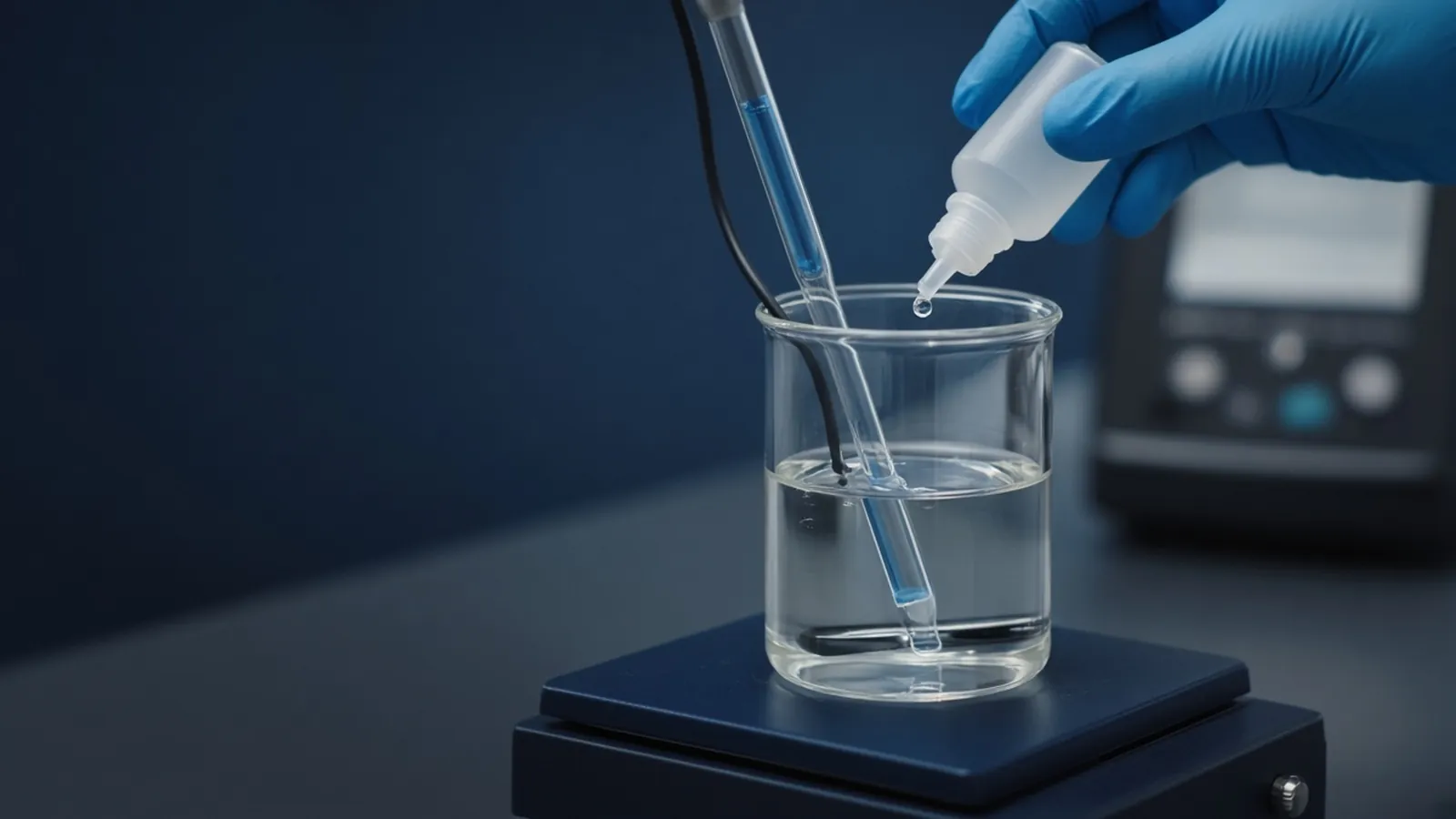 Preparing a buffer and checking pHPrepare a buffer at a stated pH and temperature, record the salt form, and treat a drifting electrode or a bad slope as a failed control.
 How to write a laboratory sourcing enquiryWrite a laboratory enquiry as measurable performance, documents and an acceptance check, so a quotation can be compared with the scientific need.