
guide
Risk assessment is a local document
A risk assessment records the agent, the procedure, the people, the place, and the controls. Copying another laboratory's sheet does not create one.
- Author
- EVRINTH Editorial Team
- Published
- 8 October 2026
- Updated
- 8 October 2026
- Reading time
- 10 min
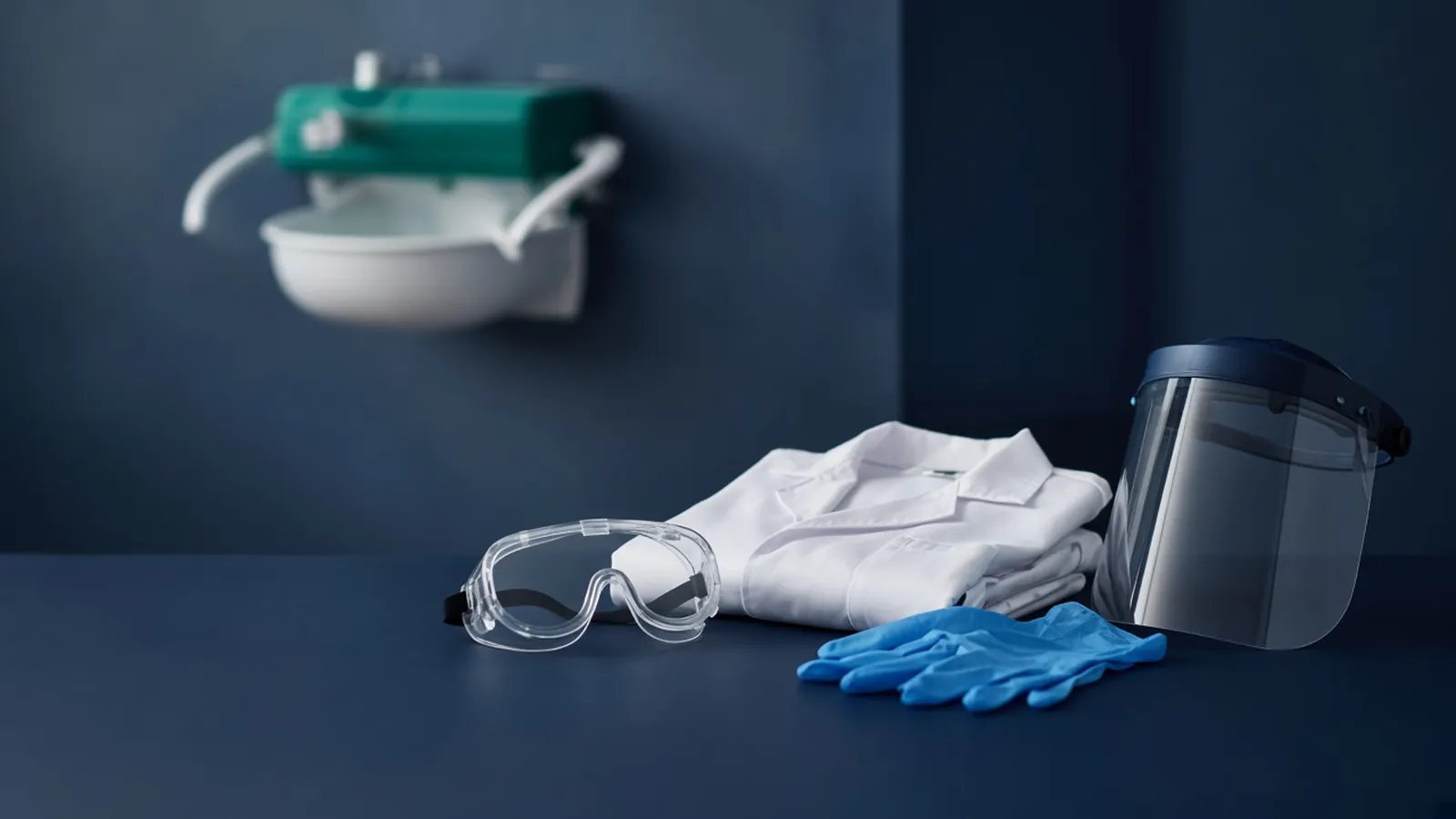
A risk assessment is a document about one piece of work in one place. It names the agent, the procedure, the people who will do it, the room they will use, and the controls that make the work acceptable to the institution. A sheet copied from a methods paper, a neighbouring laboratory, or a vendor brochure is a list of ideas. It becomes an assessment only when someone who knows this bench has tied those ideas to this material and this room.
The wider stack of barriers is explained in biosafety basics for research benches. Coats, gloves, eye protection, and waste containers are classes in the laboratory consumables catalogue. A teaching group that needs a documented enquiry path can start from academic research and a quotation request. A quotation does not accept the risk, and it does not start the experiment.
Who has to be able to read it
Use this guide when you are about to open a culture, a clinical or environmental sample, a recombinant organism, or a hazardous chemical, and someone asks whether the work may go ahead. The decision you are supporting is whether a local document exists that a supervisor and a biosafety or chemical-hygiene officer could recognise as theirs. If you cannot name the material, you are not ready to choose gloves. If you can name the material and cannot describe the steps, you still do not know whether the hazard is a splash, a cut, or an aerosol.
Two public sources frame the language. The WHO laboratory biosafety manual, fourth edition, puts a risk-based approach ahead of a level number: the agent, the procedure, and the people. The CDC Biosafety in Microbiological and Biomedical Laboratories describes containment as combinations of practices, safety equipment, and facilities. Neither document is a permit for your building. Your institution, under the law that applies where you work, is the authority.
Five fields that make the document local
The agent is the material. Write the organism and the strain if you have them, or write "unidentified bacterial isolate from a surface swab" if that is the truth. Write the chemical name, the concentration, and the solvent when the hazard is chemical. A risk group, where your system uses one, is a classification input. It is not the whole assessment, because the procedure can raise or lower the chance that the material reaches a person.
The procedure is the sequence of hands and machines. Pipetting a closed tube, vortexing, sonicating, centrifuging in an open bucket, homogenising tissue, and pouring solvent each create a different route. Volume matters. One millilitre in a screw-cap tube and fifty millilitres in an open bottle are not the same experiment with a longer name.
The people are whoever will do the work and whoever must be able to stop it. Training, supervision, and who is allowed in the room belong here. A visitor who has not been shown the spill plan is part of the assessment, because the plan fails if the person holding the flask has never read it.
The place is the room, the bench, the cabinet or hood, the eyewash, the waste stream, and the route to the autoclave or the chemical store. A control that exists on another floor is a map reference. It is a control only if this procedure will actually use it.
The controls are the practices, the equipment, and the facilities the institution assigns to those routes. Personal protective equipment answers splash and contact. A certified biosafety cabinet answers aerosols when the assessment calls for one. A fume hood answers volatile vapours. Spill response is a control only when it names the substance family and the person to call. An autoclave is a control only for loads steam can reach, which is the limit described in autoclaves and what sterilisation does not do.
What a copied sheet leaves out
A copied sheet usually has a tidy list of coats and gloves and a sentence that says "follow institutional rules." It rarely has your strain, your sonicator, your night-shift staffing, or the fact that the eyewash on this corridor is behind a stored freezer. Those omissions are the difference between a template and an assessment.
Treat a template as a questionnaire. Answer it in sentences a colleague could check against the room. If a line does not apply, write why. A blank that you leave because the template looked official is a hole, not a conservative choice.
Chemical work has a parallel document in many institutions: a chemical hygiene plan, in the sense described by the OSHA laboratory standard where that standard applies, or the local equivalent where it does not. The existence of a national regulation is not your plan. Your plan names the chemicals in this room.
A worked change, and the branch when a control is missing
Suppose the accepted assessment covers plating a well-characterised cloning strain from a one-millilitre culture. Next week someone wants to lyse the same strain by sonication in a fifty-millilitre bottle on the open bench, because the probe is already set up there. The organism name did not change. The procedure did. Sonication makes an aerosol. The volume is larger. The place may now be wrong if the assessment had required a certified cabinet for aerosol-generating steps.
The branch is to stop and rewrite, not to add a face shield and call the old sheet current. Write the new step, the new volume, and the cabinet or other control the institution requires for that aerosol. If that cabinet is out of certification, you do not have the control. Waiting for the engineer is the honest outcome. Starting on the open bench because the culture "is only the cloning strain" skips the procedure half of the document.
A second branch appears at the end of the afternoon. The waste you planned to autoclave includes a solvent rinse, or a tray of sharps, or a sealed bottle with no water for steam to heat. That load is no longer the load the assessment named. Split it according to the waste rules you were given. Do not discover the split when the autoclave operator refuses the bag.
| Field | Question that makes it local | If the answer is missing |
|---|---|---|
| Agent | What, exactly, will be opened, including unknowns? | Stop. You cannot match controls to an unnamed material. |
| Procedure | Which steps splash, cut, or aerosolise, and at what volume? | The coat-and-gloves list has nothing to attach to. |
| People | Who is trained, who supervises, and who may enter? | A competent procedure can still fail in untrained hands. |
| Place | Which room, cabinet, eyewash, and waste stream? | A control in another building is not this control. |
| Controls | Which practice, equipment, and facility did the institution assign? | Copying a sentence does not install the missing item. |
When the assessment goes stale
An assessment ages when the work drifts. People remember the organism and forget that they added a needle, a blender, or a new disinfectant. They remember the cabinet and forget that certification lapsed. They remember the spill kit and forget that the kit was built for ethanol while the new bottle is a concentrated acid.
Read the document against this week's method, not against the method you meant to run last term. If the spill response section names a family of substances you are no longer using, replace it. Do not keep a universal spill paragraph. Biological material, acid, solvent, and cryogen do not share a cleanup, and the local plan plus the safety data sheet are what govern. A single sentence that says "clean spills promptly" is not a response.
Review also belongs to near misses. A glove that soaked through, a tube that opened in the centrifuge, or a hood alarm that everyone silenced is evidence the controls need another look. File the fact with the assessment. A story told only at tea does not change the document.
What this page does not grant
This is educational material for people who work at research benches. It does not approve an organism, a protocol, a room, or a person. It does not diagnose an exposure, and it does not tell you how to treat one. Risk assessment and authorisation sit with the institution: the biosafety officer, the chemical hygiene officer, the committee, and the rules that apply where you work. If those people have not accepted the document, the work has not been authorised, however complete your draft looks.
Do not use the page to assign yourself a biosafety level. Levels, where your system uses them, are bundles of practices, equipment, and facilities described in the manuals above. They are assigned locally. A blog cannot see your agent or your building.
Heat, power, and a shared SOP
A procedure copied from a laboratory that assumes uninterrupted power and a cool room is missing local conditions. A hot, humid afternoon changes how long people can work in a fastened coat without breaking technique. A power cut stops a biosafety cabinet and a fume hood at the moment the airflow was the control. The assessment should say what you do when the fan stops, including covering or securing the work the way the cabinet SOP describes, and not resuming because the lights returned. Write those branches in. Leaving them as "use common sense" means the next person invents a different answer.
What to put in an enquiry
When you ask for consumables that the assessment already named, describe the task rather than a slogan. State the chemical or the biological material class the institution has allowed you to name, the route you are controlling (splash, hand contamination, aerosol, volatile vapour), and the waste stream. Ask for glove material, coat type, eye protection, and container class in those words. Send that specification with a quotation request. Use the enquiry to match equipment to a document you already have. Do not ask a supplier to write the assessment or to decide that the work may start.
Write a risk assessment that belongs to this work and this room
- 01Name the agent as specifically as the work allowsRecord the organism, the strain, the sample type, or the chemical, including what you do not yet know. A genus on a label is a starting point. It is not a finished description of the material you will open.
- 02List the steps that can splash, cut, or make an aerosolWalk the procedure and mark vortexing, sonication, centrifugation, pouring, and sharps. A closed tube and an open homogeniser are different procedures even when the organism name is the same.
- 03Name the people and the placeRecord who is trained for this task, who supervises, and which room, cabinet, and waste stream they will actually use. A cabinet in another building is not a control for this bench.
- 04Match each hazard to a control you can point atWrite the practice, the equipment, and the waste path the institution has provided. If a control is missing, stop and send the gap to the person who owns the assessment. Do not fill the gap with a sentence copied from another laboratory.
Questions from the bench
Can a generic biosafety sheet stand in for a local risk assessment?
No. A generic sheet can remind you of questions. It cannot know your agent, your volumes, your people, or your room. The assessment is the document that joins those facts to controls the institution has accepted.
Does this page approve the work once the five fields are filled in?
No. Filling the fields is how you prepare a document for the people who are allowed to accept it. Authorisation sits with the institution. This page is educational reading. It is not a biosafety approval, a medical instruction, or permission to proceed.
When does a small change force a new assessment?
A new organism, a new chemical, a larger volume, a move from a closed tube to an aerosol-generating step, or a move into a different room is a new piece of work. The old sheet does not travel with you. Spill response and waste paths have to be readable for the new task before you start.
Where does the autoclave sit in the assessment?
The autoclave is one possible waste or decontamination control, and only for loads that steam can actually treat. The assessment should name what is autoclaved, what is chemically disinfected, and what is a sharp. Colour-changing tape is not proof the load was sterilised. Those limits are set out in the autoclave article.
References
Manufacturer names identify published method classes. Trademarks remain with their owners. Catalogue records on this site are independent references for enquiry. They are not a statement of inventory, distribution rights or a supply commitment. This page is educational. It is not medical advice, a diagnostic protocol or a biosafety approval.
Catalogue
Related products and categories
These links follow the subject of the article into published manufacturer references. A listing is a reference for an enquiry, not a statement of stock or distribution rights.
Continue in this cluster
Related reading
Biosafety basics for research benchesResearch-bench biosafety is a stack of barriers chosen by a risk assessment. This page explains the stack. It does not approve the work.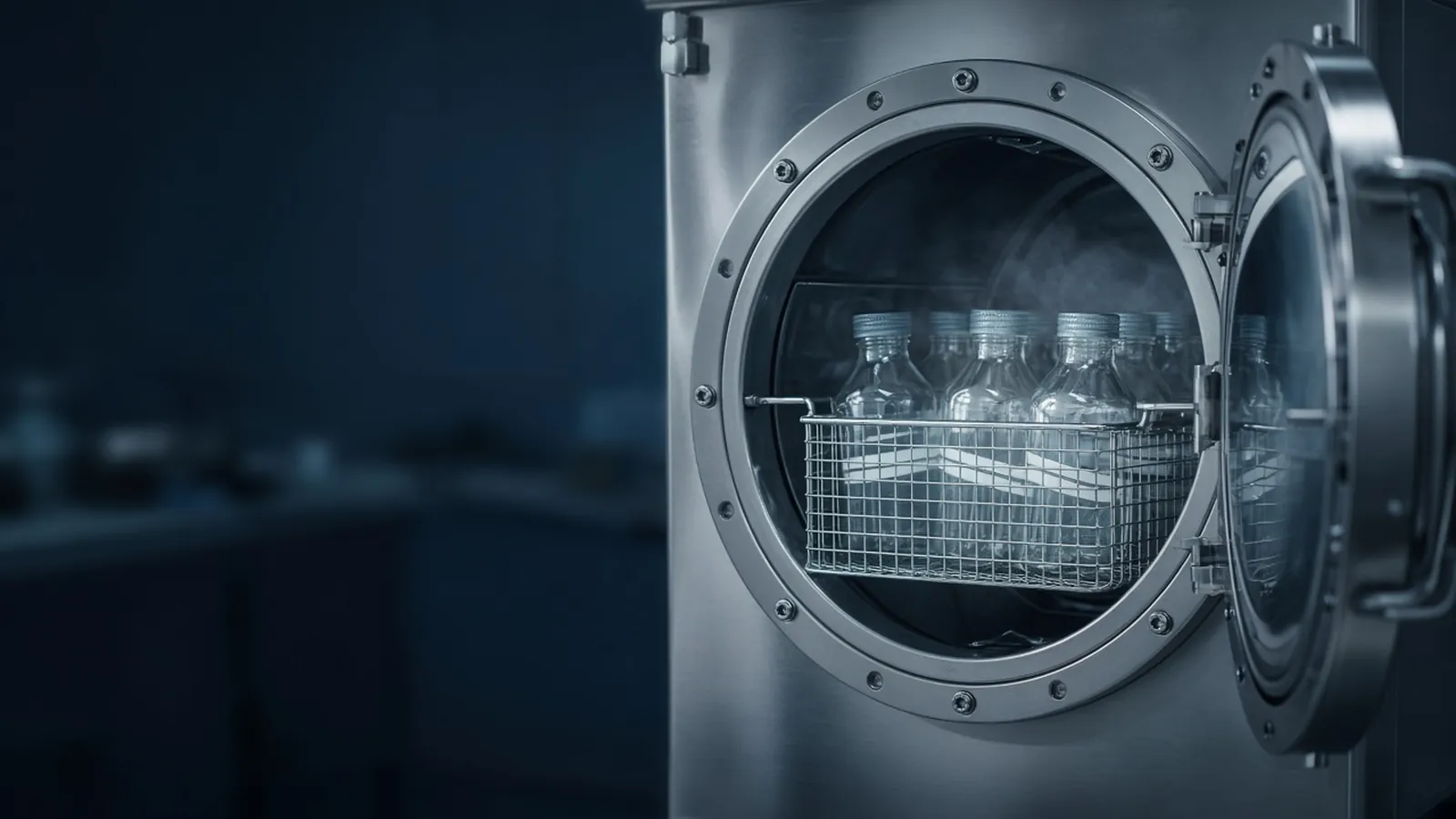 Autoclaves and what sterilisation does not doSteam sterilisation holds a cleaned load at temperature. It does not wash, remove endotoxin, or prove sterility because the tape changed colour.A glossary of biosafety termsPairs that share a bench still do different jobs. Use this comparison to choose the right word for a cabinet, a chemical, a level, or a control.