
selection guide
Sterile versus clean is not the same
How to specify sterile, clean, endotoxin-controlled or nuclease-controlled labware as separate claims with different evidence.
- Author
- EVRINTH Editorial Team
- Published
- 8 October 2026
- Updated
- 8 October 2026
- Reading time
- 7 min
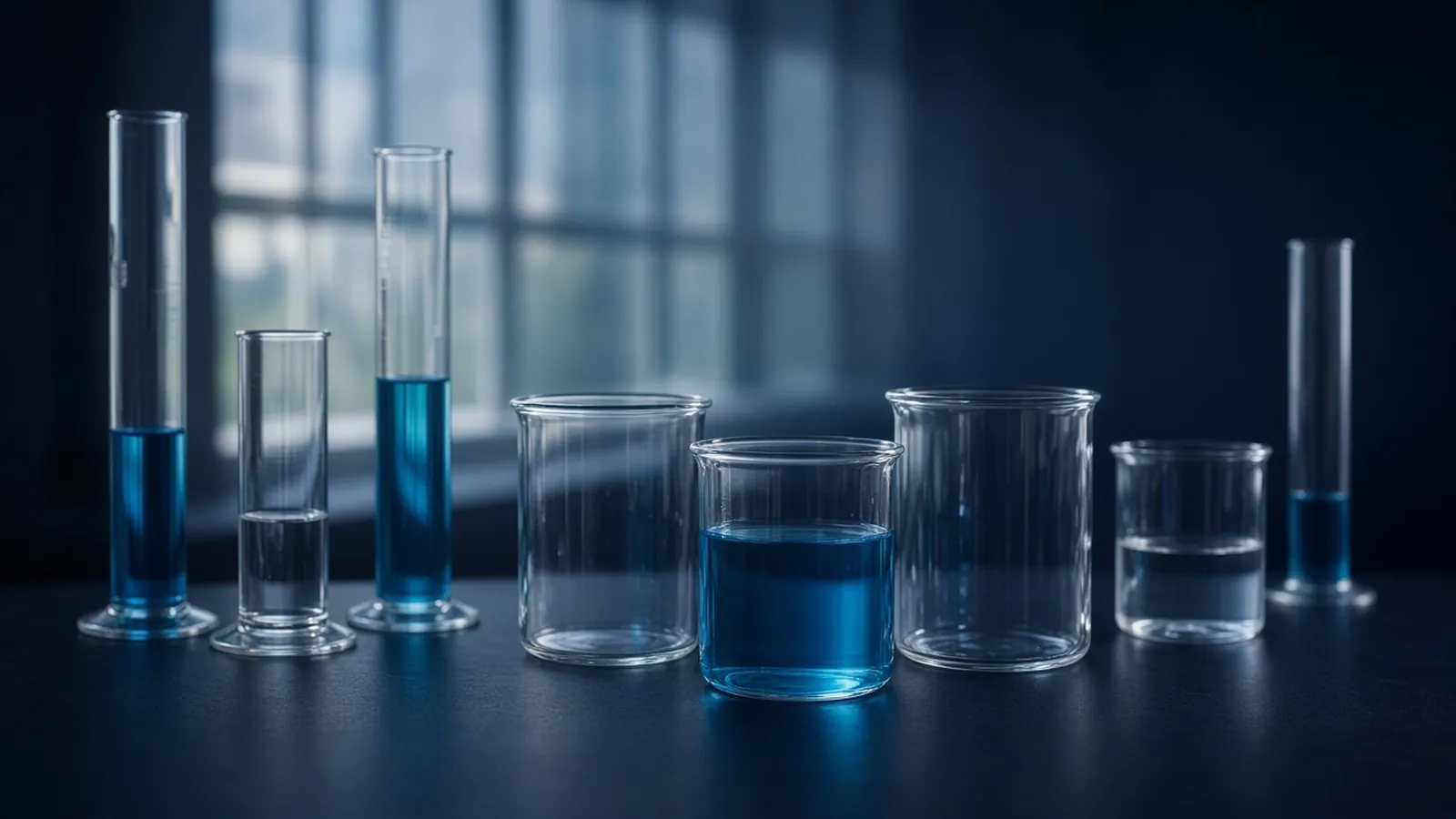
A vessel can be free of living organisms and still wreck a polymerase or a cell culture. Sterile and clean answer different questions, and endotoxin and nuclease answer two more. This selection guide is the set of claims to name when you specify labware, and the evidence each claim needs. Steam's limits are set out in autoclaves and what sterilisation does not do. Which object you are cleaning is part of choosing laboratory glassware.
Criteria the specification should separate
Name the biological claim only if you need it. Sterile means a process claim about viable organisms. For reusable glass that usually means a validated autoclave cycle after washing, with borosilicate ware, headspace, and caps loosened unless a vented cap is rated for closed cycles. For single-use plastic it means the maker's sterile claim and an unopened, undamaged pack. A wipe with ethanol is not that claim.
Name the residue claim in the same sentence if the assay notices chemistry. Clean, for this purpose, means the absence of detergent film, previous sample, and other residues the method lists. Rinse validation is how a washer earns that word. Dedicated enzyme or nucleic-acid glass is how many laboratories keep the word true. A flask can be the right volumetric class and still be unfit because the wall is filmed. NIST calibration practice wants an intact, clean surface for a volume. Sterility is not part of that sentence unless you also culture from the flask.
Name endotoxin only when the biological system requires it. Dead Gram-negative fragments are not "handled" by calling the tube sterile. Ask for the maker's endotoxin statement and the test behind it, or follow your institution's depyrogenation method for glass that is actually eligible. Do not invent a bake cycle in a drying oven and call it depyrogenation. Standard autoclave practice is the wrong tool to claim by habit.
Name nuclease control when the analyte is nucleic acid and degradation would be read as a result. Nuclease-free, PCR-clean and similar phrases are manufacturer tests, not synonyms for sterile and not synonyms for each other. A sterile swab can carry nuclease. A nuclease-free tube can be non-sterile if that is how it was sold. Buy the pair you need.
Name the material because the claim attaches to a process the material can survive. Borosilicate 3.3, as distinguished for laboratory glasses in ASTM E438, is the usual reusable steam vessel. Polystyrene is often sold sterile and is not then autoclaved by you. Polypropylene may carry any combination of these claims depending on the product. The resin does not imply the claim.
Evidence, not adjectives
For sterile reusable ware, the evidence is your autoclave record for that load class, not a colour-changing tape alone. Tape shows that a temperature was reached on the tape. It does not prove the bottle interior, and it does not prove cleanliness. For purchased sterile plastic, the evidence is the pack marking and an intact seal. Once opened, the unused remainder is a local handling question. Do not call an open box sterile for a week because it was sterile on Monday.
For clean, the evidence is the rinse practice and, where the assay is sensitive, a functional check: the enzyme works in this vessel and fails in a deliberately poorly rinsed one, or the cells attach. For endotoxin and nuclease, the evidence is the supplier document you asked for, plus whatever verification your quality rule requires. A catalogue adjective is not that document.
| Claim | Question it answers | Evidence worth filing | A process that does not answer it |
|---|---|---|---|
| Sterile | Were viable organisms removed or excluded? | Validated cycle or intact sterile pack | A detergent wash alone, or tape colour alone |
| Clean | Is interfering residue gone? | Rinse practice, water break, functional check | Autoclaving a dirty bottle |
| Endotoxin-controlled | Was LPS held to a stated test? | The maker's or the lab's endotoxin evidence | A standard steam cycle by assumption |
| Nuclease-controlled | Were damaging enzymes held to a stated test? | The matching product claim | Sterility, or a clear colour of plastic |
| Volumetric class | Is the volume a calibration? | Class mark and certificate | Any of the biological claims |
Selecting for a real method
A chemical standard that will never see a culture needs clean volumetric glass, the right class, and no sterile theatre. A medium bottle needs clean, then sterile, in that order, in borosilicate with the cap rule. A PCR tube needs the nuclease claim the assay insert names, and sterile if the insert or your contamination control names it. A cell-culture flask may need sterile, a surface treatment, and an endotoxin expectation. Writing one word for all four methods is how the wrong pack is opened.
If a control fails, match the failure to the claim. Growth in a blank is a sterility or aseptic-technique failure. A dead culture with no growth in the blank may be residue or endotoxin. A vanished nucleic acid with no amplification in the negative control may be nuclease or adsorption. Do not autoclave your way out of a nuclease problem and call the question settled.
Safety and institutional meaning
Your biosafety rules decide which organisms may be in which vessels. The WHO laboratory biosafety manual and the CDC BMBL are background. A sterile tube does not assign a containment level, and this guide does not approve a diagnostic device. Chemical cleanliness is also a chemical-safety matter when the previous occupant was a hazardous reagent. Wash those vessels on the chemical rule before any biological claim is even relevant.
Order of operations on a reusable bottle
Wash until the residue claim is plausible, then sterilise if the method needs sterile. Reversing the order bakes film in place and produces a sterile dirty bottle. New single-use packs skip the wash only because the maker's claim already bundles the words you specified. If your specification listed only sterile, do not later describe that pack as endotoxin-controlled because the bag was unopened.
Packs in a humid building
An intact sterile pack that has been wet in a humid store or a leaking carton is no longer an intact pack. Do not dry it on a windowsill and keep the claim. Open sterile packs in the place and for the time your aseptic practice allows. A power cut that stops a laminar cabinet mid-aliquot is a reason to discard what was open, not a reason to call the bottles still sterile because they started that way. Clean glass waiting for the autoclave should be covered against dust and still washed again if the wait was long and dirty. Dust is not sterile and it is not clean.
What to send
List each claim separately: sterile, clean for a named assay, endotoxin-controlled, nuclease-controlled. Add glass type or resin, format, capacity, autoclave duty if you will steam it yourself, and the quantity. Ask for the evidence the seller will provide for each claim you named. Use the laboratory glassware catalogue and the laboratory plasticware catalogue, with volumetric glassware on its own line when a volume must be declared. Put the claims on the quote request.
Questions from the bench
What does sterile claim, and what does it leave open?
A sterile claim is about viable organisms, achieved by a stated process such as a validated autoclave cycle, irradiation, or filtration, and lost as soon as the pack or the closure is compromised. It does not claim that detergent, metals, nucleic acids or endotoxin are absent. A vessel can be sterile and still inhibit an enzyme or a cell culture. When you specify sterile, also say whether you need a residue claim. If you only need the absence of living organisms, do not pretend the word covers the chemistry.
What should clean mean in a specification?
Clean means free enough of residue for the next use you named: no detergent film, no previous product, no dust you would refuse in that method. It is not a regulated synonym for sterile. A volumetric flask can be chemically clean and non-sterile, which is the right state for many analytical make-ups. A Petri dish can be sterile and still carry a processing residue. Write the residue you care about. The word clean alone is a start, and the method names the rest.
How do endotoxin and nuclease claims differ from sterile?
Endotoxin is bacterial lipopolysaccharide. It can remain after the bacteria are dead, and it matters for some cell and protein work. Depyrogenation is typically a different, harsher thermal history than a standard autoclave, when it is done in glass at all, and many people buy plastic with a stated endotoxin claim instead. Nuclease-free means damaging enzymes were controlled to the maker's test. Neither is proved by a sterile symbol. Specify the one your assay fails from, and keep the sterile claim beside it if the method also needs it.
Does autoclaving a washed bottle give me all of these?
It gives you the biological reduction your validated cycle gives you, on a load steam could reach, with caps handled as the bottle requires. It does not rinse detergent, it does not prove endotoxin removal, and it does not prove nucleases are gone. Those limits are why autoclave practice has its own explanation beside this selection guide. If the bottle was dirty, you have sterilised a dirty bottle. Wash to the chemical standard first, then apply the biological process the method actually names.
References
Manufacturer names identify published method classes. Trademarks remain with their owners. Catalogue records on this site are independent references for enquiry. They are not a statement of inventory, distribution rights or a supply commitment. This page is educational. It is not medical advice, a diagnostic protocol or a biosafety approval.
Catalogue
Related products and categories
These links follow the subject of the article into published manufacturer references. A listing is a reference for an enquiry, not a statement of stock or distribution rights.
Continue in this cluster
Related reading
Choosing laboratory glasswareHow to match borosilicate beakers, flasks and volumetric glass to the measurement you need, and when a printed line is only a guide.A glossary of labware termsDefinitions of the labware words that change a result: class marks, to contain and to deliver, joint size, resin, sterile and clean.Beakers are for handling not for accuracyWhy a beaker graduation is only a handling guide, and when a concentration other people will reuse belongs in a volumetric flask.