
application
Thawing a vial without cooking it
How to thaw a research cell vial quickly, dilute the cryoprotectant at once, and catch a label, shipment or biosafety problem before the cells are seeded.
- Author
- EVRINTH Editorial Team
- Published
- 8 October 2026
- Updated
- 8 October 2026
- Reading time
- 7 min
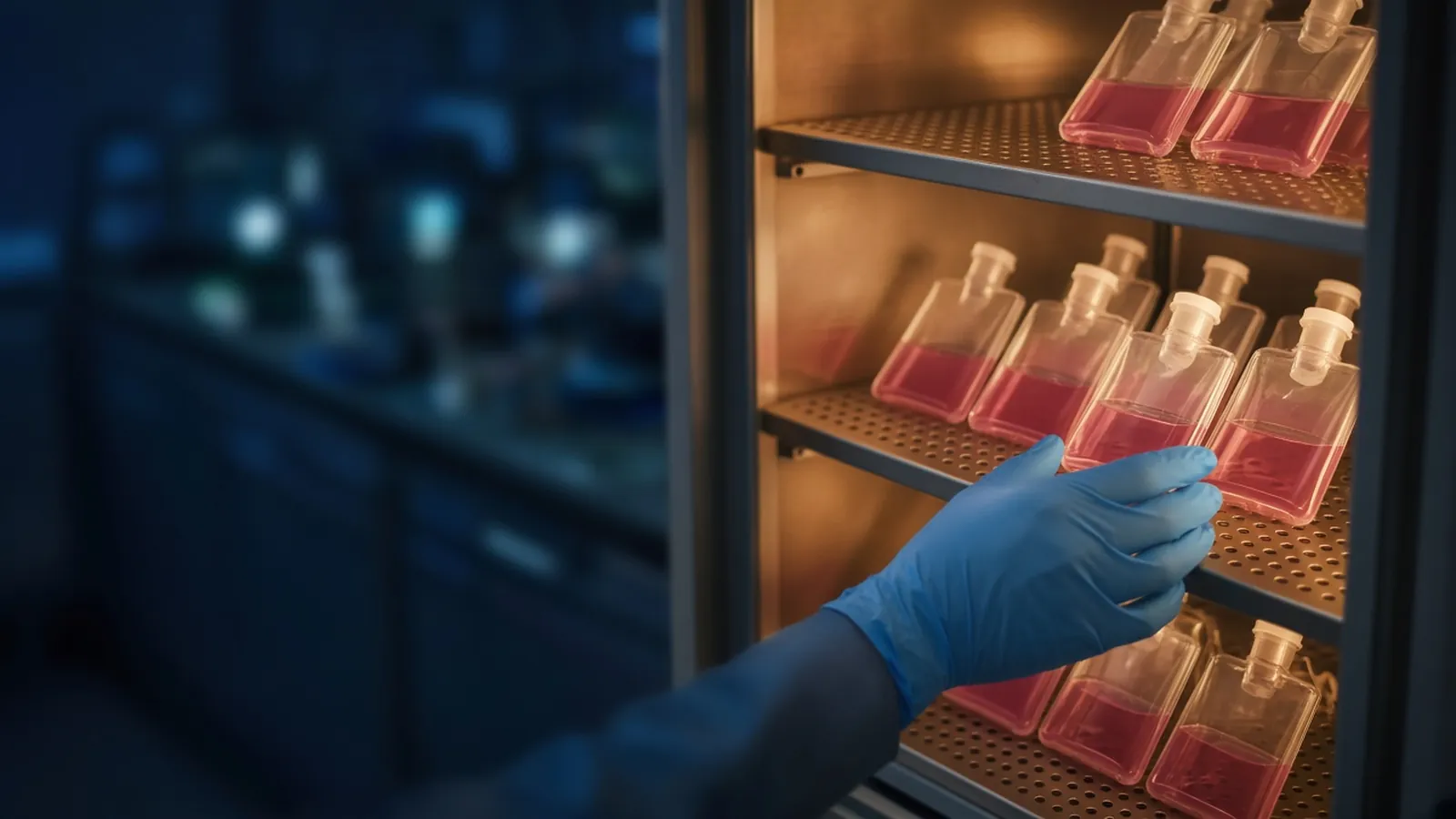
Thawing is a short application with a long consequence. A vial that spent months cold can be ruined in the two minutes after the ice disappears, because the cryoprotectant that saved it during freezing is harsh once the cells are warm and awake. This walk-through is for a research vial taken from a freezer or a dry shipper. The culture it is about to join is described in mammalian cell culture for research labs. Whether you are allowed to open it at all is in biosafety basics for research benches. The photograph shows an incubator of flasks. The action starts before any of those flasks should be touched.
Before the bath: identity and permission
Read the vial without thawing it. The name, the passage, the date and the owner should match a notebook page that also states species, medium and the biosafety assignment. A nickname on a box is not that page. If the label is smeared, if two lines could fit the code, or if the paperwork that authorises this line is missing, stop. Institutional approval decides whether the vial may be opened. A curious afternoon is not approval. Put an unresolved vial back to the cold storage it came from, or into the quarantine arrangement your rules name. Do not hold it in your pocket while you look for the email.
Check the shipper if the vial has just arrived. A dry shipper or a dry-ice box that is warm, wet inside, or already fully thawed has a history. Record it before you improvise. Cells that thawed in transit and then sat warm in DMSO are not a normal thaw. Refreezing them repeats the injury and pretends the bank is intact.
The warm minute
Many mammalian protocols thaw in a water bath near 37 Celsius. That is body-temperature water, not a hotter bath "to be faster". Swirl or agitate so the vial does not sit still and warm on one face. As soon as a small ice crystal remains, take it out. The residual ice finishes melting on the way to the cabinet and keeps you from overshooting. A vial left until the liquid feels warm in your glove has already started the toxic part of DMSO exposure. Time from "no ice" to "diluted" is the step that matters. Have the receiving vessel ready before the vial goes in the bath. Hunting for a pipette with a warm vial in your other hand is how this application fails.
Do not thaw in your hand for several minutes out of kindness. Hands are an uncontrolled bath and a contamination source. Do not microwave. Do not use a heat block set above the protocol temperature because the bath was occupied.
Water baths contaminate vial threads. Assume the outside is dirty even if the water looked clear. Dry the vial and wipe it with the disinfectant your cabinet procedure names before it goes in beside open medium. Working inside a biosafety cabinet is that choreography. A wet cap opened over a flask drips bath water into the culture.
Dilution is the rescue
Open the vial in the cabinet and transfer the contents into a larger volume of the medium the line expects, already at handling temperature. A tenfold dilution or a protocol-named volume is typical. The point is to drop the DMSO concentration immediately. Some methods then centrifuge and resuspend to remove the cryoprotectant. Some plate the diluted suspension and change the medium the next day. Both are legitimate when the line sheet says so. Inventing a third, such as leaving the neat vial contents in a tiny well "so the factors stay concentrated", leaves the cells in warm cryoprotectant. That is cooking them slowly.
Seed at a density the line can survive. A thaw is often more fragile than a routine passage, so some sheets ask for a denser seed than a weekday split. Denser is not "the whole vial into a 96-well plate". Use the vessel the recovery method names. Label it with the line, the passage you thawed, the date and the word thaw, so nobody treats it as an ordinary split. Return it to the incubator promptly. A diluted pellet left on the bench while you update the database is a second warm hold.
The next morning, look before you celebrate. Floating debris can be normal after a thaw. A complete failure to attach is a branch: bad freeze, bad thaw, wrong medium, or a line that was already dying when it was banked. Do not scrape and replate the floaters as your new stock. If the protocol says to change medium to remove residual DMSO, do that change. If viability is poor and the line is replaceable, thaw a second vial from an earlier freeze rather than expanding three unhappy colonies. Expansion from a bottleneck is a genetic event. Write it down if you truly have no other vial.
Symptoms and the cause to check first
| What you see | A likely cause | Do not do this |
|---|---|---|
| Vial already liquid on arrival | Thawed in transit | Refreeze and call it the bank |
| Cells dead, vial was fully warm in the bath | Overshot the ice-crystal endpoint | Blame the line before you fix the bath habit |
| Cells dead, dilution was late | Warm DMSO on active cells | Add extra serum to the neat thaw and hope |
| Contamination within a day | Bath water at the cap, or a dirty parent bank | Add antibiotic and keep the flask in the shared incubator |
| Label does not match the book | Identity failure | Seed it under the name you needed |
| No biosafety assignment on the record | The line is not approved to open | Open it because the shipper was expensive |
| Few cells attach, parent was overgrown | The bank copied a bad passage | Expand the survivors as the new reference |
A line you should not open
Some arrivals are administrative failures that look like technical ones. No species on the sheet, no institutional assignment, a human sample without the ethics paperwork your institute requires, or a vial whose name is only a gene you wish you had. Leave them closed. Biosafety basics for research benches is the reason. The WHO Laboratory Biosafety Manual is a reference institutions use when they write who may open what. It does not grant that permission to a reader of this page. Thawing is not a diagnostic test and not a therapeutic procedure.
If the science is allowed and the recovery is simply poor, use the branch table. A second failure from an independent vial points at the freeze or the shipper. A second failure only when one person thaws points at the bath and the delay before dilution. Watch that person once. The method is short enough that a single watched thaw fixes more than a revised SOP no one follows.
A hot room and a shared bath
In a warm laboratory the bath is often already near the right temperature and is also a better incubator for bath organisms. That does not mean you may skip the wipe. It means the bath gets dirtier faster and should be on a cleaning rota. Do not thaw in a beaker of hot tap water because the bath is across campus. Courier bags left on a sunlit dock will finish a thaw you did not start. Meet the shipper, or specify a receiving path that does not include a windowsill. A power cut during the first hour after seed is an incubator excursion on top of a fragile thaw. Note it before you interpret attachment the next day.
What to ask when the application needs materials
Name the vial format, the bath you actually have, the medium the line sheet specifies for recovery, and whether the work is a routine thaw or a shipment receiving problem. The laboratory consumables catalogue lists everyday vessels and related classes. The academic research reference is a separate page for the wider university context. Use the quote request to ask whether a quotation is possible. A thaw method can be discussed from the line sheet. The catalogue is not a thawing service, and a vial drawing is not evidence that any particular line may be opened in your room.
Questions from the bench
Why not use a hotter bath so the vial thaws faster?
Speed comes from a large temperature gap between ice and a bath near 37 Celsius, plus swirling, not from a bath that overshoots. A hotter bath keeps heating the cells after the ice has gone. The protocol's bath temperature is the limit. A kettle is not a faster version of the same method.
Should I leave a little ice or thaw until the liquid is warm?
Leave a small ice crystal and finish the thaw as you walk to the cabinet. Fully warm DMSO sitting on awakened cells is the injury this method is trying to avoid. Then dilute immediately into the medium the line sheet names.
The label and the notebook disagree. Which do I seed?
Neither, until a person who owns the record resolves the identity. Seeding the wrong line into a shared incubator is worse than losing a day. Quarantine the vial unopened if the biosafety assignment is also unclear.
A vial arrived thawed. Can I refreeze it?
Do not refreeze a thawed research vial as if nothing happened. The cryoprotectant cycle has already been spent badly. Record the shipment, ask whether a replacement bank exists, and do not quietly start an experiment on the survivors.
References
Manufacturer names identify published method classes. Trademarks remain with their owners. Catalogue records on this site are independent references for enquiry. They are not a statement of inventory, distribution rights or a supply commitment. This page is educational. It is not medical advice, a diagnostic protocol or a biosafety approval.
Catalogue
Related products and categories
These links follow the subject of the article into published manufacturer references. A listing is a reference for an enquiry, not a statement of stock or distribution rights.
Continue in this cluster
Related reading
Mammalian cell culture for research labsHow research labs keep mammalian cell culture workable: medium, aseptic technique, confluence, passage records and contamination checks.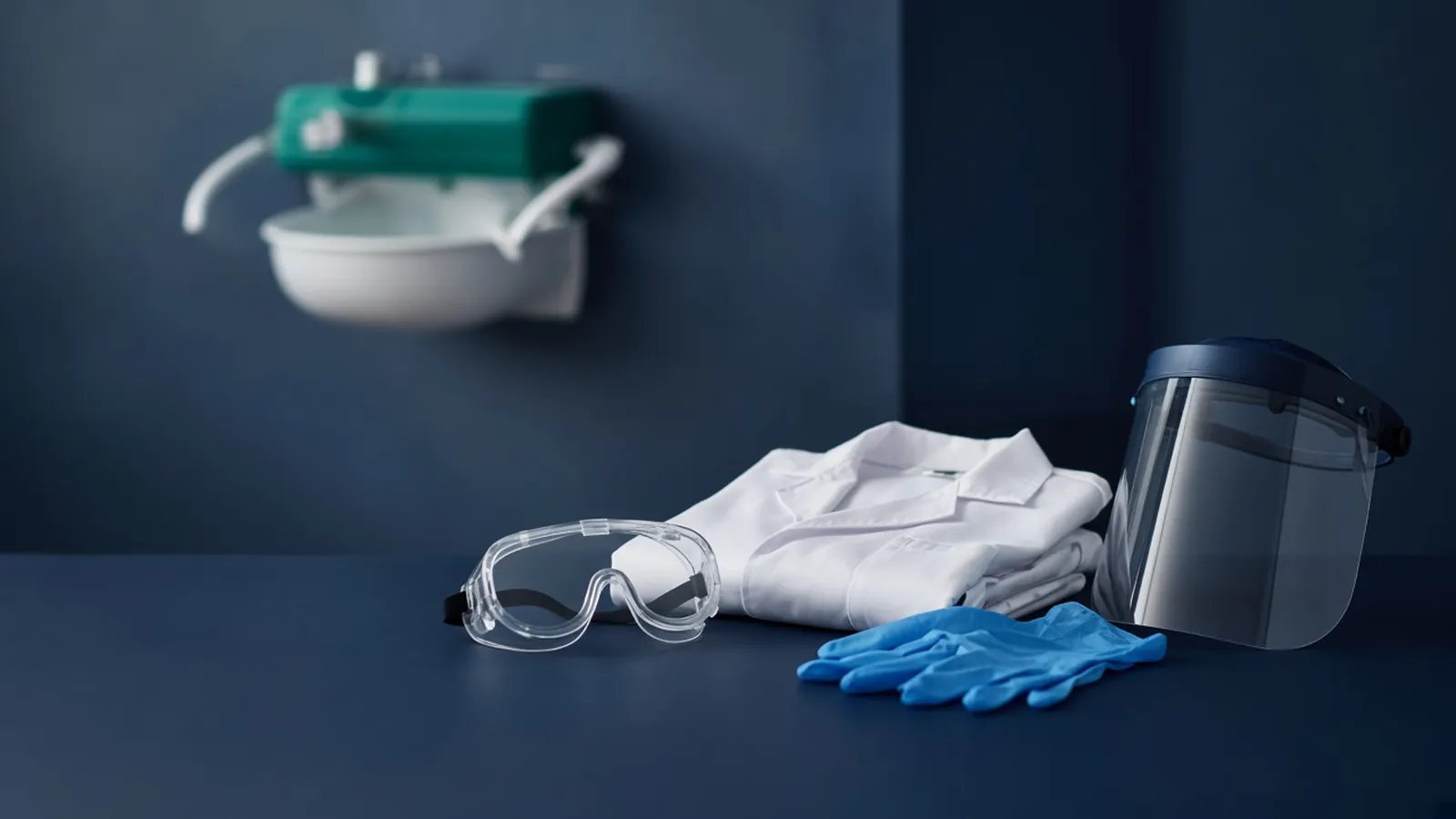 Biosafety basics for research benchesResearch-bench biosafety is a stack of barriers chosen by a risk assessment. This page explains the stack. It does not approve the work.A glossary of culture termsPairs of culture words that laboratories mix up, and the wrong next action each pair causes, from confluence versus density through to confluent versus