
glossary
Training a new student without blaming the kit
Define the stops, tip seating, angle, pre-wet, and balance check a new student must show before a reagent kit is blamed.
- Author
- EVRINTH Editorial Team
- Published
- 8 October 2026
- Updated
- 8 October 2026
- Reading time
- 7 min
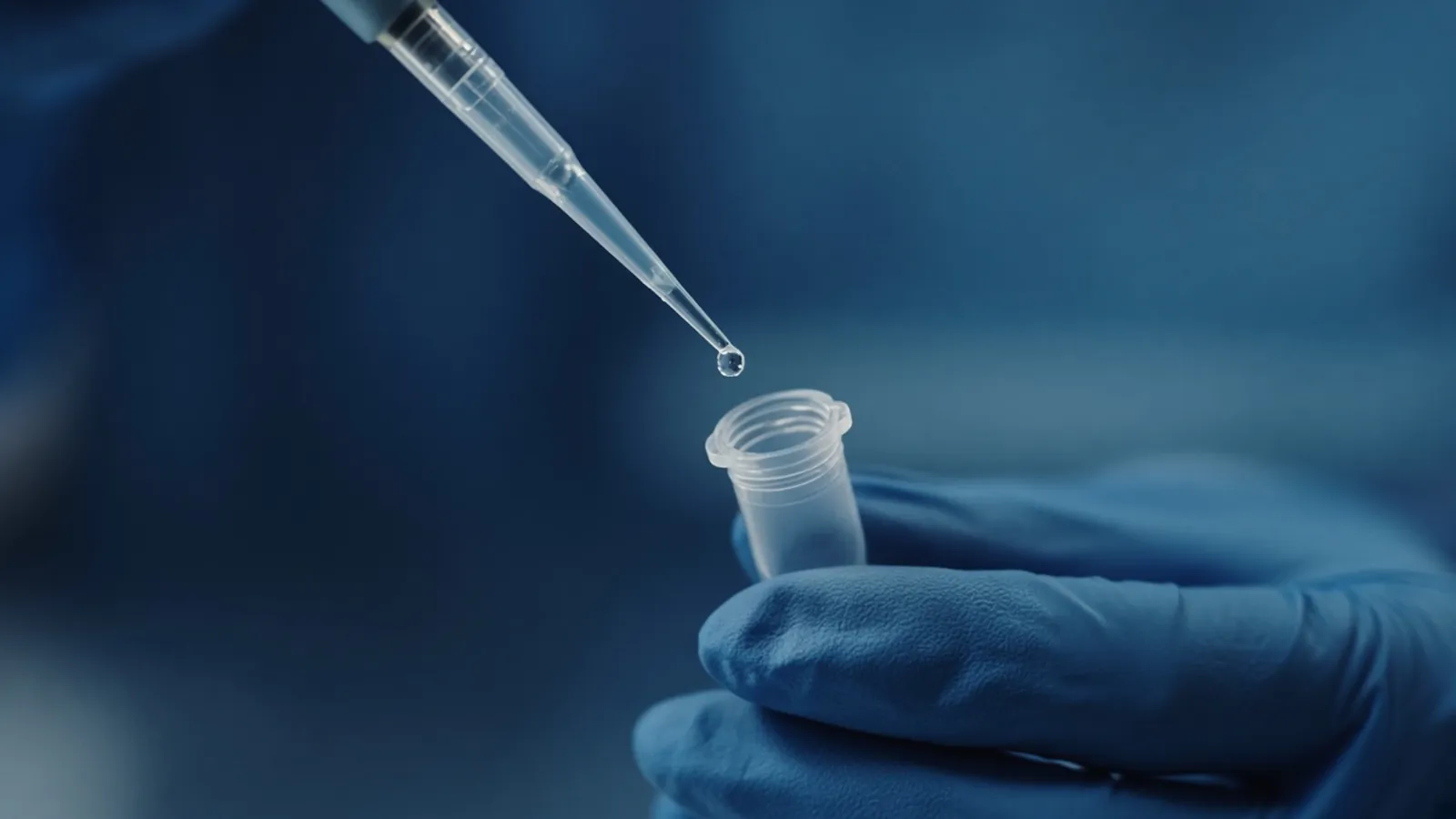
Training a new student without blaming the kit means giving names to what the trainer watches. Those names are a small glossary: two stops, tip rejection, angle, pre-wet, and a balance check. If the student can show each one, a failed reaction is evidence about the chemistry. If they cannot, the kit is still an untested suspect. The gestures are demonstrated in accurate micropipetting technique. This page is the vocabulary a trainer uses while standing next to the bench.
First stop and second stop
The first stop is the end of the calibrated stroke. Forward pipetting aspirates by releasing from that stop and delivers by pressing to it. The second stop is further down. It is the blow-out, an extra push of air after the aqueous aliquot has left, or the place a reverse stroke starts from if the liquid foams or clings. A student who aspirates from the second stop on a method that said forward has changed the volume on purpose.
The trainer watches the thumb, not the student's confidence. A press that bottoms out every time is a second-stop aspirate. A delivery that never quite reaches the first stop leaves a bead. Neither observation is a defective polymerase. ISO 8655-1:2022 is the terminology and user-recommendation standard that makes these stops speakable across laboratories. It does not grade the student and it does not prove the pipette. Error limits, if you need them for the balance check, are in ISO 8655-2:2022 and the manufacturer specification.
Tip rejection and tip fit
Tip rejection is how the tip leaves. The ejector is the tool. Banging the cone on the waste box rejects the tip and, over time, the shaft. A damaged shaft then drips with every fresh tip, and the student has manufactured the next mystery. The trainer also watches seating. A timid tip that is not on the cone will drip before rejection ever matters. Tip fit is part of the measurement. The family on the box has to be the family the method named.
A drip is the observation that blocks kit blame. Reseat. Change to a tip you know seals. If the drip survives, the pipette leaves the lesson and leaves service until it is checked. The student continues on a pipette that holds water. You do not finish the kit "just to see" on a dripping instrument.
Angle, immersion, and pre-wet
Angle is the lean of the pipette while liquid moves. Aspiration should be close to vertical so the tip enters a few millimetres and no more. A steep angle in a small tube wets the outside of the tip. That outside film is an extra, uncalibrated volume, and at small settings it is the whole error. The trainer can see the outside wetness. It is not an invisible enzyme problem.
Pre-wet means the student draws and expels the working liquid before the measured stroke so the air cushion is not dry. The first real dispense then matches the habit. Skipping it makes the first tube the outlier, which is exactly the tube a nervous student then repeats with a new kit component. Teach the preparatory strokes as waste, not as samples.
The balance check as a training observation
A balance check is a series of water dispenses, converted with the density at the measured temperature, compared with the specification the laboratory claims. It is also a teaching mirror. The student sees a mass move when the stop changes. Near room temperature the density is about 0.998 grams per millilitre. Use a table for the actual water temperature. Do not teach 1.000 as a convenience and then call a systematic gap a clumsy thumb.
The check between formal calibrations is described in checking a pipette between calibrations. Use a volume the balance can resolve. A one-microlitre lesson on a milligram balance teaches superstition. If the room is much warmer than the pipette's usual specification temperature, say so. A hot teaching lab and an ice-cold practice liquid will not match, and the mismatch is thermal, not moral. Equilibrate the water you use for the lesson.
| Term the trainer uses | What is being watched | Kit failure it can imitate |
|---|---|---|
| First stop | Aspirate and deliver end at the calibrated stroke | Low or high enzyme in every tube |
| Second stop | Blow-out only after delivery, in forward mode | Extra volume, or a bead left behind |
| Tip rejection | Ejector used, shaft not banged | A later drip that looks like a bad lot |
| Angle | Shallow immersion, outside of the tip dry | Random extra liquid in some tubes |
| Pre-wet | Preparatory strokes discarded | Only the first reaction fails |
| Balance check | Mass versus the specification claimed | A whole afternoon of curves condemned |
When the kit is still the wrong conclusion
A control inside the kit that fails in the trainer's hands, on a checked pipette, is the point where the lot can be questioned. Until then, scattered student replicates are a teaching result. Write the pipette identity in the lesson so the story can be repeated. Do not lend a dripping personal pipette to the student to "get a feel" and then interpret their blank lane.
Safety
Students copy mouth-pipetting if they ever see it. They must not see it. Culture and solvent stay inside the assessment. The WHO laboratory biosafety manual is an advisory reference for that assessment, not a training certificate. This glossary is research education. It is not an academic evaluation and not a clinical competency sign-off.
What a teaching-lab enquiry should include
State the volume ranges students actually set, the tip family that must seat without hammering, whether you need a lighter plunger class for long practicals, and whether a calibration document is required at those volumes. A teaching set that only includes large-range pipettes will force small volumes to the bottom of the range. Say the small volume explicitly. Instruments are in the scientific instruments catalogue, tips in the laboratory consumables catalogue, and the practical's volumes go with the quotation request.
Questions from the bench
Which words should a trainer define before a student touches a kit?
Define the first stop, the second stop, tip rejection, immersion angle, pre-wet, and the balance check. Each word is an observation the trainer can see. The first stop is the calibrated end of travel. The second stop is the blow-out, used after delivery in forward pipetting and not as the aspirate position. Tip rejection means the ejector, not banging the shaft on a box. If those words are fuzzy, a failed reaction has nowhere to land except the kit, which may be innocent. The fuller stroke is in the micropipetting technique page. This glossary is the training checklist behind it.
How does a dripping tip imitate a bad reagent?
A drip before dispensing means part of the aliquot never reached the tube. Enzyme units, primer moles, and buffer concentrations all move, and the gel or the curve looks like a reagent failure. The kit did not open the seal. The observation is the drip. The branch is a new tip and, if the drip remains, a pipette out of service. Only after a sealed tip delivers a repeatable water mass, compared with the specification you claim, do you open a discussion about the kit lot. Blaming the kit first spends the lot and teaches the student the wrong cause.
What is a fair balance check for someone on their first week?
A short gravimetric series of water at a volume the balance can resolve, with the density taken from a table at the measured temperature. Near room temperature water is about 0.998 grams per millilitre, not 1.000. The student uses one mode, one tip family, and pre-wetting. You watch the stops rather than the number alone. A mean outside the specification, or a scatter you would not accept from yourself, is a reason to repeat the observation, then to change tip or pipette. It is not a reason to announce that the student cannot do science. The interim pattern is the same one used between formal calibrations.
When is it finally reasonable to question the kit?
When a trainer can repeat the failure with their own hands on a pipette that just passed a water check, with the same tip family, the same stops, and the same temperatures, and a control the kit itself defines still fails. Even then the record should include the pipette identity and the tip lot, because the next person will ask. A kit can be wrong. It should not be the first noun in the sentence. Training names the nouns in the order they can be seen: stop, tip, angle, pre-wet, balance, then reagent.
References
Manufacturer names identify published method classes. Trademarks remain with their owners. Catalogue records on this site are independent references for enquiry. They are not a statement of inventory, distribution rights or a supply commitment. This page is educational. It is not medical advice, a diagnostic protocol or a biosafety approval.
Catalogue
Related products and categories
These links follow the subject of the article into published manufacturer references. A listing is a reference for an enquiry, not a statement of stock or distribution rights.
Continue in this cluster
Related reading
Accurate micropipetting techniqueHow an air-displacement micropipette delivers a volume, how forward pipetting uses the two stops, and why temperature belongs in the result.A glossary of liquid-handling termsSeparate the liquid-handling terms people mix up, from blow-out and pre-wetting to systematic error, tip fit, and the Z-factor.Air displacement versus positive displacementTrace under-delivery and dripping to the air cushion or the piston, and choose the pipette class that matches the liquid.