
explainer
Training records and who may use a cabinet
A certified cabinet is not a trained user. The record should show who was shown the airflow, the sash height, and the signs of failure.
- Author
- EVRINTH Editorial Team
- Published
- 8 October 2026
- Updated
- 8 October 2026
- Reading time
- 8 min
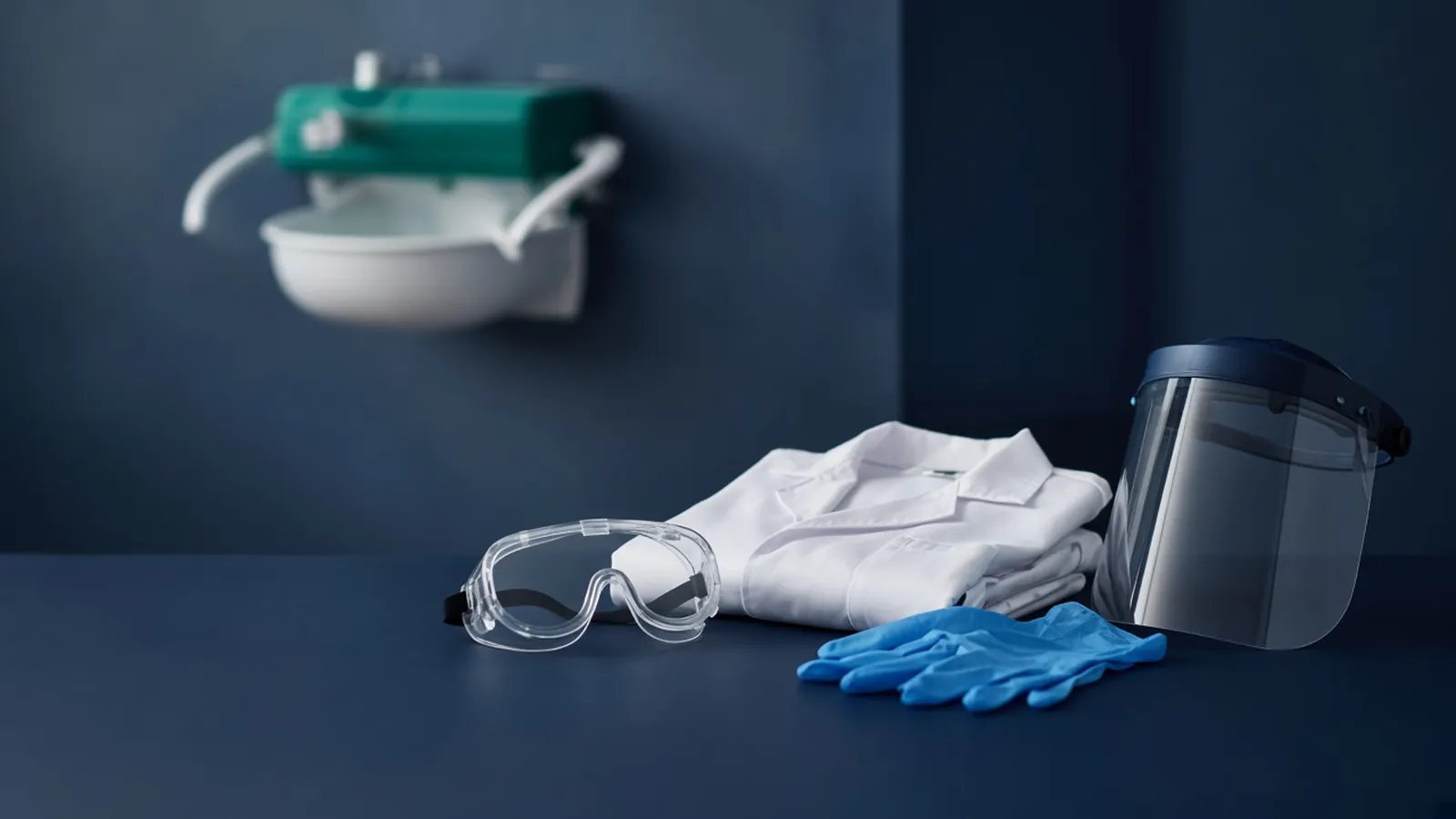
A certificate on the cabinet is about the last test of the machine. It does not remember who was shown the sash, the airflow gauge, or the sound the fan makes when a grille is blocked. This explainer is for the person who decides whether someone may work in that opening. The way the air moves is described in working inside a biosafety cabinet. The assessment that decided a cabinet was the right control is biosafety basics for research benches. Gloves and other worn items are catalogue classes in laboratory consumables. A laboratory that needs a sourcing path for those items can use academic research and a quotation request. Neither path trains your users.
Two facts that are not the same fact
A cabinet is certified, or it is not, against the test your institution recognises, on a date, for a result. That fact lives with the machine. A person is authorised, or they are not, against the training rule your institution wrote. That fact lives with the person and names the equipment. Laboratories get into trouble when they treat the first fact as the second. The fan is fine, so everyone in the building is presumed fine. The presumption is how a visitor, a rotation student, or a colleague from the chemistry bay opens a culture in a machine they cannot describe.
The WHO laboratory biosafety manual and the CDC BMBL both treat training as part of the programme, not as a mood. They do not list your names. Your biosafety office does, if the programme is real.
What the record is for
The record exists so that, on a Tuesday, someone can answer a narrow question: may this person use this cabinet for this kind of work today? If the record cannot answer that, it is a signature collection. A useful record has the person's name, the date, the cabinet's identity, and the name of the person who did the showing. It states what was shown. At a minimum that is the airflow, meaning where air enters and where it must not be blocked; the sash height the cabinet was balanced at; and the failure signs, meaning the alarm, a sash left in the wrong place, a blocked grille, a smell of solvent that does not belong there, and a power cut. It states whether the person talked through those points or was watched doing them. Talking is not nothing. It is not the same as hands in the opening.
It also states the boundary of the permission. Cleared for this Class II cabinet in this room, for the agents the assessment already allows, is a different sentence from cleared for cabinet work in general. A refresher interval, if your institution sets one, belongs on the record. This page will not invent a number of months. If the institution has not set one, the absence is a gap in the rule, not a silent forever.
What showing the airflow actually means
People say "we covered airflow" and mean a slide with arrows. Showing it on the cabinet means the person can point at the front grille, the rear grille if the design has one, and the sash mark, and can say what happens when a box of tips sits on the intake. It means they have seen the indicator in its normal window and know that an alarm is a stop, not a background noise. The mechanism is the one in the cabinet article: inward air at the opening, filtered air down over the work, exhaust only through the path the class uses. You do not need to re-teach the physics in the record. You need the record to show the physics was attached to this machine.
Failure signs are the part most often skipped because they feel negative. A trained user can say: if the alarm sounds, I close vessels and come out; if the power drops, I do not finish the flask in still air; if I smell solvent, I am in the wrong enclosure. A user who has only been shown how to wipe the deck has been shown housekeeping, not the control. Both matter. They are not substitutes.
Personal protective equipment is a third column, not the training itself. The record can note that the person was shown which coat, eye protection, and gloves this assessment requires, and how gloves come off before the phone. A glove demonstration does not replace the sash demonstration. Spill response is a fourth column when the work can spill: where the disinfectant is, what the contact time is, and when the spill is too large for the person who was just trained. Point at the laboratory's spill plan. Do not paste a new one into a training sheet to look complete.
Who may use it, in practice
The people who may use it are the people the rule names and the record can find. A principal investigator's presence in the building is not a blanket authorisation for the group. A night user is not authorised by a day user's record. A service engineer is not a user of the cultures, and a user is not a person who lifts the work tray. If your rule allows supervised use before a record is complete, the supervisor has to be the one the rule names, actually watching, not down the corridor. If the rule is silent, silence is not a yes. The branch is to ask the person who owns training, and to wait.
When the cabinet fails its test, or the certificate date has passed the interval your institution allows, nobody may use it as a cabinet, including the best-trained person in the room. Training does not repair a failed airflow. The honest status is "out of service" until someone competent says otherwise. Working "carefully" in a dead cabinet is ordinary bench work with a stainless costume.
When a person is trained on cabinet A, cabinet B of the same class in the same room may still need a short familiarisation if the alarm and the sash mark differ. A clean bench and a fume hood need their own records. The mix-up is calling all three the hood and filing one signature.
| What you might confuse | What it actually shows | What it does not show |
|---|---|---|
| Field test, in date | The machine met the test on that date | That any particular person may use it |
| A slide with arrows | Somebody presented a diagram | That the person can find the grille on this cabinet |
| Watching for an hour, unwritten | A memory of a demonstration | A record you can check on Tuesday |
| Signature on a group sheet | Attendance | The sash, the alarm, and the failure signs |
| Training on a biosafety cabinet | This enclosure, if it is named | A fume hood, a clean bench, or a lapsed machine |
The branch when the record is missing
If you cannot find the person's name, they do not start. Offer the demonstration and write it down, or find someone who is recorded and can do the work. Do not let them "just watch a plate" inside the sash. Watching from inside the opening is using the cabinet.
If you can find the name but not what was shown, treat the record as incomplete. A signature with no content is not repaired by adding today's date. If the cabinet identity is missing, you do not know whether the training was for this airflow. If the only copy is a damp notebook nobody will open, move the fact somewhere the Tuesday question can be answered. Humidity destroys paper records in a hot season. That is an operational reason to keep a second copy, not a reason to stop recording.
Power cuts and night work expose the gap. The person alone with a failed alarm needs to have been shown the failure, not to discover it. Training records do not replace the rule about working alone. They are one of the things that rule should look at.
What this does not grant
A complete record is not a biosafety approval and not permission to bring in a new organism. It is not occupational health clearance. It is not medical advice after a spill or a cut. The spill plan and a clinician handle exposure. The record only answers who had been shown the control before the session started. If your institution has no training rule, the scientific act is to ask for one, not to promote the most confident student.
What an enquiry can carry
Ask whether familiarisation is available when a cabinet is installed, and ask what it covers: airflow, sash, alarm, and what the user should do when those fail. State that the institution decides who is then allowed to work. Specify gloves, eye protection, and waste containers as separate consumable lines through the quote form. Do not ask a seller to keep your training file or to decide that a group induction was enough.
Questions from the bench
If the cabinet passed its field test last month, may a new student use it?
Only if your laboratory's rule says that student is allowed, and the record shows they were shown this cabinet, not a photograph of one. A current test says the machine met the test. It does not say the person knows the sash mark, the grille, or what the alarm is for. Those are separate facts, and both have to be true.
Is watching a colleague for an afternoon a training record?
It is a memory unless somebody writes who was shown what, on which date, on which cabinet. A useful record names the airflow, the sash height, the failure signs, and whether the person was observed working, not only seated through a slide. Your institution decides how formal that writing is. A blog does not issue the permission.
Does training on one cabinet cover the fume hood beside it?
No. The air does a different job, and the failure signs are different. A person cleared for a biosafety cabinet is not thereby cleared for a chemical hood, a clean bench, or a second cabinet of another class. If the record does not name the equipment, it is not yet a record of competence on that equipment.
What should an enquiry say about training, if it says anything?
It can ask whether a manufacturer or a certifier offers a familiarisation session, and what that session covers. It should not ask the seller to decide who in your building may work. State that authorisation stays with the institution. Consumables for the session, such as gloves and waste containers, can be specified separately.
References
Manufacturer names identify published method classes. Trademarks remain with their owners. Catalogue records on this site are independent references for enquiry. They are not a statement of inventory, distribution rights or a supply commitment. This page is educational. It is not medical advice, a diagnostic protocol or a biosafety approval.
Catalogue
Related products and categories
These links follow the subject of the article into published manufacturer references. A listing is a reference for an enquiry, not a statement of stock or distribution rights.
Continue in this cluster
Related reading
Biosafety basics for research benchesResearch-bench biosafety is a stack of barriers chosen by a risk assessment. This page explains the stack. It does not approve the work. Working inside a biosafety cabinetHow a Class II biosafety cabinet moves air, how that differs from a chemical fume hood, and which habits keep cultures and workers protected.A glossary of biosafety termsPairs that share a bench still do different jobs. Use this comparison to choose the right word for a cabinet, a chemical, a level, or a control.