
application
Waste streams chemical biological and ordinary
Chemical, biological, sharps, and ordinary waste fail when they share a container. Follow one afternoon and see where the streams must stay apart.
- Author
- EVRINTH Editorial Team
- Published
- 8 October 2026
- Updated
- 8 October 2026
- Reading time
- 8 min
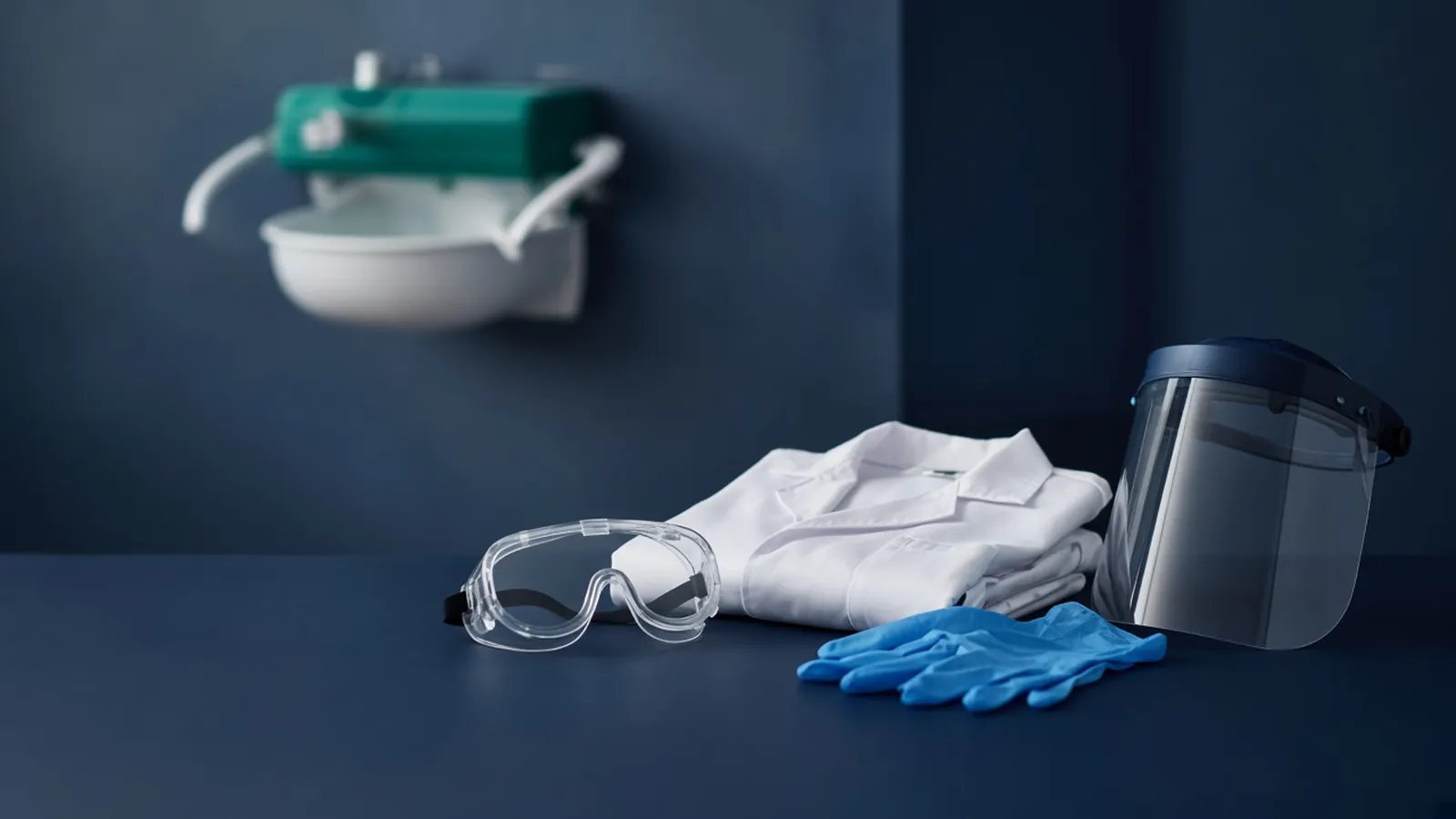
The failure in a waste room is rarely a missing bin. It is two wastes that should never have shared one. This page follows a single afternoon in which chemical, biological, sharps, and ordinary waste are produced by ordinary bench work, and shows where they part. The risk assessment that decided those streams exist is biosafety basics for research benches. Why an autoclave cannot finish a chemical problem is autoclaves and what sterilisation does not do. Bags, sharps containers, and labels are classes in the laboratory consumables catalogue. A teaching lab can frame the list through academic research and a quotation request. The institution names the stream. A catalogue does not.
The afternoon, before anything is discarded
It is a plasmid afternoon. You have used a solvent wash, a bacterial culture, a glass Pasteur pipette, paper that never touched the bench, and a paper towel that did. At the start, four containers are already in reach, each labelled with the name your laboratory uses, not with a private nickname. If one of them is missing, the work can still be set up, but the first tube should not be opened until you know where each waste will go. Discovering the path at the end is how a solvent bottle gets stuffed into a biological bag "for a moment."
The WHO laboratory biosafety manual and the CDC BMBL describe decontamination and waste as part of a programme. The WHO manual on wastes from health-care activities is a general practice source for healthcare waste, not a permit for your research building and not a local statute. Your waste officer, your biosafety contact, and the written procedure are the names that count. This article will not invent a disposal vendor or a citation it is not sure of.
Four streams, and why mixing is the whole failure
Chemical waste is the solvent, the unused stain, the acid, the phenol, the ethidium solution if your procedure treats it as chemical, and any mixture the chemical plan says must not be autoclaved or poured down a sink. It stays capped, compatible wastes only, in the container the plan names. Unknowns do not get combined "because they are both liquid."
Biological waste is material that had, or might have had, the agent: culture tubes, tips that touched culture, agar, gloves from that work, and the towel that wiped the bench. The laboratory decides whether that stream is autoclaved, chemically disinfected, or both, and in which order. A bag destined for steam must be a bag steam can actually reach, not a brick, and it must not contain the chemical stream. Those packing limits live with the autoclave manufacturer and the waste rule together.
Sharps are the puncture risk: needles, blades, and broken or fragile glass the procedure includes. They go into a puncture-resistant sharps container at the point of use, closed before it is overfilled. A contaminated sharp is not made ordinary by being biological, and it is not made safe by being dropped into a soft bag that will later be lifted. If the sharp also carries a chemical the autoclave must not see, the institution's rule for that overlap is what you follow. Do not improvise a hybrid bag.
Ordinary waste is packaging, paper, and gloves that never touched agent or hazardous chemical. It is the stream people use as a default. The default is the failure. A pipette wrapper is ordinary. The pipette tip is not. A box is ordinary until someone puts a used tube in it because the box was closer.
| Stream | What belongs, in this afternoon | What must not be added | If you already mixed them |
|---|---|---|---|
| Chemical | Solvent wash, capped and named | Culture, sharps, ordinary paper | Do not autoclave the mix to undefine it. Ask the waste rule. |
| Biological | Tips, tubes, towel that wiped the bench | Solvent, bleach-soaked cloth if the autoclave rule forbids it | Hold the bag. Do not relabel it ordinary. |
| Sharps | Pasteur pipette, any broken glass | A soft bag, a recap story, an overfilled lid | Close the container. Do not fish the glass out. |
| Ordinary | Wrappers that stayed clean | Anything that touched the work | If it touched the work, it has left this stream. |
Where the afternoon actually branches
The solvent wash finishes first. The tube is emptied into the chemical container that is already labelled with the solvent name, not into a beaker that will be decided later. The cap goes back on. If that container is full, you do not start a second unknown bottle. You stop and use the handover the waste plan describes.
The culture tubes and tips go into the biological bag as they are used, not in a pile that will be sorted with bare hands at tea. The bag is not compressed. If the laboratory autoclaves this stream, the bag is one the steam procedure accepts, and it contains no solvent and no sharps. If you find a Pasteur pipette in it, you do not reach in. You treat the bag as a puncture risk and follow the spill and sharps rule for a contaminated bag, which may mean a larger rigid container rather than a rescue.
The Pasteur pipette goes into the sharps container at once, without a two-handed recap. When the fill line is reached, the container is closed. An extra pipette balanced on the lid is the next person's injury.
The wrapper from the sterile tips, which stayed on the clean side and never touched culture, can go to ordinary waste. The towel that wiped the bench cannot. It goes with the biological stream, or with the chemical stream if the wipe was a solvent spill the plan treats as chemical. The branch is the question "what did this touch," not "what is this object shaped like."
At the end you close each container. An open chemical bottle on a bench overnight is a vapour and a spill. An open biological bag is an invitation to the ordinary bin. You wash your hands after the gloves come off, and the gloves do not travel to the ordinary bin on the way to the sink. If the next person will inherit a half-full chemical container, the label has to be readable without asking you. A handover that depends on memory is how two afternoons become one mixture.
When a spill crosses the streams
A splash of culture onto the bench is biological until the disinfectant and the contact time in the spill plan have done their work. The towels from that cleanup are biological waste, or whatever the plan names, and they are not ordinary because they look like paper. If the spill is solvent, the towels may now be chemical waste, and they may be a fire hazard in a closed bin. The spill plan says which. Do not autoclave a solvent-soaked towel to make the decision go away. Do not mix bleach into an unknown solvent to feel thorough. Those reactions are their own incidents.
If you cannot name the stream, the container stays closed and labelled as unknown, and the person who owns the waste rule decides. Unknown is a temporary state, not a fifth bin you invent.
Heat, labels, and the enquiry
In hot weather a closed chemical container builds pressure if it was filled too high or left in the sun. Leave the headspace the plan requires, and do not store waste bottles on a window ledge because the bench was full. Humidity smears weak labels. A label that says the solvent name, the date, and your initials is part of the stream. A blank bottle is how the next person creates a mixture. Specify, on a consumables enquiry, sharps containers with a closing lid and a fill line, biological bags of a size your autoclave procedure can accept without crushing, and chemical containers the plan already allows. State that the institution names disposal. Use the quote form. Do not ask a seller to become the waste vendor or to confirm a local legal citation.
This page is educational. It is not a biosafety approval, not a waste licence, and not permission to proceed with an agent the assessment has not named. If the written streams are missing, the afternoon should not produce the waste.
Questions from the bench
Can biological waste that also holds a solvent go into the autoclave bag?
Not unless the institution's own waste rule says that particular mixture is allowed, which is uncommon for flammable or toxic solvents. Steam does not make a solvent safe, and the autoclave is not a disposal vendor. Keep the chemical stream and the biological stream apart at the bench, before they share a bag you then have to undefine.
Are gloves always biological waste?
They are the stream of whatever they touched. A glove that handled only dry ordinary packaging can follow the ordinary path the laboratory allows. A glove that touched culture, blood, or a disinfectant-soaked spill follows the biological or chemical path the procedure names. The failure is a single bin that accepts every glove because gloves look alike.
Is a sharps container only for needles?
The laboratory's definition decides, and it usually includes needles, blades, and broken glass that can puncture a bag. A soft autoclave bag is not a sharps container. Do not drop a Pasteur pipette or a cracked flask into the biological bag because the glass is also contaminated. Contaminated sharps have a stream that is both sharp and biological, and the container has to satisfy both.
Who names the colour of the bag?
Your institution. Colour codes differ, and a colour you remember from another building is not a law you can import. This page will not assign a colour or cite a local rule it has not read. It will say that mixing streams is the failure, and that the written local names are what the labels should repeat.
References
Manufacturer names identify published method classes. Trademarks remain with their owners. Catalogue records on this site are independent references for enquiry. They are not a statement of inventory, distribution rights or a supply commitment. This page is educational. It is not medical advice, a diagnostic protocol or a biosafety approval.
Catalogue
Related products and categories
These links follow the subject of the article into published manufacturer references. A listing is a reference for an enquiry, not a statement of stock or distribution rights.
Continue in this cluster
Related reading
Biosafety basics for research benchesResearch-bench biosafety is a stack of barriers chosen by a risk assessment. This page explains the stack. It does not approve the work. Autoclaves and what sterilisation does not doSteam sterilisation holds a cleaned load at temperature. It does not wash, remove endotoxin, or prove sterility because the tape changed colour.A glossary of biosafety termsPairs that share a bench still do different jobs. Use this comparison to choose the right word for a cabinet, a chemical, a level, or a control.