
protocol overview
Working alone is an institutional rule
Working alone is a rule the laboratory writes. This overview shows which tasks need a second person and how to record that decision.
- Author
- EVRINTH Editorial Team
- Published
- 8 October 2026
- Updated
- 8 October 2026
- Reading time
- 9 min
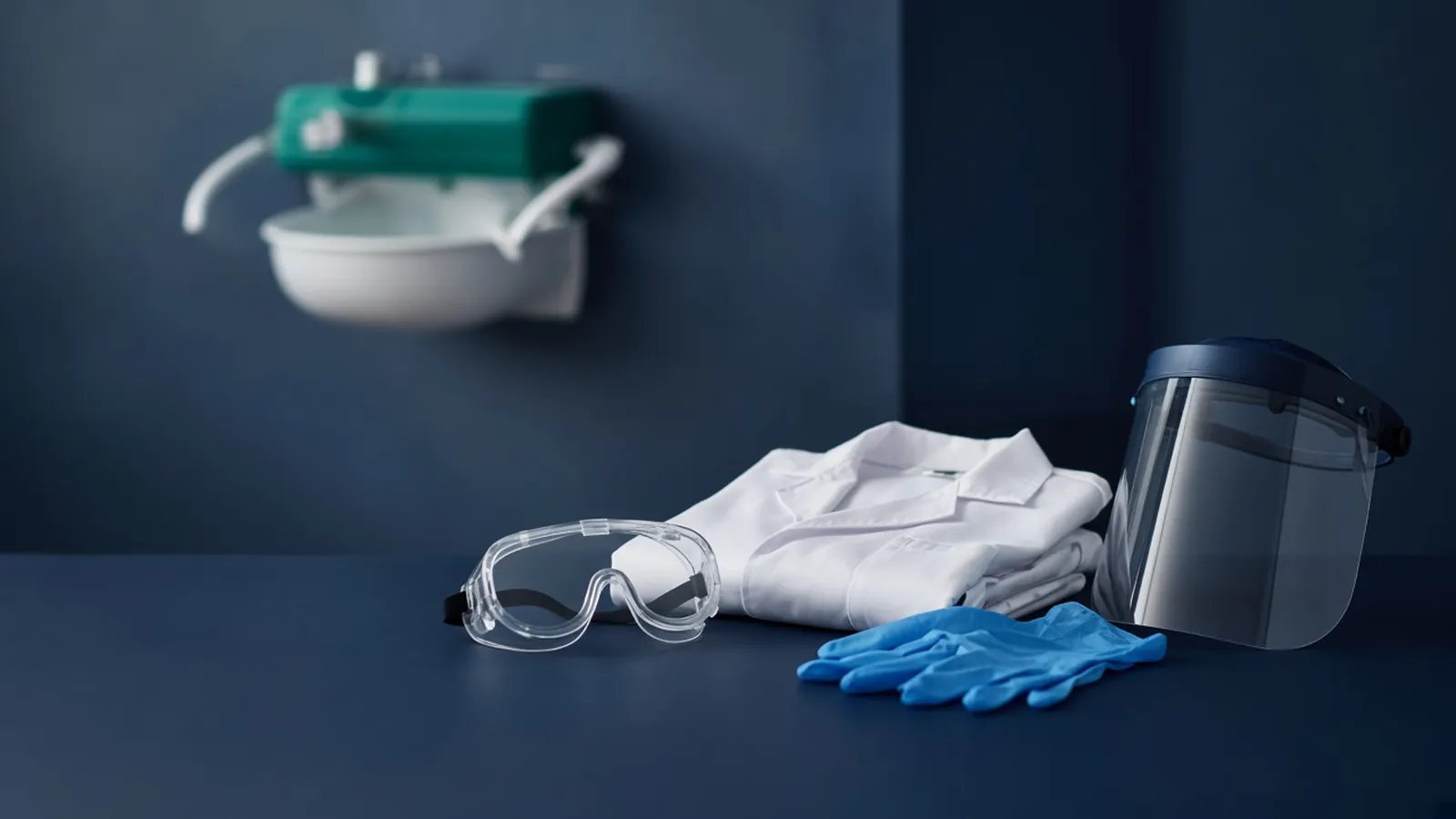
Some afternoons are quiet enough that working alone feels efficient. The question is not whether the building is empty. It is whether the task can go wrong faster than one person can respond. This overview is the decision path. Your laboratory writes the rule. The assessment that names the agent and the procedure is biosafety basics for research benches. Steam burns from a bad unload are part of autoclaves and what sterilisation does not do. Eye protection, coats, and gloves that the rule still requires are in the laboratory consumables catalogue. A teaching-lab discussion of what to specify can go through academic research and a quotation request. None of that writes your alone-work rule for you.
What the rule is deciding
The rule decides which tasks a single person may start, which tasks need a second person in the room, and which tasks are simply not done outside staffed hours. It is an institutional document. This article will not supply a clock, a legal curfew, or a borrowed regulation from another country. Evening work is not automatically forbidden, and daytime work is not automatically safe. A litre of liquid nitrogen in a small room is the same oxygen problem at 11:00 and at 23:00. Concentrated acid is the same eye injury on a busy Tuesday if nobody is near the eyewash.
The WHO laboratory biosafety manual and the CDC BMBL expect programmes to match controls to the work. The OSHA laboratory standard is one public picture of a chemical hygiene plan. Use them as background. The signature that matters is the one on your own rule.
Why some tasks should not be solo
Cryogens fail in two ways at once, and either can leave a person unable to walk out. Liquid nitrogen is about -196 °C. A splash or a touch on a metal rack injures tissue immediately. A release in a small room, a cold room, or a stalled lift also turns a litre of liquid into a large volume of gas that can displace oxygen. An unconscious person does not open the door. A second person outside the hazard, who knows you are in there, is the control the physics suggests. Your institution confirms whether that means two people for every fill, a ban on solo fills, or something narrower. Confirm it. Do not treat a dewar as ordinary glassware because you have carried one before.
Concentrated acids, and other corrosives that can destroy an eye, fail when a splash and a lone worker coincide. The eyewash only helps if someone can reach it, or can put you on it. Personal protective equipment reduces the chance. It does not reach the eyewash for you if you are disoriented. Diluting a large bottle, pouring from a winchester, or heating an acid are the scenes people underestimate because the bottle was only being moved. The rule should name the concentrations and the volumes, not the adjective "strong."
Large volumes of biological agent fail as a spill and an aerosol one person cannot cover while also keeping their own exposure down. A tray of cultures, a broken centrifuge bottle, or a waste bag that splits are different sizes of the same problem. The spill plan assumes someone can warn the room, cover the spill, and keep the contact time. If the plan's first step is "alert people nearby" and there is nobody nearby, the plan and the staffing contradict each other. Either change the staffing for that volume or do not open that volume.
Autoclave unloading of large liquid loads belongs on the same list when your laboratory has seen, or can foresee, eruptive boiling. One person, a visor, and heat-resistant gloves may be what the assessment requires, or the assessment may require a second person for the big flasks. Read it. Do not add heroism. A power cut that stops a cycle and then returns, tempting someone to open a door alone at the end of the day, is a known way this task becomes solo by accident.
Other tasks are often reasonable alone: labelling tubes, setting up a buffer that is not a corrosive concentrate, reading a plate that stays closed, writing. The point of the rule is the split, not a general suspicion of empty rooms. If everything is forbidden, people will ignore the rule. If nothing is forbidden, the cryogen fill will happen in the lift.
A path through the afternoon
Before you start, name the task in one line, including the volume and the chemical or agent. Open the written rule. If the task is on the permitted-alone list, you may still owe a check-in. Do the check-in the rule describes, with a person who will notice if you do not call back. If the task is on the not-alone list, find the second person and agree that they stay through the hazardous step, not through the first five minutes. If the task is on neither list, stop and ask. Silence is a missing rule, and a missing rule is not a yes.
Then look at the room. Is the eyewash reachable by one person if the other is the casualty? Is the oxygen alarm, where one is fitted, something both of you will believe? Is the dewar's route avoiding a shared lift if that is your local rule? Set those conditions before the vessel is open. Personal protective equipment comes on for the task the assessment names. It is not a substitute for the second person the rule named.
If, halfway, the second person is called away, you are back at the start of the decision. Stop the hazardous step. A culture that can be closed should be closed. An acid pour stops. A dewar fill stops. Record the pause. Restart only when the condition is true again.
If the building empties because of a power cut, treat the cut as a change of task. Cabinets and hoods may have stopped. Lighting may be emergency only. Cryogen and acid work do not become more acceptable because you would like to finish before you leave. The branch is to make safe what the outage procedure names and to go. Do not start a new hazardous step because the alarm is already noisy.
| Task family | Why one person is a poor match | What the rule might require | What is not enough |
|---|---|---|---|
| Liquid nitrogen fill or transport | Cold injury, and oxygen displacement in a small volume | A second person, or a ban on solo fills, as written locally | A phone in your pocket inside the cold room |
| Concentrated acid, large pour | Eye and skin injury you may not self-treat | Buddy at the eyewash, PPE as assessed | Goggles left on the bench |
| Large volume of agent | Spill bigger than one person can cover | Two people, or a smaller volume | A spill kit you cannot reach and read |
| Large liquid autoclave unload | Eruptive boil, burn, broken glass | The assessment's staffing for that cycle | Opening the door because it looks finished |
| Closed-tube paperwork | No sudden uninterruptible failure | Often allowed, sometimes with check-in | Using this row to justify the dewar |
Recording the decision without building a bureaucracy
Write one line: task, volume, rule you relied on, names present, time. That is enough for the next person to see why a fill did not happen at 19:00. It is not an essay about commitment. If an incident occurs, that line is also what the report needs, which is a different page. Do not backfill the line after a near miss to make the afternoon look supervised.
Heat, power, and empty corridors
In a hot season people stay late because the middle of the day was unbearable, and the building is emptier than the rule assumed. The temperature does not relax the cryogen or the acid. If outages are common in the evening, the rule should say that a power cut ends certain tasks, because the hood, the cabinet, the lights, and any oxygen alarm that is not on backup have changed. Specify, if you are equipping a room, an eyewash that is reachable and an alarm the institution has chosen, through the quote form as a specification only. Do not ask a seller to write the alone-work rule or to declare a legal curfew.
The limit of the page
This is not permission to work alone, and it is not permission to ban a colleague's evening. It is not medical advice after a splash or a cold burn. It is not a biosafety approval for the agent in the large flask. If the rule and the task disagree, the task waits. That wait is the control.
Decide whether this task may be done by one person
- 01Read the task against the written ruleFind the laboratory's own list of work that may be done alone and work that may not. Do not treat a quiet building as a yes. If the rule is silent for this task, ask the person who owns the rule before you start.
- 02Name the failure one person cannot interruptWrite the plausible bad event: a cryogen release in a small room, a splash of concentrated acid to the eyes, or a spill of a large volume of agent. If you cannot see how a second person would help, you may be looking at the wrong failure, or at a task that truly is a single-person job under the rule.
- 03Add the person or change the taskEither the second person stays for the whole hazardous step, or you shrink the volume, move the work to a permitted hour, or postpone. A colleague who is in the building but not informed is not the control. Record what you decided and who was present.
Questions from the bench
Is there a legal curfew this page can quote for evening work?
No. This page does not invent a clock time, a statute, or a curfew. Some tasks are a bad idea for one person because of the physics or the agent, at noon or at night. Your institution writes whether that means a second person, a check-in, or a ban. Follow that writing. If it does not exist, the lack of a curfew is not permission.
Which tasks are the usual reasons to refuse solo work?
Cryogens in a small room or a lift, concentrated acids and other corrosives that can reach the eyes, and large volumes of biological agent that one person cannot cover if they spill. Unloading a large liquid autoclave cycle is in the same family when a boil-over would leave one person with a burn and no help. Your list may be longer. The principle is the failure you cannot interrupt alone.
Does a phone call count as the second person?
A check-in can be part of a rule for low-hazard work. It does not pull you out of an oxygen-deficient room or put your eyes on an eyewash. If the failure needs hands on the scene within seconds, the second person has to be there. Write the difference into the record so a phone is not later described as if it had been a buddy.
What if the second person leaves halfway through?
The hazardous step stops, or it moves back to a point the rule allows one person to hold. Do not finish the dewar fill, the acid dilution, or the large spill-prone volume because you are close to done. Close what can be closed safely, and restart when the rule is satisfied again. The record should say the work paused, not that it was almost supervised.
References
Manufacturer names identify published method classes. Trademarks remain with their owners. Catalogue records on this site are independent references for enquiry. They are not a statement of inventory, distribution rights or a supply commitment. This page is educational. It is not medical advice, a diagnostic protocol or a biosafety approval.
Catalogue
Related products and categories
These links follow the subject of the article into published manufacturer references. A listing is a reference for an enquiry, not a statement of stock or distribution rights.
Continue in this cluster
Related reading
Biosafety basics for research benchesResearch-bench biosafety is a stack of barriers chosen by a risk assessment. This page explains the stack. It does not approve the work.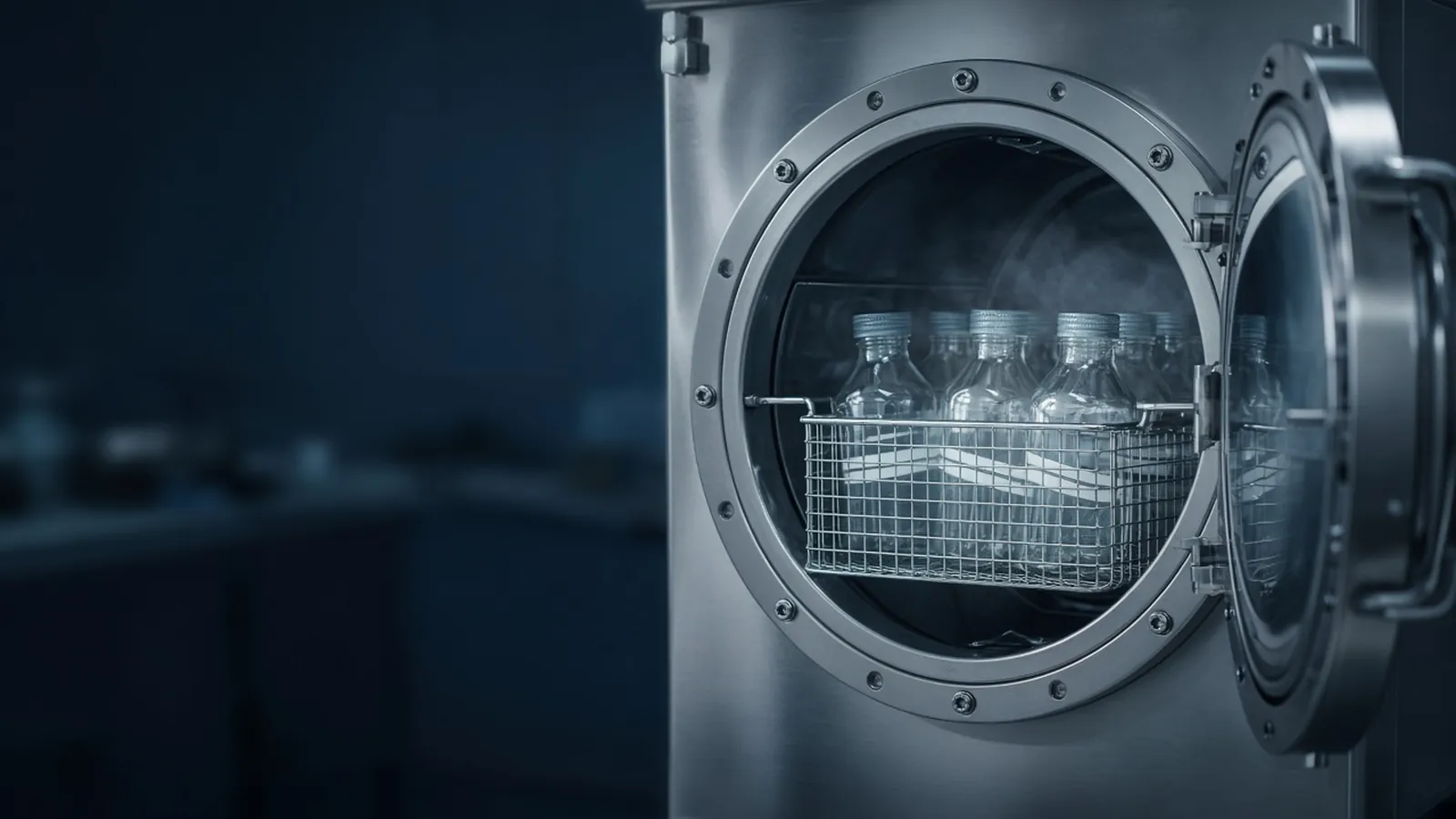 Autoclaves and what sterilisation does not doSteam sterilisation holds a cleaned load at temperature. It does not wash, remove endotoxin, or prove sterility because the tape changed colour.A glossary of biosafety termsPairs that share a bench still do different jobs. Use this comparison to choose the right word for a cabinet, a chemical, a level, or a control.