
troubleshooting
Gas cylinders and a secured chain
A hiss, a slack chain, or the wrong regulator are different faults. Separate oxygen, nitrogen, carbon dioxide, and hydrogen before you touch a fitting.
- Author
- EVRINTH Editorial Team
- Published
- 8 October 2026
- Updated
- 8 October 2026
- Reading time
- 8 min
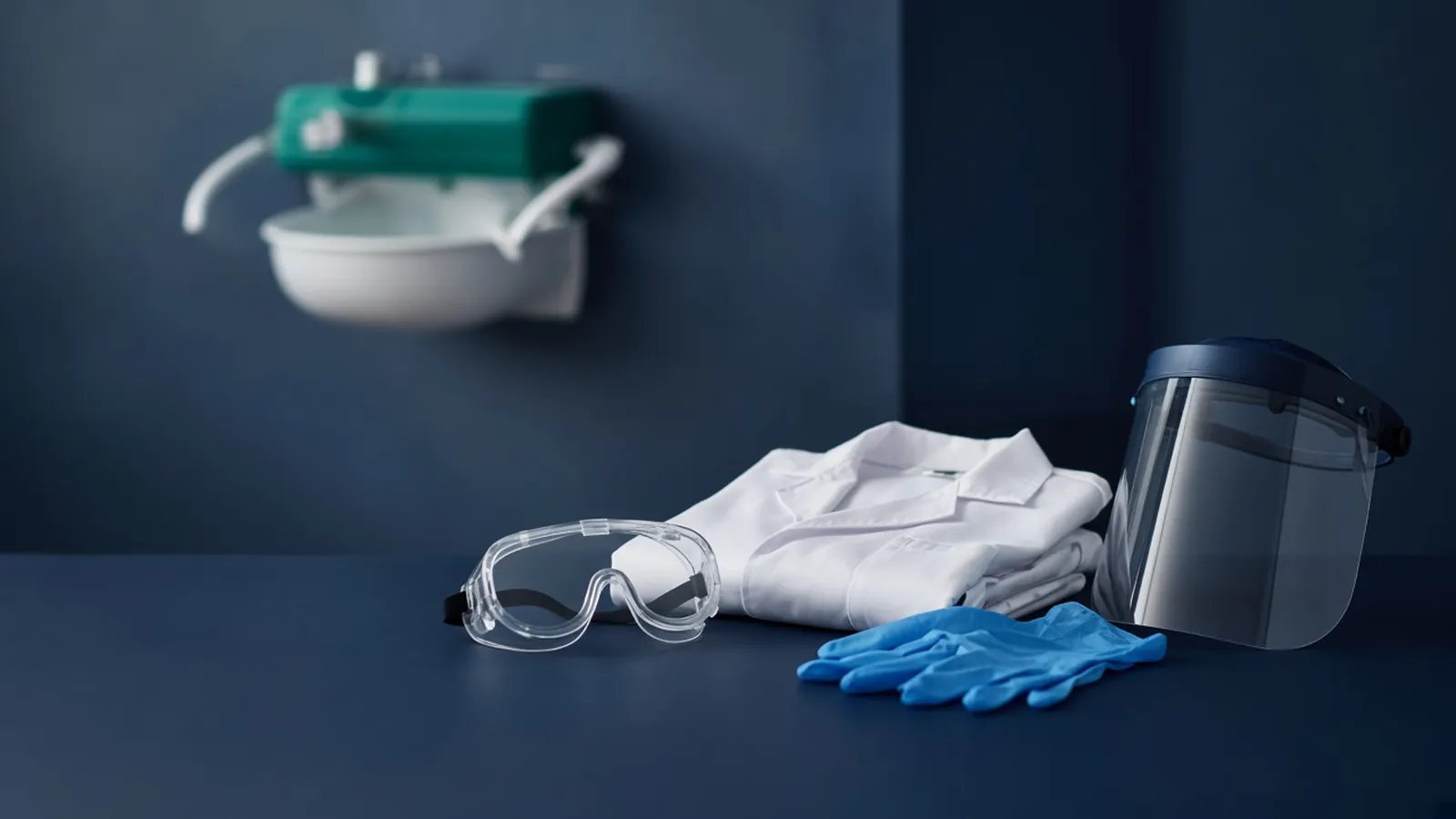
A cylinder that hisses at the valve, a regulator that will not seat, and a chain clipped to itself are three different problems. Start with the symptom you can see, then ask which gas you actually have. Oxygen, nitrogen, carbon dioxide, and hydrogen are not one gas with four labels. This troubleshooting page sits beside the broader bench assessment in biosafety basics for research benches. Cold liquid nitrogen is a different article from a compressed nitrogen cylinder; do not import the dewar habits unchanged. Eye protection and the gloves your gas procedure names are classes in the laboratory consumables catalogue. A facilities enquiry can be framed through academic research and a quotation request. The restraint, the cap, and the regulator still have to match the cylinder in the room.
Symptoms before explanations
Walk up and look, without opening anything.
If the cylinder stands free, or the chain is slack, or the strap is around the valve guard only, the symptom is an unsecured cylinder. A fall breaks the valve and turns the cylinder into a projectile. The remedy class is a chain or strap to a sound anchor, on the body of the cylinder, tight enough that it does not walk. Do this before you admire the gauge. If you cannot find a real anchor, the cylinder is not "temporarily fine."
If you are about to move it and the valve cap is off, or the regulator is still fitted, the symptom is a transport that is not ready. Put the cap on if the laboratory's procedure has you do that, regulator removed, and use a trolley. Do not roll a cylinder by its valve. Do not lift it by the cap as if the cap were a handle, unless the cap is the type the supplier says may be used that way. When in doubt, do not move it.
If the regulator's connection does not match the valve, or you are reaching for an adapter, stop. The symptom is the wrong regulator class. Forcing a thread destroys the sealing surface and can put an oxygen fitting onto a gas it must not meet. Adapters are how the wrong gas enters a line that was labelled last year.
If you open the valve and hear a hiss, see bubbles you did not expect, or smell something when the gas should be odourless, the symptom is a leak. Close the cylinder valve. Use the leak-check method the laboratory owns for that gas. A soap solution is a method only when the laboratory has approved that solution for that service. Oxygen and oil do not belong together. Do not wipe a fitting with a greased rag and call it clean. If the leak continues with the valve shut, or the leak is large, leave the area and follow the emergency plan. Tightening a fitting under pressure, with your face at the outlet, is not the first step.
If the gauge does not move, the symptom might be an empty cylinder, a closed valve, a failed gauge, or a regulator that is not the one this cylinder accepts. Do not keep opening the valve further to persuade it. Check the obvious closures, then treat a dead gauge as unknown rather than as empty. An "empty" hydrogen cylinder is still a hydrogen cylinder.
Four gases, four hazards
Oxygen supports combustion. An oxygen-enriched atmosphere makes materials burn that would not burn so readily in air, including clothing. Regulators, threads, and gloves used on oxygen stay free of oil and grease. A leak of oxygen is not "safe because people breathe oxygen." It is a fire problem. The OSHA oxygen standard is a public reference for that difference. It applies where it applies. Your institution's rule applies in your building.
Nitrogen is an asphyxiant. It has no warning smell. A leak into a small room, a cold room, or a poorly ventilated store displaces oxygen without looking like an emergency. People notice late. A nitrogen cylinder is not a harmless "air" spare. Liquid nitrogen is a further hazard of cold and expansion, handled as a cryogen, not as a slightly colder version of this cylinder.
Carbon dioxide is also an asphyxiant, and it is not interchangeable with nitrogen in your head. It is denser than air and can pool low, in a pit, a cold room, or the bottom of a store. It also affects breathing at concentrations where the oxygen percentage has not yet fallen to the same degree people expect from nitrogen. A CO2 incubator cylinder leaking overnight is a room problem, not only a failed culture. Do not sniff a connection to identify it.
Hydrogen is flammable, buoyant, and able to ignite across a wide mixture range with air. A hydrogen leak is a fire and explosion hazard. The controls are the ones your flammable-gas rule already wrote: ventilation, no ignition sources, the right regulator and tubing, and an emergency plan that says when you leave rather than when you adjust. The OSHA hydrogen standard describes that class of hazard in the occupational literature. Treating hydrogen with nitrogen habits, because both are "just cylinders," is the failure mode this page exists to stop.
The OSHA compressed gases standard is the general public anchor for securing and storing cylinders. The WHO laboratory biosafety manual belongs in the programme around the bench. Neither document chooses your regulator thread.
| Symptom you can see | Likely cause | Next check | Do not |
|---|---|---|---|
| Cylinder rocks when touched | Chain slack, wrong height, or clipped to itself | A real anchor on the cylinder body | Call a visible chain a restraint |
| Cap absent, move planned | Transport started too early | Cap on, regulator off, proper trolley | Roll it by the valve |
| Fitting will not seat | Wrong regulator class or damaged thread | Stop. Match gas and connection | Force it with an adapter |
| Small hiss at the joint | Loose connection or damaged seal | Valve closed, then the lab's leak check | Use oil, or lean in to listen |
| Large hiss, unknown gas, or hydrogen | A release, not a adjustment | Leave, warn, emergency plan | Tighten under pressure |
| Gauge dead | Valve shut, empty, or failed gauge | Closures, then treat as unknown | Assume empty hydrogen is inert |
The branch when the gas is not the one on the label
Labels fade, and a cylinder can be returned with a collar from a different service if someone was helpful. If the painted name, the tag, and the valve connection disagree, do not open it to see. The next check is the supplier and your gas custodian. Using it because the incubator is waiting is how carbon dioxide tubing meets a different gas. Mark it as held, and say so in the room. An autoclave nearby does not make a cylinder safer. Heat from an autoclave, or from a window in a hot afternoon, is a reason to keep cylinders out of that corner, not a reason to ignore a bad fitting.
Personal protective equipment for connecting a regulator is what the assessment names, often eye protection and the glove that still lets you feel a thread. It does not make an oxygen fitting tolerant of grease. It does not authorise solo work if your alone-work rule says a hydrogen change needs two people.
Store oxygen away from hydrogen and from oil, with the separation your gas rule already states. A shared chain between an oxygen cylinder and a hydrogen cylinder is not a clever use of one anchor. It is two hazards given one failure. If the only anchor in the room would force that pairing, the next check is a second anchor, not a tighter chain.
What an enquiry should specify
Specify the gas by name, the regulator class or connection your installation already uses, a restraint that anchors the cylinder body, and valve caps for transport. Ask for the leak-check method compatible with that gas, especially oxygen. State that hydrogen, if you need it, is a flammable-gas installation, not a compressed-air accessory. Use the quote form. Do not ask for a universal regulator. Do not ask a seller to declare the room safe. The institution owns the risk assessment, the emergency plan, and the decision that these four gases stay four procedures.
Questions from the bench
The chain is on, but the cylinder still rocks. What is wrong?
A chain that loops only around the valve guard, or that is clipped to itself, is not anchoring the cylinder to the bench or the wall. The restraint should hold the body, often in the upper portion, so a nudge cannot drop it. If it still rocks, the anchor point is the fault. Do not call it secured because a chain is visible somewhere in the picture.
May I move a cylinder with the regulator still attached if I am careful?
The usual control is a valve cap on during transport, regulator off, on a trolley meant for cylinders, with the cap protecting the valve if the cylinder falls. Your laboratory's rule is the one to follow. A careful walk with a regulator in place is how valves snap. If the cap is missing, do not invent a transport. Park it and get the cap.
I hear a small hiss at the connection after I open the valve. What next?
Close the cylinder valve. Do not keep hunting for the sound with your face at the fitting. Use the leak-check method your laboratory has already approved for that gas. For oxygen, that method must be suitable for oxygen service. Oil, grease, and an improvised film are not a method. If the hiss is large, or you do not know the gas, leave and follow the emergency rule rather than tightening under pressure.
Can one regulator family serve oxygen, nitrogen, carbon dioxide, and hydrogen?
No. The gas, the connection, and the pressure duty have to match. Oxygen equipment stays free of oil. Hydrogen is a flammable gas with its own controls. Nitrogen and carbon dioxide are both asphyxiants and are still not the same gas, because carbon dioxide has effects at concentrations where oxygen may still be present. Match the regulator class. Do not adapt a fitting to force a match.
References
Manufacturer names identify published method classes. Trademarks remain with their owners. Catalogue records on this site are independent references for enquiry. They are not a statement of inventory, distribution rights or a supply commitment. This page is educational. It is not medical advice, a diagnostic protocol or a biosafety approval.
Catalogue
Related products and categories
These links follow the subject of the article into published manufacturer references. A listing is a reference for an enquiry, not a statement of stock or distribution rights.
Continue in this cluster
Related reading
Biosafety basics for research benchesResearch-bench biosafety is a stack of barriers chosen by a risk assessment. This page explains the stack. It does not approve the work.Cryogen burns and oxygen displacementCold burns and oxygen displacement are different injuries from one liquid. Compare contact controls with the controls for a small room or a lift.A glossary of biosafety termsPairs that share a bench still do different jobs. Use this comparison to choose the right word for a cabinet, a chemical, a level, or a control.