
guide
Media serum and what a bottle label is asking
How to read a culture-medium label: basal class, serum percentage, glutamine form, pyruvate, phenol red and the bicarbonate the incubator must match.
- Author
- EVRINTH Editorial Team
- Published
- 8 October 2026
- Updated
- 8 October 2026
- Reading time
- 10 min
A basal bottle and a serum bottle are a formulation, not a pair of colours you blend until the flask looks fed. The label is asking which salts, which sugar, which amino acids, which buffer and which undefined biological mixture the cells will live in. It is also asking what was left out on purpose. The decision this page supports is whether the liquid you are about to put on the cells is the one written for that line. The culture cycle around that decision sits in mammalian cell culture for research labs. The photograph at the top of this page shows a mass spectrometer and sample vials. It does not show flasks or medium.
Who has to answer the label
The person seeding today and the person writing a purchase specification are doing the same job at different distances from the flask. A family name is not a recipe. DMEM, RPMI-1640, MEM, DMEM/F-12, Ham's F-12 and IMDM differ in salts, amino acids, vitamins and typical uses. Inside one family, glucose may be the higher or the lower level, glutamine may be present or absent, pyruvate and HEPES may or may not be listed, and phenol red may be omitted because the work is sensitive to it. Two bottles that both say DMEM can be different experiments.
Public collection sheets, such as the ATCC culture guides and the ECACC collection, are starting descriptions for lines they hold. Your freezer record overrides a generic page when the two disagree.
What the basal liquid is actually doing
Basal medium is a salt solution with a carbon source, amino acids, vitamins and a buffer, sterile and ready to equilibrate with a gas atmosphere. The carbon source is usually glucose. A higher glucose formulation and a lower one change how fast many lines acidify the medium and which metabolic routes they favour. Naming the family and forgetting the glucose line is a real formulation error, not a clerical one.
L-glutamine is the unstable amino acid in that set. In warm liquid it breaks down and releases ammonia. A label either includes it, and expects you to respect the shelf life, or omits it so you add L-glutamine or a more stable dipeptide such as alanyl-L-glutamine when you build the working bottle. A typical research addition, when the basal lacks glutamine, is on the order of a couple of millimolar. Follow the sheet. A second dose on top of glutamine already in the basal raises the ammonia load later.
Sodium pyruvate feeds central metabolism. Some lines need it and some basals already contain it, often near one millimolar when it is added at all. The failure is doubling: the basal already had it, and a second aliquot went in because a different catalogue number had needed the addition.
Phenol red is an indicator, not a nutrient. It also has weak oestrogenic activity at concentrations used in routine medium, so some hormone-responsive assays specify a phenol-red-free bottle. Leaving the dye in because the flask is easier to glance at can become the variable you later call biology.
Bicarbonate is the buffer that expects carbon dioxide. Its concentration is paired with an incubator setpoint, commonly near five percent for many commercial formulations and higher for some others. The setpoint belongs to the medium sheet. HEPES is a different buffer class. It holds pH during handling outside the incubator and changes how dependent the medium is on carbon dioxide. It does not make the rest of the label optional. Keep HEPES-containing medium out of strong light, because light can generate peroxide in that buffer. If you dilute a concentrate, the water grade is part of the formulation. Laboratory water types and where they fail is the companion note. Do not thin a complete medium with bench water.
Serum is a mixture you did not define
Serum, most often fetal bovine serum in mammalian work, supplies growth factors, lipids, hormones, attachment proteins and binding proteins, plus batch variation. None of that is one active concentration. A protocol percentage, often in a five-to-twenty percent range and frequently near ten percent on collection sheets, is a volume fraction of an undefined liquid. Heat inactivation, only when the method requires it, is commonly a hold near 56 Celsius for about half an hour. It is aimed at reducing complement activity, it throws precipitate, and it is not a default. Do not autoclave serum. A second filtration through a drying filter does not answer a mycoplasma question.
Record the lot. A new lot is a new undefined half of the medium. If a phenotype shifts afterwards, the lot is a hypothesis. Mixing two lots in one stock to finish the old bottle erases that hypothesis.
Serum can carry mycoplasma and other adventitious agents. A purchase specification can ask which tests the supplier names for the lot. A test name on a certificate is not a licence to skip quarantine of a new line, and it is not a substitute for the aseptic sequence in working inside a biosafety cabinet.
Building the day's medium without inventing a third recipe
Start from the written card: basal catalogue description, serum percentage, glutamine plan, pyruvate plan, and any antibiotic decision recorded as its own choice rather than as part of the colour. Bring the basal and the serum to the cabinet only after the outsides are dry and wiped in the way your room requires. Combine them into a sterile working bottle labelled with the date, the serum lot, the percentage and the initials of the person who mixed it. Add glutamine or pyruvate to that working bottle if, and only if, the card says the basal lacks them.
Branch when the card and the bottle disagree. If the basal already lists glutamine and the card says to add it, stop and identify which document is current. Do not add it to be safe. If two open basals of the same family differ in glucose, do not pour one into the other. Open the one the card names. If thawed serum has thrown a heavy precipitate, follow the lot instruction rather than shaking the haze and calling it dissolved growth factor.
Warm only the aliquot the session will use. A full working bottle left in a bath is a warm incubation of a rich medium, and complete medium feeds bacteria more readily than basal alone. Return stocks to the cold storage on their labels. Thaw serum under the conditions the supplier describes, not on a heater. Preparing a buffer and checking pH is the habit if you must check an equilibrated aliquot. Do not put a used probe into the stock bottle.
| Label line | What it is asking | If you ignore it |
|---|---|---|
| Basal family and glucose level | Which salt, amino acid and sugar background | A metabolic shift you will blame on the treatment |
| Serum percentage and lot | How much undefined mixture, and which batch | An irreproducible phenotype and no lot to compare |
| Glutamine present, absent, or dipeptide | Whether you add it, and how stable it is | Ammonia from a double dose, or starvation from none |
| Sodium pyruvate present or absent | Whether a second aliquot belongs | A doubled supplement or a missing one |
| Phenol red present or omitted | A pH cue, and a possible oestrogenic variable | A hormone assay run on the wrong background |
| Bicarbonate, and HEPES if listed | Which gas atmosphere the pH expects | Alkaline drift, or a light-exposed HEPES bottle |
| Storage temperature | Where the unopened and opened bottles live | A warm afternoon that edits glutamine and invites growth |
When the flask is fine and the formulation is not
Cells can look spread and still be on the wrong sugar, the wrong serum lot or a double glutamine dose. Suspect the label when a phenotype moves after a new bottle even though confluence and passage number did not, when two people "using up" different open bottles cannot reproduce each other, or when a hormone assay drifts after a switch back to phenol red.
A cloudy working bottle is contamination until you have evidence otherwise. Do not filter it back into service and do not add antibiotic to rescue it. An alkaline purple aliquot left with a loose cap has lost carbon dioxide. Restoring the colour in the incubator does not restore a record of how high the pH went. Use a fresh aliquot. A yellow bottle that sat warm overnight is not still trustworthy because the cap was on.
Research use, and the hazards that are easy to skip
Complete medium is research material, not a therapeutic product, and this article is not a manufacturing instruction. Human and primate lines can carry agents that matter to the worker. The cabinet, the disinfection and the waste path come from a local risk assessment. The WHO Laboratory Biosafety Manual is one reference laboratories use when they write that assessment. Citing it does not assign a level to your room.
A warm receiving bay and a long walk to the cold room
In a hot building the risky interval is the time between the courier and the cold room. A serum bottle that arrives warm is a lot to hold back and to ask about, using the supplier's stability statement, before it feeds a passage you care about. Write the travel condition into the purchase note before the box is on the dock. A refrigerator that spent a night without power is an excursion for serum and for glutamine-containing liquid.
If the laboratory writes a specification, name the basal variant in words: family, glucose, glutamine plan, pyruvate, phenol red, bicarbonate or HEPES, serum percentage, and any mycoplasma testing expectation the work actually needs. "Cell culture medium" is not a specification.
What to put on the enquiry
State the line if you may, the basal family and the variant, the serum requirement, the vessel format and whether you are asking about consumables or about a method. The laboratory consumables catalogue is the plasticware and everyday class list. The academic research reference is a separate page for university laboratories framing a broader conversation. Use the quote request to ask whether a quotation is possible. A method can be discussed from the written formulation. A catalogue family name is not itself a basal recipe, a serum lot or a statement about a culture service.
Match the written formulation before you feed a flask
- 01Read the line sheet against both bottlesWrite the basal family, glucose level, glutamine form, pyruvate, phenol red and serum percentage the line actually uses. A family name such as DMEM is not yet a formulation.
- 02Record the serum lot on the working bottleNote the lot, the percentage and the date you combined it with the basal. Do not pour two serum lots into one bottle to finish them, and do not top up yesterday's complete medium with a new mix.
- 03Add only the supplements the sheet namesGlutamine or a stable glutamine dipeptide, and pyruvate, go in only when the basal lacks them and the line requires them. Adding a second portion because the cap was already off changes the recipe.
- 04Warm an aliquot, not the stockBring only the volume for this session toward handling temperature. Return the stocks to the cold conditions on their labels, and discard an aliquot that sat warm through a delay you did not plan.
Questions from the bench
Is ten percent serum a universal supplement?
No. Many continuous lines are maintained near that range, and many primary cultures, hybridomas and serum-free adaptations are not. The percentage is a line-specific formulation line. Copying ten percent from a neighbouring flask is how two experiments become one undocumented mixture.
Should every liquid medium receive extra glutamine?
Only when the basal was sold without it, or when your written method replaces what has degraded. Glutamine breaks down in warm liquid and the breakdown feeds ammonia into the culture. A dipeptide form is more stable and is still a deliberate addition, not a harmless extra.
Does a red colour mean the medium is correct?
Phenol red is a pH cue sitting in the buffer design, not a nutrient and not a certificate. The same red can hide a wrong glucose level, a wrong serum lot or a missing pyruvate. Judge the label first and the colour second, together with how the cells look.
Can this formulation be used to prepare a clinical infusion?
No. These are research culture liquids. Therapeutic manufacturing follows a separate quality system and a legal framework this article does not provide. Biosafety for the line remains an institutional assignment.
References
Manufacturer names identify published method classes. Trademarks remain with their owners. Catalogue records on this site are independent references for enquiry. They are not a statement of inventory, distribution rights or a supply commitment. This page is educational. It is not medical advice, a diagnostic protocol or a biosafety approval.
Catalogue
Related products and categories
These links follow the subject of the article into published manufacturer references. A listing is a reference for an enquiry, not a statement of stock or distribution rights.
Continue in this cluster
Related reading
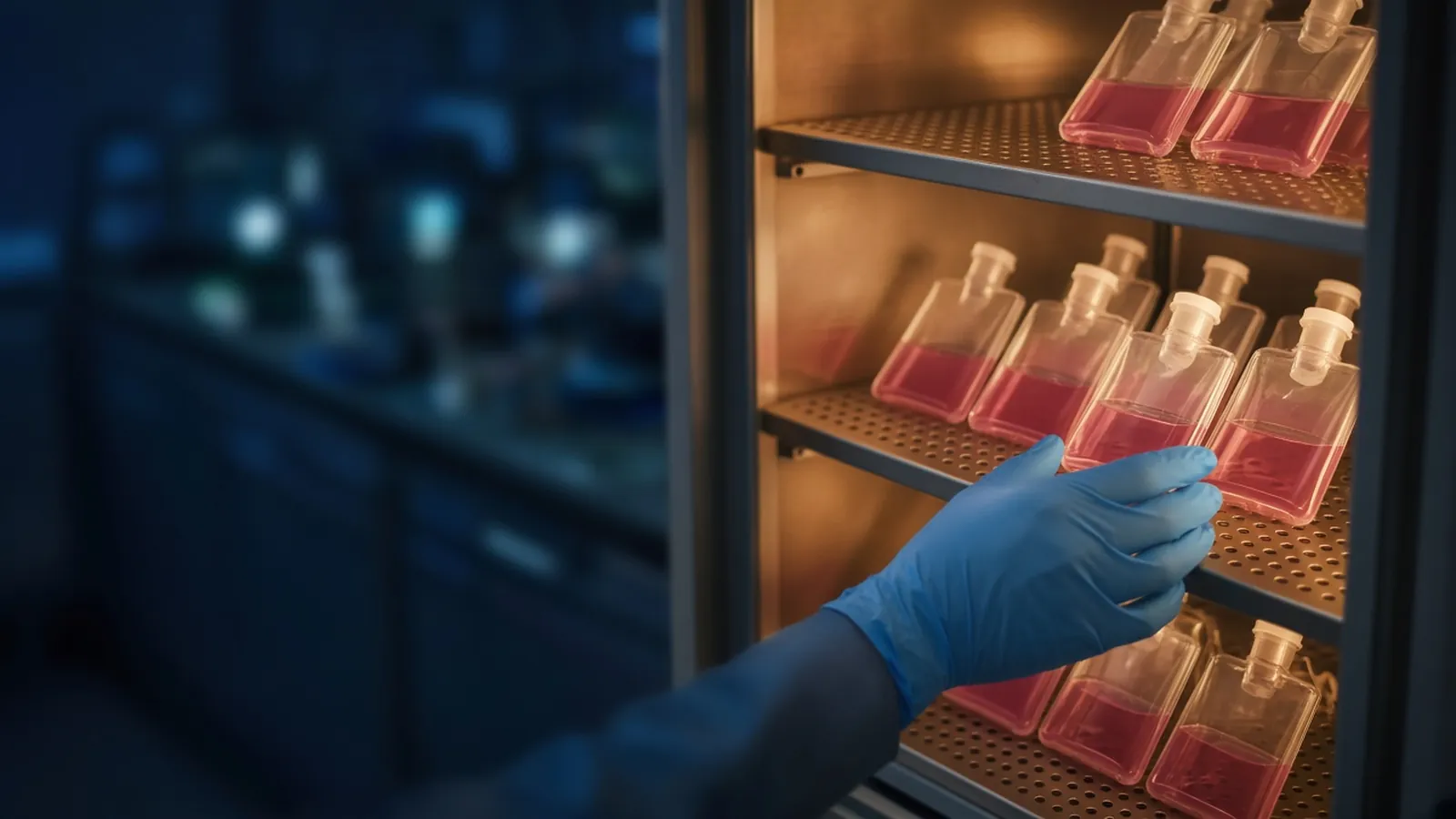 Mammalian cell culture for research labsHow research labs keep mammalian cell culture workable: medium, aseptic technique, confluence, passage records and contamination checks.
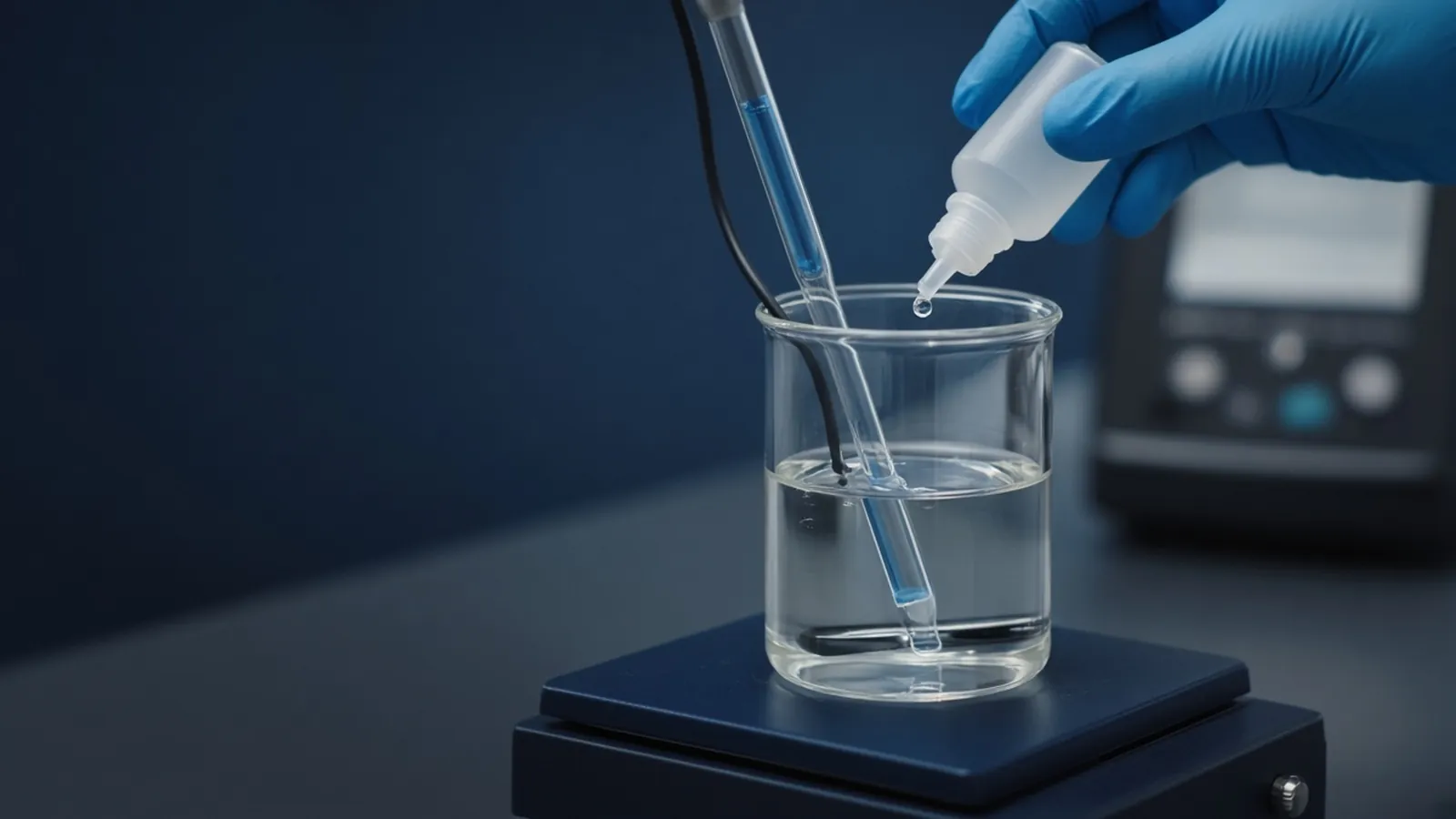 Preparing a buffer and checking pHPrepare a buffer at a stated pH and temperature, record the salt form, and treat a drifting electrode or a bad slope as a failed control.A glossary of culture termsPairs of culture words that laboratories mix up, and the wrong next action each pair causes, from confluence versus density through to confluent versus