
protocol overview
Plant DNA extraction and polyphenols
Plan plant DNA extraction around oxidising polyphenols and co-precipitating polysaccharides, from CTAB-class buffers to young leaf versus woody tissue.
- Author
- EVRINTH Editorial Team
- Published
- 8 October 2026
- Updated
- 8 October 2026
- Reading time
- 10 min
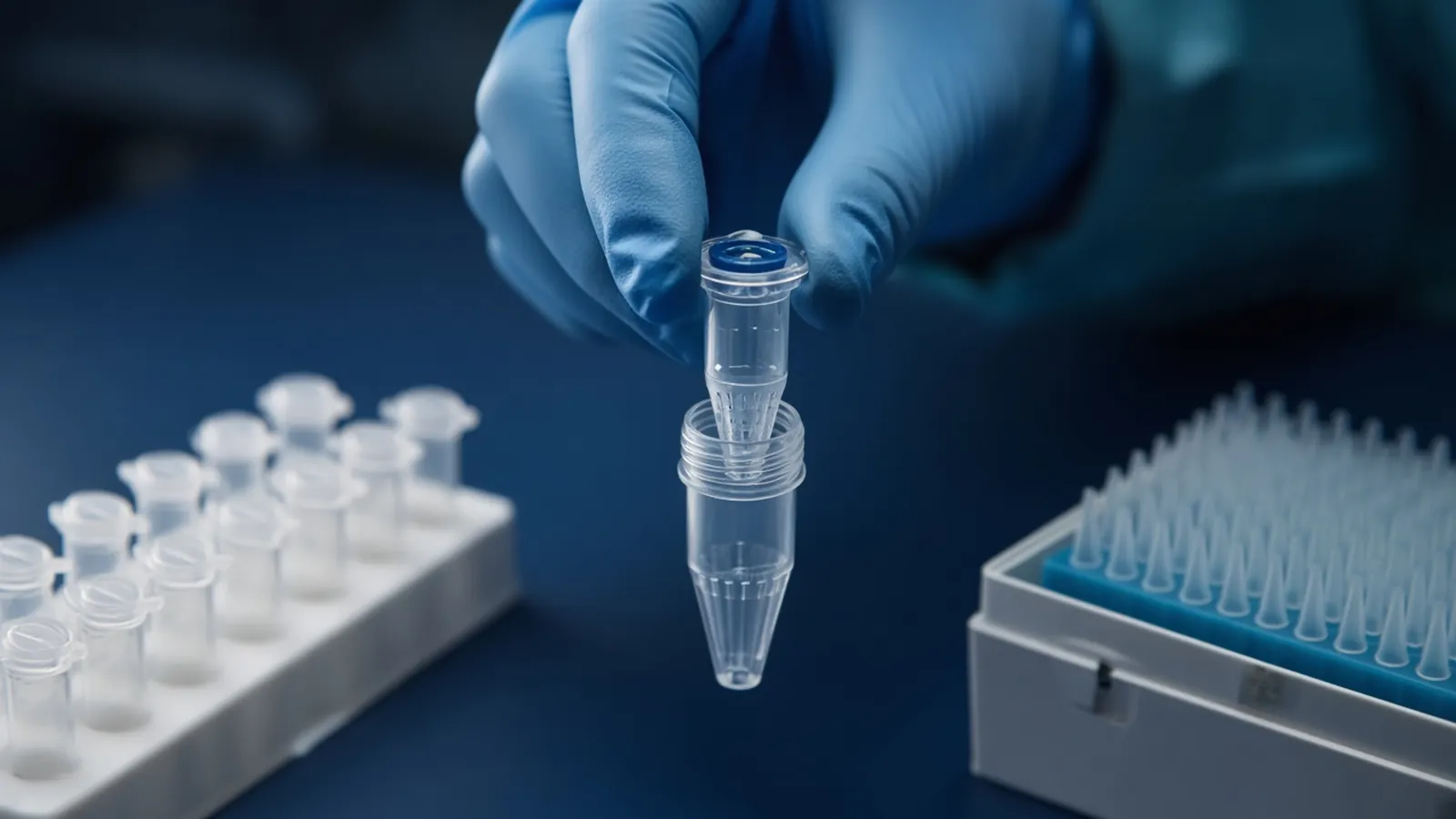
Plant DNA extraction is a fight with the vacuole. The walls are tough, the polysaccharides are sticky, and the polyphenols oxidise as soon as the cell is broken, then bind the DNA you just released. The decision is which tissue you are willing to grind, and which chemistry class you will follow all the way through, not whether a blood protocol happens to be on the shelf. This is a staged overview for research benches. It is not a gram-scale CTAB recipe and not a plant-health certificate.
Where plant extracts sit among other extraction classes is covered in how DNA extraction methods differ. CTAB buffers are buffers: their pH is part of the method, which is why preparing a buffer and checking pH matters if you make them rather than buying a plant kit.
What polyphenols and polysaccharides do to a prep
Polyphenols are abundant in many leaves, barks, and mature tissues. When the cell ruptures they meet air and enzymes and oxidise. The oxidised products crosslink and adsorb. DNA caught in that complex comes out brown, pellets stubbornly, and often will not cut or amplify even when A260 suggests plenty of nucleic acid. A260/A280 is a poor alarm for this, because the brown material is not simply protein. Preventing oxidation matters more than washing colour off afterwards. Young, expanding leaves of many species are an easier matrix than woody stems of the same plant: less lignin, often less phenolic burden, and a wall you can disrupt without turning the mortar into a brick. That is a tendency, not a promise. Some young tissues are still phenol-rich. Name the species.
Polysaccharides, including starch and mucilage, co-precipitate with DNA in alcohol. The pellet can be glassy, clear, and huge, and it dissolves into a viscous inhibitor. Polymerases stall. Pipettes string. A depressed 260/230 is the carbohydrate clue, the same clue chaotrope gives, so you still need the colour and the viscosity to tell the stories apart. A spike-in PCR is the test that matters: if a known template fails only in this extract, the tube is inhibitory however proud the absorbance.
CTAB-class extraction is the classical answer to both problems. CTAB is a cationic detergent. In a high-salt lysis it helps open membranes and, with the salt concentration the protocol controls, lets you separate nucleic acids from polysaccharides that would travel together in a naive alcohol crash. Later steps in a complete protocol use that salt switch, a solvent partition the institution allows, or a precipitation condition that keeps polysaccharide behind. The point for a working scientist is that salt is not a seasoning. It is the switch. Running the lysis half of a CTAB method and then an unrelated alcohol step from a plasmid prep is how the DNA is lost or the slime is kept. Follow one complete protocol. Do not assemble it from grams you found in two papers.
PVP, polyvinylpyrrolidone, is the additive class that binds polyphenols. A reducing-agent class, such as a thiol the SOP permits, limits oxidation while you grind. Both belong in the buffer at the concentrations that protocol states. This page will not give those grams. Beta-mercaptoethanol, if your SOP still uses it, is a toxic chemical with its own assessment, not a drop you add by folklore. Some plant kits replace the solvent step with a silica column aimed at plants. That is a legitimate class when it actually names plants, polyphenols, or polysaccharides, and a hopeful class when it is only a rebadged blood column.
Sample lysis here is the grind plus the buffer. A mortar, a bead mill, or a homogeniser each shear DNA to some degree. Short PCR forgives more shear than a long-read plant genome. If you need length, keep the mechanical step as short as the wall allows and check a gel. RNA integrity, if someone later wants RNA from the same species, will not survive this DNA grind unless the RNA half was split off into a denaturing buffer at once.
Stages, and the branches on brown and slime
Stage one is the tissue. Prefer the youngest healthy leaf when the genetic question allows. If the question is about a woody genotype and a leaf might not represent it, extract the wood and budget for a harder cleanup rather than silently changing the organ. Record species, organ, and age in words a stranger can read.
Stage two is the disruption. Work promptly. A pulp that sits and browns has already coupled polyphenols to the DNA. Keep the material cold when the protocol says cold, and get it into buffer that contains the PVP and reducing-agent classes that protocol uses. Do not grind a dry, warm heap and add buffer as an afterthought.
Stage three is the separation the protocol owns. For a CTAB-class method that includes a chloroform partition, that solvent step is an institutional hazard decision, as organic extraction always is. Do not improvise volumes. For a plant silica kit, the wash has to be the plant wash, because polysaccharide and polyphenol removal is the reason you chose it. Skipping a wash to save ten minutes returns a brown, inhibitory eluate and a flattering A260.
Stage four is the look and the test. Colourless and freely soluble is encouraging and not proof. Brown means polyphenols are still bound: cleanup or a new tissue, and do not commit a library. Viscous or glassy means polysaccharide: the high-salt wash or precipitation behaviour in your protocol, or a column rated for it, then a spike-in. Clear, non-viscous, and still inhibitory means a leftover the eye cannot see, often carbohydrate or a chaotrope. Dilute and spike. A blank grind of buffer through the same mortars tells you whether the plant or the reusable equipment supplied the band.
Stage five is the assay match. A short amplicon may succeed from a prep that would fail a restriction digest or a long-read library. Say which claim you are making. A failed long amplicon with a successful short one can be shear or inhibitor concentration, and the spike separates those.
| What the tube shows | Likely plant problem | Decision at this stage |
|---|---|---|
| Brown pellet or brown eluate | Oxidised polyphenols bound to DNA | Do not load a scarce assay; cleanup or re-extract younger tissue |
| Glassy, viscous pellet | Polysaccharide co-precipitated | Salt or wash step the plant protocol already has; then spike |
| Low 260/230, pale and non-viscous | Carbohydrate or chaotrope, or a dirty blank | Reblank; then a wash or a dilution spike |
| Column clogs | Fibre, starch, or too much input | Less tissue, better grind and clear, or a pre-filter the kit allows |
| Short PCR works, long PCR fails | Shear, residual inhibitor, or a hard template | Spike a long control; check the gel for length |
| Mortar blank has a band | Contamination, not the leaf | Retire the shared mortar workflow |
Failures that survive a second spin
A brown eluate that you bind again on an ordinary blood column often stays brown. The polyphenol is stuck to the DNA, not merely dissolved beside it. You need a step that strips that complex, which is the plant protocol's job, or you need tissue that never browned. Dilution sometimes lets a short PCR succeed by lowering the inhibitor. It does not make the DNA a good restriction substrate.
A yield that grows when you use less leaf is overload or a lysis that could not reach the core of a thick wad. Plant silica columns clog on fibre. Less input is a real optimisation.
A perfect-looking ratio and a dead PCR is polysaccharide or a wash leftover. Spike. If the spike dies, clean or dilute. If the spike lives and the plant target does not, then you may talk about primers and about whether that gene is present. A260/A280 will not make that speech for you.
Shared mortars and razor blades between species are a contamination path. A blank grind catches it. A band in the blank retires the batch.
Hazards that are easy to treat as kitchen work
Liquid nitrogen, if you use it to make a brittle powder, is a cold burn and an asphyxiant. That is an institutional decision about dewars and rooms, not a mortar trick. CTAB is an irritant. Thiols such as beta-mercaptoethanol are toxic. Chloroform, if the protocol still partitions with it, is the same solvent hazard as any organic extraction: cabinet, waste stream, and an SOP, or you do not run that version. A plant silica kit avoids that solvent and does not avoid chaotropes.
Most leaves are not infectious in the human sense. Some plants and some pathogens they carry are quarantine material. Your institution decides. The WHO laboratory biosafety manual is background where a microbe is part of the sample, not a permit to mill regulated plant material on an open bench. This overview does not certify a crop, a variety, or a pathogen test.
Heat in the field and in the vehicle
Oxidation is faster when the leaf is warm. A bag of leaves left in a closed vehicle in the sun can brown before anyone grinds it, and the DNA arrives already dragged into complexes. Collect into the cold or into the buffer the protocol allows, the same day if you can, and write the delay in the notebook. A woody cutting is even less forgiving of a casual afternoon on the dashboard. None of this requires a climate statistic. It requires the time and the colour at the moment of lysis. If the tissue is already brown and dry, say so in the result. The extraction did not invent that colour.
What to ask for
Name the species, the organ, and whether the tissue is young leaf or wood. Say whether extracts from this plant usually brown or string. Say whether a chloroform step is permitted in your laboratory. If it is not, ask for a plant-kit class rather than a classical CTAB solvent path. State the downstream step, short PCR or long DNA, and the input mass you can actually harvest.
Browse plant-capable lysis and column classes in the sample preparation catalogue and place them on the sample preparation pathway. Send the species and the hazard constraint with the quote request. The nucleic acid isolation enquiry reference is a place to describe the matrix. It is an enquiry reference. It does not mean a plant extraction is performed for you. Ask whether a quotation is possible. The acceptance check is a non-brown, non-viscous eluate that still passes a spike-in, not a ratio copied from a blood prep.
Plan a plant DNA prep around browning and slime
- 01Choose the youngest tissue that still answers the questionYoung leaves usually carry less lignin and often fewer polyphenols than bark or woody stem. Substitute an easier organ only when that organ is the same genetic question.
- 02Disrupt fast, before the cut surface brownsPolyphenols oxidise and then bind DNA. Grind or slice into the buffer class the protocol names, and do not leave a warm pulp waiting on the bench.
- 03Use a complete CTAB-class or plant-kit path, including the salt switchHigh salt, PVP and a reducing-agent class belong together in a CTAB-style method. Copying only the lysis half, without the matching separation, is how DNA vanishes or polysaccharides come along.
- 04Branch on colour and viscosity before you trust a ratioA brown eluate means polyphenols are still on the DNA. A glassy, viscous pellet means polysaccharide. A260/A280 will not clear either. Run a spike-in PCR or change the cleanup the protocol allows.
Questions from the bench
What does browning have to do with the DNA?
Plant polyphenols oxidise to reactive quinones. Those products bind proteins and nucleic acids and drag DNA into brown complexes that restrict poorly and amplify poorly. The colour is not a harmless leaf pigment left in the tube. If the elution is brown, plan a cleanup aimed at polyphenols or a repeat from younger tissue, and do not spend the tube on a scarce library.
Why do people add PVP and high salt instead of using a blood kit?
PVP is a polymer class that binds polyphenols and helps keep them away from DNA. High salt is the switch in a CTAB-class extraction: it changes what stays soluble, including polysaccharides that would otherwise co-precipitate. A kit aimed at blood has neither job as its main design. It may work on a soft young leaf and fail on a woody, phenol-rich species. Match the chemistry to the plant problem.
The pellet is clear and gooey and will not dissolve. Is that a lot of DNA?
Often it is polysaccharide co-precipitated with some DNA. It can inhibit PCR even when a spectrophotometer reports a cheerful number, and A260/A280 is a weak witness because carbohydrate shows more at 230 nm. Use the salt and wash behaviour your plant protocol already specifies, or a plant-rated column, and test with a spike-in rather than with a larger load of the goo.
Can the same grind be used for plant RNA?
Only if the buffer was an RNA lysis from the start. Polyphenols and polysaccharides bother RNA work too, and RNases in plant tissue are unforgiving. RNA integrity will not survive a DNA-style wait while a pulp browns. If you need both, split the tissue before disruption and put the RNA half into a denaturing RNA method immediately.
References
Manufacturer names identify published method classes. Trademarks remain with their owners. Catalogue records on this site are independent references for enquiry. They are not a statement of inventory, distribution rights or a supply commitment. This page is educational. It is not medical advice, a diagnostic protocol or a biosafety approval.
Catalogue
Related products and categories
These links follow the subject of the article into published manufacturer references. A listing is a reference for an enquiry, not a statement of stock or distribution rights.
Continue in this cluster
Related reading
How DNA extraction methods differHow silica columns, beads, precipitation and organic extraction change DNA yield, length and inhibitors, and which class fits the assay you actually plan toA glossary of purification termsDefine chaotrope, bind-wash-elute, yield, purity ratios and RIN, then walk a purification so those words describe one real workflow.Blood saliva and tissue as starting materialExplain how EDTA blood, heparin blood, saliva and solid tissue behave as extraction inputs, and why a serum tube is not whole blood.