
guide
Sterile technique for cloning strains
How aseptic handling of non-pathogenic E. coli cloning strains keeps dust, loops and open lids from turning a plate into a mixed culture.
- Author
- EVRINTH Editorial Team
- Published
- 8 October 2026
- Updated
- 8 October 2026
- Reading time
- 11 min
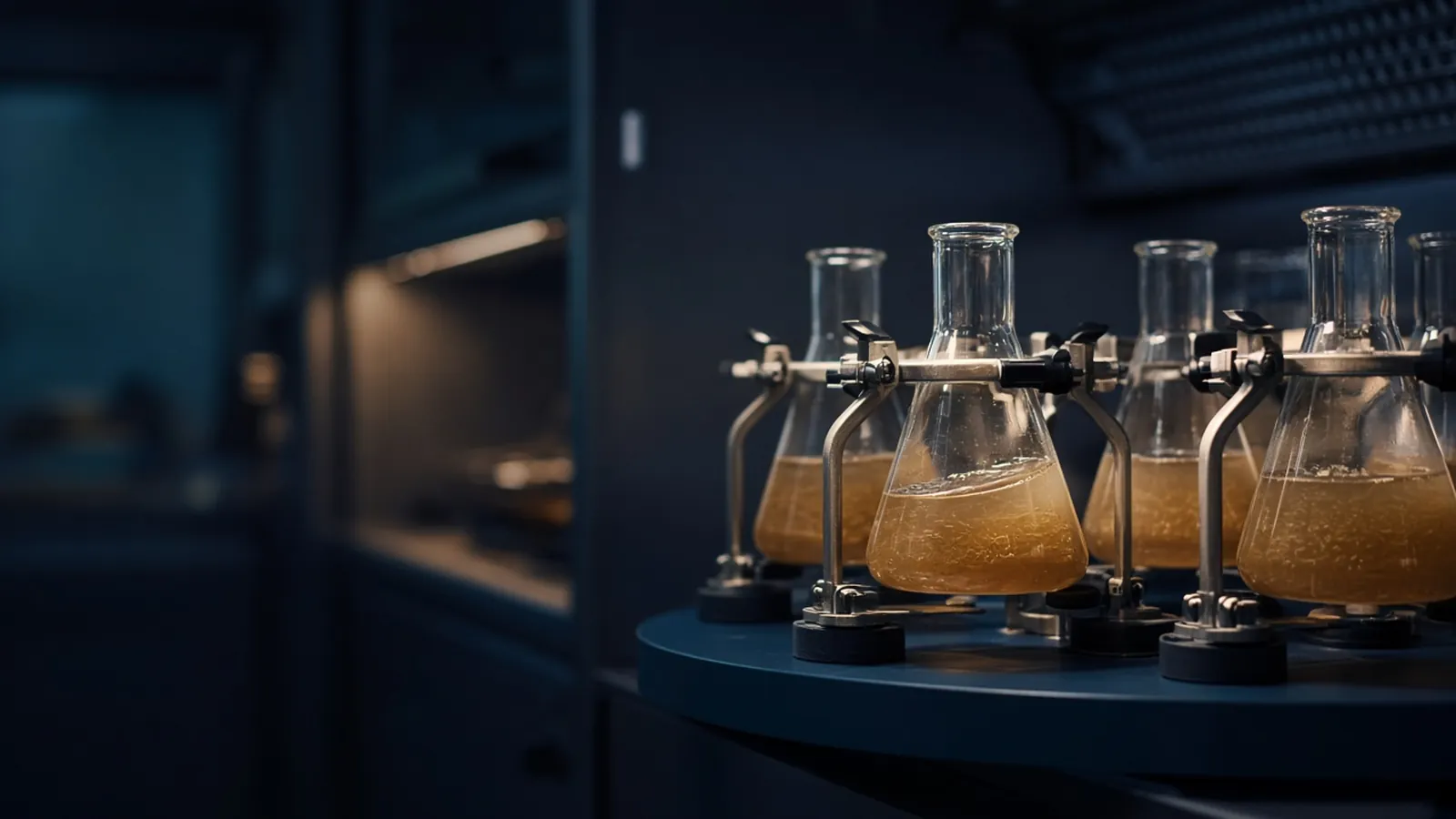
Sterile technique for cloning strains is the habit that keeps a non-pathogenic Escherichia coli K-12 plate equal to the organism you meant to put on it. The decision it supports is simple and easy to skip: whether tomorrow's colony is a descendant of today's inoculum, or a visitor that landed while the lid was off. Culture conditions, competence and antibiotic logic sit in bacterial culture and transformation. How a resistance marker is read once the plate is closed is the companion note on antibiotic selection and blue-white screening. The path from a designed insert to a candidate colony is plasmid cloning from insert to colony.
Media, antibiotics and sterile disposables are specified from the reagents and chemicals catalogue. The wider method family is the molecular biology pathway. Sequence questions can be framed with the custom gene synthesis reference as an enquiry prompt. A sourcing note goes to the quote request, where a handling method can be discussed against a written specification.
Who is allowed to open the plate
This guide stays with laboratory cloning and expression strains already accepted for the bench: K-12 derivatives and the similar non-pathogenic hosts used to copy plasmids or to express a recombinant protein. It is an open-bench discipline for that class of work. When a risk assessment says the organism requires a biosafety cabinet, the cabinet is the control, and a flame on an open bench does not stand in for it. Cabinet practice for the work your institution has already assigned to a cabinet is described in working inside a biosafety cabinet. The institutional frame is biosafety basics for research benches.
A contaminant on a cloning plate shows up as an extra colony, a lawn, or a miniprep that will not digest. Skin flora, dust-borne spores and a neighbouring clone from a reused loop all look like bacteria until you ask which bacteria. The habits below exist so that question does not arrive after a week of work on the wrong colony.
What settles on agar while the lid is up
Agar is a wet, rich surface at room temperature or warmer. Particles fall onto it whenever the lid is off: skin flakes, dust, droplets from speech, and cells shaken loose from a pipette tip. The longer the face of the agar sees the room, the more chances those particles have. Holding the lid at an angle over the dish, like a shield, cuts the solid angle of air that can reach the surface. Working quickly does the same job. Talking across an open plate does the opposite: the plume from your mouth is aimed at the medium.
A flame, where the assessment allows one, is only a local updraft. Hot air rises and can reduce what falls straight into the working zone. It does not sterilise the room, and it does not rescue a plate left open while you answer a question. Disposable sterile loops skip the flame. They stay sterile until the packaging is opened and the tip touches something other than the inoculum. A loop set on the bench has joined the bench.
Metal loops are a different class. They are sterilised in the flame until the wire glows, then cooled in air or by a brief touch to sterile agar at the edge you will not streak. A glowing loop plunged into a colony kills the cells you wanted and spatters the rest. A loop that is still hot enough to hiss on agar has not finished cooling. Public streaking notes such as the Addgene streak-plate protocol show the shape of that habit. Follow your laboratory's written method for the loop you actually hold.
Loops, flames and the lid, as classes of tool
You need a closed plate whose medium was sterilised before it was poured, a writing tool that never touches the agar, and a loop or tip that is sterile at the moment of contact. The plate is sterile only until it is opened, and only on the surfaces that stayed covered. Autoclaves and what sterilisation does not do is the right companion here: a completed cycle on a closed bottle does not protect that bottle after the cap has been unscrewed on a dusty bench, and indicator tape does not prove the agar you later poured stayed clean.
Markers belong on the outside of the base. They are not sterile implements. A gloved finger on the agar is an inoculum, even when the glove came from a fresh box, because the glove then touched a tap, a pen or a fridge handle. Change gloves when they stop being clean. Tips and loops are single-colony tools. One colony, one tip, then waste. Re-entering a broth tube with a tip that has already touched a plate is how you seed the tube with whatever else was on that plate.
Plates should be dry enough that liquid does not run, and not so dried that the surface has cracked. Condensation on the lid is a reservoir. If it drips onto the agar it smears colonies into one another and can carry a contaminant across a streak you thought was separated. Incubate plates inverted so condensation stays on the lid and off the surface. That inversion is part of sterile reading, not only of colony shape.
Open, streak, close, and the branch when a blank plate grows
Clear the bench before you lift a lid. Label every plate you will open. If you are streaking for isolation, use the successive-sector pattern your laboratory teaches, flaming or changing the loop between sectors so each sector is a dilution of the last. If you are spotting a transformation, spread with a sterile spreader and close the lid as soon as the liquid is no longer a pool. The Addgene molecular biology reference is a public place to see how these everyday steps are named. It is not a substitute for the sheet that came with your medium.
Keep one plate uninoculated in the same session, opened for the same few seconds and closed again. That plate is your air-and-medium control. Incubate it with the others. If it stays clear, you have evidence that this batch of agar and this room, for this sitting, did not rain colonies by themselves. If it grows, stop. Do not pick "the colonies that look like E. coli" from the sample plates and hope. The control has told you the session is contaminated. Pour again, shorten the time plates stay open, and check whether a fan, a window or a shared lid was the route.
A second branch: the control is clear, but a streak shows two morphologies. Treat the odd colony as a stranger. Do not passage it "to see what it is" on the cloning bench. Return to a single colony of the expected look, on selective agar if a plasmid marker should be present, and confirm the plasmid before you trust the broth. Colony morphology is a weak identity test. It is still strong enough to reject a plate that has obviously mixed.
Routes onto the agar, and the habit that blocks each one
| Route onto the plate | What you see later | Habit that blocks it |
|---|---|---|
| Dust or skin falling on open agar | Colonies on a plate you barely touched, including the blank | Lid as a shield, short open time, no talking over the dish |
| Loop set down, then reused | A streak sector that grows a second morphology | One loop for one contact, then waste or a fresh flame |
| Lid from a dirty plate placed on a clean one | Unexpected growth that matches a neighbour experiment | Label the base, keep each lid with its own dish |
| Open media bottle on a busy bench | Many plates from one pour all grow the same stranger | Pour promptly, flame or cover the neck if your method says so, cap at once |
| Condensation dripping across streaks | Colonies that run together overnight | Incubate inverted, do not tap the lid dry onto the agar |
| Hot loop, or a loop cooled in a non-sterile place | No growth where you streaked, or growth of a bench organism | Cool in air or on sterile agar you will not count |
When the plate stops being evidence
A session fails closed when the blank plate grows, when two people share an unlabelled stack, or when a loop travels from a contaminated control back into a glycerol stock. The costly version is quiet: every plate looks fine, and the contaminant is a second E. coli that happens to tolerate the same antibiotic. You will not see that by eye. The habits above lower the chance. They do not prove a colony's plasmid. Confirmation still belongs to a digest, a colony PCR or a sequence, as the cloning path describes.
Mouth pipetting has no place in this work. Spills of culture are disinfected by the method your laboratory has already chosen, then cleaned up. Do not invent a disinfectant recipe on the day. Waste plates and loops go into the inactivation stream the institution specifies before they leave the room. This page is not medical advice and not an approval to change containment because a technique feels familiar.
An odd smell, a film on a broth, or a colony colour your strain does not make is a reason to stop. ATCC culture guides describe how collections expect recipients to revive and check bona fide material. Use them as handling context for strains you were sent.
Fans, open windows and dust on the agar
Ceiling fans and open windows move dust onto plates. In a hot room it is tempting to keep both running while you streak. The air speed that makes the bench bearable is the same air speed that delivers particles to open agar. Close the window for the minutes the plates are open, and keep the fan from blowing across the dishes. A laminar cabinet is used only when the risk assessment has already placed this work there. Heat is not a reason to upgrade an organism's containment, and it is a reason to shorten open-plate time.
Humidity adds a second problem. Lids sweat. If you open a sweating plate face-up, droplets fall onto the streaks and join colonies that were separate at midnight. Wipe nothing onto the agar. Open inverted plates carefully, or let them cool before you read them. A monsoon week is a week of shorter open times and fresher blanks, not a week of guessing which colony is yours.
What to name when you ask for the materials
State the strain class, the antibiotic, whether you need plates or the components to pour them, and whether loops are disposable or reusable metal. Say if the medium must be free of antibiotic until you add it after cooling. Ask for the written specification of the agar base and the drug. Use the quote request for that note. A method can be discussed there. The custom gene synthesis page can frame a question if the DNA, rather than the loop, is the thing you are specifying. Read it as an independent reference for the enquiry, not as a statement that a synthesis run is already under way.
Open, inoculate and close a cloning-strain plate without parking it in the air
- 01Clear a small working areaRemove clutter, spills and old plates from the patch of bench you will use. Set out only the labelled plates, the sterile loops and the culture you mean to touch. A crowded bench is a place where a lid gets swapped.
- 02Label the base before you lift a lidWrite antibiotic, date and strain on the agar plate base, not on a loose lid. Do this while every dish is still closed. Opening a plate to remember what it is leaves the agar facing the room.
- 03Inoculate with the lid as a shieldCrack the lid toward you, keep the agar covered as much as the loop allows, and touch only the colony or broth you intend. Cool a flamed metal loop before it meets cells. A hot loop kills the inoculum and can split the agar.
- 04Close first, then discard the loopSeat the lid, set the plate aside, and only then drop the disposable loop into the waste stream your institution names. A loop that rests on the bench between colonies is no longer sterile.
Questions from the bench
Does a Bunsen burner replace a biosafety cabinet?
A flame is a local updraft some laboratories use while streaking K-12 cloning strains, and only where the risk assessment already allows an open bench. It does not filter air and it is not the engineering control required when an organism must be handled in a cabinet. If the strain is not on your institutional list as a cloning strain, stop and take the assessment to the people who own it.
Why label the base of the plate rather than the lid?
Lids come off, get stacked, and get placed on the wrong dish. The base stays with the agar, so the antibiotic and the date remain attached to the medium you actually poured. A lid label that migrates onto a different plate is how a kanamycin dish is read as ampicillin.
A control plate I never touched grew a few colonies. What does that mean?
The agar, the air above it, or a loop that was supposed to be sterile already carried cells. Sample plates streaked in that same session cannot be trusted as pure cloning-strain work. Discard the set, find the route, and pour or open a fresh batch rather than picking around the strangers.
What should an enquiry about loops, plates or media say?
Name the cloning-strain class, the antibiotic marker, whether you need ready agar or the components to pour it, and the sterile-loop style your method uses. A method can be discussed against the written specification. Ask for that specification rather than treating a catalogue family as one recipe.
References
Manufacturer names identify published method classes. Trademarks remain with their owners. Catalogue records on this site are independent references for enquiry. They are not a statement of inventory, distribution rights or a supply commitment. This page is educational. It is not medical advice, a diagnostic protocol or a biosafety approval.
Catalogue
Related products and categories
These links follow the subject of the article into published manufacturer references. A listing is a reference for an enquiry, not a statement of stock or distribution rights.
Continue in this cluster
Related reading
Bacterial culture and transformationHow non-pathogenic E. coli cloning strains are grown and how plasmid DNA is introduced, with the controls that make a colony meaningful. Autoclaves and what sterilisation does not doSteam sterilisation holds a cleaned load at temperature. It does not wash, remove endotoxin, or prove sterility because the tape changed colour.
 Antibiotic selection and blue-white screeningHow antibiotic plates keep a plasmid in a cloning strain, and why a white colony on X-gal is a candidate rather than proof of the insert.