
glossary
Troubleshooting a dripping pipette
Name the seal, shaft, solvent, and piston causes of a dripping pipette, and keep that pipette out of service until it is checked.
- Author
- EVRINTH Editorial Team
- Published
- 8 October 2026
- Updated
- 8 October 2026
- Reading time
- 6 min
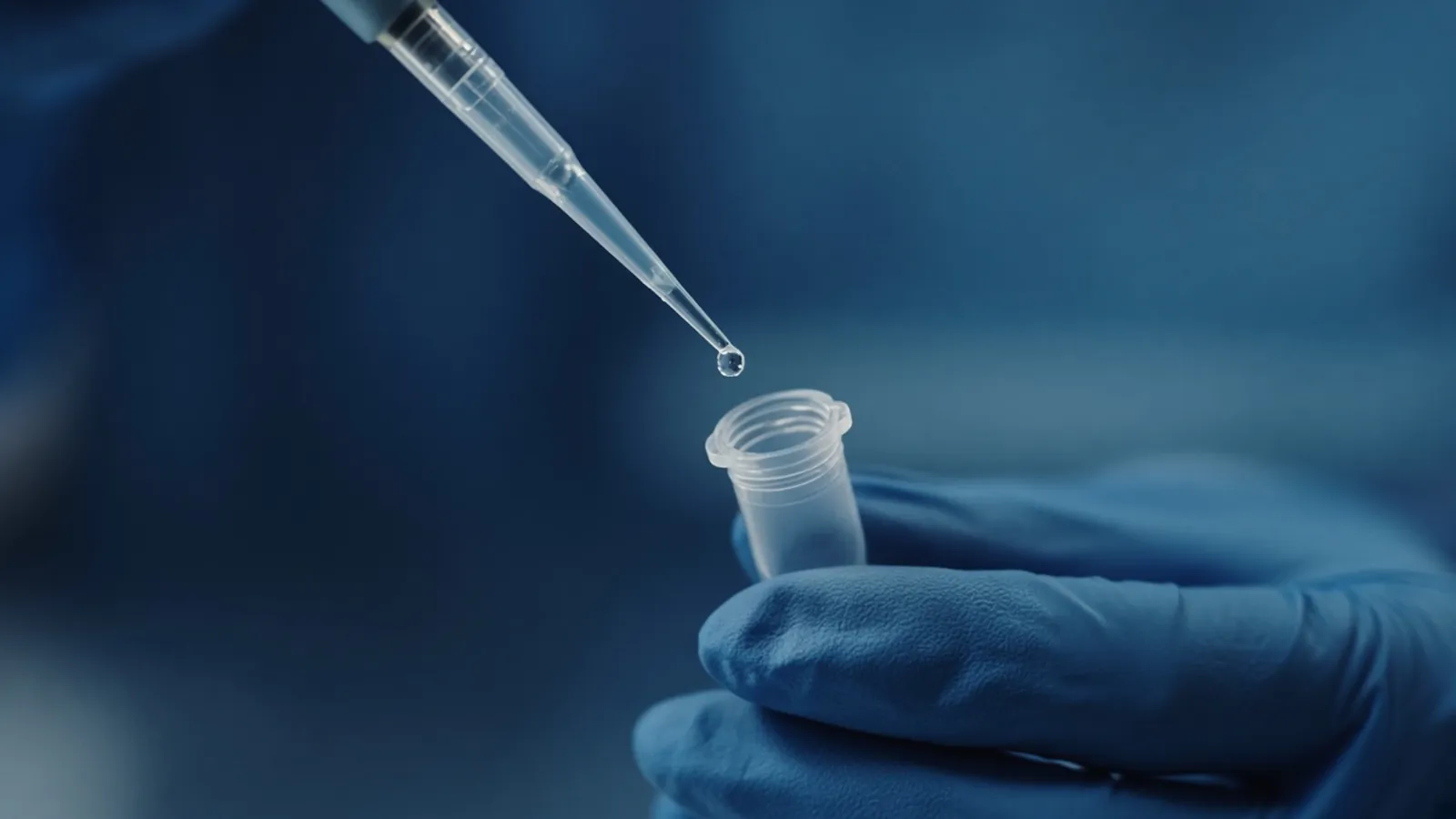
A dripping pipette is a small leak with a large vocabulary. The useful terms are seal, shaft, volatile liquid, internal contamination, and piston. Each term points at a different next check. Using them as synonyms, or calling all of them technique, is how a bad instrument stays on the bench. The stroke you expected, before the drip, is the one in accurate micropipetting technique.
Seal
The seal is the closure that keeps the air cushion a cushion. On an air-displacement micropipette there are two places people mean. One is the tip on the cone. The other is the piston seal inside the body. A tip seal fails when the collar does not match the cone, when the tip is cracked, or when the shaft is dented so no collar can sit. The check is immediate: a fresh tip from a family that has sealed before. If the drip stops, the word was tip fit, and you throw the bad tip away rather than wiping it. If the drip continues, stop saying tip.
ISO 8655-2:2022 considers the pipette complete with its selected tip. A drip means that completeness has failed for this stroke. ISO 8655-1:2022 is terminology and user recommendations, not a permission to keep working. Numerical tolerances are irrelevant while liquid will not stay in the tip. You cannot compare a gravimetric mean with a specification if the aliquot is on the bench.
Shaft
The shaft, or nose, is the barrel the tip mounts on. A drop, a side impact, or a habit of banging tips off can bend or score it. The glossary point is that a damaged shaft mimics every bad tip you try. The next check is visual: look along the cone for a flat spot, a crack, or a residue ring. Then try one trusted tip. If the shaft is damaged, the pipette leaves service. No forward-pipetting coaching tightens a bent cone. Record the drop if there was one. A certificate issued before the drop describes the earlier shaft.
Volatile liquid
A volatile drip is liquid pushed out by vapour in the cushion. Ethanol, acetone, and acetonitrile classes do this when the air is unsaturated or the pause is long. The word matters because the piston may be healthy. The next check is a water hold. Water that holds classifies the drip as vapour. Pre-wet, shorten the pause, use reverse mode if the method allows, or move to positive displacement. Do not grind the adjustment to make a solvent stop dripping. You would then ruin the water volume.
Viscous liquids sometimes look like a drip when a slow bead finally lets go. That is retention and late drainage, not a seal failure. The next check is a slower reverse stroke. If a bead remains, change class. Do not call it a drip and replace the seal.
Internal contamination and the piston
Internal contamination is liquid where only air should be. It wets the piston, attacks the seal, and can reappear as a drip or as a short volume days later. The next check is not another tip. It is to take the pipette out of service and follow the manufacturer for cleaning. Many shafts tolerate only listed agents. Ultraviolet illumination of the outside is not a complete answer for a wet piston. Autoclaving is forbidden unless the manufacturer says that model can be autoclaved. Detach the tip ejector if the insert tells you to before any cleaning that requires it.
The piston seal is the internal partner of the tip seal. When it is nicked, dried out, or swollen by solvent, water drips with every tip. The next check is service, not a student told to pipette faster. An interim confirmation after service is a water series of the kind in checking a pipette between calibrations.
| Term | What you should see if this is the cause | Next check |
|---|---|---|
| Tip seal | A new trusted tip holds water | Discard the bad tip and note the family |
| Shaft | Every tip drips and the cone looks damaged | Out of service; do not keep trying boxes |
| Volatile liquid | Water holds, solvent drips | Pre-wet, pace, or positive displacement |
| Viscous bead | A slow drop after a fast stroke | Reverse mode, slower, or a piston tip |
| Internal contamination | History of liquid in the nose, later unexplained drips | Manufacturer cleaning; not a surface wipe |
| Piston seal | Water drips with trusted tips and a sound shaft | Service, then a gravimetric check |
What not to call it
Do not call a drip a calibration interval that came due. Intervals are planned. A drip is an event. Do not call it the reagent kit. A kit cannot open a seal. Do not keep a personal pipette that drips because the shared ones are booked. Tag it, including the word out of service, and move it off the bench.
Safety
A drip of culture, solvent, or acid is a spill, not only a metrology event. Follow the institutional spill practice. The WHO laboratory biosafety manual is an advisory reference for that assessment, not a repair manual. This page is research troubleshooting. It does not authorise you to disassemble a contaminated piston without the manufacturer's instructions and your local rules.
What to say when the replacement is discussed
Say what dripped, water or solvent, whether a trusted tip changed the result, and whether the shaft was dropped. Ask for a calibration document after service, at the volumes you use. Browse instruments in the scientific instruments catalogue and tips in the laboratory consumables catalogue. Send the failure description with the quotation request.
Questions from the bench
What does a drip mean in liquid-handling language?
A drip is liquid leaving the tip before you have dispensed, or leaving it when the pipette is only being held. In an air-displacement pipette that means the pressure in the tip is higher than the seal can hold, or the orifice is letting liquid fall because the cushion is leaking. It is not a random error to be averaged. It is a failed hold. Until you know which cause you have, the pipette is out of quantitative service. Careful forward pipetting cannot repair a path that will not stay filled.
How do you tell a bad tip seal from a volatile liquid?
Repeat the hold with water and a tip family you already trust on this cone. If water holds and ethanol drips, the cause class is vapour in the air cushion, and the next check is pre-wetting, pace, or positive displacement. If water also drips, the cause class is mechanical: tip fit on this cone, a damaged shaft, internal contamination, or the piston seal. Reseat once. A second drip with a fresh tip retires the pipette from service until someone inspects it. Do not switch to the assay liquid to see if the drip was a fluke.
What is internal contamination in this context?
Internal contamination means liquid has gone past the tip into the nose or onto the piston. It corrodes or swells seals, it can drip back later into unrelated samples, and it is no longer a tip problem. Laying a filled pipette down is a common route. The word is a service event. Wiping the outside does not reach it. Ultraviolet light on the barrel does not reach it. Follow the manufacturer for disassembly and for which agents the seals tolerate, and do not autoclave the pipette unless that model is stated to allow it.
Should a dripping pipette stay in use for non-critical washes?
Only if your laboratory has a written rule that this particular task does not interpret volume, and even then a drip contaminates benches and gloves. A better branch is to tag the pipette out of service, including casual use, until the check is done. People borrow a tagged pipette for a quick standard. The tag failed when the pipette was still in reach. A passed water check, as in the interim gravimetric habit, is what puts it back. A drip that returned after service is a new event, not the old tag removed early.
References
Manufacturer names identify published method classes. Trademarks remain with their owners. Catalogue records on this site are independent references for enquiry. They are not a statement of inventory, distribution rights or a supply commitment. This page is educational. It is not medical advice, a diagnostic protocol or a biosafety approval.
Catalogue
Related products and categories
These links follow the subject of the article into published manufacturer references. A listing is a reference for an enquiry, not a statement of stock or distribution rights.
Continue in this cluster
Related reading
Accurate micropipetting techniqueHow an air-displacement micropipette delivers a volume, how forward pipetting uses the two stops, and why temperature belongs in the result.A glossary of liquid-handling termsSeparate the liquid-handling terms people mix up, from blow-out and pre-wetting to systematic error, tip fit, and the Z-factor.Air displacement versus positive displacementTrace under-delivery and dripping to the air cushion or the piston, and choose the pipette class that matches the liquid.