
selection guide
Troubleshooting scattered replicates
Name the technique, tip, temperature, mixing, and evaporation causes of scattered replicates, and what a method specification should record.
- Author
- EVRINTH Editorial Team
- Published
- 8 October 2026
- Updated
- 8 October 2026
- Reading time
- 7 min
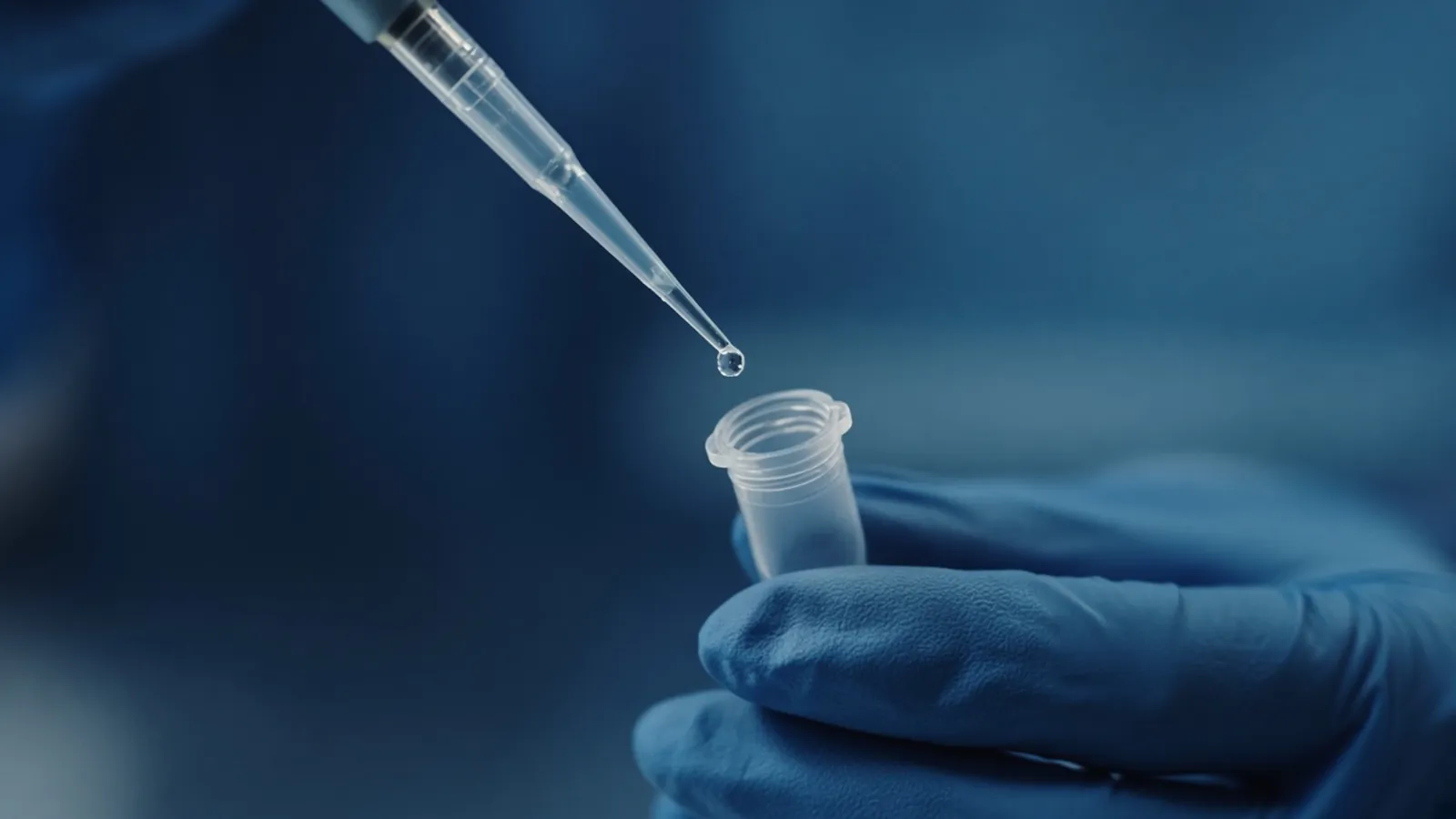
Scattered replicates are a selection problem as much as a troubleshooting problem. The method either names the pipette, the tip, the temperature, the mix, and the plate time, or the next person will blame a different cause from the one you fixed. This guide says what to specify so scatter has a short list, and how to walk that list when the points fan out. The stroke that should have been specified is in accurate micropipetting technique.
What scatter can and cannot mean
Random error is the metrology name for scatter under conditions you claim were the same. Systematic error is a shift of the whole set. Replicates that fan out are the random-error picture, possibly sitting on top of a bias you have not noticed because you only plot the spread. A specification that asks only for a tight triplicate misses a triplicate that is tight and wrong.
Causes that belong in the specification, because they are known and repeatable, are these. Technique: angle, immersion depth, first stop versus an accidental blow-out, and whether forward or reverse mode was used. Tip: family, seating, filter or plain, and a lot change. Temperature: cold enzyme and warm barrel, or a curve made in the morning and samples in the heat. Mixing: a droplet on the wall that never joined the reaction. Evaporation: open plates, especially outer wells. Calibration: a pipette whose random error is already wide on a balance. Meniscus reading: on a serological pipette used where a piston was required, the eye-level guess is the scatter.
ISO 8655-1:2022 gives the words and the user recommendations. ISO 8655-2:2022 is where pipette error limits are specified. You compare a check with the specification you claim. You do not invent a new permissible scatter because the triplicate looked sad.
Criteria the method should name before the first run
Name the pipette range so the selected volume is not stranded at the bottom of a larger instrument. Name single or multichannel, and require that a lagging channel stops the plate. Name the tip family used when the method was shown to work. A later substitution is a deviation, not a silent improvement.
Name forward pipetting for aqueous work, including pre-wet and the blow-out, or name reverse pipetting for viscous or foaming liquids. Name a maximum open time for plates and a lid. Name how mixing happens: wall touch, stir, or a set number of pipette mixes, with a warning that mixing by pipette adds cycles of error if the tip is loose.
Name the liquid temperature. If the enzyme stays on ice, say that the volume is delivered cold and that a room-temperature calibration is not the whole story. Name where replicates sit so an edge effect can be seen as a position, not as three unlucky wells. Name the balance check that puts the pipette back in service after a drop. That check's shape is in checking a pipette between calibrations.
A path when the points have already scattered
Plot or list the replicates in the order they were pipetted and in their well positions. A stripe down one row is a multichannel tip or piston. A worsening from first to last is fatigue, a warming cushion, or a reservoir running dry. Edge wells only, after a wait, are evaporation. All volumes scattered, including a same-day water series, are the pipette, the tip, or the stroke.
Then measure. Weigh a short forward series of water at the assay volume if the balance can resolve it. Use the density at the measured temperature, about 0.998 grams per millilitre near room temperature, from a table, not 1.000. If that series is wide, change the tip and repeat once. If it stays wide, remove the pipette from quantitative work. If the water series is tight, go back to mixing and evaporation and the real liquid's viscosity. Do not adjust the pipette to chase a biological triplicate.
A meniscus read on a large serological pipette, used for a small critical volume, will not tighten no matter how you service a micropipette you did not use. Move that step to a piston in range.
| Pattern in the replicates | Likely class | What the specification should already have named |
|---|---|---|
| One row of a plate, all columns | Tip seating or one channel | Stop rule for a lagging channel |
| Grows from first tube to last | Fatigue, temperature walk, or reservoir level | Block size, equilibration, reservoir depth |
| Outer wells only, after a wait | Evaporation | Lid and maximum open time |
| Only the smallest volume | Bottom of the range, film, first stop | A lower-range pipette and pre-wet |
| Tight on water, wide on the assay liquid | Viscosity, mixing, or volatility | Mode and mix, not a new water calibration |
| Wide on a millilitre graduation | Meniscus reading | The pipette class for that step |
Failure modes of the investigation itself
Deleting the outlier until the error bar fits is how scatter becomes a publication habit. The outlier was the datum that named the cause. Averaging three wells that include a bubble does the same. So does checking the pipette with a milligram balance at a volume it cannot see, then declaring the tool innocent.
A warm, dry afternoon can add evaporation on top of a mildly loose tip. Fix the tip first, then the lid. Two causes can be true. The specification should still list them separately so the next scatter is faster to read.
A specification that will still make sense next year names the balance readability required for the smallest volume and the open-plate time you are willing to defend. It names whether replicates sit adjacent or are spread across the plate on purpose to detect an edge effect. Adjacent replicates hide evaporation because they share a neighbourhood. Spread replicates expose it. Choose one plan and write it down. If a robot and a person both dispense the same map, the specification also names which wells each of them owns, so a double-filled control is not later called scatter. Record the room temperature beside that plan when the building runs hot in the afternoon, because an edge effect and a warming cushion can arrive together and the note is what separates them.
Safety and research limits
Chasing scatter with a hazardous liquid on an open balance is the wrong experiment. Use water to test the piston. Follow the institutional assessment for the real sample. This guide does not make a research triplicate into a diagnostic result. BIPM and NIST frame the measurement. They do not interpret your assay.
What to send when you specify tools for a scattered assay
Send the smallest volume, the pipette range you want instead of an oversized one, the tip family, filter needs, and the calibration document you require at that small volume. Mention plate format if evaporation is part of the history. Instruments are in the scientific instruments catalogue, tips and plates in the laboratory consumables catalogue, and the volumes go with the quotation request.
Questions from the bench
Which scatter is a pipette problem rather than a biological one?
Suspect the pipette when the scatter tracks the order of pipetting, a single channel of a multichannel, a tip lot change, or the time the plate sat open. Suspect the biology when the same scatter appears after a second person repeats the volumes with a checked pipette and a fresh tip. A gravimetric series tells these apart for water: wide random error with a disciplined stroke points at the instrument, the tip, or the balance. A tight gravimetric series points back at mixing, evaporation, or the assay itself.
Why do replicates fan out at the smallest volume in the protocol?
Relative error grows as you approach the bottom of a pipette's range, and a film or an outside droplet becomes a large fraction of a tiny aliquot. Pre-wet, watch the first stop so you do not dip into the blow-out by accident, and prefer a lower-range pipette whose middle includes the volume. Specify that lower range in the method. A 100-microlitre pipette asked for a few microlitres can look precise in a practised hand and still be the widest relative tolerance on the bench.
How does evaporation from a plate imitate bad pipetting?
Outer wells lose water faster than inner wells when a plate sits uncovered, especially in a dry or warm room. The replicates were equal at the moment of dispensing and unequal when you read them. That is a plate-timing problem. Humidity slows the loss and does not remove it. Specify a lid, a cover film, a maximum open time, and where the replicates sit. Do not retune a pipette that just passed a water check because the edge wells concentrated.
What should a method specification record so the next person can chase scatter?
Record the pipette identity and range, the tip family, forward or reverse mode, pre-wet, liquid temperature, how the mix was done, and the time the plate may stay open. Record where replicates and controls sit on the plate map. A specification that says mix well and pipette carefully cannot choose a next check. Also record the error limit you claim, which lives in the manufacturer specification or in ISO 8655-2, not in a remembered percentage.
References
Manufacturer names identify published method classes. Trademarks remain with their owners. Catalogue records on this site are independent references for enquiry. They are not a statement of inventory, distribution rights or a supply commitment. This page is educational. It is not medical advice, a diagnostic protocol or a biosafety approval.
Catalogue
Related products and categories
These links follow the subject of the article into published manufacturer references. A listing is a reference for an enquiry, not a statement of stock or distribution rights.
Continue in this cluster
Related reading
Accurate micropipetting techniqueHow an air-displacement micropipette delivers a volume, how forward pipetting uses the two stops, and why temperature belongs in the result.A glossary of liquid-handling termsSeparate the liquid-handling terms people mix up, from blow-out and pre-wetting to systematic error, tip fit, and the Z-factor.Air displacement versus positive displacementTrace under-delivery and dripping to the air cushion or the piston, and choose the pipette class that matches the liquid.