
selection guide
Vapour phase versus liquid phase storage
Liquid-phase nitrogen is colder and steadier but submerges tubes. Vapour phase avoids immersion and varies with height and lid openings.
- Author
- EVRINTH Editorial Team
- Published
- 8 October 2026
- Updated
- 8 October 2026
- Reading time
- 8 min
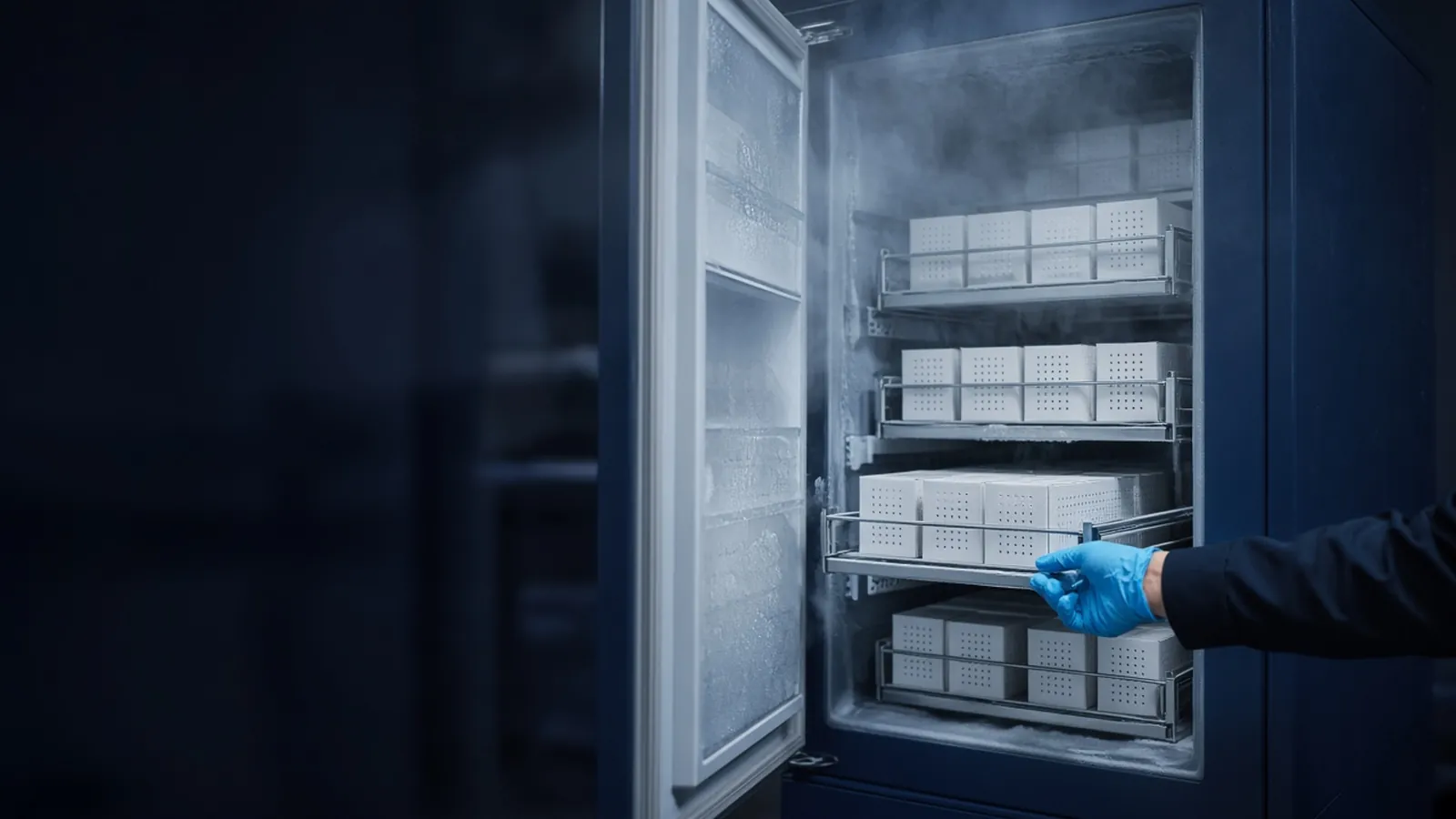
Liquid-phase storage and vapour-phase storage are two ways to use the same dewar, and they do not protect a sample for the same reason. Liquid is colder and more stable thermally, and it submerges tubes. Vapour avoids that bath, and it is warmer and more variable with height and with every lid opening. This selection guide is the criteria you write down before you ask for a vessel, a rack, and a vial. The burst mechanism that makes immersion dangerous is assumed here, not re-argued. Temperature classes above nitrogen, including the minus-80 freezer, are in storing biological samples from fridge to freezer.
Vials and racks come from the laboratory plasticware catalogue. Labels and cryogenic gloves come from laboratory consumables. The dewar is an instrument in scientific instruments. Choosing it is a laboratory procurement specification and a quotation request.
Select the phase the sample actually needs
Start from the material, not from the dewar you already own. Viable cells, and other stocks a method explicitly sends to nitrogen, are the usual reason to leave a minus-80 freezer at all. Many nucleic-acid aliquots never need this choice. Putting them in nitrogen because the dewar has a free cane adds the tube hazard without a biological benefit. If the method is satisfied by minus 80, stop on this page and use the freezer.
If the method does require nitrogen, read what it says about phase. Some culture-collection conditions are specific. The ATCC culture guides are a public example of strains arriving with storage expectations. Your SOP may choose vapour phase as a house rule to reduce immersion. That rule is honest only if someone has checked that the warmer vapour still satisfies the stability the method claims. "We prefer vapour" is a criterion. It is not, by itself, a stability result.
Criterion one: temperature and uniformity
Liquid nitrogen at atmospheric pressure boils near minus 196 °C. Below the surface, tubes share that bath. A brief lid opening does not rewrite the temperature of a submerged vial the way it rewrites the gas at the neck. Thermal stability is the real advantage of the liquid phase. Use it when the sample's evidence says the extra cold and the steadiness matter, and when the vials are rated to be there.
Vapour is the gas above that bath. It is colder at the liquid surface and warmer toward the neck. How large that gradient is depends on the dewar geometry, the liquid level, the insulation of the lid, and how often people open it. A manufacturer may publish a profile for a defined fill level. Use that profile. Do not copy a number from a different vessel and call it your top-rack temperature. This guide will not invent one.
Lid openings are part of the criterion. A dewar that is entered every hour is a different vapour space from a dewar entered once a week. If your inventory practice needs constant access, vapour-phase uniformity gets worse, and you should either change the access pattern or question whether vapour still meets the sample's need. A map of rack and position, so that each opening is short, is part of the thermal control.
Criterion two: whether the tube is allowed to be wet
Liquid phase submerges the cap. Specify only vials the manufacturer rates for liquid immersion, with seals in the condition the manufacturer describes. A vapour-only vial in the liquid is a failed selection even if the temperature looks ideal.
Vapour phase reduces that immersion. The rack design has to keep the tubes above the liquid at the highest fill the SOP allows, not only on the day the dewar was empty enough to look safe. A low-profile rack that sits in the bath when someone overfills is liquid phase with a vapour label. Ask, in the enquiry, what liquid level corresponds to the bottom of the lowest stored tube. Write that level next to the vessel.
Overfill is the branch that fails this criterion. If the level alarm says the liquid has climbed, do not retrieve tubes and carry on. Follow the manufacturer's instruction for lowering the level, and treat vials that were wetted as immersion events. Their seals need the same suspicion you would apply after deliberate liquid storage.
Criterion three: the room and the people
Both phases release nitrogen gas. Both can burn. Both can displace oxygen. A selection that ignores the room is incomplete. An oxygen monitor, ventilation, training, and filling rules are SOP items. The WHO laboratory biosafety manual and the CDC BMBL are educational references for cryogenic storage among biological laboratories. They do not replace a local risk assessment. Biosafety basics for research benches introduces that local decision. This guide does not approve a dewar for any organism.
Access frequency shows up here too. Liquid-phase retrieval drips and splashes. Vapour-phase retrieval is drier and still cold. People who are unwilling to wear a face shield will defeat either design. Specify the personal equipment in the same document as the phase, and do not describe it as optional colour.
| Criterion | Favours liquid phase | Favours vapour phase | Ask this before you decide |
|---|---|---|---|
| Temperature | Colder bath, steadier below the surface | Warmer, stratified from surface to neck | Does the method require the liquid temperature, or only "nitrogen"? |
| Uniformity | Shared by submerged vials | Depends on height, fill, and lid openings | What does the dewar manual claim at the top rack? |
| Tube integrity | Only with vials rated for immersion | Avoids a bath if racks stay above the liquid | Are our current vials vapour-only? |
| Overfill | The normal condition | A failure that quietly becomes liquid | Where is the level sensor relative to the lowest tube? |
| People | Splash and drip on retrieval | Still requires cryogenic gloves and a shield | Who is trained, and who may fill the vessel? |
A selection that fails in the middle of the vessel
Consider a dewar used in vapour phase, with a popular top rack and a neglected bottom rack. The top is opened often, so those vials see repeated warm spikes. The bottom rack is close to the liquid and stays colder, until a delivery overfills the vessel and the bottom boxes wet their caps. You now have two storage conditions and a false belief that you have one. The selection repair is to measure, or to take the manufacturer's profile, at both heights, to set a maximum liquid level, and to stop treating "in the dewar" as a single address on the freezer map.
The branch if you cannot keep the level honest: do not store at the bottom. Leave a physical gap the SOP defines, even though it wastes space. Space is cheaper than a wetted vapour-only vial. If the sample truly needs liquid, change the SOP and the vial rating together, on purpose, with the safety office. Do not drift into liquid phase one overfill at a time.
Dry ice does not belong in this selection. It is a different substance and a shipping coolant. Dry ice packing for sample shipments is the companion when the stock has to travel. A dewar is not a shipper, and a shipper is not a storage phase.
Alarms and records that make the choice real
A phase you cannot see will not stay chosen. Specify a level indicator and a high-temperature alarm. Decide who is called. A vapour-phase dewar that runs dry does not fail like a freezer that loses power. The temperature rises as the last liquid disappears, and the top racks feel it first. A liquid-phase dewar that runs low may uncover the upper vials and create an unplanned vapour zone. The response differs. Write both.
Inventory control is the other record. Position includes height, because height is temperature in the vapour. "Dewar 2, cane C" is incomplete if cane C can be seated at two depths. Log lid openings if uniformity is part of your claim. You do not need a novel for each visit. You need to notice a pattern of hourly openings that the selection guide assumed would be weekly.
Public cloning methods on Addgene often stop at "store the glycerol stock in the freezer" or name nitrogen for a particular library. Read the sentence you were given. Selecting liquid phase for a plasmid stock the method keeps at minus 80 is not extra care. It is a different hazard.
What to put in the enquiry
Name the sample class and the phase the SOP has already chosen. Ask for the dewar manual's temperature expectation at the highest and lowest storage position, at a stated fill. Ask for racks that cannot be lowered into the liquid if you have chosen vapour. Ask for vials rated for that same phase. Ask for the level alarm and the temperature alarm as separate lines. State that filling, oxygen monitoring, and biosafety classification stay with your institution.
If the reply offers a single "cryogenic storage system" without a phase, send it back. The selection is the phase. Everything else is hardware that either supports that sentence or contradicts it. On delivery, compare the rack position with the liquid level before the first unique stock goes in. A commissioning check with dummy vials is the right place to discover that the bottom box gets wet.
Questions from the bench
Which phase is colder?
The liquid is colder. Liquid nitrogen sits near its boiling point, about minus 196 °C, and the bath below the surface is thermally steady. Vapour above that liquid is still extremely cold, but it is warmer than the liquid and it changes with height, with how recently the lid was opened, and with the liquid level. Follow the dewar manufacturer for the temperatures their geometry actually produces.
If vapour is warmer, why do laboratories choose it?
Because immersion is a tube hazard. Liquid can enter a cryovial whose seal leaks, and that liquid can burst the tube on warming. Vapour-phase racks are meant to keep tubes out of the bath. You accept a warmer, less uniform temperature in exchange. The choice is only valid if your samples and your SOP tolerate that warmer band. Do not assume every cell stock is indifferent to the difference.
Can I ignore the dewar manual if our SOP prefers a phase?
No. The manufacturer defines how that vessel is filled, where the trays sit, and which sensors mean the liquid has climbed into the stored tubes. Your SOP chooses the phase inside those limits. An SOP that contradicts the manual is a different risk assessment, and it needs the safety office, not a quiet local habit.
What lines belong on a phase-selection enquiry?
State the sample class, the phase your SOP requires, the vial rating that matches it, the rack positions relative to the liquid, and the alarm for low level and for high temperature. Ask the dewar maker's stated temperature range at the top and bottom of the inventory. Send that as a quotation request so the reply can be checked against the manual.
References
Manufacturer names identify published method classes. Trademarks remain with their owners. Catalogue records on this site are independent references for enquiry. They are not a statement of inventory, distribution rights or a supply commitment. This page is educational. It is not medical advice, a diagnostic protocol or a biosafety approval.
Catalogue
Related products and categories
These links follow the subject of the article into published manufacturer references. A listing is a reference for an enquiry, not a statement of stock or distribution rights.
Continue in this cluster
Related reading
Storing biological samples from fridge to freezerFridge, minus-20, minus-80 and nitrogen storage slow different kinds of damage. A warm box is a quarantine decision, not a hope.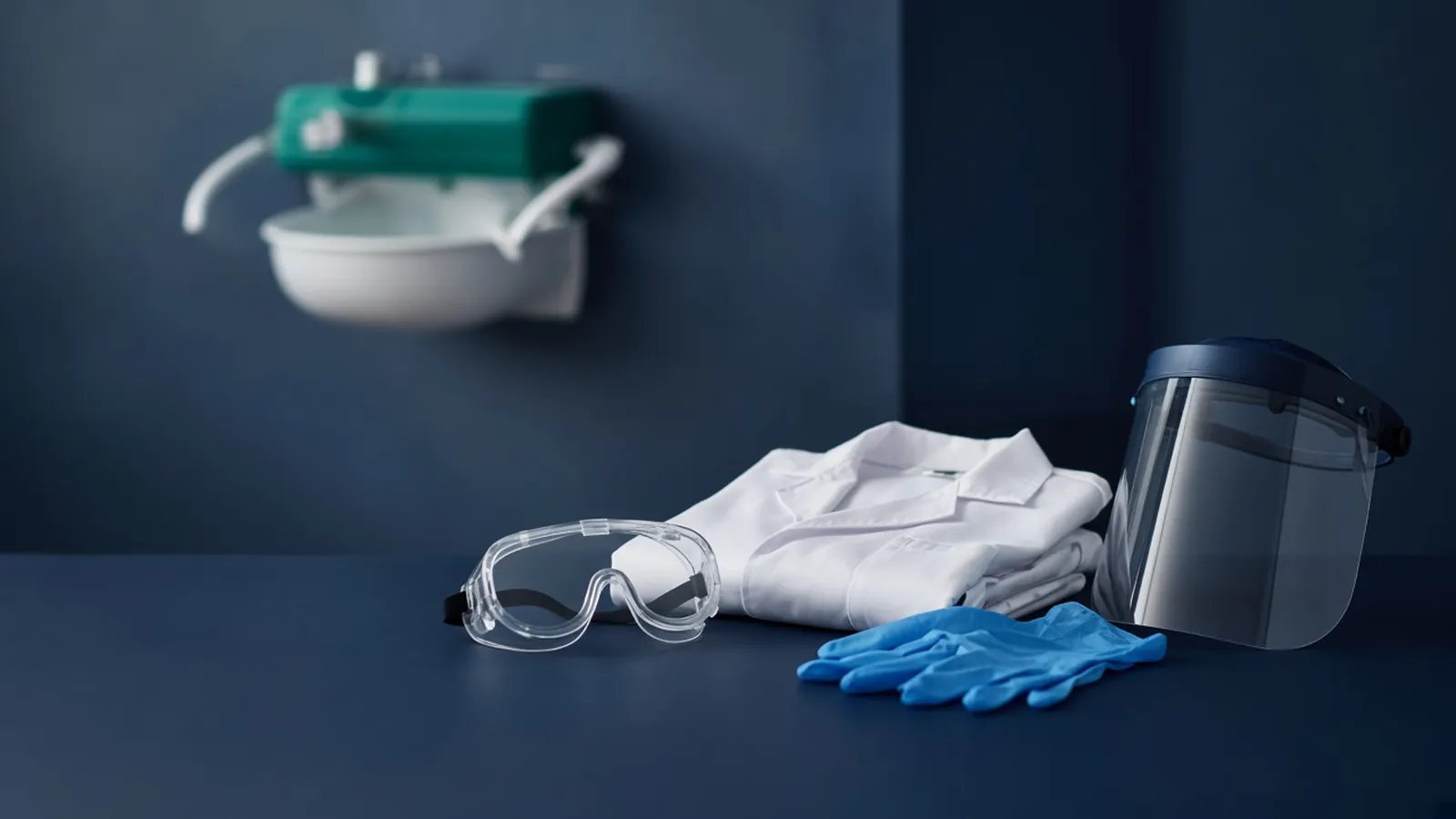 Biosafety basics for research benchesResearch-bench biosafety is a stack of barriers chosen by a risk assessment. This page explains the stack. It does not approve the work.A glossary of cold-chain termsSetpoint is not air temperature, and a phase-change pack is not every coolant. Compare the cold-chain pairs labs treat as one word.