
protocol overview
Ethidium bromide and safer dye choices still need care
Treat ethidium bromide as a mutagenic intercalator, and read the SDS for a dye sold as safer. Waste handling stays a local decision.
- Author
- EVRINTH Editorial Team
- Published
- 8 October 2026
- Updated
- 8 October 2026
- Reading time
- 11 min
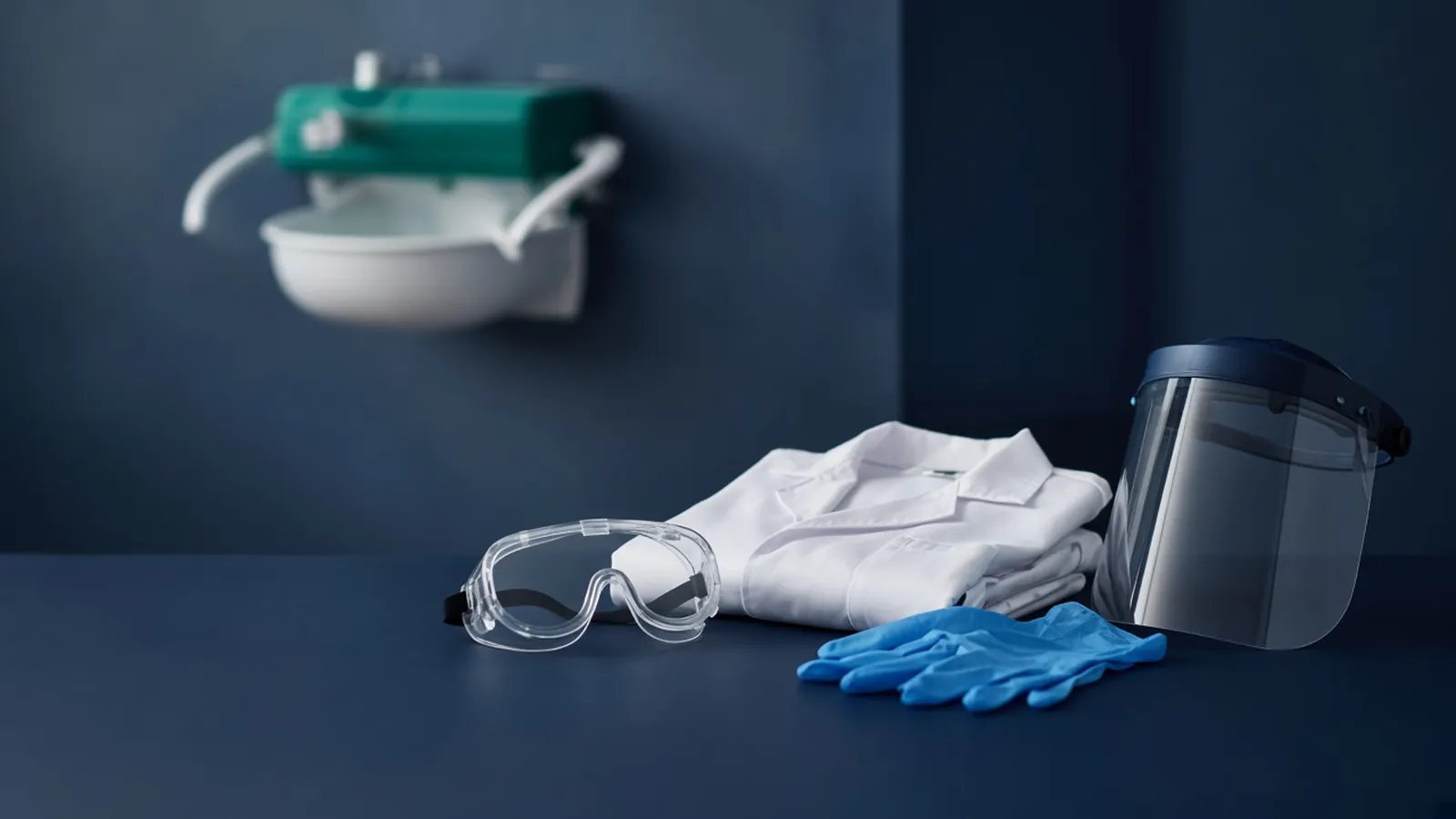
The gel is not the hazard decision. The stain is. Ethidium bromide is used because it slides between the bases of nucleic acids and fluoresces when an ultraviolet lamp excites it. That binding is why the usual hazard framing calls it a mutagenic intercalator, and why laboratories still give it a designated area, a waste rule, and gloves. A dye sold as safer can be a better choice on the evidence in its safety data sheet. It does not become non-hazardous because the label says safer. The waste category remains a local decision.
How a band is produced and what it does not prove is in agarose gel electrophoresis for DNA. What the lamp does to eyes, skin, and the DNA you hope to clone is in UV light on a transilluminator. The bench context is biosafety basics for research benches. Gloves, trays, and waste containers are classes in laboratory consumables. A teaching laboratory specifying a stain can use academic research and a quotation request.
Intercalation, in plain language
Ethidium bromide is a planar molecule that inserts between DNA base pairs. The complex fluoresces under ultraviolet light, which is why a band becomes visible. The same insertion is the reason mutagenicity assays have long paid attention to it: an intercalator can disturb replication. Public chemical records, including the PubChem summary for ethidium bromide, are where you confirm identity and look up the hazard statements the compilers list. Those statements are not a local waste permit. They are a reason to open the safety data sheet that arrived with your bottle and the chemical hygiene rule that covers your room.
Where the OSHA laboratory standard applies, ethidium bromide is one of the hazardous chemicals the chemical hygiene plan has to be able to talk about. Where a different national system applies, the local plan still has to name it. "Everyone uses it" is not a plan. The WHO laboratory biosafety manual and the CDC BMBL matter when the gel is part of biological work. They do not replace the chemical sheet. A non-infectious plasmid prep can still be a chemical hygiene problem because of the stain.
So-called safer dyes are a mixed class. Some are other DNA-binding fluorophores marketed with data that, in the manufacturer's hands, showed lower mutagenicity in a stated assay. Trade names stay with their owners. What you need from the seller is the safety data sheet for the exact product, the excitation light it needs, and any waste statement the manufacturer is willing to put in writing. Your institution then decides whether that statement changes the category. A slide that says "non-toxic" is not the decision. Some alternative dyes still bind nucleic acids. Some need the same ultraviolet lamp. Some are accepted for ordinary disposal only under conditions you do not have. Read the sheet before you pour the gel, not after the buffer tank is pink.
Where the stain goes changes the waste
Protocols put the dye in three places, and the choice is a waste decision as much as a sensitivity decision.
In the gel, a small amount of stain is cast with the agarose. The gel itself is contaminated, and some dye leaches into the running buffer. You have a solid and a liquid to account for.
In the running buffer, you contaminate a larger volume for the sake of a stain that is already in the tank. The band may look fine. The tank contents are now part of the waste, including the next time someone tops the buffer up and spreads the contamination into a second bottle.
As a post-stain, you run the gel without dye and then bathe it. The bath can be a smaller, more concentrated waste, and the running buffer may stay outside the stain rule. The gel is still contaminated. Post-staining also tempts people to leave a bath uncovered on a shared bench. The bath is a chemical tray. It belongs in the area the assessment named, labelled, and covered when you are not using it.
None of these is a microlitre recipe. The method you are following names the concentration. Your job in this overview is to notice which liquids and solids became contaminated, and to keep them on the path assigned to that stain. Switching to a safer dye does not erase the question. It asks the question again with a new sheet.
A spill of stain solution is a chemical spill of a mutagenic intercalator, or of whatever the alternative dye's sheet says. Identity still comes first. Do not wipe ethidium bromide with the biological disinfectant poster unless the chemical plan says that is the response. Absorbent, gloves, and the waste bag are the ones named for this chemical. The general spill logic is in spill cleanup starts with the substance identity. This page does not add a decontamination recipe. Some laboratories use commercial destaining bags or a chemical treatment they have validated and accepted. Those methods are valid only where the institution adopted them, and the residue is still handled as the waste rule says. A blog procedure with bleach and a drain is not an adoption.
Imaging is part of the same session
Ethidium bromide's usual lamp is ultraviolet. The shield and the interlock protect your eyes and skin. The same light nicks the DNA if you leave the band on the lamp while you find a blade. If you are excising a fragment to clone, the ultraviolet page and the cloning checkpoints belong in the same afternoon. The electrophoresis page tells you whether the band is even the right size to cut. It does not make the cut safe, and it does not make the fragment intact.
Alternative dyes that work with blue light remove the ultraviolet exposure when the instrument and the dye really match. They do not remove the chemical. They do not remove the need to know whether the blue light is intense enough to matter to the eyes under the instrument's own instructions. Specify the pair, dye and imager, in the assessment. Do not put an ethidium gel on a blue box and conclude the chemical became safer because the box is blue. The dye did not change.
Gloves for the session match the chemical, not the habit of the PCR bench. Change them when they are stained. A pink finger means the next door handle is a spill. Wash after the gloves come off. Eye protection is whatever the assessment names for a splash of the stock solution, which is more concentrated than the gel. The stock bottle is the step where a face splash is most credible. Dilute stocks are prepared in the chemical arrangement the plan names, not over a notebook.
The branch when the waste path is missing
You finish the gel and realise nobody can say whether stained gels are collected, treated, or refused by the contractor. The branch is to stop. Bag and label the gel, the buffer, and the tips as "stain waste, category unconfirmed," and put them in the holding place the laboratory uses for undecided chemical waste. Do not dump the buffer. Do not autoclave the gel to make it feel addressed. Steam is the wrong kind of finishing step unless the waste assessment has said this load is a steam load, and even then autoclaves and what sterilisation does not do still applies. A melted gel can still be a chemical waste.
The second branch is a dye substitution halfway through a project. The old ethidium waste and the new dye waste may be different categories. Keep the containers separate and labelled with the product name, not with the word "stain." A shared carboy is how a careful substitution is undone on Fridays.
The third branch is a faint band. People turn the lamp up, remove the shield, and hold the gel closer. That choice damages eyes and DNA together. If the band is too faint, the fix is in the loading, the percentage, or the stain method, which is the electrophoresis article's territory. It is not a shield left open.
| Choice | What it changes | What it does not cancel |
|---|---|---|
| Ethidium bromide in the gel | Solid gel plus some buffer contamination | The mutagen framing, the waste rule, the ultraviolet lamp |
| Ethidium bromide in the buffer | A larger volume of liquid waste | Any sense that dilution made a drain disposal acceptable |
| Post-stain bath | Waste concentrated in a bath. Running buffer may stay cleaner | The contaminated gel, and the open tray as a chemical |
| A dye marketed as safer | The safety data sheet you must read, and possibly the lamp | Automatic non-hazard status. The local waste category remains |
| Blue-light imaging | Ultraviolet exposure, when the dye truly matches that light | The chemical hazard of whichever dye is in the gel |
| Unclear waste rule | The session stops at a labelled holding container | The temptation to autoclave or to pour |
Failure modes
The stock bottle is unlabelled after a decant, and the working solution is a stronger concentration than the gel method assumed. You have both a chemistry problem and a waste problem. Label the concentration when you make the working solution. A faded pink beaker is not a label.
People photocopy a vendor's "safe stain" flyer into the risk assessment and skip the safety data sheet. The flyer is advertising. The sheet is the document. File the sheet, and write the waste category in the assessment in your institution's words. That is the same standard as any other local assessment: the product claim does not fill the fields.
A glove policy that allows ethanol-wetted gloves to continue from the stain tray to the keyboard spreads the dye. Change gloves at the edge of the area. If the keyboard is already speckled, it is contaminated equipment under the chemical plan, not a cleaning tip from this overview.
Limits
This overview does not approve a stain, a drain disposal, or a biosafety level. It is not medical advice about a mutagen exposure. Authorisation and waste classification sit with the institution. If stock solution reaches skin or eyes, the safety data sheet and the emergency plan govern. Do not continue the gel while you decide whether the exposure "counts."
What to specify
On a quotation request, name the stain class, ask for the safety data sheet, and ask which light source the manufacturer specifies. Say whether you need the dye for in-gel, in-buffer, or post-stain use, without asking the seller to pick a waste bin. Ask for containers and trays compatible with the solvent the stain is supplied in. If you are moving away from ethidium bromide, say so, and keep the old waste stream in the enquiry as a separate line so the two products are not shipped as interchangeable. The seller can describe the product. The laboratory decides the hazard category and whether the work may proceed.
Choose the stain, contain it, image it, and stop if the waste path is unclear
- 01Choose the stain before the gel is pouredRead the safety data sheet and the laboratory waste rule for ethidium bromide or for the alternative dye. Decide whether the stain will be in the gel, in the buffer, or used after the run. Each choice changes how much contaminated liquid you create.
- 02Keep stain, gel, and buffer on the assigned pathUse the bench area, the gloves, and the containers the assessment named. Do not carry a stained gel across the laboratory on an unlabelled tray. If a drop leaves the area, treat it as a chemical spill and open the plan for that substance.
- 03Image with the controls the lamp requiresIf the dye needs ultraviolet light, use the shield and the interlock. Over-exposure also damages the DNA you may want to clone. If the laboratory has accepted a blue-light system for that dye, use that system. Do not defeat a shield to see a faint band.
- 04Stop when the waste category is unclearGels, buffers, and tips are waste only on the stream the institution assigned. Do not pour staining buffer down a drain because a dye was marketed as safer. Ask, and hold the material in a closed, labelled container until the answer exists.
Questions from the bench
Is ethidium bromide always handled as a mutagen?
Laboratories treat it as a mutagenic intercalator in ordinary chemical hygiene, because it binds nucleic acids and it has a long history in mutagenicity testing. Your institution's hazard classification and waste category are the rules you follow. This page does not reclassify the chemical, and it does not say a small gel is exempt.
If the bottle says the dye is safer, can the waste go in the ordinary bin?
Not on the strength of the marketing word. So-called safer dyes are still chemicals, many of them still bind DNA, and their safety data sheets do not all say the same thing. The waste decision is local. Read the sheet, then follow the category your institution assigned to that named product.
Should stained gels be autoclaved?
Only if the waste assessment names that load. Steam does not automatically destroy a chemical hazard, and an autoclave is the wrong place for a waste the chemical hygiene plan collects separately. The autoclave article explains what steam does not do. When in doubt, hold the gel and ask. Do not run a cycle to make an awkward item feel finished.
Does the agarose page tell me which stain to use?
No. The agarose article is about how percentage, buffer, and a ladder turn a sample into a band, and what that band does not prove. Stain choice, ultraviolet exposure, and waste are separate decisions. Use the gel page for the electrophoresis. Use this page for the chemical decision, and the ultraviolet page if the lamp is the hazard in front of you.
References
Manufacturer names identify published method classes. Trademarks remain with their owners. Catalogue records on this site are independent references for enquiry. They are not a statement of inventory, distribution rights or a supply commitment. This page is educational. It is not medical advice, a diagnostic protocol or a biosafety approval.
Catalogue
Related products and categories
These links follow the subject of the article into published manufacturer references. A listing is a reference for an enquiry, not a statement of stock or distribution rights.
Continue in this cluster
Related reading
Biosafety basics for research benchesResearch-bench biosafety is a stack of barriers chosen by a risk assessment. This page explains the stack. It does not approve the work.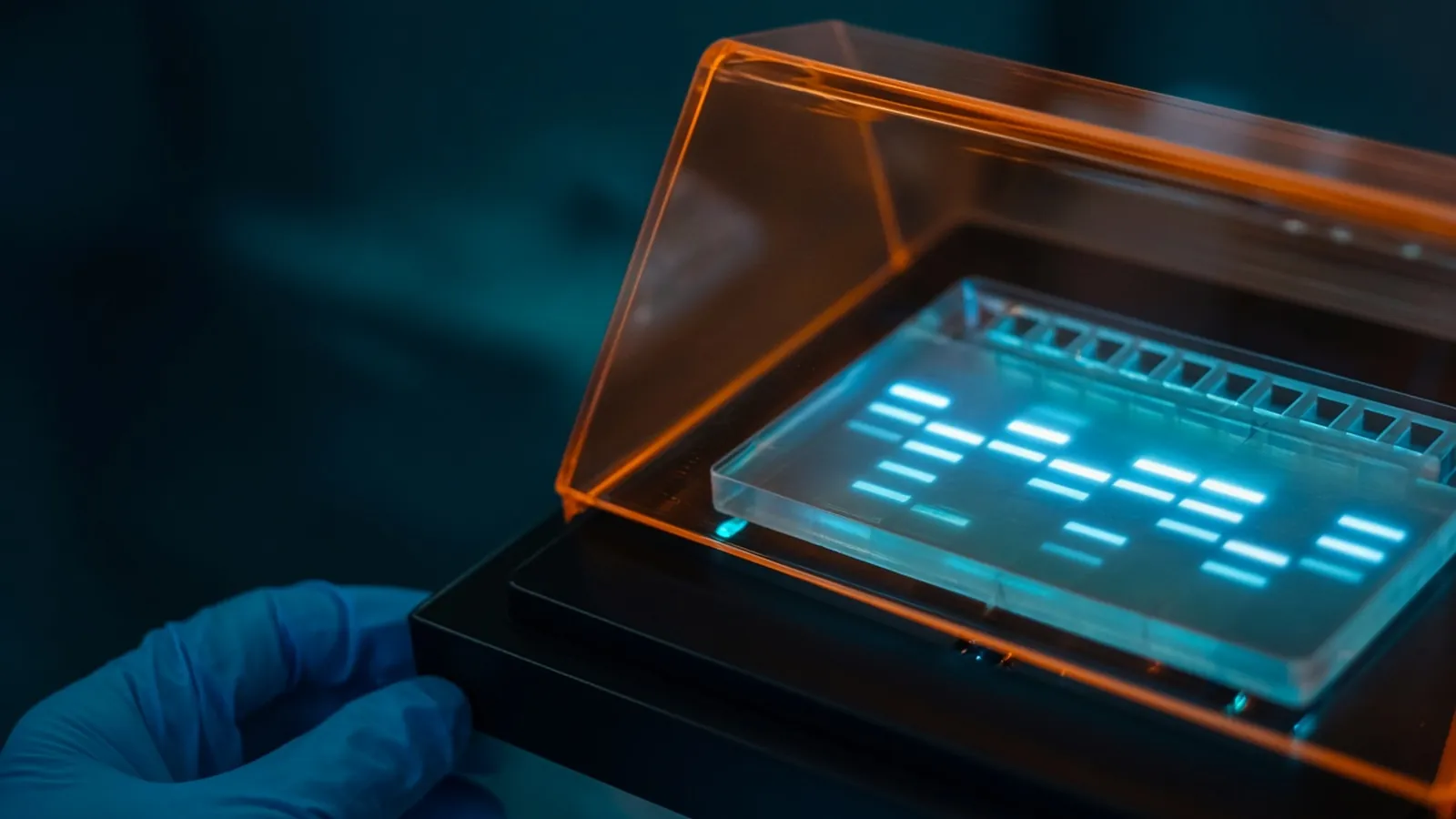 Agarose gel electrophoresis for DNAHow agarose percentage, buffer and a size ladder turn a DNA sample into a band, and what that band does and does not prove about identity.A glossary of biosafety termsPairs that share a bench still do different jobs. Use this comparison to choose the right word for a cabinet, a chemical, a level, or a control.