
protocol overview
PPE that matches the task
Match the coat, the gloves, and the eye protection to the route a splash or a contamination would take. Extra layers are not automatically safer.
- Author
- EVRINTH Editorial Team
- Published
- 8 October 2026
- Updated
- 8 October 2026
- Reading time
- 9 min
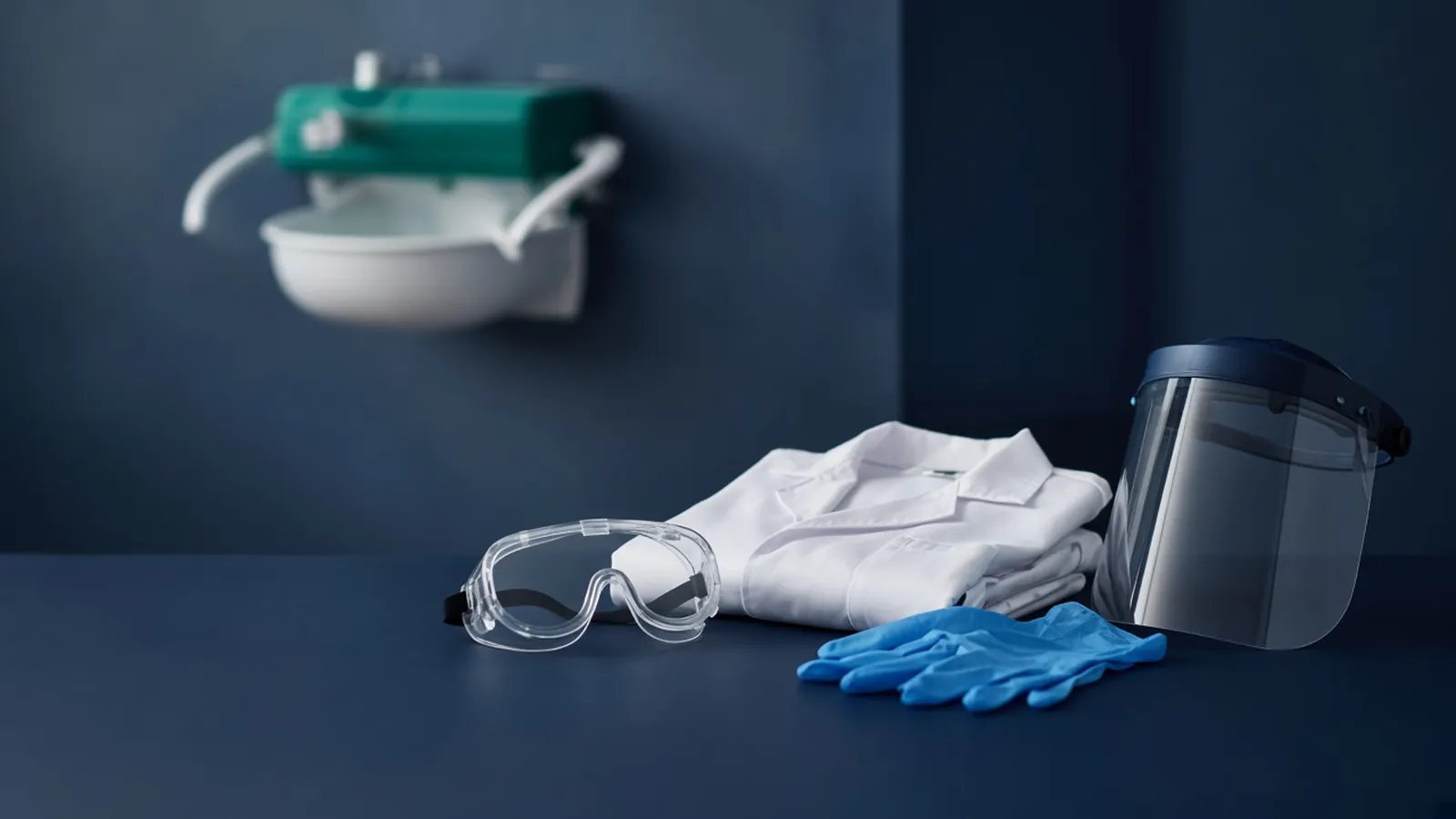
A fastened lab coat, a pair of gloves, and eye protection are three different answers. One keeps a splash off your clothes. One keeps material off your hands. One keeps a splash out of your eyes. Wearing all three can be exactly what the assessment requires. Wearing all three because a corridor poster shows them is not a method. Personal protective equipment matches the task when you can point from a route of exposure to the item that interrupts it, and when you can still do the work cleanly.
The stack this choice sits inside is described in biosafety basics for research benches. Coats, gloves, and eyewear are product classes in laboratory consumables. A laboratory that is writing the choice into a teaching specification can discuss it through academic research and send the task description with a quotation request. The quotation does not decide the assessment.
Routes, not a uniform
Start from the way the material would reach a person if the step went wrong. A splash onto the bench reaches clothing and, if you are close, the eyes and the mouth. A contaminated lid reaches the hands, then the pen, the timer, and the door. An aerosol from a sonicator or an open centrifuge bucket is an inhalation and a surface problem that a coat does not solve. A volatile solvent is a vapour problem. Gloves do not filter it.
Write the route in the same sentence as the step. "Opening phenol" is not yet a route. "Pouring phenol on the open bench, with a splash toward the face and a vapour in the breathing zone" is a route, and it immediately shows that eye protection and a coat are incomplete without a fume hood. "Resuspending a cloning strain in buffer with a micropipette" is a different route. The assessment may still want a coat and gloves. It may not want the same eyewear you use for the phenol, and it may want a cabinet if the step generates an aerosol. The organism name does not pick the garment. The step does.
The WHO laboratory biosafety manual and the CDC BMBL both treat personal protective equipment as one layer inside a larger set of practices and facilities. The OSHA laboratory standard, where it applies, puts engineering controls ahead of protective equipment for hazardous chemicals. That order is the point. If the route is a vapour, specify the hood. Then specify the clothing that handles the splash the hood does not catch.
Classes of coat, glove, and eye protection
A lab coat is a barrier for clothing and a layer you can remove when you leave the room. It works when it is fastened, when the cuffs do not drag through the work, and when it stays in the laboratory. A coat worn open is a cape. A coat taken to the canteen is a transport route. Fluid-resistant coats and ordinary cotton coats are different classes. The assessment names which splash they are expected to hold. Neither coat is chemical armour against a large pour of solvent.
Gloves are a hand barrier for the time they stay intact and for the chemicals they were chosen for. Nitrile and latex are material choices: solvent resistance on one side, allergy on the other. Change them when they are contaminated, torn, or slick. They are not a substitute for washing your hands after they come off. That failure mode has its own page, gloves are not a substitute for handwashing. Do not invent a breakthrough time for a chemical you have not looked up on the manufacturer's chart.
Eye protection has its own geometry. Safety glasses, goggles, and a face shield stop different splash paths. The comparison is in eye protection and a face shield. For this overview, the rule is enough: match the seal to the splash you can actually produce, and know where the eyewash is before you unscrew the cap.
Hearing protection, cryogenic gloves, and heat-resistant gloves are further classes for further tasks. A cryogenic glove is a poor glove for fine pipetting. A nitrile examination glove is a poor glove for a minus-eighty rack. Task first, then the item.
A session, and the branch when the task changes
Before anything is opened, read the assessment's PPE line against today's method. Lay out the coat, the eyewear, and the glove material it names. Check that the eyewash path is clear. Check that the spill plan for today's substances is the plan posted in the room, not a plan for last month's solvent.
Put the coat on and fasten it. Put eye protection on before the gloves, so you are not adjusting a strap with contaminated hands later. Put gloves on clean, dry hands. If you are working in a cabinet, follow that cabinet's order for what enters the workspace, as described in working inside a biosafety cabinet.
During the work, change gloves when you move from a dirty step to a clean one, and when a glove is splashed. Do not disinfect a grossly contaminated glove and keep typing. Remove the glove and wash. If a splash reaches the eyewear, stop, use the eyewash as the posted instruction says, and tell the person the plan names. This page is not the treatment.
The branch that matters most is a change of task in the middle of the afternoon. You finish an aqueous plasmid prep and someone asks you to pour the phenol waste, or to sonicate the culture you had only meant to plate. The PPE that was honest for the micropipette is not automatically honest for the new route. Stop. Re-read the assessment. If the new step is not on it, the step waits. Adding a face shield "just in case" while you stay on the open bench with a volatile chemical is how extra PPE imitates a control it does not provide.
When you leave, remove gloves and wash before you touch the door, the phone, or your face. Leave the coat in the laboratory. Eyewear stays with the task, not on your forehead in the corridor. Waste, including disposable PPE the plan calls contaminated, goes into the stream the assessment named. Steam sterilisation of that waste, if it is even appropriate, has the limits in autoclaves and what sterilisation does not do.
| Route | Item that answers it | Failure when the item is wrong |
|---|---|---|
| Splash onto clothing | Fastened coat of the resistance the assessment named | An open coat, or a coat that leaves the room, carries the splash with you |
| Hands | Gloves of a suitable material, changed when contaminated | The wrong polymer, or gloves worn to the door, moves the material onward |
| Eyes and face | Eyewear matched to the splash geometry | Glasses for a full-face splash, or a shield used instead of sealed goggles |
| Vapour | Engineering control, usually a fume hood | Gloves and a coat leave the inhalation route open |
| Aerosol from a procedure | The cabinet or other containment the assessment named | A coat on the open bench does not contain the aerosol |
When the chemical and the organism disagree
Biological and chemical hazards share a bench more often than the PPE poster admits. A plasmid prep can include ethanol, isopropanol, or phenol. A staining bath can include a mutagen. The gloves and the eyewear have to satisfy the harsher route, not the route you find more familiar. If no single glove material covers both steps, split the steps and change gloves, rather than compromising on a glove that is traditional for the organism and wrong for the solvent.
Spill response is the stress test. The equipment you wore to pipet may be too little, or the wrong material, for cleaning up the bottle you dropped. The plan should already name that difference. If it does not, the gap belongs in the assessment before the bottle is opened, which is the argument of risk assessment is a local document. Standing over a spill while you invent a costume is the failure.
Institutional limits
This overview is not a biosafety approval and not a medical instruction. It does not tell you that your work is safe because you own a coat. Authorisation sits with the institution. Follow the assessment you were given, and stop when the task leaves it. An exposure is reported the way the institution says, to the people it names. Nothing here treats an injury or tells you to stay at the bench.
Warm rooms
Heat and humidity make honest PPE feel optional. People unfasten coats, park goggles on their hair, and delay glove changes because their hands are wet with sweat. Sweat inside a glove is not, by itself, proof that a chemical broke through. It is a reason technique collapses. The assessment for a warm laboratory should say what is required when the room is hot, and it should prefer controls that people can keep using, such as a hood and a realistic glove-change rhythm, over a costume that comes off at the first uncomfortable hour. Fogging of eyewear is a specification problem, discussed with the eye-protection comparison, not a reason to work unprotected.
What to put in an enquiry
Name the task, the route, and the chemical class the institution allows you to share. Ask for coat type, glove polymer and thickness class, and eyewear type as separate lines, because they answer separate routes. Say whether cryogenic or heat-resistant hand protection is a different task. Send that with a quotation request. Ask for the manufacturer's chemical-resistance information for any named solvent. Do not ask a seller to certify that a bundle of PPE makes the protocol acceptable.
Choose personal protective equipment from the route, then stop if the task changes
- 01Name the route before you name the garmentWrite whether the credible contact is a splash to clothing, contamination of the hands, a splash to the eyes, or a vapour the lungs would inhale. Personal protective equipment answers the first three. A vapour needs a hood or another engineering control.
- 02Match material and design to that route and to the chemicalChoose coat, glove, and eye protection for the route the assessment named, including chemical compatibility. A glove that resists the organism's buffer may still fail against the solvent in the lysis step.
- 03Confirm you can still see and handle the workPut the items on and check fogging, grip, and reach before the tube is open. If the layers stop you working cleanly, the assessment needs a different control, not a person who peeks around the eyewear.
- 04Reopen the choice when the task changesA new chemical, a larger volume, a sharp, or a move from a closed tube to an aerosol is a new route. Stop and follow the revised assessment. Do not keep yesterday's PPE list because it was already on the bench.
Questions from the bench
Is more personal protective equipment always safer?
No. Each item answers a route. Extra layers that fog the eyewear, reduce grip, or make glove changes sloppy can increase the chance of a spill. The safer set is the set that matches the task and still lets the person work in control.
Does a lab coat replace a biosafety cabinet?
No. A coat keeps material off clothing. A certified biosafety cabinet, when the assessment calls for one, is an engineering control for aerosols. They sit in different places in the stack described in the biosafety basics article. Wearing a coat on the open bench does not turn the bench into a cabinet.
Should the same PPE be worn for the organism and for the solvent?
Only if both routes and both materials were in the assessment and the items suit both. Nitrile that is reasonable for an aqueous culture can be a poor choice for some solvents. Eye protection that is enough for a small buffer splash may be too open for a concentrated acid. Read the safety data sheet beside the biological assessment.
Where does spill response fit with PPE?
The spill plan names the protective equipment for cleanup, which may differ from the equipment you wore to do the work. A small splash on a glove is a glove change and a wash. A spill on the floor is a different task, with its own entry criteria. Do not invent that second set at the moment the bottle breaks.
References
Manufacturer names identify published method classes. Trademarks remain with their owners. Catalogue records on this site are independent references for enquiry. They are not a statement of inventory, distribution rights or a supply commitment. This page is educational. It is not medical advice, a diagnostic protocol or a biosafety approval.
Catalogue
Related products and categories
These links follow the subject of the article into published manufacturer references. A listing is a reference for an enquiry, not a statement of stock or distribution rights.
Continue in this cluster
Related reading
Biosafety basics for research benchesResearch-bench biosafety is a stack of barriers chosen by a risk assessment. This page explains the stack. It does not approve the work.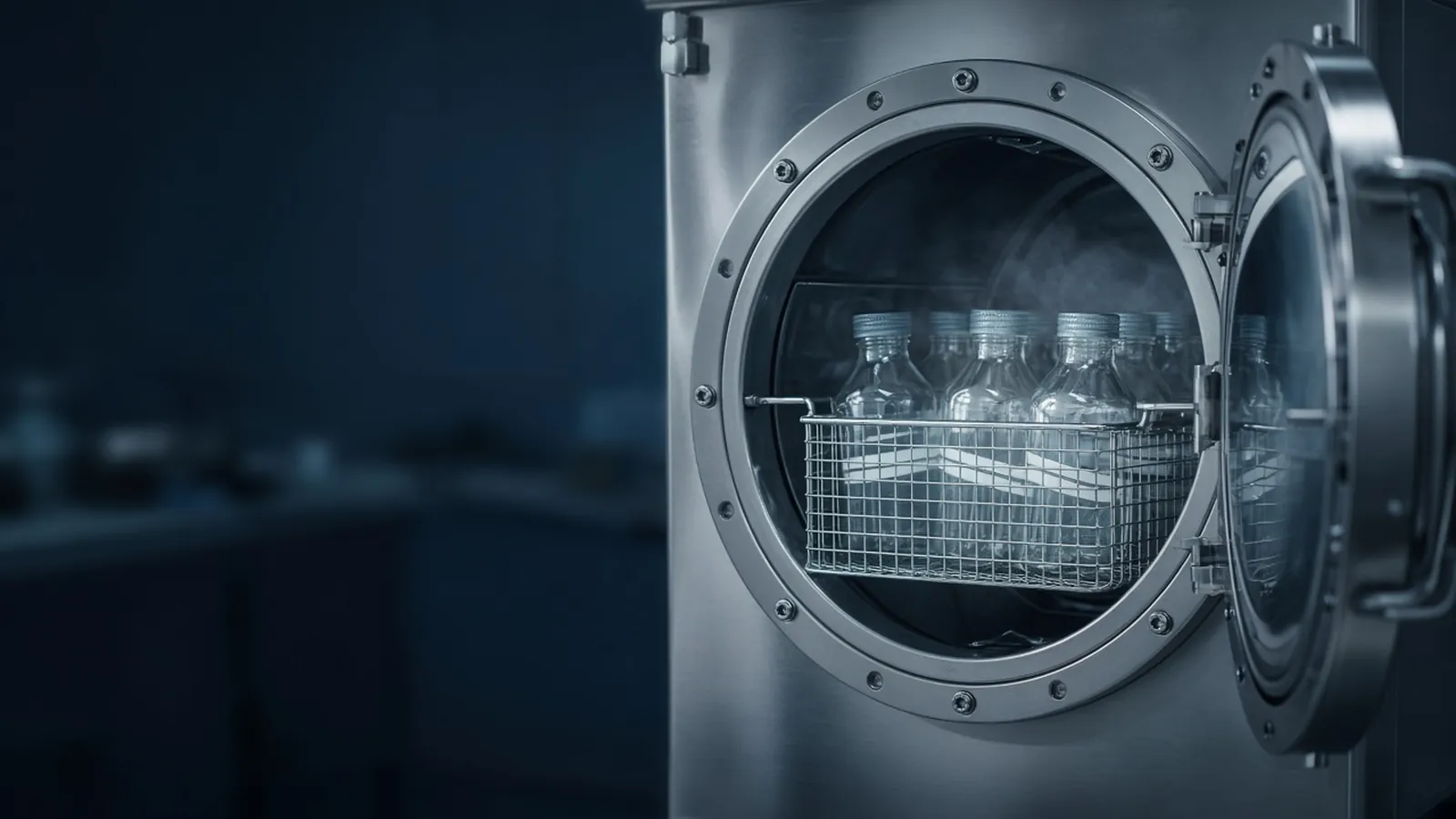 Autoclaves and what sterilisation does not doSteam sterilisation holds a cleaned load at temperature. It does not wash, remove endotoxin, or prove sterility because the tape changed colour.A glossary of biosafety termsPairs that share a bench still do different jobs. Use this comparison to choose the right word for a cabinet, a chemical, a level, or a control.