
application
Sharps and glass pasteur pipettes
A glass Pasteur pipette is a sharp in the middle of an ordinary transfer. Substitution and the waste stream are institutional decisions.
- Author
- EVRINTH Editorial Team
- Published
- 8 October 2026
- Updated
- 8 October 2026
- Reading time
- 9 min
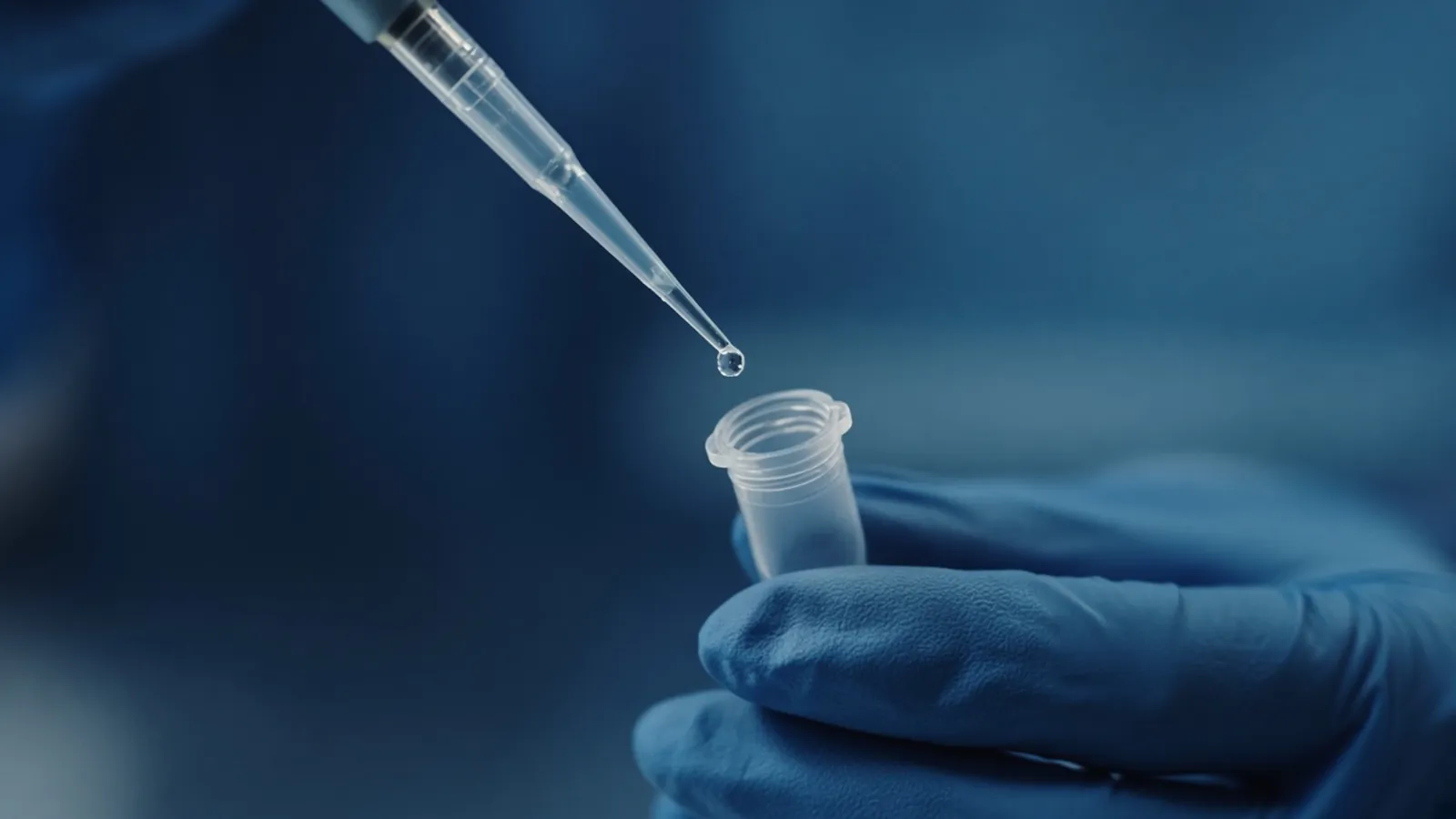
The pellet is in the tube, the supernatant has to come off, and a glass Pasteur pipette is already in the drawer with a rubber bulb. The transfer looks too ordinary to be a sharps decision. The pipette is glass. It breaks. The tip punctures a bag whether or not anyone fitted a needle that afternoon. This page follows that one task, then the needles and blades that belong in the same container, and stops where the institution's waste stream takes over.
The photograph shows a micropipette tip and a gloved hand, which is one substitute when the volume has to be measured. How that micropipette is used well is in accurate micropipetting technique. When plastic is the right vessel class at all is in when to use plastic tubes, tips, and plates. The biosafety frame is biosafety basics for research benches. Pipettes, tips, and transfer plastics are classes in laboratory consumables. A teaching lab can specify them through academic research and a quotation request.
The task in front of you
You have a small culture, a spin is finished, and you need the liquid off the cells or off a nucleic-acid pellet. The traditional tool is a glass Pasteur pipette: a long, cheap, disposable glass tube drawn to a fine tip, driven by a rubber bulb. It reaches the bottom of a tube. It also snaps when it knocks the rim, and the tip is small enough to hide in a palm. People set the used pipette on a paper towel "for a second," and the towel goes into a bag, and the bag is then a sharps injury waiting for the person who lifts it.
Before the bulb goes on, decide whether glass is required. If the liquid is aqueous and the volume is approximate, a plastic transfer pipette often does the same job without a glass tip. If the volume must be known, a micropipette and a tip do it, and the tip is a plastic sharp-enough item that still belongs in the waste the assessment names for tips, which may or may not be the rigid sharps container. Follow that local distinction. If the liquid is a solvent that attacks the plastic you have, glass may stay, and the sharps control stays with it. Compatibility is a science constraint. Habit is not.
Personal protective equipment for this task is whatever the assessment already named for a splash of that culture plus a puncture. Gloves stop a smear. They are a weak defence against a glass tip driven into the hand. Eye protection matters if the bulb can eject a drop toward the face. A coat keeps the drop off your clothes. None of these replaces the decision to keep glass off the bench when plastic would do. The route-matching logic is in PPE that matches the task.
Needles and blades in the same afternoon
The Pasteur pipette is the surprising sharp. Needles and blades are the obvious ones, and they appear in the same laboratories. A syringe needle used to load a sample, a needle on a vacuum line, a razor or scalpel used to cut a band out of a gel: each can puncture, and each can carry whatever it touched. Gel cutting adds the stain and, if the lamp is ultraviolet, a second hazard covered in UV light on a transilluminator. The blade still goes into a sharps container, not into the gel-waste bag loose.
Substitution for needles is sometimes real: a blunt cannula, a gel-loading tip, or a method that does not need a puncture. Substitution is allowed when the science and the assessment agree. It is not allowed as a private improvement that skips a safety step the method required for another reason, such as a closed transfer the SOP designed. Write the substitute into the method so the next person does not "correct" it back to a needle.
Recapping is the puncture people think they can solve with care. The institutional rule decides. Where recapping is forbidden, the needle leaves the hand once and enters the container. This page will not describe a one-handed technique, because teaching a workaround is how forbidden recapping survives. If the SOP permits a specific method, that method lives in the SOP.
The container is the control you set up first
A sharps container is rigid, it closes, it is labelled the way the institution requires, and it sits at the bench before the first pipette is opened. It is not overfilled. An overfilled container is how the next pipette sticks out and stabs the person who tries to force the lid. If the container is full, you stop and fetch the replacement the waste plan provides. You do not improvise a beaker.
Glass Pasteur pipettes go in that container as they are finished, tip first if the design allows, not onto a towel. Plastic transfer pipettes that are biologically contaminated follow the biological waste rule, which may be a different bag. Clean broken glass that never touched a hazardous material may have a separate glass box. Those three destinations are easy to mix up at the end of a long spin. The assessment should draw the distinction in a sentence you can read at the bench. If it does not, ask before you generate the waste, which is the same discipline as risk assessment is a local document.
Disposal after the container is closed is an institutional stream. Some biological sharps are treated by steam under a validated load. Some are collected untreated by a contractor the institution has engaged. Some chemical contamination means the sharps are a chemical waste. You do not invent a hybrid such as "autoclave then the ordinary bin" because the bin in the corridor looks available. What steam can and cannot do to a load is in autoclaves and what sterilisation does not do. A melted pipette is still capable of a cut. Treatment, where it is required, does not end the sharp.
The WHO laboratory biosafety manual and the CDC BMBL both treat sharps control as a core practice: substitute where you can, do not recap by the habits that cause punctures, and discard into a proper container. The OSHA laboratory standard, where it applies, keeps the chemical side of a contaminated sharp inside the chemical hygiene plan. A Pasteur pipette that transferred phenol waste is a chemical sharp and a glass sharp. The plan has to say so.
When the pipette breaks
A snap over a culture is both a sharp and a spill. Stop. Do not pick up slivers with gloved fingers. The spill plan for that biological material names the disinfectant, the tools for collecting glass, and who may do it. Forceps or a dustpan the plan allows, then the sharps container, is the shape of a response. The disinfectant and the contact time are the plan's, not a recipe from this page. If the liquid was a solvent or an acid, you are in that family of spill instead, and the biological wipe is the wrong one. Identity first is the whole argument of spill cleanup starts with the substance identity.
If you cannot see all the pieces, say so. A missing tip in a towel is a future injury. Bag the towel as sharps waste if the plan allows, rather than shaking it into a sink. The sink is a poor sharps container and a poor spill response.
| Item | Why it is a sharp | Substitution question |
|---|---|---|
| Glass Pasteur pipette | Fine glass tip, breaks, punctures bags | Plastic transfer pipette, if the liquid and the volume allow |
| Micropipette tip | Punctures bags when it is rigid and contaminated | Still a waste item. The stream may differ from glass. Follow the local rule |
| Needle | Puncture, often after recapping or separation | A blunt alternative, if the method still works and the SOP agrees |
| Blade or scalpel | Cut, plus whatever the gel or tissue contained | Scissors or a method that avoids the cut, only if the science allows |
| Broken glassware | Cuts, and it may be contaminated | Prevention: plastic vessels when the plastic page says plastic is honest |
What failure looks like in this task
The bulb is weak, so people pull harder and the pipette jumps out of the tube and flicks supernatant onto the glove and the bench. That is a spill of whatever the culture was, plus a glass object now on its side. Change the bulb before the session. A cracked bulb is not a technique.
The container is across the room, so used pipettes accumulate in a beaker. The beaker is not labelled, and the next person tips it into a bag. Distance is the defect. Move the container to the bench at the start. If the room's rule is that containers stay at a station, take each pipette there immediately, and do not build a private beaker.
Someone autoclaves a bag of Pasteur pipettes loose, without a rigid container, because the bag was labelled biological. The bag arrives with holes. The defect was the packaging, and the autoclave did not invent a rigid wall. Follow the load preparation the waste SOP already wrote.
Limits
This application does not authorise culture work, name a biosafety level, or design a waste contractor's route. Authorisation sits with the institution. A puncture that breaks the skin is an occupational health event under the local plan, not a moment to squeeze the wound and continue because the strain was "only a cloning strain." This page is not a medical instruction and not permission to proceed.
Specifying the substitute
Heat and humidity do not make glass safer, but they do make people rush the last spin of the day and leave pipettes on towels. The operational fix is a container within reach and a plastic substitute already in the drawer for the aqueous steps. On a quotation request, ask for sterile plastic transfer pipettes for aqueous supernatants, for micropipette tips if the volume must be measured, and for rigid sharps containers of the closure type your waste SOP requires. Say if glass Pasteur pipettes are still needed for a named solvent, so the glass is a deliberate line and not the default. Ask the institution's waste rule to be the destination. Do not ask a seller to confirm that autoclaving a container makes it ordinary waste.
Questions from the bench
Is a glass Pasteur pipette a sharp if I never attach a needle?
Yes. The tip is glass, it breaks into slivers, and it punctures bags. Sharps include needles, blades, and glass Pasteur pipettes. The absence of a syringe does not move the pipette into ordinary glass waste.
When can a plastic transfer pipette replace it?
When the liquid is compatible with the plastic, the volume does not need the glass pipette's particular delivery, and the assessment accepts the substitute. Aqueous culture supernatants often qualify. Some solvents attack some plastics. If the science needs glass, keep the glass and keep the sharps container at the bench before you start.
May I recap a needle if I am careful?
Follow the institutional sharps rule. Many institutions forbid recapping. A two-handed recap after the needle has been used is a common puncture. This page does not teach a recapping technique. If the SOP forbids recapping, the needle goes straight into the sharps container.
Can the autoclave make a sharps container safe to treat as ordinary trash?
Only if the waste assessment names that container as a steam load and the cycle is one the autoclave article's limits still respect. Steam does not remove the physical sharp, and a melted or bagged needle can still puncture. The downstream path after any treatment is the institution's waste rule, not a decision you make at the bench.
References
Manufacturer names identify published method classes. Trademarks remain with their owners. Catalogue records on this site are independent references for enquiry. They are not a statement of inventory, distribution rights or a supply commitment. This page is educational. It is not medical advice, a diagnostic protocol or a biosafety approval.
Catalogue
Related products and categories
These links follow the subject of the article into published manufacturer references. A listing is a reference for an enquiry, not a statement of stock or distribution rights.
Continue in this cluster
Related reading
 Biosafety basics for research benchesResearch-bench biosafety is a stack of barriers chosen by a risk assessment. This page explains the stack. It does not approve the work.
 Autoclaves and what sterilisation does not doSteam sterilisation holds a cleaned load at temperature. It does not wash, remove endotoxin, or prove sterility because the tape changed colour.A glossary of biosafety termsPairs that share a bench still do different jobs. Use this comparison to choose the right word for a cabinet, a chemical, a level, or a control.