

genome editing
Checking whether a genome edit worked
How PCR, sequencing and protein checks show whether a genome edit is present, clonal and on target, and which result is still only a hint.
8 October 2026 · 8 min read
Knowledge centre
Guides, method explainers and sourcing notes for research laboratories. Written by the EVRINTH Editorial Team from published methods, with catalogue links for enquiry rather than stock claims.
520 articles
genome editing
How PCR, sequencing and protein checks show whether a genome edit is present, clonal and on target, and which result is still only a hint.
8 October 2026 · 8 min read

buffers and water
Trace a failed magnesium-dependent enzyme to EDTA carry-over, including textbook TE, and decide whether EGTA or less chelator is the check the method actually allows.
8 October 2026 · 8 min read
nucleic acid purification
Set an extraction input from the assay you will run and the kit capacity class, so too little sample is not missed and too much does not overload.
8 October 2026 · 10 min read
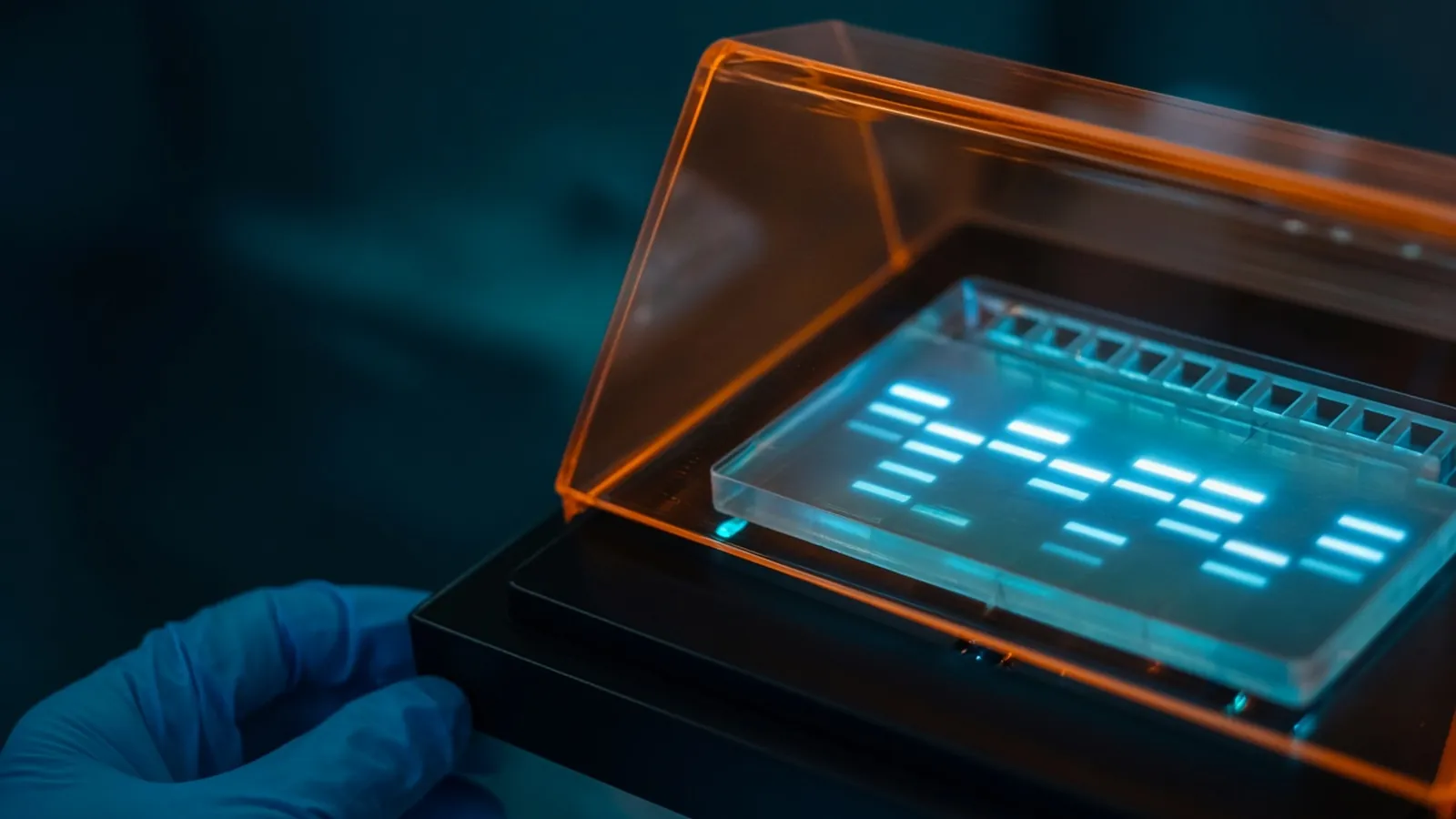
gels and blotting
Choose an agarose percentage from the expected fragment size and a ladder that brackets it, balancing resolution, gel strength and run time.
8 October 2026 · 9 min read

pcr amplification
Why annealing temperature is not the Tm printed on a tube, and how salt, magnesium, additives, and a short gradient locate the real window.
8 October 2026 · 8 min read
immunoassays
How to choose and check a primary antibody: host, clonality, application claims, and controls that show the signal is the intended target.
8 October 2026 · 7 min read

Pillar · labware
How to match borosilicate beakers, flasks and volumetric glass to the measurement you need, and when a printed line is only a guide.
8 October 2026 · 8 min read

dna sequencing
Choose read length and paired or single ends from the sequence you must place. Longer short reads help repeats only a little; mates rescue mapping.
8 October 2026 · 7 min read

gene expression
How to choose reference genes for this experiment by testing stability, instead of trusting a housekeeping name such as GAPDH or ACTB from another study.
8 October 2026 · 9 min read
molecular cloning
Why a restriction site on a plasmid map may not cut the DNA in your tube, and how methylation, star activity and buffer choice decide the digest.
8 October 2026 · 9 min read

proteomics
Reversed-phase C18 is the usual peptide separation before electrospray. Trap-elute or direct injection, and nano versus higher flow, are column specification choices.
8 October 2026 · 8 min read

Pillar · chromatography
How life-science chromatography separates molecules on a stationary phase, and what an HPLC or column peak does not prove about purity.
8 October 2026 · 9 min read