
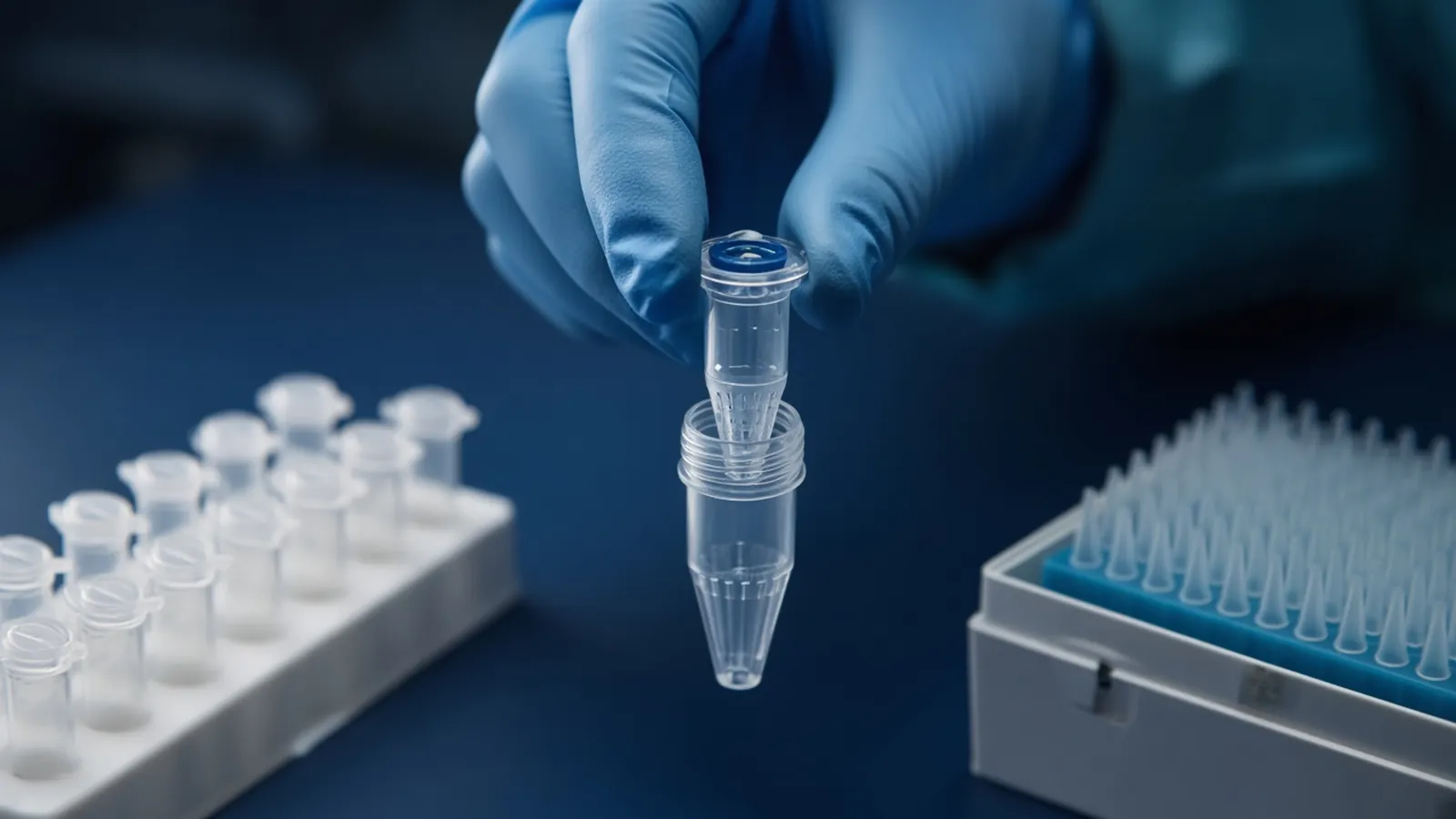
nucleic acid purification
Plant DNA extraction and polyphenols
Plan plant DNA extraction around oxidising polyphenols and co-precipitating polysaccharides, from CTAB-class buffers to young leaf versus woody tissue.
8 October 2026 · 10 min read
Knowledge centre
Guides, method explainers and sourcing notes for research laboratories. Written by the EVRINTH Editorial Team from published methods, with catalogue links for enquiry rather than stock claims.
520 articles
nucleic acid purification
Plan plant DNA extraction around oxidising polyphenols and co-precipitating polysaccharides, from CTAB-class buffers to young leaf versus woody tissue.
8 October 2026 · 10 min read
proteomics
Plasma and serum span many orders of magnitude in protein concentration. A plain digest mostly sees albumin and immunoglobulins, and depletion changes what remains.
8 October 2026 · 8 min read
Pillar · molecular cloning
How an insert becomes a plasmid, a colony and a verified clone, and which checkpoint fails when the plate is empty or the insert is wrong.
8 October 2026 · 8 min read
microbiology
What segregational stability means in liquid culture, and why a cloudy cloning-strain flask can still give you no plasmid.
8 October 2026 · 7 min read
labware
A working map of polypropylene, polyethylene, polystyrene, polycarbonate, PET and PTFE, and why the solvent chart still decides.
8 October 2026 · 7 min read
labware
How to trace a weak or noisy plate reading to well colour: clear for absorbance, white for luminescence, and black for fluorescence.
8 October 2026 · 7 min read
liquid handling
Compare a human plate map with a robot deck map so well identity, A1 orientation, replicates, and controls stay the same.
8 October 2026 · 7 min read
immunoassays
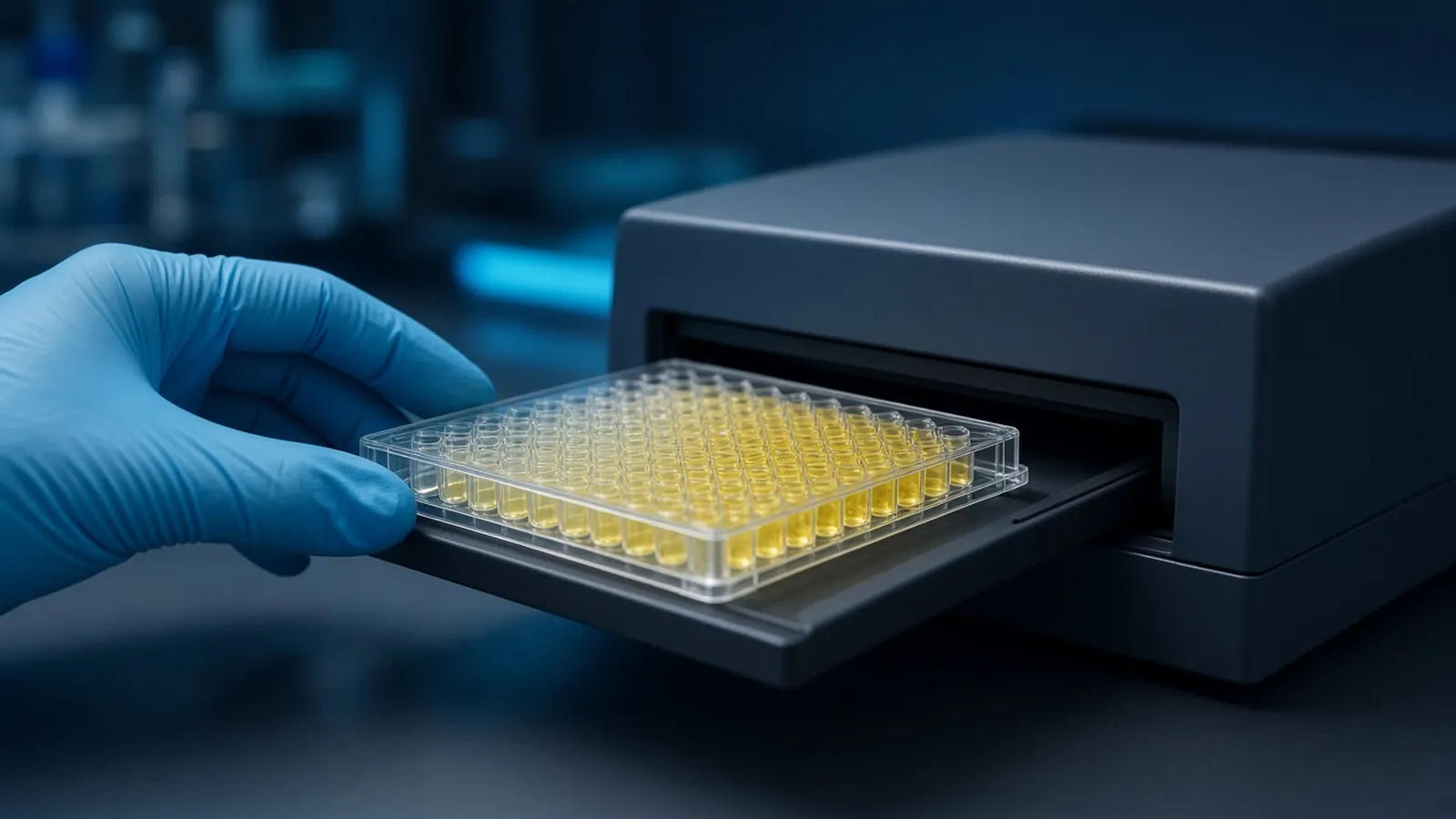
Absorbance, fluorescence and luminescence are different reads. A wrong wavelength or a clear plate in a fluorescence assay looks like a failed ELISA.
8 October 2026 · 9 min read
labware
Where polypropylene, polyethylene and polystyrene belong in ordinary research work, and where a resin class stops being enough.
8 October 2026 · 7 min read
gels and blotting
Stain a blot with Ponceau after transfer and before blocking to see lanes, bubbles and failed transfer. The dye washes off and does not name the antigen.
8 October 2026 · 7 min read
pcr amplification
Decide when a positive, a negative and a no-template control each earn a place, and when a clean blank still leaves sample lanes unread.
8 October 2026 · 7 min read
proteomics
Why a variable modification explains a mass shift without proving biology: localisation, neutral loss, search-space cost and which shifts are often tube artefacts.
8 October 2026 · 7 min read